
This website or its third-party tools use cookies which are necessary to its functioning and required to improve your experience. By clicking the consent button, you agree to allow the site to use, collect and/or store cookies.
Please click the consent button to view this website.
I accept
Deny cookies Go Back
  • Skip to primary navigation
  • Skip to main content

ABTI | Joseph Riggio International

  • Home
  • Meet Joseph
    • To Sicily And Back … A Love Story
    • JSR Short Bio & CV
    • Abbreviated CV Timeline
  • BLOG :: “Blognostra”
  • Contact
You are here: Home / Archives for Joseph Riggio

Joseph Riggio

Mythogenic Mastery

Mythogenic Mastery

by Joseph Riggio · Apr 1, 2019

mythogenesis

noun


mytho·​genesis |  ˌmithə+ variants: or less commonly mythogeny  mə̇ˈthäjənē  plural mythogeneses also mythogenies

Definition of mythogenesis

1: formation or production of myths

2: the tendency to make myths or to give mythical status to something (as a tradition or belief)

[From: https://www.merriam-webster.com/dictionary/mythogenesis]


It’s interesting that when you Google “mythogenesis” Google asks you, “Did you mean pathogenic?” — potentially leading you away to a definition of something that means ‘causing disease’.

It’s also interesting to me that more people probably know what pathogenic means than mythogenic.

However, I’d like to take us beyond definitions and into experience for a few moments … to explore “myth making” as a way of approaching self awareness, self understanding and self mastery.

For years I’ve been on about mastery versus transformation. Many programs of the kind that I myself lead promise transformation. They suggest you need to be different than you are today, so that you can get/have what you don’t today. Yet, this seems to me self defeating, because whatever you think you may want that you don’t currently think you have is predicated on who you are today, and not who you will become when you have whatever it is you’re seeking. Therefore you may find that when you arrive … have whatever it is that you’re seeking … you feel no more satisfied than you were before you had it, because getting it changes you.

Years ago, around the early 1990s I had done some research and realized that people really want the feeling of satisfaction, and they want it to linger and not just as a transient experience.

So I designed a model I called the Satisfaction Cycle®.

This model was predicated on the idea that who you are in this moment right now hold all the keys to your potential through all time, and furthermore that you have immediate access to realizing that full potential instantaneously.

The only requirement …

You must remove that which limits you from experiencing yourself fully as whole and complete … right now.

Yet, most people have been trained to see themselves as only having the potential to be whole and complete in the future. This creates the endless desire for self-improvement, that some folks like to call self-growth or personal development.

Now I’m not against personal development as an idea. In fact I like the idea of improving, but I think of it as refinement, not necessity. To my way of thinking you express the fullness of being you are now seeking to experience by attending to the fullness of being that you already posses, and then you can’t help but to experience personal development.

You see, just attending to something fully and with rigorous focus refines it. I should probably make it clear here that when I use the word “attending” I mean “doing something” not “contemplating” … even if you first contemplate you must take action to complete the process of fully attending, putting the contemplation to rest.

Coming To Rest

Everyone ultimately wants to come to rest within themselves.

This doesn’t mean stopping your action or activity, it means being a peace within yourself, giving up the relentless sense of chasing something that you think you need or want, but don’t yet have.

Coming to rest means realizing this moment is complete unto itself, and stepping fully into it to experience it completely. 

The paradox of coming to rest means that you begin have more time and energy available to do things you haven’t yet done, and you do them without any undue urgency or, sense of threat or overwhelm. You begin moving through the world from a position of self-mastery.

Others can’t help but to notice when you possess self-mastery. 

Self-mastery expresses itself as an air of calm and control beyond the chaos of the moment. Regardless of the urgency of the moment, whey you possess self-mastery you aren’t urgent. Think of the surgeon who makes critical life and death decisions in seconds, and retains a calm deliberate certainty in the moment about the choices they make. Or, the naval fighter pilot who’s plane hurdles through space faster than the speed of sound, and calmly and deliberately controls their craft with the certainty required to land it safely on the rolling deck of an aircraft carrier in the middle of an ocean deep in the darkness of night.

I remember a story that I was told from when I was too young to remember. My grandmother, my father’s mother, who I spent a great deal of time with, was watching over me and I spiked a very high fever. My then young unmarried uncle, told me he was very concerned and felt like I needed to be taken to the doctor or the emergency room. My grandmother instead told him not to worry that the fever would break and I’d be fine. She repeatedly bathed me in cool water and then rubbed alcohol on my feverish body, three times … four times … until as she predicted, the fever broke and I “slept like the dead” according to the way my uncle tells it.

When I woke the next morning it was as though I had never had a fever, and as usual ran about leaving a wake of minor destruction in my path. Never though did my grandmother’s composure waver. Whenever she was engaged in a task of any kind she possessed and evidenced an air of self-mastery always as I remember her, even in those moments of lucidity that had become sporadic into her 103 year when she finally passed peacefully one night during her sleep.

When you possess self-mastery in the simplest moments you can extend it to the most chaotic moments. I like to think of this as keeping your head about you when all those around you are losing theirs. However, I find most people only look to access mastery of this kind when they are already in crisis, failing to seek it, practice it, and experience it in the mundane moments of their life when they more easily access it to make it a habit and pattern of being they recognize for themselves.

Stop And Smell The Roses

Mastery and mythogenesis meet where you experience your own autobiographical narratives. 

For the most part the world will impose certain narrative on you … stories about who your people were/are, stories about the place you come from, stories about how you look and how that fits the current fads of appearance and beauty, stories about how you should be and what’s important or not … it goes on and on.

For instance, one of the great narratives shared and told in many places refers to the story of education … either you’re one of the smart kids or you’re not one of them. This of course has less to do with being intelligent than it does with conforming to demands to do it they way you are told. In many measures of intelligence in education creativity becomes a detriment. Yet, the label of being a smart kid, or not, puts an indelible mark on many people before they have any sense of personal choice about it.

Another common narrative has to do with what “side of the tracks” you come from … was your family wealthy or not, are you the right kind of person, do you practice the ‘right’ religion, do you have the ‘right’ skin color, do you speak the ‘right’ language and pronounce it in the ‘right’ way, are your people from the ‘right’ place, do you were the ‘right’ clothes, to you eat the ‘right’ foods, to you practice the ‘right’ traditions … and on it goes, and the narrative builds about whether or not you are the ‘right’ kind of person.

The Hermenutic Option: Despite the impositions of the narratives imposed upon you, you always have a choice about how you interpret them … you get to set the meaning. 

Trying to “fix” the meaning of the narratives that have been imposed upon them, beyond their initial control, keeps a lot of people chasing a dream about who they could be or should be … but in their own minds (and maybe by dint of cultural interpretation too) ain’t.

Many folks are lost in trying to manifest a life that matches some narrative that they don’t own … one that ain’t their own.

You always get to choose your own myth, the story you are living into, and the way that shapes how you interpret the narratives of your life, as long as you want it and make that choice.

Choosing your own myth frees you. Your myth is always bigger than any of the narratives it contains.

You really have no choice as to whether or not you’ll be living into a myth, if you’re very clever you only really get to choose the myth itself.

By the time you were seven or so, a myth was present for you … and you’ve either be A) living into it unthinkingly, B) resisting it desperately, or C) revising it and choosing one for yourself.

The book of your life was begun by others, but you don’t need to remain in that story.

Whenever you choose you get to take over the authorship of your own life, and begin scripting a new life if you so desire it.

The moment you take over the myth-makers role in your own life you immediately begin reshaping the entirety of the story that’s been told so far. You don’t need to rewrite your past stories …

The very act of deciding who you are now in this moment, and who you are becoming, imposes a new meaning on who you have been. 

This simple act of taking control of your own story, shaping the narrative that’s being told, transports you into the beginning of possessing self-mastery.

Keeping it simple, you cannot possess self-mastery if you don’t possess your own story.

In many old fairy tales the hero’s/heroine’s heart is removed and keep in a box by some evil witch or sorcerer and to become whole, often even to live and prevent their own untimely death, the hero/heroine must discover where their heart is hidden and reclaim it for themselves.

The heart at the center of your being that you are seeking is your myth.

Once you’ve discovered your myth, the essential story of who you are, have always been and are becoming, everything about you will begin to coalesce and reform to accept this as the centering and guiding essence of your being. You’ll feel this happening within yourself, and you’ll see the manifestation of it without as well all around you. As you continue others will also begin to notice it and will respond to it in spoken and unspoken ways.

You will be known for your acts, but you will know yourself more because of the myth you are making, and the master you’ve become.

It is of little value to master all about you, if you have left the mastery of yourself behind. 

Just some thoughts to ponder as a new dawn approaches …

Joseph Riggio, Ph.D.

Somewhere on the East Coast of the United States at 05:32 AM EDT
Filed Under: Blog, General, Language & Linguistics, Mythology, Story, Transformational Change & Performance, Uncategorized

Revisiting: Pathways to A High-Ticket Coaching Or Consulting Practice

Revisiting: Pathways to A High-Ticket Coaching Or Consulting Practice

by Joseph Riggio · Mar 2, 2019

Or … The Gravesian Way To Making A Great Living As A Coach/Consultant/Trainer …

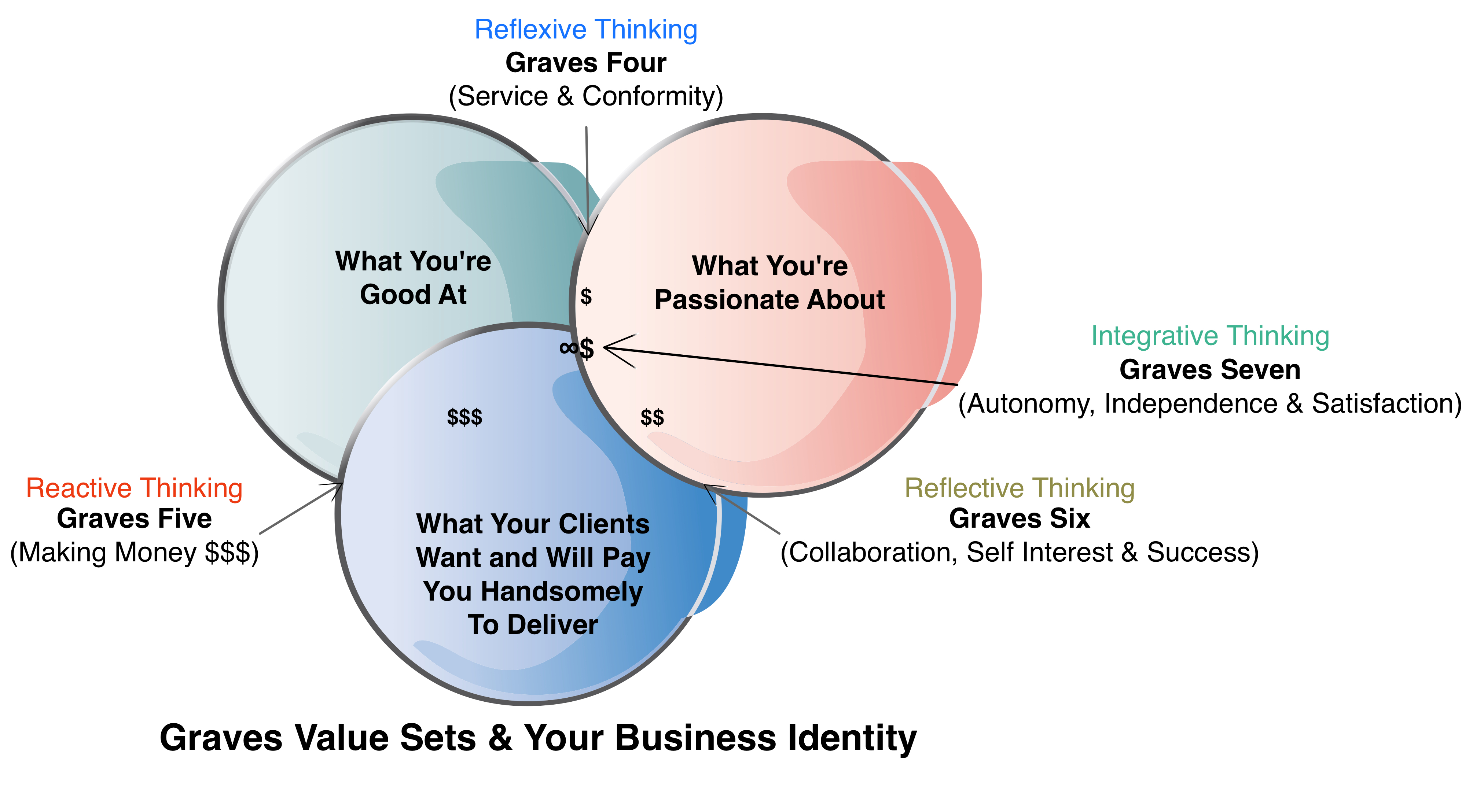
Graves Business Model Venn Diagram JSR


Okay … the idea of the Venn Diagram showing this particular intersection isn’t mine, but the commentary around it is …

Let’s take a closer look together … shall we?


[NOTE: I originally wrote this as a post on my blog where I’ve been talking the Graves Model for years. This model identifies what most drives perceptual, decision-making and behavioral responses that people default to generally, all other things being equal. The fundamental point here is that unconscious values drive responses. When you can recognize how your values shape your responses, and the way values shape the responses that others make, you can make choices that serve you more powerfully in your business. It’s not so important to try to master the Graves Model, as to get the underlying values that form business decisions that shape a business’ outcomes.]

Most of the build your coaching business gurus will point you towards what I’m calling out as the Reflective Thinking/Graves Six position where you supposedly make money by pursuing your passion … e.g.: your Million Dollar Message B.S.

BUT … while you can indeed make money by overlapping What You’re Passionate About resides and where What Your Clients Want and Are Willing To Pay Handsomely To Get overlap … there ain’t no guarantee that’s gonna happen …

BECAUSE there’s no guarantee that what you’re passionate about … or your message, life story, insights, calling, whatever … is going to resonate with what customers and clients are willing to pay handsomely for today.

Now if you notice most of these “Gurus” are following the path that most of the  on-line business/marketing gurus will point you toward (and mostly follow themselves) … i.e.: the place where What You’re Good At and What Clients Want and Will Pay Handsomely For overlap. This is the Reactive Thinking/Graves Five position on the diagram, and you can indeed make loads of money when you follow this path to riches.

In other words, the Reflective Thinking/Graves Six Do What You Love Gurus seldom follow their own advice precisely, except when there’s a lucky accident and they are actually at the Integrative Thinking/Graves Seven position (think Oprah Winfrey).

I point to this position in the middle of the diagram where all three circles overlap … (BTW this is where the money you can earn is for all intents and purposes unlimited), so it all comes together for them.

Just to complete the outer positions, 90% of folks who have businesses that are actually jobs are stuck in the Reflexive Thinking/Graves Four position, where What You’re Good At and What You’re Passionate About overlap. (NOTE: This is Michael Gerber of “The E-Myth” fame refers to as the technician’s ‘entrepreneurial spasm’.)

OKAY, SO HERE’S THE “SKINNY” AS I LIKE TO SAY …

YOU HAVE TO DECIDE EXACTLY “WHY” YOU WANT TO RUN A COACHING/CONSULTING/TRAINING BUSINESS!!!

(Or, what you get from your coaching/consulting/training business will not necessarily be what you want or expect to get from it.)

What To Do About It …

(If You Really Want To Build A High-Ticket Practice)

A great majority of folks who are good at what they do, but ain’t making no money, are operating at a Reflexive Thinking/Graves Four position on this diagram. It’s simple and kind of stupid (I’ll explain why later on, give me a minute to get there …)

Most folks who are willing to do what it takes, are at a Reactive Thinking/Graves Five position on the diagram, and are building businesses that make money, sometimes tons of moolah, but they aren’t necessarily that happiest folks on the planet (in fact they are often the most anxious folks on the planet, always waiting for the house of cards they built to implode).

When you leap to the Reflective Thinking/Graves Six position you find that there’s a whole spectrum of success, from what is utter financial failure to super financial success and independent wealth. Yet, these folks are living in a dream expecting to live the dream, i.e.: doing well by doing good, regardless of the fact the reality is that most of the time they are more interested in what they want to do for themselves than helping out the world as a form of service or sacrifice.

Now that ain’t saying that folks who are operating out of the Reflective Thinking/Graves Six value set aren’t doing good work, it’s just that the reality is that most of the time that decision is based on what NLPers (folks trained in NLP/neurolinguistic programming) call Sorting By Self and Internal Reference. In other words they decide what’s most right by their own internal measure and not necessarily what would in fact most serve the world-at-large.

For example a whole lot of these folks drive expensive SUVs and many drive expensive sports cars, that ain’t doing a whole lot for the planet they claim to love, or being particularly respectful of the percentage of resources they use compared to the least privileged folks on the planet. And those in the coaching/consulting industry don’t stay local/buy local/work local either, because they are getting on planes to go to the conventions where their tribe meets up and when they’re not flying to meet their tribe they’re looking to hook up with some tribe in Fiji or Patagonia or the Himalayas on holiday.

Once again, I’m NOT condemning these folks … good on the if they’ve found a way to satisfy their deepest desires and making the dosh they need to pursue them fully. BUT, as I said this is as much a lucky coincidence as it is strategic planning, and even then this is NOT the path to sainthood regardless of how many Salutations to the Sun you’ve done, or how many hours you’ve spent meditating mindfully, or even if you’ve spent two years of your youth in the Peace Corps.

The main point for anyone who’s trying to build a high-ticket practice is to get that if you want to be on the path to success that is strategic, then you’ve really got to look at why you want this and how you expect to pull it off in the real world where no one cares about your intention …

That’s right … NO ONE CARES ABOUT YOUR INTENTION!

ALL FOLKS CARE ABOUT ARE WHAT THEY WANT AND,
HOW YOUR ACTIONS HELP THEM GET THAT … OR NOT!

(NOTE: There is an exception to this as well … when folks believe and expect that you will help them get what they want, even when that doesn’t turn out to be true after the fact.)

So think about it … WHY DO YOU WANT TO BUILD A HIGH-TICKET COACHING, CONSULTING OR TRAINING PRACTICE???

In other words answer these two question for yourself:

1. What do you expect to get from building a high-ticket coaching, consulting or training practice?

2. How will getting this satisfy your deeper desires and values beyond just making money (unless your at Reactive Thinking/Graves Five, just making money is not going to keep you happy).

Now going back a step …

If you both want to make money AND satisfy your deeper desires and values you’ll need to come to terms with a couple of things …

FIRST … you MUST satisfy the intention to serve your clients based on “What Your Clients Want and Will Pay You Handsomely For” … if you’re NOT starting here you are NOT operating strategically with regard to building a High-Ticket Practice.

AND … you MUST satisfy the intention to serve “What You’re Passionate About” as well.

Now, that may sound like I just recommended that you follow the Graves Six pathway to success, and that’s ALMOST correct, but as they say in the infomercial world … “WAIT THERE’S MORE!”

REMEMBER … there’s absolutely no guarantee that “What You’re Passionate About” and “What Your Client’s Want and Will Pay You Handsomely For” are aligned or will come together … if those two things aren’t also “What You’re Good At” too.

Because typically High-Ticket Clients almost always go to someone who is an expert, who does the best quality work, for what they want and expect to pay handsomely for as well. In other words, they seek out folks who are good at what they do as their primary criteria (even when they get it wrong because someone has created a reputation built on sand … probably a savvy Six BTW).


For BOTH YOU AND YOUR CLIENTS to be deeply satisfied you need to be in the Reactive Thinking/Graves Five zone for them … AND the Reflective Thinking/Graves Six zone for you!

And, in the world of this model Reactive Thinking/Graves Five and Reflective Thinking/Graves Six together equal Integrative Thinking/Graves Seven when it comes to building a High-Ticket Coaching, Consulting or Training Practice that satisfies BOTH YOU AND YOUR CLIENTS!


Summing It Up

Simply put, STOP PAYING ATTENTION TO THE MAGICAL THINKING WORLD OF THE GET RICH QUICK BY DOING WHAT YOU LOVE Gurus!!!

While there’s nothing wrong with doing what you love … HECK I RECOMMEND IT … you aren’t going to have the chance to work with the High-Ticket clients you want, or to strategically satisfy your desire to make more money … or get filthy, stinking rich for that matter … if you don’t move out of the position you’re in to a position where you really do satisfy all the people in the equation BASED ON THEIR CRITERIA AND NOT YOURS ALONE.

As the wise men say, there are many paths to the top of mountain, but whether you get up there broken and defeated barely having survived, happily trekking with a merry band of sherpas and stopping for a week in basecamp before you turn around and head down never having seen the peak, or travel all the way in a luxury helicopter is up to you.

If you want to you can indeed have it, and knowing WHO you are, is at least as important as WHAT to do and HOW to do it … this is the world of Integrative Thinking/Graves Seven autonomy and success … and, here’s a little secret, when you are operating from WHO you are, you begin to gain unprecedented insight into WHO your clients are as well.

So if your guru isn’t starting there with you, i.e.: WHO you are, as the basis for designing the offers you build your HIGH TICKET Coaching/Consulting/Training business around, then at least remember this wise saying … CAVEAT EMPTOR (i.e.: buyer beware).

Joseph Riggio, Ph.D.
Architect & Designer of the MythoSelf Process, Soma-Semantics and Generative Flow

P.S. – Leave a comment and let me know what you think  … if you’d like to get a little more clarity on your current identity and values in regard to your business, I can talk and walk you through where you are on the diagram today and help you make the move to the center of yourself in about 15 minutes . If you’d like to pursue it you can schedule a call here …

Schedule Your Short Complimentary 15 Minute Call with Me Here

Filed Under: Business Performance, Coaching, Mentoring, NLP, NLP & Hypnosis

Seeing Wholeness

Seeing Wholeness

by Joseph Riggio · Dec 17, 2018

The Key To Transformational Embodiment 

About 30 years ago I began searching for the universal ”skeleton key” to transformational change.

By the mid-1990s I had come to the conclusion that the ”key” to transformational change was part of what I began calling the somatic ground of being … embodiment … the foundation of ontological experience and awareness. This led to an approach using somatic interventions to instigate ontological transformation.

I remember sitting in the “Hypnotorium” with Roye at the front doing something with someone, a piece of profound transformational hypnosis.

This is very different from what many think of as hypnosis, i.e.: “You are getting sleepy … your eyes are getting heavy, tired, and they want to close … just let them close, NOW … going deeper into a deep, deep sense of relaxation … let yourself float down, even deeper, still …” and then some suggestions about stopping smoking or losing weight, or some other habit interruption and reframing.

It’s also obviously very different from stage hypnosis, (same script followed by), ”Now you will follow my suggestions … when I snap my fingers you will open your eyes, and when I mention the word “hypnosis” you will cluck like a chicken …” No, not anything like that at all.

Transformational hypnosis was … is … the art of shifting the ontological awareness you operate from about reality, what is real and how it is organized, and most importantly your place in relation to it.

Within the art of transformational hypnosis there is an intention not to change symptoms or behavior at the surface, but the structure of your perception at a deep and essential level, all the way down to the core of your sense of identity.

Now the way I was learning about how Roye worked was presented in what he referred to as “wholeform” … never truly broken down into steps to follow, but instead presented as a complete piece of work.

Someone would come in and present a life issue they were facing and within … a significant choice in a relationship maybe, or the need and desire to make a major change in their profession or lifestyle, it might be they were dealing with a major loss and were struggling with processing it fully, and as often it would have been someone who was simply stuck and yearning for a breakthrough to an imagined future that infuriatingly continued to elude them.

Roye would refer to whatever it was that the person presented as the ”presenting problem” and point out that it was simply the lens to a solution. The trick of course was to be able to elicit and discern the solution that had been obfuscated by the presenting problem and remained unavailable to the one presenting it.

So I would come, a couple or a few times a month, or even weekly, to sit in the Hypnotorium with Roye to learn the secrets of the deep art of transformational hypnosis. I have to admit that for months the entirety of it eluded me and all I could gather from what he was doing at the front of the room was bits and pieces of technique.

Maybe I would pick up a way of leading someone into an altered state with some bit of language. Or, I’d notice that Roye would alter his posture to be more like the person he was working with, and yet with all these bits and pieces I was gathering my skill remained mostly limited to working at best at the surface of things.

Then it happened …

I think maybe I was tired, or frustrated, but I’d given up trying to “get it” and I just sat there as Roye was doing a piece of work with someone and I saw the whole thing!

This wasn’t the process he was using, or what he was doing, it was what he was noticing about the person in front of him. They are the whole thing!

This is where the magic happens. I got that absolutely in that instant, as fleeting as it was and as difficult to recapture. By trying to “get it” … looking and listening for what it was, I remained unable to get the “whole thing” … the entirety of what happens moment to moment as you are with someone.

The “whole thing” is the entirety of how someone is organized in any given moment AND how they change moment to moment in an endlessly choreographed dance of dynamic movement.

This way of seeing became the essence of the work I do and teach in MythoSelf Process and Soma-Semantics models.

I proposed we have a fundamental, ontological state of being that is innate to us, because of the deep integration between the somatic and semantic structure of wholeform experience that treats the body-mind as an integrated singularity. This state of being always emerges in wholeform as a singularity all at once.

The wholeform ontological structure contains the entirety of the way we are within our bodies, how we use them, move within them and move through them, and the language forms that arise to inform us and others via the descriptions of the subjective experience we are having as we do.

One of the primary teaching distinctions of the MythoSelf Process and Soma-Semantics is the art of Seeing Wholeness.

Yet Seeing Wholeness remains elusive, as it did for me for months of my early training with Roye, only becoming apparent in that first instance as a wholeform experience of undifferentiated wholeness that was the true essence of the person I saw for the first time that day.


Seeing The Wholeform Of Wholeness:

To see wholeness you cannot be looking for the pieces or the parts, as wholeness only exists in the wholeform.

This is what makes it so hard for folks to learn … the letting go of trying to see what they cannot yet discern for themselves.

For most people to learn to see wholeness you must allow yourself to see it through the eyes of someone who can already see it, and see what they are seeing, not what you are looking for yourself.

This of course is a kind of trick you must learn for yourself, i.e.: to see through the eyes of another.

What you’re noticing for is the entirety of whatever you are present to, not the parts of the entirety. Of course the entirety includes you, since you are present as well.

Wholeness always includes whatever happens between you and what you are noticing, and it is there that the magic of the wholeform experience becomes most present … in the space between.

To put this another way, I always feel the wholeform experience before I can see it, but once I can feel it I can’t help but to see it as well.

What we call adumbration in the MythoSelf Process and Soma-Semantics training forms the basis for seeing wholeness … the ability to foresee what is emerging as it emerges, or even a microsecond or so before it is apparent in any ordinary sense of being able to see it.

As crazy making as this seems to see wholeness you must allow yourself to feel it coming before it’s there within yourself. Then you must allow yourself to stop looking for anything and just notice for everything, because when you are tracking for wholeness everything changes all at once.

When you are noticing for wholeness you do not only notice that someone has moved an arm or a leg, or that they smiled or frowned, or that their voice changed in someway such as increasing or decreasing in volume or pitch. You notice for the way they are now entirely different AND they moved an arm or a leg, or that they smiled or frowned, or that their voice changed in someway such as increasing or decreasing in volume or pitch.

By getting caught by the arm or a leg moving, or that they smiled or frowned, or that their voice changed in someway such as increasing or decreasing in volume or pitch, you lose the sense of the wholeform, and you lose any ability to see wholeness.

Wholeness flows.

Wholeness doesn’t exist in any moment and it does in every moment. It is the ability to see the grand pattern of change and transformation, and to notice for how that pattern organizes itself in alignment with some future, teleological wholeform possibility.

Using the information that is present by tracking the Soma-Semantic (whole)form you can then assist whomever you are working with to align themselves with that wholeform possibility as the possibility of choice. This then becomes the trajectory along which they propel themselves into their chosen future.

NOTE FOR MYTHOSELF PROCESS FACILITATORS AND TRAINERS:

When you can do this you are doing the MythoSelf Process, and only when you are doing this, doing anything else is something, but not the MythoSelf Process.

Merry Christmas 2018!

Joseph Riggio, Ph.D., Parsippany, NJ
Architect & Designer of the MythoSelf Process,a SomaSemantics and Generative Flow

Filed Under: Behavioral Communication, Blog, Coaching, NLP, NLP & Hypnosis, Transformational Change & Performance, Transformational Communication, Uncategorized

The Really Big Ones …

The Really Big Ones …

by Joseph Riggio · Dec 13, 2018

Important Decisions …

You only make a few really important decisions in your whole life, the ones that are life changing.

Most people think they make important decisions every year, or month, or week … or even every day. Some really self obsessed folks think they make really important decisions every hour!

The reality is that most decisions have a very limited half-life, i.e.: the amount of time that decision lingers until you can make another decision that changes whatever happened as a result of the previous decision.

The simple reality is that virtually all decisions have a half-life of some kind, meaning they can be changed or even completely reversed as though they never happened at all.

Even getting a tattoo isn’t a permanent decision, but for now removing a finger would be, although even that decision leaves you with prosthetic options.

So when you think about it the only really big decisions, the important ones, are the ones that ripple out in space and time, affecting you in ways that are hard to comprehend completely when you make them. 

These decisions almost always have an affect beyond you and where you are standing in the moment. These kinds of decisions affect others, and usually your relationships with them. They may even affect dozens, hundreds, thousands, millions or billions of people, depending on who you are and the position you occupy when you’re making them.

But for most of us, the really big decisions, the most important ones linger most of all in our own lives, and we need to have a way to understand what they will mean to use before we commit to them.

I know a bit about making these kinds of decisions, because I have lived in the unique space of not only making my own … some remarkably successful ones and others that still linger in my life in ways that force me to relive them with some degree of regret, but I digress … I have also been privy to the decision making of clients whom I’ve stood beside when they were making some of the really big, important decisions in their lives.

Very few folks have the privilege of standing alongside someone as they make a truly critical, crucial decision in their life, and have that person turn to them and ask for advice or an opinion, one that is likely to have some weight in the decision that’s about to be made … possibly one that will change the course of a life. Yet, I have stood there, next to someone more than once, who was about to make what felt to them a life and death decision, and in a few cases was just that. And, in a few cases sometimes making that decision for more than just themselves.

I don’t think there is any more sobering experience I’ve had than those times someone has turned to me in a critical moment about making a crucial decision in their life, one that would change the course of their life and possibly the lives of many others, and asked for my advice or opinion knowing that they’d consider almost as valuable as their own personal counsel.

What You Must Know Before Making A Really Big, Important Decision:

What I’ve learned from standing in that unique space next to someone is that all decisions have consequences that extend beyond the moment you are making them in the here and now.

When you are making really big, important decisions you need to know they will have lingering consequences, and you cannot know all of them when you are making the decision.

This means you will have to learn to accept the risk of making really big, important decisions and the consequences they bring, even the unknown and unexpected consequences of the decision, or be at the mercy of having those decisions made for you by default.

The really big, important decisions don’t go away, they don’t fade and become meaningless in your life. Even when you refuse to make a big and important decision it will linger, and it will grown the stench of a rotting corpse, becoming more foul and difficult to deal with as you wait.

The most successful and fulfilled people I know share three common traits:

  1. First a kind of paradoxical one … they make all the decisions they can immediately and don’t make any decision that they aren’t ready to make until the waiting for that decision is full
  2. They include the counsel of another or others in their most important decision-making, and
  3. They own whatever decisions they make completely, especially when they don’t turn out well 

All three of these are present at all times for the really big, important decisions that the most successful and fulfilled people I know make for themselves and others, because often these folks are making decisions that deeply impact the lives of others as well as their own.

What’s most curious to me though is how most less successful and fulfilled people do exactly the opposite …

  1. They rush into decisions that could have waited and that they are in no position to make, while waiting on the decisions that need to be made and that they can make in the moment …
  2. They often or even always make their biggest and most important decisions based solely on their own counsel, neither thinking nor knowing how to engage another in helping them work through them, or not having someone in their life they can and do trust to stand in that space with and for them …. and
  3. They refuse to own the decisions they make or the consequences that come with them, always looking to blame someone else for what happened and what went wrong after the fact, it’s never their fault in their own minds, so they never get to learn from their mistakes and are doomed to making the same ones over and over again.

Now you might be reading these lists and wondering why they are so different … opposite from one another in fact.

My experience suggest that the most successful and fulfilled folks accept that life is uncertain and full of risk. They know that some risks can be avoided or mediated, and others are meaningless despite being present. These folks also know that those risks that cannot be avoided, mediated and are of great importance must be faced despite the fear they feel, and the do just that … they face what must be done directly and then they act, but only when they can and must, with the advice of trusted counsel, and the accept whatever will happen as a result of their own making.

The less successful and fulfilled people act from fear to relieve themselves of it, never really having learned to stand in it and accept that some things must be faced and cannot be avoided or mediated. They let their fear force them to make decisions they are incapable of making from how they are and where they stand in the moment, they insist on making them on their own or despite counsel otherwise from others, and in no way do they accept the full weight and responsibility of making their own decisions, because they feel forced into them by their fear and look to find a scapegoat they can blame for whatever tragic outcomes may come as a result of their own faulty approach.

I’ve seen dozens of examples of both … extremely successful and fulfilled folks who make truly high-quality decisions, and much less successful or fulfilled people who cannot seem to get out of their own way to make even moderately big or important decisions well.


What Are The Really Big and Important Decisions You’re Likely To Make?

Okay, I’m not going to give you a list, instead I’m going to give you principles you can use to make your own list.

The first principle is this:

  • Any decision you make that has lingering consequences through space and time that cannot be reversed immediately after you make it and take action on it is a big and really important decision.

Decisions of this kind include many critical health choices that you may find yourself forced to make in a moment of crisis, including who you choose to assist you and what options you take to address the crisis, whether your own or for another. Any decision that would alter the course of your life, or the life of another irrevocably is a big, important decision such as the decision to have a child, to give up a child or, to foster or adopt a child. From the first moment after you make these decisions and act upon them they immediately build momentum and compound to become big and important decisions in your life and that of others. There are also decisions to not do something that is time critical that are big and important decisions, like taking action to prevent harm to yourself or another, from something as simple as putting on a seat belt, or deciding not to drive in a severe storm if you don’t absolutely have to for something even more critical than avoiding a situation you don’t need to be in that puts you and others at risk. Make all these decisions with great care, and with the advice and input of counsel whenever you can.

These kinds of decisions also include any decision you make to harm yourself or another with grave consequence, for example anything that would cause the loss of a limb, an organ or a life. This could be from intentional self inflicted trauma, or unintentionally inflicted trauma like driving while drunk and permanently injuring yourself or another. These decisions also include setting down any path that leads to an escalation of events that cause this kind of trauma, from something as simple as not getting enough exercise or eating poorly, to taking drugs that lead to a crippling addiction, or engaging in activities with others that result in inevitable and devastating consequences like gambling beyond your means and building inescapable debt with people that must be paid, or following urges like sexual desire to places that can only end in grief for yourself and those you indulge yourself with as well. Avoid decisions of this kind at all costs if you are able.

The second principle is:

  • Any decision that requires you to make extraordinary effort to remove yourself from, change the outcome or direction of where it’s going, or how it will affect others after you make it is a big and important decision too.

Okay so we’re probably not talking about life and death here, so we a little removed from that intensity of risk and the decision making associated with it. However, these decisions do have lingering consequences and need to be made with utmost care whenever possible. An example of this kind of decision is entering into any kind of committed contract … from marriage to a professional engagement where you’ve pledged something from your time to a specific outcome you must produce or suffer the consequences if you fail to do what you’ve committed to and promised. It might also be a decision not to do something that would set you up for failure that you can avoid by saying no now. As with any big and important decision you’ll make, these kinds of decisions often require more than just simple counsel, but often professional counsel from experts like an attorney or accountant who can see the long term ramifications of your decision in way you could not on your own.

It might also be a professional decision regarding a business you own or run where you really do need the counsel of others with greater expertise and more qualified than you to make the proper decision. And, minimally you’ll want to have a trusted adviser, a personal “consigliere” of sorts in your corner for these kinds of decisions. This person can assist you in thinking through your decision, and while whatever decision you make will be your own, and as such you must own it completely, your consigliere can not only help you consider it in ways you might not on your own or from a view you that you wouldn’t take on your own, they may also be useful or even instrumental in carrying it out, or presenting it on your behalf as you spokesperson. This last bit is a masterful ‘trick’ of many elite performers creating a means of later modifying what has been said with a grace not otherwise possible.

The third and final principle for now is this one:

  • Almost all truly big and important decisions involve other people, usually people who hold a significant place in your life.

When it comes down to it the really big and most important things in your life will be about the people you care for, care about and love.

This is a key distinction about big and important decisions, it’s almost always about the people in your life.

Who you marry, the way you raise your children, the friends you make and keep company with, who you hire or work for, or work with … all these kinds of decisions involve other people. They can be and often are big, important decisions.

The think to know and remember about these decisions are that you are building a bank or good will or ill will, and you will do both in your lifetime. There is no pleasing everyone, and any attempt to do so will cause more harm than good, so get over trying. You want to know yourself and trust yourself to know when to say ‘yes’ and when to say ‘no’ to others regardless of how they will feel in the moment.

The ability to know when to say ‘yes’ and when to say ‘no’ to another person is a critical life skill you must develop if you want to live a successful and fulfilled life.

Saying ‘no’ as soon as possible is the surest way to minimize bad feelings and any ill will you will create with others. In fact becoming know as someone who says ‘no’ often and quickly gives you a tremendous freedom to do so, and makes those times when you say ‘yes’ far more meaningful.

Saying ‘yes’ is a commitment of yourself to another, and if you want to live a successful and fulfilled life you must practice living your commitments, the promises you make to others. No one hears the promise made to them by another as a casual comment, they will always take your promises seriously, until you prove to them that they cannot … then they will never take your promises seriously again. So better to say ‘no’ now, than to promise something you find later you cannot or will not follow through with and deliver.

As with all other big and important decisions the decisions in your life involving other people are often, if not always, made better by the trusted counsel of another. We are too charged around others to see them fully for who and what they are, and there is no guarantee that in this case two heads will truly be any better than one, but it does raise your odds of getting it right and your chance to make the best decision more likely.

This is especially true when the decisions involving someone is for you highly emotionally charged … either positively or negatively, love and hate are not often the best ground for making the best decisions. Yet, regardless of the counsel of others you must especially be willing to own your decisions made on the ground of love or hate.

Tread this ground with the utmost respect and humility, for here you will look back and see the biggest and most important decisions of your life.

The bank you make in the space of your relationships with others is the one you will draw from more and more as your own life force and will dwindles. You will find that you want to sit quietly with a trusted friend you’ve invested much with rather than move on to the next thing to do, the next great accomplishment in your life, when this time comes for you. Yet, will find yourself drinking alone, staring at an empty chair if you are not making these investments into the bank of life and relationships now. In these times of your life family and friends will be seen as your greatest treasure, so fill the treasure chest now with what’s most meaningful and not the trinkets many believe to be the stuff of great fortune.

As always I am humbled to have walked in this space with others who have and do trust me as one of their trusted advisers whom they look to for counsel when life shows up with these really big and important decisions, and for a few I have had the honor of standing alongside them as their personal consigliere when life showed up most critically, this is an almost unimaginable responsibility and privilege. Yet, as I scan the heavens and look to my own future, I see that these seeds I have sown have born the greatest fruit and my treasure chest is full, thank you for allowing me such grace …

Buona Fortuna and Abundanza,

Joseph

Filed Under: Blog, General, Human Systems, Life, Story, Uncategorized

Profane Coaching:101

Profane Coaching:101

by Joseph Riggio · Dec 1, 2018

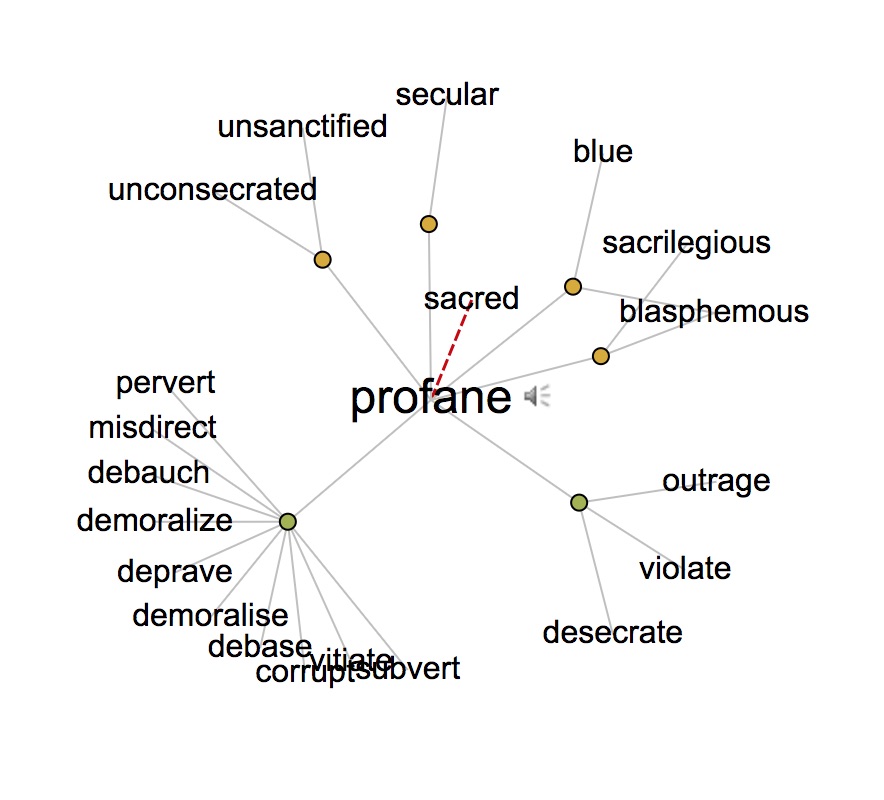
pro·fane – prəˈfān, verb: grossly irreverent toward what is held to be sacred.

Coaching often tries to present itself in one of two ways by many of the major practitioners of the craft …

  1. Socratic – very mild, gentle and nurturing, as the ultimate helping intervention that never interferes with the personal process of the individual being coached by adding anything or offering anything to them that they haven’t presented first themselves.
  2. Serious – very precise, impactful and professional, as a way to awaken and access higher levels of performance and especially interpersonal performance for executives, entrepreneurs, professionals and anyone seeking to lead others in any way.

Okay, let’s agree … those are two ways to consider coaching, and perfectly valid ones at that. Let’s also agree that it wouldn’t be too hard to find training or mentoring as a coach following one of those two paths either.

Now let’s set both of those ways of presenting coaching aside completely and look at the whole thing from another perspective entirely …

For three decades I’ve been developing an approach to working with clients that almost completely disregards the conventional thinking about coaching, and how it’s to be done with clients.

For instance here’s some of what I don’t often do …

  • Let my clients tell me about their problems/issues/challenges, I don’t need or want to know what’s wrong as the place we begin working together
  • Listen to them tell their story for too long, since it’s not the story they want to be living anyway
  • Keep my observations, opinions, and experience to myself, instead I apply all three liberally
  • Ask a lot of useless questions to establish rapport, just to allow my clients to feel they’ve been heard
  • Speak with deference and delicateness to protect my client’s sensitivity, or their shame, guilt or otherwise protected emotions
  • Treat my clients as equals in the coaching process, after all they come to me because I’m an expert not an equal
  • Mollycoddle clients or parse language, because it might offend or upset them to hear the truth
  • Try to remain professional at all times, meaning never showing emotion or revealing myself to them

That’s the short list.

It’s what makes my approach to coaching a bit “profane” so to speak (the other thing is the way I freely and joyfully use “colorful” language that may be more common coming from a stevedore than a coach or consultant – I have family in the stevedore business, so you can believe me, their language is remarkably colorful).

Here’s the bottomline right up front … my approach to coaching is a bit different, it starts out differently, it happens different, and it usually ends different too … with my clients wondering why they hell they came to see me in the first place (not because they didn’t get what they came for, but because they can’t remember what interfered with having it in the first place, or not having its all along).

My approach begins here …

WHADDA YA WANT?

It’s the simplest question in the world and one that ain’t always easy to answer.

It’s also the question you’ll get from any waitress in any NJ diner as she places a cup of strong, hot coffee down in front of you too.

The difference between me and your waitress is that she expects you to know what you want when she asks the question. If you don’t you’ll get an eye roll, and the next thing you’ll hear is, “You want me to give you a little more time honey?” as she walks away not to be seen again for the next thirty minutes (next time you’ll be ready with your order when she puts the coffee down, right?). She’s also more patient and kind than I am too.

I start already knowing that you don’t know what you want … even if you think you do. At least that’s true like 98.725 percent of the time (I just made that number up of course, but it’s probably remarkably accurate).

BUT … I also know that in answering the question, “WHADDA YA WANT?” that you have to access what it is you really want from getting what you think you want (that’s the truly secret sauce in the mix, and why I don’t listen too much to what clients have to say to me when I’m working with them).

Hey, I’m not trying to train you to be a Profane Coach here, I’m just laying out the structure a bit, so if you’re a little confused by that statement it’s okay, maybe someday we’ll meet up and it will make a lot more sense to you then.

What I’m actually paying attention to is how you are when you are answering the question.

How you are is what it’s all about!

What I mean by that is that there’s something we all access when we think about what we want, it’s the way we expect to be when we have it. This way of being is essential as well to what it take to get it, but it’s simply not available in the way of being that’s associated with longing for something that isn’t present.

You can only access what you really want when you aren’t longing to have it and thinking about how it’s missing.

Once again, this is that secret sauce I was mentioning, and to tell you the truth, most people need a little kick in the pants to let go of what holds them back from getting it.

That’s also in part what makes my approach to do the work we’d be aiming at together “profane” in the first place, I take off the kid gloves. We’ll be digging into places that are likely to be uncomfortable, but nonetheless essential to get to so we can get past whatever limits you today from having what you really want.

Let’s just put our cards on the table … what makes more way of working with clients profane is that I’m going to be intentionally provocative about pushing the buttons that normally unsettle the clients I’m working with to get to what’s beneath whatever they find unsettling.

It’s a really fascinating thing to create a context that’s simultaneously both unsettling and safe … another profane idea … that it’s possible to be both intentionally unsettling, provocative and disturbing in a coaching setting, and create a space that’s undeniably safe to explore the themes we’ll be discussing within.

What’s so powerful here is that the “secret sauce” reveals the underlying code that you use to access yourself at your best, when you are beyond being plagued by any limitations that prevent you from achieving what you intend and deeply desire.

The “Profane” Somatic Code

This “code” is somatically organized, held in the way you use your body at the micro-muscular level, literally the way your body prepares to respond before it even does.

Many somatic approaches address the idea that they way you use your body profoundly influences how you think, how you respond and what you do. Most of these somatic approaches look at the more gross movements and postural adjustments that we make and how these are affecting us in other ways beyond the question of the movements themslves.

At the core of the “profane” approach I use is going to movements that are so small that they are almost imperceptible … almost. Truth be told, these micro-muscular movements are in fact imperceptible from the outside, but they can be reverse engineered by the movements that emerge from them.

Once you know how the human body works you can figure out what has to happen for whatever you’re experiencing, or observing, at the level of micro-muscular pre-movements to happen. For arguments sake we could be pointing to individual muscle fiber twitches.

There’s another presumption in approaching coaching profanely, that the semantic structure, i.e.: the structure of meaning we create from what we perceive and the sense-making that arises from it, arise from the somatic ground of how we are within ourselves … literally the way we are in our bodies.

This is a profane concept to all those folks who hold the mental processes above or superior to body-based processes. Yet, within the consideration of the profane approach I’m outlining here what arises first in the body is considered at least equal to, and often superior to, what we become aware in mind … and, always ahead of the language we use to describe it.

This is a really big deal …

By being “profane” with you, you’ll get to what you won’t on your own, because you’d avoid it otherwise … either intentionally or unintentionally … but, with the right kind of provocation, the right kind of push, you’ll go where you normally won’t on your own.

This way of coaching isn’t for everyone … either coaches or clients, but it may be something you’d want to explore as a coach to add into your snatchel of tricks, or as a client to get past whatever it’s been that you keep bumping up against and ordinary “pedestrian” respectful approaches can’t bypass.

I’d love to hear from you with you’re thoughts about being “profane” as someone who works with clients … or, as someone who’d consider working with a “profane” coach.

All the best,

Joseph Riggio, Ph.D.
Architect & Designer of the MythoSelf Process, SomaSemantics and Generative Flow

Filed Under: Blog, Coaching, Transformational Change & Performance, Uncategorized

This Ain’t No Zen!

This Ain’t No Zen!

by Joseph Riggio · Jun 27, 2018

If it ain’t Zen, WTF is the MythoSelf Process then???


Essentially the MythoSelf Process is the “the ability to freely play and take action” it’s about “being childlike and creative in the way you experience, approach and show up in the world” … but, it ain’t Zen, or any other frackin’ thing either … we’ll come back to all this, but first we need to lay some groundwork.


Sometimes folks who come to experience the MythoSelf Process or to learn “how to do it” meaning that they want to become proficient in running the process with others as well as for themselves, assume that the MythoSelf Process is “like” Zen or something.

Here’s the first rule of the MythoSelf Process (NO! The first rule of MythoSelf is NOT: “You do not talk about MythoSelf.”):

The first rule of MythoSelf is: “THIS IS NOT THAT.”

Let’s start there things are themselves, i.e: what they are, no more, no less and not “LIKE” something other than themselves, regardless of what we’re referring or pointing to, things are just themselves … objects, people, places, events, ideas, and yes, the MythoSelf Process is just the MythoSelf Process … it ain’t Zen (or any other bloody thing you can imagine in the distortions of your mind “it’s LIKE” … ‘cause it ain’t!).

Okay, so then what “IS” the MythoSelf Process???

The MythoSelf Process is dynamic, i.e.: it’s a process:

proc·ess

ˈpräˌses,ˈprōˌses

noun

  1. a series of actions or steps taken in order to achieve a particular end.”military operations could jeopardize the peace process”synonyms: procedure, operation, action, activity, exercise, affair, business, job, task, undertaking”investigation is a long process”

The MythoSelf Process “happens” (NOTE: it’s never “DONE” to someone, it “HAPPENS” with someone or a group of people).

The MythoSelf Process reveals what we call the “source code” that a person uses to know themselves to be alive. It uses an “if/then” algorithm, “if THIS, then THAT” … if “this” is present then I am alive.

This is the essence of awakening, becoming aware that you are alive, you are present, this is happening right here, right now … and you are able to remain present to it as it unfolds and is coming into being, moment by moment by moment responding to what “IS” …

”Like THIS …”

We often say, “Like THIS …” as a way of referencing what is present that acknowledges the presence of being alive to the individual experiencing the “this” of their own internal awareness.

Unlike many other approaches to “awakening” the MythoSelf Process bases the way to awakening in the experience of the body, the somatic experience, or how you notice yourself being in your body in this moment right here, right now.

Ultimately with training and experience you become able to track this experience almost unconsciously, but fully competently, making adjustments and compensating to be at your best at all times … or at the very least to know when you are not, and give yourself permission to get back to yourself before you make any major commitments or take any major action. (We usually recommend, “WHEN IN DOUBT, DON’T!”)

Signals in the System

The skill I’m referring to above is a subtle awareness to notice for the way you are in your body, or how your body is responding in the moment to what we call “The Signals in the System” or all the stuff that’s happening right here, right now, including all the stuff that’s happening internally for you … your thoughts, how you feel, where you are tense or relaxed, what urges you’re feeling, all those internal signals are part of the totality of what we call the signals in the system.

What you need to get for now is that the signals in the system we’re mostly concerned with are the ones that mostly go unnoticed, e.g.: what’s not being said, or the breeze that’s blowing as you’re thinking about how to invest the inheritance you just found out about from your great uncle George, or whatever. Signals in the system points to that stuff in the background, that’s there not just imagined or projected magically, but so often is left out of the calculation of what’s going on and how that’s affecting you and how you’re responding to what’s happening.

Okay, that might sound like a lot to keep track of, we know. Here are a couple of things that might help you relax about all the possible signals in the system that you could be noticing for:

  1. You don’t need to do anything about the signals in the system, just let them be for now
  2. You don’t need to even pay any particular attention to the signals in the system, as long as you know they are there even when you are not paying attention to them

What you do want to do about the signals in the system is pay attention to the ones you do notice!

If something stands out from the background to you, regardless of what it may be or how insignificant it may seem, just agree with yourself to notice it … trust us, there’s a reason you noticed it, there’s a reason your system responded to it. Now immediately check how you are in yourself, what are you doing in your body?

The easiest way to learn to check what’s going on within yourself, what you’re doing with your body, is to check for where you are holding any kind of tension. For now try to relax that tension and notice what happens as a result. You’re not trying to make a change in terms of what you notice, other than relaxing wherever you find tension in your body. Then, just notice what you notice. If it’s nothing, let it be. If you find you’ve changed the way your thinking, or what you’re thinking about, or how you’re feeling … or, if a sudden seemingly random thought pops up in mind … pay attention to that and consider what it means to you in terms of adjusting how you’ll respond to whatever is going on as a result of noticing what came up for you.

Eventually, with practice and some discipline, you’ll begin to “notice for” the signals in the system automatically, and the “distance” between the incoming signals as well as you internal signals, and your response will be virtually nonexistent, essentially you’ll begin to respond instantly and highly effectively with regard to moving in the direction of the outcomes you intend.

Taking Action … Playfully

So this brings us full circle.

When you are able to be present to what’s happening in the moment … right here, right now … you’ll find you’re able to respond to things in a way the feels like playing, as well as instantly and effectively, regardless of the context or circumstance.

This is the beginning of freedom, i.e: the freedom to take action.

Most people experience times where they are hesitant, or get caught and freeze, or maybe they wish they had responded differently after the fact.

Yet, when we watch children at play, while they may not like the outcome they seldom if ever go back and think, “I wish I had done that differently.” or get stuck in their play unable to act at all. They simply act out of their innate nature.

This is the idea of what we mean by becoming “childlike” … having access to your innate, natural way of taking action freely.

When you “arrive” at the point where you are both able to track the signals in the system in regard to your intended outcomes and you also have the ability to respond creatively, as though you are at play, you are free in a way very few adults will ever experience.

This is essentially what the MythoSelf Process leads to … “the ability to freely play and take action” it’s about “being childlike and creative in the way you experience, approach and show up in the world.” …

So, when someone asks, “Is the MythoSelf Process like Zen.” I get how they can be confused … but, regardless of where there may be similarities, THIS ISN’T THAT.”

If you are interested in learning more about the MythoSelf Process I’ve got a short video I made here: MythoSelf Professional Training

All the best,

Joseph Riggio, Ph.D.

Architect & Designer of the MythoSelf Process and SomaSemantics

P.S.: If you’re also interested in getting trained in the MythoSelf Process yourself you can also get that information here as well: MythoSelf Professional Training

Filed Under: Blog, Elite Performance, General, Human Systems, Transformational Change & Performance, Uncategorized

Who You Gonna Call? (When Things Go All Pear Shaped)

Who You Gonna Call? (When Things Go All Pear Shaped)

by Joseph Riggio · May 28, 2018


pear shaped

A British expression used to indicate that something has gone horribly wrong with a person’s plans, most commonly in the phrase “It’s all gone pear shaped.”

A term meaning “to go to hell in handbasket” or “when the shit hits the fan.” Reportedly of British or Cockney origin, from the Royal Air Force’s description of circular flight paths gone awry, or “pear-shaped.”

From: Urban Dictionary, http://tiny.cc/2rx2ty


I had an interesting experience over the last 24 hours. I began breaking one of my own rules to live by:

”When you ask an expert for their opinion be prepared to take it, or don’t ask.”

This doesn’t mean blindly follow anyone … ever!!! But, if you’ve vetted the expert, and trust your process for determining they’re an expert, or even that they might be an expert, accept what they are saying has weight.

Now, I’m a big fan of Master Al Ridenhour’s advice he gives me all the time as I’ve been studying Guided Chaos with him, ”It’s okay to use respectful disrespect.” by which he means questioning everything.

But, once you’ve identified an expert listen and absorb what they have to offer, then check if what the expert offers fits what you already know and if it passes the “smell test” – i.e.: it makes sense to you, even if you know nothing just using your common sense or street sense. Then feel free to ask questions, even challenging ones. In other words, don’t compromise your instinct, intuitions or right to an opinion (even if it’s wrong).

So, it’s okay to ask questions, and expect and accept that you might get answers you don’t like, but as Richard Feynman says, “It doesn’t matter how beautiful your theory is, it doesn’t matter how smart you are. If it doesn’t agree with experiment, it’s wrong.”

Now you’re onto experimentation, and I’ll offer you another one of my life rules to live by:

When you’re experimenting to test something always add in “safety first” … remember you don’t know what the hell your doing, and the results you’re about to get are unpredictable.

This is all about HOW to take the expert’s advice, i.e.: treat it like a good hypothesis, not a proven theory … TEST, TEST, TEST!

What your trying to do is test the limits of the advice. You want to find out where the boundaries of their advice are regarding where it fits and will work, and where and how it will fail. The idea that everything has limits and will fail at some point, at sometime, somewhere, under the right conditions must become a presumption you live by if you want to create the highest quality results you are capable of creating. This means you’re always working to remain alert and aware.

Here’s another “rule to live by” that I just made up:

Never let your newly learned expertise, or the expertise you’ve been developing and have counted on for decades, to become so rigid that you assume you always have the right answer THIS TIME.

This is the major flaw of the learned, they count on their patterns of success too much.

The only “cure” for relying on patterns that have worked for you again and again, is to approach them as a child would … with wonder.

Let’s visit with the renowned Dr. Feynman once again for some expert advice: “The first principle is that you must not fool yourself and you are the easiest person to fool.”

A child constantly reinvents their world, and along with it their worldview, allowing what no longer fits to be abandoned in favor of a newer, fresher, more accurate interpretation backed by experimentation and experience … and, they don’t get too committed to that new point of view either, leaving them constantly open and ready to discover what remains unknown.

Here’s what another expert famously had to say about what remains unknown:

“Reports that say that something hasn’t happened are always interesting to me, because as we know, there are known knowns; there are things we know we know. … But there are also unknown unknowns – the ones we don’t know we don’t know.” – Donald Rumsfeld, U.S. Secretary of Defense

This bit is unfortunately as true of experts as for the rest of us.

My focus has been on how to remain open, even when I’m the expert in question. That means at least two constants:

1. I’m constantly refining what I believe I already know, and I have “proven” works to the best of my awareness, to improve the elegance and efficiency of what I’m doing and how I do it

2. I’m constantly questioning if what I believe meets the facts on the ground as I now know them in this moment, therefore I do my best to remain open to what I don’t know, or even never considered in that way before this moment

Then the third piece becomes my ability to remain open enough to update and change when I encounter information or experience that doesn’t fit what I now know, accepting it as fitting in the category of the “unknown, unknowns … the ones we don’t know we don’t know.”

In the middle of the night I found myself having to update what I’d been saying that contradicted an expert I respect (in this case Grandmaster John Perkins, creator of the Guided Chaos system of Adaptive Self-Defense). He was offering some wisdom about self-defense on the street against an attacker who means you real harm. I was kind of stuck on an idea about more controlled and predictable fighting, even at the “street level” of fighting, and he called me out on it.

So, I fell back on my on rule for living about trusting the experts I’ve identified as being expert, and backed out of my own opinion, while simultaneously using the experience to update where my opinion applies versus where it doesn’t. At the same time I used my sense of “respectful disrespect” to place the information that was being presented where it belonged in the larger frame of consideration we were discussing, while not displacing what was already there in place and also valid.

This last bit (which will also be the last bit here as well), “… to place the information that was being presented where it belonged in the larger frame of consideration we were discussing, while not displacing what was already there in place and also valid.” is remarkably difficult to actually accomplish (at least for me … and many of those I’ve directly worked with). To accept the idea that there are things we know that are not exactly as we know them, and simultaneously what we know remains accurate where it applies (but not where it doesn’t), requires the kind of genius that F. Scott Fitzgerald refers to in his quote: “The test of a first-rate intelligence is the ability to hold two opposed ideas in mind at the same time and still retain the ability to function.” – F. Scott Fitzgerald (https://www.brainyquote.com/quotes/fscottfitzgerald100572)

To all the first-rate minds out there 😉

All the best,

Joseph Riggio, Ph.D.
ABTI | Joseph Riggio International

P.S. – If you’re interested in exploring a bit of my expertise, let’s schedule a chat about my upcoming MythoSelf Professional Training in the U.K. this August, and NJ for the three module program that runs beginning in Sept 2018 and continuing in Dec 2018 & April 2019: https://josephriggio.click/mpt-landing.

Filed Under: Uncategorized

« Previous Page
Next Page »

© 2026 ABTI | Joseph Riggio International · Rainmaker Platform

Privacy Policy

  • Services
  • Log In