This website or its third-party tools use cookies which are necessary to its functioning and required to improve your experience. By clicking the consent button, you agree to allow the site to use, collect and/or store cookies.
Please click the consent button to view this website.
I accept
Deny cookies Go Back
  • Skip to primary navigation
  • Skip to main content

ABTI | Joseph Riggio International

  • Home
  • Meet Joseph
    • To Sicily And Back … A Love Story
    • JSR Short Bio & CV
    • Abbreviated CV Timeline
  • BLOG :: “Blognostra”
  • Contact
You are here: Home / Archives for Uncategorized

Uncategorized

The Really Big Ones …

The Really Big Ones …

by Joseph Riggio · Dec 13, 2018

Important Decisions …

You only make a few really important decisions in your whole life, the ones that are life changing.

Most people think they make important decisions every year, or month, or week … or even every day. Some really self obsessed folks think they make really important decisions every hour!

The reality is that most decisions have a very limited half-life, i.e.: the amount of time that decision lingers until you can make another decision that changes whatever happened as a result of the previous decision.

The simple reality is that virtually all decisions have a half-life of some kind, meaning they can be changed or even completely reversed as though they never happened at all.

Even getting a tattoo isn’t a permanent decision, but for now removing a finger would be, although even that decision leaves you with prosthetic options.

So when you think about it the only really big decisions, the important ones, are the ones that ripple out in space and time, affecting you in ways that are hard to comprehend completely when you make them. 

These decisions almost always have an affect beyond you and where you are standing in the moment. These kinds of decisions affect others, and usually your relationships with them. They may even affect dozens, hundreds, thousands, millions or billions of people, depending on who you are and the position you occupy when you’re making them.

But for most of us, the really big decisions, the most important ones linger most of all in our own lives, and we need to have a way to understand what they will mean to use before we commit to them.

I know a bit about making these kinds of decisions, because I have lived in the unique space of not only making my own … some remarkably successful ones and others that still linger in my life in ways that force me to relive them with some degree of regret, but I digress … I have also been privy to the decision making of clients whom I’ve stood beside when they were making some of the really big, important decisions in their lives.

Very few folks have the privilege of standing alongside someone as they make a truly critical, crucial decision in their life, and have that person turn to them and ask for advice or an opinion, one that is likely to have some weight in the decision that’s about to be made … possibly one that will change the course of a life. Yet, I have stood there, next to someone more than once, who was about to make what felt to them a life and death decision, and in a few cases was just that. And, in a few cases sometimes making that decision for more than just themselves.

I don’t think there is any more sobering experience I’ve had than those times someone has turned to me in a critical moment about making a crucial decision in their life, one that would change the course of their life and possibly the lives of many others, and asked for my advice or opinion knowing that they’d consider almost as valuable as their own personal counsel.

What You Must Know Before Making A Really Big, Important Decision:

What I’ve learned from standing in that unique space next to someone is that all decisions have consequences that extend beyond the moment you are making them in the here and now.

When you are making really big, important decisions you need to know they will have lingering consequences, and you cannot know all of them when you are making the decision.

This means you will have to learn to accept the risk of making really big, important decisions and the consequences they bring, even the unknown and unexpected consequences of the decision, or be at the mercy of having those decisions made for you by default.

The really big, important decisions don’t go away, they don’t fade and become meaningless in your life. Even when you refuse to make a big and important decision it will linger, and it will grown the stench of a rotting corpse, becoming more foul and difficult to deal with as you wait.

The most successful and fulfilled people I know share three common traits:

  1. First a kind of paradoxical one … they make all the decisions they can immediately and don’t make any decision that they aren’t ready to make until the waiting for that decision is full
  2. They include the counsel of another or others in their most important decision-making, and
  3. They own whatever decisions they make completely, especially when they don’t turn out well 

All three of these are present at all times for the really big, important decisions that the most successful and fulfilled people I know make for themselves and others, because often these folks are making decisions that deeply impact the lives of others as well as their own.

What’s most curious to me though is how most less successful and fulfilled people do exactly the opposite …

  1. They rush into decisions that could have waited and that they are in no position to make, while waiting on the decisions that need to be made and that they can make in the moment …
  2. They often or even always make their biggest and most important decisions based solely on their own counsel, neither thinking nor knowing how to engage another in helping them work through them, or not having someone in their life they can and do trust to stand in that space with and for them …. and
  3. They refuse to own the decisions they make or the consequences that come with them, always looking to blame someone else for what happened and what went wrong after the fact, it’s never their fault in their own minds, so they never get to learn from their mistakes and are doomed to making the same ones over and over again.

Now you might be reading these lists and wondering why they are so different … opposite from one another in fact.

My experience suggest that the most successful and fulfilled folks accept that life is uncertain and full of risk. They know that some risks can be avoided or mediated, and others are meaningless despite being present. These folks also know that those risks that cannot be avoided, mediated and are of great importance must be faced despite the fear they feel, and the do just that … they face what must be done directly and then they act, but only when they can and must, with the advice of trusted counsel, and the accept whatever will happen as a result of their own making.

The less successful and fulfilled people act from fear to relieve themselves of it, never really having learned to stand in it and accept that some things must be faced and cannot be avoided or mediated. They let their fear force them to make decisions they are incapable of making from how they are and where they stand in the moment, they insist on making them on their own or despite counsel otherwise from others, and in no way do they accept the full weight and responsibility of making their own decisions, because they feel forced into them by their fear and look to find a scapegoat they can blame for whatever tragic outcomes may come as a result of their own faulty approach.

I’ve seen dozens of examples of both … extremely successful and fulfilled folks who make truly high-quality decisions, and much less successful or fulfilled people who cannot seem to get out of their own way to make even moderately big or important decisions well.


What Are The Really Big and Important Decisions You’re Likely To Make?

Okay, I’m not going to give you a list, instead I’m going to give you principles you can use to make your own list.

The first principle is this:

  • Any decision you make that has lingering consequences through space and time that cannot be reversed immediately after you make it and take action on it is a big and really important decision.

Decisions of this kind include many critical health choices that you may find yourself forced to make in a moment of crisis, including who you choose to assist you and what options you take to address the crisis, whether your own or for another. Any decision that would alter the course of your life, or the life of another irrevocably is a big, important decision such as the decision to have a child, to give up a child or, to foster or adopt a child. From the first moment after you make these decisions and act upon them they immediately build momentum and compound to become big and important decisions in your life and that of others. There are also decisions to not do something that is time critical that are big and important decisions, like taking action to prevent harm to yourself or another, from something as simple as putting on a seat belt, or deciding not to drive in a severe storm if you don’t absolutely have to for something even more critical than avoiding a situation you don’t need to be in that puts you and others at risk. Make all these decisions with great care, and with the advice and input of counsel whenever you can.

These kinds of decisions also include any decision you make to harm yourself or another with grave consequence, for example anything that would cause the loss of a limb, an organ or a life. This could be from intentional self inflicted trauma, or unintentionally inflicted trauma like driving while drunk and permanently injuring yourself or another. These decisions also include setting down any path that leads to an escalation of events that cause this kind of trauma, from something as simple as not getting enough exercise or eating poorly, to taking drugs that lead to a crippling addiction, or engaging in activities with others that result in inevitable and devastating consequences like gambling beyond your means and building inescapable debt with people that must be paid, or following urges like sexual desire to places that can only end in grief for yourself and those you indulge yourself with as well. Avoid decisions of this kind at all costs if you are able.

The second principle is:

  • Any decision that requires you to make extraordinary effort to remove yourself from, change the outcome or direction of where it’s going, or how it will affect others after you make it is a big and important decision too.

Okay so we’re probably not talking about life and death here, so we a little removed from that intensity of risk and the decision making associated with it. However, these decisions do have lingering consequences and need to be made with utmost care whenever possible. An example of this kind of decision is entering into any kind of committed contract … from marriage to a professional engagement where you’ve pledged something from your time to a specific outcome you must produce or suffer the consequences if you fail to do what you’ve committed to and promised. It might also be a decision not to do something that would set you up for failure that you can avoid by saying no now. As with any big and important decision you’ll make, these kinds of decisions often require more than just simple counsel, but often professional counsel from experts like an attorney or accountant who can see the long term ramifications of your decision in way you could not on your own.

It might also be a professional decision regarding a business you own or run where you really do need the counsel of others with greater expertise and more qualified than you to make the proper decision. And, minimally you’ll want to have a trusted adviser, a personal “consigliere” of sorts in your corner for these kinds of decisions. This person can assist you in thinking through your decision, and while whatever decision you make will be your own, and as such you must own it completely, your consigliere can not only help you consider it in ways you might not on your own or from a view you that you wouldn’t take on your own, they may also be useful or even instrumental in carrying it out, or presenting it on your behalf as you spokesperson. This last bit is a masterful ‘trick’ of many elite performers creating a means of later modifying what has been said with a grace not otherwise possible.

The third and final principle for now is this one:

  • Almost all truly big and important decisions involve other people, usually people who hold a significant place in your life.

When it comes down to it the really big and most important things in your life will be about the people you care for, care about and love.

This is a key distinction about big and important decisions, it’s almost always about the people in your life.

Who you marry, the way you raise your children, the friends you make and keep company with, who you hire or work for, or work with … all these kinds of decisions involve other people. They can be and often are big, important decisions.

The think to know and remember about these decisions are that you are building a bank or good will or ill will, and you will do both in your lifetime. There is no pleasing everyone, and any attempt to do so will cause more harm than good, so get over trying. You want to know yourself and trust yourself to know when to say ‘yes’ and when to say ‘no’ to others regardless of how they will feel in the moment.

The ability to know when to say ‘yes’ and when to say ‘no’ to another person is a critical life skill you must develop if you want to live a successful and fulfilled life.

Saying ‘no’ as soon as possible is the surest way to minimize bad feelings and any ill will you will create with others. In fact becoming know as someone who says ‘no’ often and quickly gives you a tremendous freedom to do so, and makes those times when you say ‘yes’ far more meaningful.

Saying ‘yes’ is a commitment of yourself to another, and if you want to live a successful and fulfilled life you must practice living your commitments, the promises you make to others. No one hears the promise made to them by another as a casual comment, they will always take your promises seriously, until you prove to them that they cannot … then they will never take your promises seriously again. So better to say ‘no’ now, than to promise something you find later you cannot or will not follow through with and deliver.

As with all other big and important decisions the decisions in your life involving other people are often, if not always, made better by the trusted counsel of another. We are too charged around others to see them fully for who and what they are, and there is no guarantee that in this case two heads will truly be any better than one, but it does raise your odds of getting it right and your chance to make the best decision more likely.

This is especially true when the decisions involving someone is for you highly emotionally charged … either positively or negatively, love and hate are not often the best ground for making the best decisions. Yet, regardless of the counsel of others you must especially be willing to own your decisions made on the ground of love or hate.

Tread this ground with the utmost respect and humility, for here you will look back and see the biggest and most important decisions of your life.

The bank you make in the space of your relationships with others is the one you will draw from more and more as your own life force and will dwindles. You will find that you want to sit quietly with a trusted friend you’ve invested much with rather than move on to the next thing to do, the next great accomplishment in your life, when this time comes for you. Yet, will find yourself drinking alone, staring at an empty chair if you are not making these investments into the bank of life and relationships now. In these times of your life family and friends will be seen as your greatest treasure, so fill the treasure chest now with what’s most meaningful and not the trinkets many believe to be the stuff of great fortune.

As always I am humbled to have walked in this space with others who have and do trust me as one of their trusted advisers whom they look to for counsel when life shows up with these really big and important decisions, and for a few I have had the honor of standing alongside them as their personal consigliere when life showed up most critically, this is an almost unimaginable responsibility and privilege. Yet, as I scan the heavens and look to my own future, I see that these seeds I have sown have born the greatest fruit and my treasure chest is full, thank you for allowing me such grace …

Buona Fortuna and Abundanza,

Joseph
Filed Under: Blog, General, Human Systems, Life, Story, Uncategorized

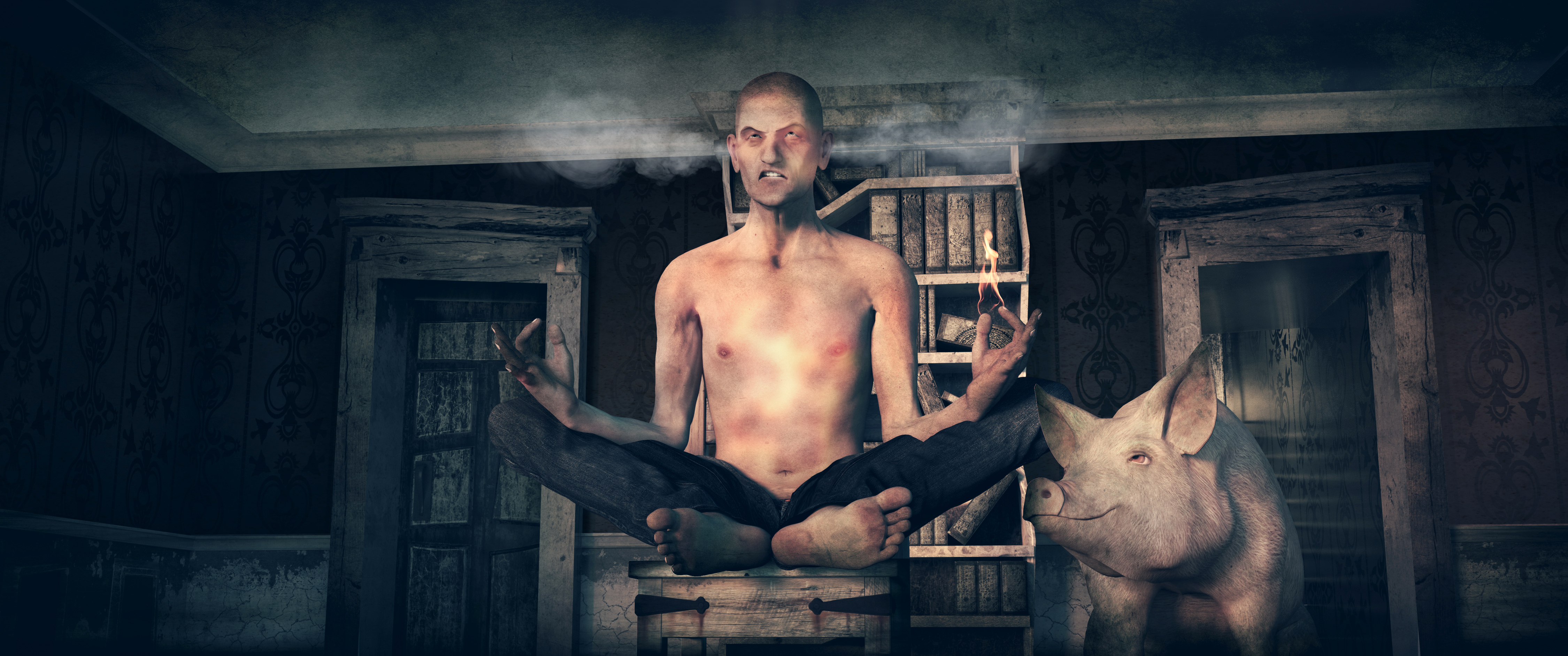
Profane Coaching:101

Profane Coaching:101

by Joseph Riggio · Dec 1, 2018

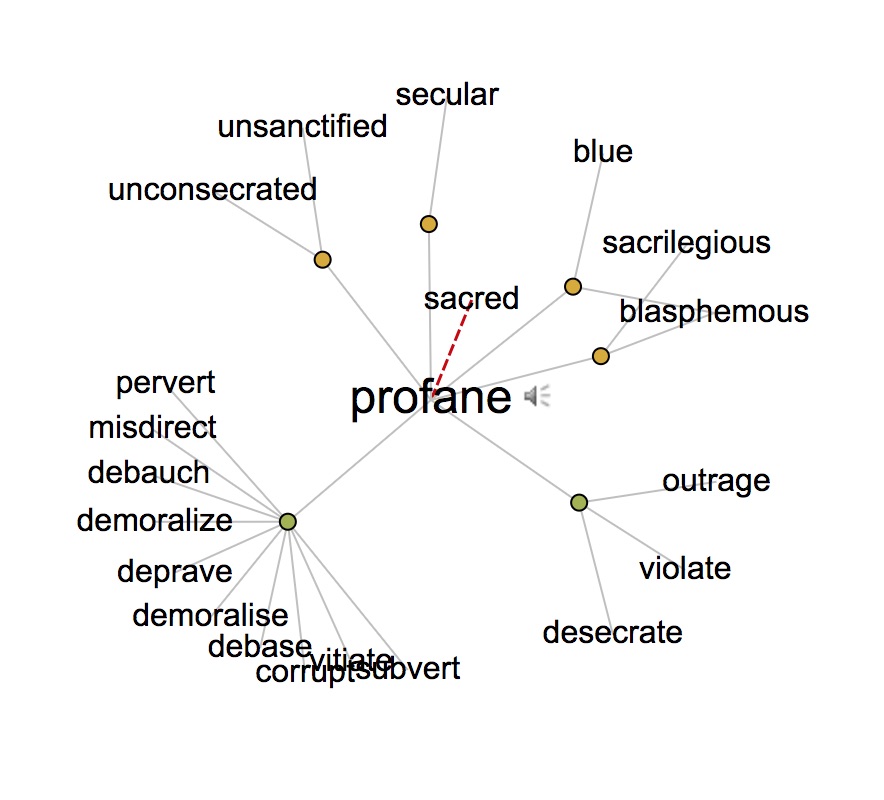
pro·fane – prəˈfān, verb: grossly irreverent toward what is held to be sacred.

Coaching often tries to present itself in one of two ways by many of the major practitioners of the craft …

  1. Socratic – very mild, gentle and nurturing, as the ultimate helping intervention that never interferes with the personal process of the individual being coached by adding anything or offering anything to them that they haven’t presented first themselves.
  2. Serious – very precise, impactful and professional, as a way to awaken and access higher levels of performance and especially interpersonal performance for executives, entrepreneurs, professionals and anyone seeking to lead others in any way.

Okay, let’s agree … those are two ways to consider coaching, and perfectly valid ones at that. Let’s also agree that it wouldn’t be too hard to find training or mentoring as a coach following one of those two paths either.

Now let’s set both of those ways of presenting coaching aside completely and look at the whole thing from another perspective entirely …

For three decades I’ve been developing an approach to working with clients that almost completely disregards the conventional thinking about coaching, and how it’s to be done with clients.

For instance here’s some of what I don’t often do …

  • Let my clients tell me about their problems/issues/challenges, I don’t need or want to know what’s wrong as the place we begin working together
  • Listen to them tell their story for too long, since it’s not the story they want to be living anyway
  • Keep my observations, opinions, and experience to myself, instead I apply all three liberally
  • Ask a lot of useless questions to establish rapport, just to allow my clients to feel they’ve been heard
  • Speak with deference and delicateness to protect my client’s sensitivity, or their shame, guilt or otherwise protected emotions
  • Treat my clients as equals in the coaching process, after all they come to me because I’m an expert not an equal
  • Mollycoddle clients or parse language, because it might offend or upset them to hear the truth
  • Try to remain professional at all times, meaning never showing emotion or revealing myself to them

That’s the short list.

It’s what makes my approach to coaching a bit “profane” so to speak (the other thing is the way I freely and joyfully use “colorful” language that may be more common coming from a stevedore than a coach or consultant – I have family in the stevedore business, so you can believe me, their language is remarkably colorful).

Here’s the bottomline right up front … my approach to coaching is a bit different, it starts out differently, it happens different, and it usually ends different too … with my clients wondering why they hell they came to see me in the first place (not because they didn’t get what they came for, but because they can’t remember what interfered with having it in the first place, or not having its all along).

My approach begins here …

WHADDA YA WANT?

It’s the simplest question in the world and one that ain’t always easy to answer.

It’s also the question you’ll get from any waitress in any NJ diner as she places a cup of strong, hot coffee down in front of you too.

The difference between me and your waitress is that she expects you to know what you want when she asks the question. If you don’t you’ll get an eye roll, and the next thing you’ll hear is, “You want me to give you a little more time honey?” as she walks away not to be seen again for the next thirty minutes (next time you’ll be ready with your order when she puts the coffee down, right?). She’s also more patient and kind than I am too.

I start already knowing that you don’t know what you want … even if you think you do. At least that’s true like 98.725 percent of the time (I just made that number up of course, but it’s probably remarkably accurate).

BUT … I also know that in answering the question, “WHADDA YA WANT?” that you have to access what it is you really want from getting what you think you want (that’s the truly secret sauce in the mix, and why I don’t listen too much to what clients have to say to me when I’m working with them).

Hey, I’m not trying to train you to be a Profane Coach here, I’m just laying out the structure a bit, so if you’re a little confused by that statement it’s okay, maybe someday we’ll meet up and it will make a lot more sense to you then.

What I’m actually paying attention to is how you are when you are answering the question.

How you are is what it’s all about!

What I mean by that is that there’s something we all access when we think about what we want, it’s the way we expect to be when we have it. This way of being is essential as well to what it take to get it, but it’s simply not available in the way of being that’s associated with longing for something that isn’t present.

You can only access what you really want when you aren’t longing to have it and thinking about how it’s missing.

Once again, this is that secret sauce I was mentioning, and to tell you the truth, most people need a little kick in the pants to let go of what holds them back from getting it.

That’s also in part what makes my approach to do the work we’d be aiming at together “profane” in the first place, I take off the kid gloves. We’ll be digging into places that are likely to be uncomfortable, but nonetheless essential to get to so we can get past whatever limits you today from having what you really want.

Let’s just put our cards on the table … what makes more way of working with clients profane is that I’m going to be intentionally provocative about pushing the buttons that normally unsettle the clients I’m working with to get to what’s beneath whatever they find unsettling.

It’s a really fascinating thing to create a context that’s simultaneously both unsettling and safe … another profane idea … that it’s possible to be both intentionally unsettling, provocative and disturbing in a coaching setting, and create a space that’s undeniably safe to explore the themes we’ll be discussing within.

What’s so powerful here is that the “secret sauce” reveals the underlying code that you use to access yourself at your best, when you are beyond being plagued by any limitations that prevent you from achieving what you intend and deeply desire.

The “Profane” Somatic Code

This “code” is somatically organized, held in the way you use your body at the micro-muscular level, literally the way your body prepares to respond before it even does.

Many somatic approaches address the idea that they way you use your body profoundly influences how you think, how you respond and what you do. Most of these somatic approaches look at the more gross movements and postural adjustments that we make and how these are affecting us in other ways beyond the question of the movements themslves.

At the core of the “profane” approach I use is going to movements that are so small that they are almost imperceptible … almost. Truth be told, these micro-muscular movements are in fact imperceptible from the outside, but they can be reverse engineered by the movements that emerge from them.

Once you know how the human body works you can figure out what has to happen for whatever you’re experiencing, or observing, at the level of micro-muscular pre-movements to happen. For arguments sake we could be pointing to individual muscle fiber twitches.

There’s another presumption in approaching coaching profanely, that the semantic structure, i.e.: the structure of meaning we create from what we perceive and the sense-making that arises from it, arise from the somatic ground of how we are within ourselves … literally the way we are in our bodies.

This is a profane concept to all those folks who hold the mental processes above or superior to body-based processes. Yet, within the consideration of the profane approach I’m outlining here what arises first in the body is considered at least equal to, and often superior to, what we become aware in mind … and, always ahead of the language we use to describe it.

This is a really big deal …

By being “profane” with you, you’ll get to what you won’t on your own, because you’d avoid it otherwise … either intentionally or unintentionally … but, with the right kind of provocation, the right kind of push, you’ll go where you normally won’t on your own.

This way of coaching isn’t for everyone … either coaches or clients, but it may be something you’d want to explore as a coach to add into your snatchel of tricks, or as a client to get past whatever it’s been that you keep bumping up against and ordinary “pedestrian” respectful approaches can’t bypass.

I’d love to hear from you with you’re thoughts about being “profane” as someone who works with clients … or, as someone who’d consider working with a “profane” coach.

All the best,

Joseph Riggio, Ph.D.
Architect & Designer of the MythoSelf Process, SomaSemantics and Generative Flow

Filed Under: Blog, Coaching, Transformational Change & Performance, Uncategorized

This Ain’t No Zen!

This Ain’t No Zen!

by Joseph Riggio · Jun 27, 2018

If it ain’t Zen, WTF is the MythoSelf Process then???


Essentially the MythoSelf Process is the “the ability to freely play and take action” it’s about “being childlike and creative in the way you experience, approach and show up in the world” … but, it ain’t Zen, or any other frackin’ thing either … we’ll come back to all this, but first we need to lay some groundwork.


Sometimes folks who come to experience the MythoSelf Process or to learn “how to do it” meaning that they want to become proficient in running the process with others as well as for themselves, assume that the MythoSelf Process is “like” Zen or something.

Here’s the first rule of the MythoSelf Process (NO! The first rule of MythoSelf is NOT: “You do not talk about MythoSelf.”):

The first rule of MythoSelf is: “THIS IS NOT THAT.”

Let’s start there things are themselves, i.e: what they are, no more, no less and not “LIKE” something other than themselves, regardless of what we’re referring or pointing to, things are just themselves … objects, people, places, events, ideas, and yes, the MythoSelf Process is just the MythoSelf Process … it ain’t Zen (or any other bloody thing you can imagine in the distortions of your mind “it’s LIKE” … ‘cause it ain’t!).

Okay, so then what “IS” the MythoSelf Process???

The MythoSelf Process is dynamic, i.e.: it’s a process:

proc·ess

ˈpräˌses,ˈprōˌses

noun

  1. a series of actions or steps taken in order to achieve a particular end.”military operations could jeopardize the peace process”synonyms: procedure, operation, action, activity, exercise, affair, business, job, task, undertaking”investigation is a long process”

The MythoSelf Process “happens” (NOTE: it’s never “DONE” to someone, it “HAPPENS” with someone or a group of people).

The MythoSelf Process reveals what we call the “source code” that a person uses to know themselves to be alive. It uses an “if/then” algorithm, “if THIS, then THAT” … if “this” is present then I am alive.

This is the essence of awakening, becoming aware that you are alive, you are present, this is happening right here, right now … and you are able to remain present to it as it unfolds and is coming into being, moment by moment by moment responding to what “IS” …

”Like THIS …”

We often say, “Like THIS …” as a way of referencing what is present that acknowledges the presence of being alive to the individual experiencing the “this” of their own internal awareness.

Unlike many other approaches to “awakening” the MythoSelf Process bases the way to awakening in the experience of the body, the somatic experience, or how you notice yourself being in your body in this moment right here, right now.

Ultimately with training and experience you become able to track this experience almost unconsciously, but fully competently, making adjustments and compensating to be at your best at all times … or at the very least to know when you are not, and give yourself permission to get back to yourself before you make any major commitments or take any major action. (We usually recommend, “WHEN IN DOUBT, DON’T!”)

Signals in the System

The skill I’m referring to above is a subtle awareness to notice for the way you are in your body, or how your body is responding in the moment to what we call “The Signals in the System” or all the stuff that’s happening right here, right now, including all the stuff that’s happening internally for you … your thoughts, how you feel, where you are tense or relaxed, what urges you’re feeling, all those internal signals are part of the totality of what we call the signals in the system.

What you need to get for now is that the signals in the system we’re mostly concerned with are the ones that mostly go unnoticed, e.g.: what’s not being said, or the breeze that’s blowing as you’re thinking about how to invest the inheritance you just found out about from your great uncle George, or whatever. Signals in the system points to that stuff in the background, that’s there not just imagined or projected magically, but so often is left out of the calculation of what’s going on and how that’s affecting you and how you’re responding to what’s happening.

Okay, that might sound like a lot to keep track of, we know. Here are a couple of things that might help you relax about all the possible signals in the system that you could be noticing for:

  1. You don’t need to do anything about the signals in the system, just let them be for now
  2. You don’t need to even pay any particular attention to the signals in the system, as long as you know they are there even when you are not paying attention to them

What you do want to do about the signals in the system is pay attention to the ones you do notice!

If something stands out from the background to you, regardless of what it may be or how insignificant it may seem, just agree with yourself to notice it … trust us, there’s a reason you noticed it, there’s a reason your system responded to it. Now immediately check how you are in yourself, what are you doing in your body?

The easiest way to learn to check what’s going on within yourself, what you’re doing with your body, is to check for where you are holding any kind of tension. For now try to relax that tension and notice what happens as a result. You’re not trying to make a change in terms of what you notice, other than relaxing wherever you find tension in your body. Then, just notice what you notice. If it’s nothing, let it be. If you find you’ve changed the way your thinking, or what you’re thinking about, or how you’re feeling … or, if a sudden seemingly random thought pops up in mind … pay attention to that and consider what it means to you in terms of adjusting how you’ll respond to whatever is going on as a result of noticing what came up for you.

Eventually, with practice and some discipline, you’ll begin to “notice for” the signals in the system automatically, and the “distance” between the incoming signals as well as you internal signals, and your response will be virtually nonexistent, essentially you’ll begin to respond instantly and highly effectively with regard to moving in the direction of the outcomes you intend.

Taking Action … Playfully

So this brings us full circle.

When you are able to be present to what’s happening in the moment … right here, right now … you’ll find you’re able to respond to things in a way the feels like playing, as well as instantly and effectively, regardless of the context or circumstance.

This is the beginning of freedom, i.e: the freedom to take action.

Most people experience times where they are hesitant, or get caught and freeze, or maybe they wish they had responded differently after the fact.

Yet, when we watch children at play, while they may not like the outcome they seldom if ever go back and think, “I wish I had done that differently.” or get stuck in their play unable to act at all. They simply act out of their innate nature.

This is the idea of what we mean by becoming “childlike” … having access to your innate, natural way of taking action freely.

When you “arrive” at the point where you are both able to track the signals in the system in regard to your intended outcomes and you also have the ability to respond creatively, as though you are at play, you are free in a way very few adults will ever experience.

This is essentially what the MythoSelf Process leads to … “the ability to freely play and take action” it’s about “being childlike and creative in the way you experience, approach and show up in the world.” …

So, when someone asks, “Is the MythoSelf Process like Zen.” I get how they can be confused … but, regardless of where there may be similarities, THIS ISN’T THAT.”

If you are interested in learning more about the MythoSelf Process I’ve got a short video I made here: MythoSelf Professional Training

All the best,

Joseph Riggio, Ph.D.

Architect & Designer of the MythoSelf Process and SomaSemantics

P.S.: If you’re also interested in getting trained in the MythoSelf Process yourself you can also get that information here as well: MythoSelf Professional Training

Filed Under: Blog, Elite Performance, General, Human Systems, Transformational Change & Performance, Uncategorized

Who You Gonna Call? (When Things Go All Pear Shaped)

Who You Gonna Call? (When Things Go All Pear Shaped)

by Joseph Riggio · May 28, 2018


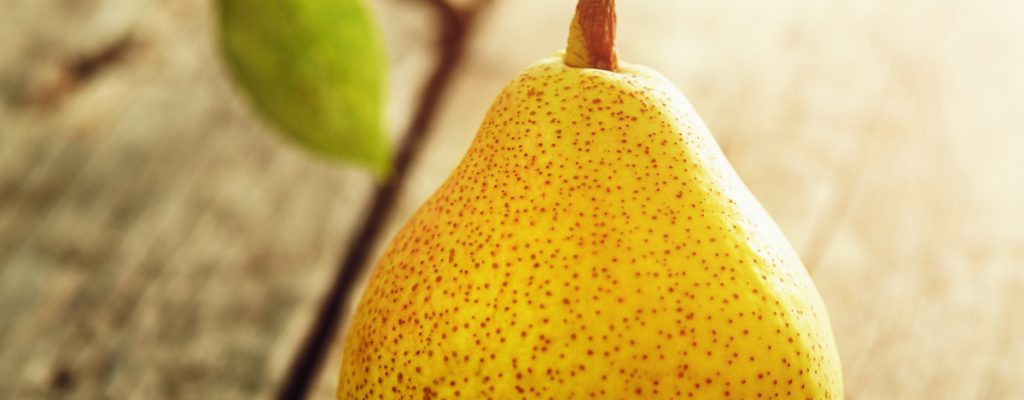
pear shaped

A British expression used to indicate that something has gone horribly wrong with a person’s plans, most commonly in the phrase “It’s all gone pear shaped.”

A term meaning “to go to hell in handbasket” or “when the shit hits the fan.” Reportedly of British or Cockney origin, from the Royal Air Force’s description of circular flight paths gone awry, or “pear-shaped.”

From: Urban Dictionary, http://tiny.cc/2rx2ty


I had an interesting experience over the last 24 hours. I began breaking one of my own rules to live by:

”When you ask an expert for their opinion be prepared to take it, or don’t ask.”

This doesn’t mean blindly follow anyone … ever!!! But, if you’ve vetted the expert, and trust your process for determining they’re an expert, or even that they might be an expert, accept what they are saying has weight.

Now, I’m a big fan of Master Al Ridenhour’s advice he gives me all the time as I’ve been studying Guided Chaos with him, ”It’s okay to use respectful disrespect.” by which he means questioning everything.

But, once you’ve identified an expert listen and absorb what they have to offer, then check if what the expert offers fits what you already know and if it passes the “smell test” – i.e.: it makes sense to you, even if you know nothing just using your common sense or street sense. Then feel free to ask questions, even challenging ones. In other words, don’t compromise your instinct, intuitions or right to an opinion (even if it’s wrong).

So, it’s okay to ask questions, and expect and accept that you might get answers you don’t like, but as Richard Feynman says, “It doesn’t matter how beautiful your theory is, it doesn’t matter how smart you are. If it doesn’t agree with experiment, it’s wrong.”

Now you’re onto experimentation, and I’ll offer you another one of my life rules to live by:

When you’re experimenting to test something always add in “safety first” … remember you don’t know what the hell your doing, and the results you’re about to get are unpredictable.

This is all about HOW to take the expert’s advice, i.e.: treat it like a good hypothesis, not a proven theory … TEST, TEST, TEST!

What your trying to do is test the limits of the advice. You want to find out where the boundaries of their advice are regarding where it fits and will work, and where and how it will fail. The idea that everything has limits and will fail at some point, at sometime, somewhere, under the right conditions must become a presumption you live by if you want to create the highest quality results you are capable of creating. This means you’re always working to remain alert and aware.

Here’s another “rule to live by” that I just made up:

Never let your newly learned expertise, or the expertise you’ve been developing and have counted on for decades, to become so rigid that you assume you always have the right answer THIS TIME.

This is the major flaw of the learned, they count on their patterns of success too much.

The only “cure” for relying on patterns that have worked for you again and again, is to approach them as a child would … with wonder.

Let’s visit with the renowned Dr. Feynman once again for some expert advice: “The first principle is that you must not fool yourself and you are the easiest person to fool.”

A child constantly reinvents their world, and along with it their worldview, allowing what no longer fits to be abandoned in favor of a newer, fresher, more accurate interpretation backed by experimentation and experience … and, they don’t get too committed to that new point of view either, leaving them constantly open and ready to discover what remains unknown.

Here’s what another expert famously had to say about what remains unknown:

“Reports that say that something hasn’t happened are always interesting to me, because as we know, there are known knowns; there are things we know we know. … But there are also unknown unknowns – the ones we don’t know we don’t know.” – Donald Rumsfeld, U.S. Secretary of Defense

This bit is unfortunately as true of experts as for the rest of us.

My focus has been on how to remain open, even when I’m the expert in question. That means at least two constants:

1. I’m constantly refining what I believe I already know, and I have “proven” works to the best of my awareness, to improve the elegance and efficiency of what I’m doing and how I do it

2. I’m constantly questioning if what I believe meets the facts on the ground as I now know them in this moment, therefore I do my best to remain open to what I don’t know, or even never considered in that way before this moment

Then the third piece becomes my ability to remain open enough to update and change when I encounter information or experience that doesn’t fit what I now know, accepting it as fitting in the category of the “unknown, unknowns … the ones we don’t know we don’t know.”

In the middle of the night I found myself having to update what I’d been saying that contradicted an expert I respect (in this case Grandmaster John Perkins, creator of the Guided Chaos system of Adaptive Self-Defense). He was offering some wisdom about self-defense on the street against an attacker who means you real harm. I was kind of stuck on an idea about more controlled and predictable fighting, even at the “street level” of fighting, and he called me out on it.

So, I fell back on my on rule for living about trusting the experts I’ve identified as being expert, and backed out of my own opinion, while simultaneously using the experience to update where my opinion applies versus where it doesn’t. At the same time I used my sense of “respectful disrespect” to place the information that was being presented where it belonged in the larger frame of consideration we were discussing, while not displacing what was already there in place and also valid.

This last bit (which will also be the last bit here as well), “… to place the information that was being presented where it belonged in the larger frame of consideration we were discussing, while not displacing what was already there in place and also valid.” is remarkably difficult to actually accomplish (at least for me … and many of those I’ve directly worked with). To accept the idea that there are things we know that are not exactly as we know them, and simultaneously what we know remains accurate where it applies (but not where it doesn’t), requires the kind of genius that F. Scott Fitzgerald refers to in his quote: “The test of a first-rate intelligence is the ability to hold two opposed ideas in mind at the same time and still retain the ability to function.” – F. Scott Fitzgerald (https://www.brainyquote.com/quotes/fscottfitzgerald100572)

To all the first-rate minds out there 😉

All the best,

Joseph Riggio, Ph.D.
ABTI | Joseph Riggio International

P.S. – If you’re interested in exploring a bit of my expertise, let’s schedule a chat about my upcoming MythoSelf Professional Training in the U.K. this August, and NJ for the three module program that runs beginning in Sept 2018 and continuing in Dec 2018 & April 2019: https://josephriggio.click/mpt-landing.

Filed Under: Uncategorized

Life Is Movement

Life Is Movement

by Joseph Riggio · Apr 20, 2018

  The Magic of Movement

  Do you recognize the magic in movement … or like most people do you take it for granted that humans move?


Think about that comment for a moment.

We typically don’t even notice we have the capacity for or access to movement, despite being in movement virtually in a constant way, 24 hours a day, 7 days a week, 357 days a year, year after year … even when we sleep (except for very brief periods of REM sleep paralysis, and even then breathing and eye movement is happening). The exception to this ignorance of familiarity seems to be when we are in pain or unable to move in the ways we want.

There’s a second factor as well that falls within the scope of the magic of movement … i.e.: how our physical bodily movement is reflected in and by our thoughts, and how in mirror form our thoughts are reflected in and by our movement. There are many sources that document this at a very precise level, for example the work of Dr. Paul Ekman on micro expressions (https://www.paulekman.com/).

What I’d like to share with you is the power of becoming conscious of your movement to improve the quality of your PERFORMANCE and by virtue of that improvement the quality of your LIFE.

Let’s call PERFORMANCE the ability to willfully enact behaviors that create the outcomes you desire, including your cognitive behaviors that determine the way you experience yourself and the world around you as well as others with whom you share it. Then let’s say that the quality of  your life is determined by the quality of the way you perform, where your performance is a function of the following algorithm:

PERCEPTION/SENSATION ➡︎ SENSE-MAKING ➡︎ MEANING-MAKING ➡︎ DECISION-MAKING ➡︎ ACTION!

Where each of these steps in the algorithm have the potential to be willful and intentional, and most significantly aligned with the outcome of how you desire to have the experience of your life, i.e.: who you are being in any given moment.

To improve your performance in the way I suggest is possible above you’d need to attend to it in a way that is beyond how most people will ever will. In particular this means attending to very precise and distinct actions that are part of how you move, in relation to the thought process that is simultaneous to your movement, even and especially your micro-muscular responses.

[NOTE: Here’s a link to an article I wrote in 2000 as an example of what I mean by that: Utilising Soma-Semantic Modeling.]

Soma-Semantic Modeling is a process that we use within Soma-Semantics℠ as a part or the MythoSelf℠ Process model to lead people to uncover how they create their own thoughts and responses, so that they can willfully choose the outcomes they create. The essence of the model is a function of tracking the movements that are simultaneous to the cognitive processing. Within the model movement is considered part and parcel of cognitive processing, i.e.: how and what you think.

It’s really that simple, it’s impossible to separate these two aspects of being human, i.e.: thinking and moving!

Or, we could say that movement is thinking, and that thinking is virtually impossible without movement (even if the movement is outside of the scope or ordinary awareness and perception, i.e.: micro-muscular movement such as changes in breathing or eye accessing).

However, the magic is that we have much more willful and intentional control over our movement in most cases than over our thoughts, or our emotions for that matter (and “Yes, Virginia, emotions are based in movement as well … in fact, inextricably so).

But, let’s leap to a very critical point:

  • “Somatic Education” or “Somatic Intervention/Therapy” mostly, if not entirely, is done to alleviate discomfort, pain or some limitation of physical mobility. What I am pointing to here is NOT that.

Another critical point to consider would be:

  • Most “Embodiment Training” or “Embodiment Facilitation” means attending to being present, or mindful, about what is immediate to the experience that is happening and unfolding. Again, I am NOT pointing to that either.

What I am pointing to is the function of movement:

  • I am point to “Vitality” and “The Felt Sense of Self” … two essential qualities of being human, and the uniqueness of “humanness” in movement (as humans enact and experience it).


The Essential Quality of Human Movement:

Humans move in particular ways that only humans move. I get it, that that seems obvious, yet we so often refer to exquisite human movement in non-human similes and metaphors, e.g.: “he/she moves like a panther,” “strike like a tiger, ” “run like the wind” or “Become flexible and surrender yourself as the willow surrenders itself , bend without breaking.” We use these forms of speech especially when we intend to offer someone a high compliment or dramatize a point about movement.

Human movement is a function of our innate structure, i.e.: how we are built physically, the laws of physics and how they act upon our structure, e.g.: gravity, and our learning about how we use ourselves physically. 

We could drill down and make the list of how human movement functions more specific and detailed, but the simple outline above should be enough to make the point that movement has limitations that are inherent in what it is to be human, as well as in how we have learned what it means to be human and use ourselves well.

The great challenge actually is that not only don’t we typically learn to use ourselves well physically, we are actually taught to use ourselves poorly!

Most people who have been educated in a Western school system, or work in an office type environment have been taught to become very still for long periods of time in positions that weaken and distort the body. Primarily this means sitting for long periods of time, often hunched forward with your head pitched forward over the body, like a bird waiting to peck at something in front of it … the problem for humans is that they are birds or built like them either.

Another great insult to how we move and damage our bodies (and our minds in the process) is through sustained repetitious movement that often happens in factory or assembly type work, where the same movement pattern is repeated over and over, sometimes for hours on end, with minimal breaks in-between. This kind of continuous repetition over time begins to limit the body to perform that movement more efficiently by altering the basic structure, shortening some tendons and ligaments, while lengthening others, and making alternative movement more challenging, difficult or impossible.

Now we could get into the physical ramifications of this poor learning about body awareness and use, like pain and injury, but that’s not what I want to share with you (nor am I an expert in that aspect of movement). Instead, I want to point out again that movement is thinking, and thinking is virtually impossible without movement, especially when you are referring to micro-muscular movement as part of the larger fine and gross motor movement. So all of this poor learning about body awareness and use limits and distorts your thinking and ability to perform as well.

Start at the simplest level. In order to train children to be still from a very young age they are trained to ignore the signals and demands of their body to move, to adjust, to be free of a constantly held position … like sitting. So little by little, and within a very short period of time, say just a year or two, children are trained to sit still and pay attention from a sitting still position, and have shut down their internal awareness of their bodily process. These children are now primarily or exclusively externally aware, and minimally or completely unaware of their internal responses. Like this they have lost their ability to adjust in the ways that are best suited to them unique to perform well.

Even when we observe most physical education classes we see children trained to perform movement organized to some ideal, and not to explore or use their own bodies in ways that are uniquely suited to them as individuals. Then we can take this same idea to physical training or exercise for adults and watch them in yoga classes trying to emulate the “perfect form” of the teacher, or in martial arts classes doing the same, attempting to throw the perfect punch or kick. In organized sports there are also “perfect forms” that are stressed by coaches for the athletes to attempt to achieve, the perfect bat, tennis, golf or cricket swing … the ideal pitch or throw … the best swimming stroke or running gait … all based on some idea of what that means on a universal level and imposed on the individual.

Of course when we see fantastic performers do these things they are beautiful to watch and experience, in part because these individuals have learned to either adapt themselves to the ideal, or more likely found the ideal for themselves that transcends the illusion of a universal ideal. Once you recognize and accept the uniqueness of every body this becomes glaringly obvious … that no universal ideal exists for any particular human body.

So in the course of learning all of this “perfection” you learn to shut down your natural brilliance, how you uniquely and specifically are designed to move and perform and excel. 

This of course carries over as well into how you think about how you think, or “should” think, i.e.: how you use your mind for things other than how you move. When you accept that the teacher or society knows better about how you should use your body than you or nature do, then it’s easy to get you to accept they also know more about how you should use your mind as well.

However, despite all the bad learning, your body remembers …

If you give yourself a change you can return to natural movement, essential human movement, in a way that is uniquely suited to you and your body. However, this normally takes some re-training to learn how to forget what you have come to think is correct movement, and re-discover what natural movement is for you.

When you remember, and realize, what natural movement feels like and the freedom of moving naturally again it liberates you in a way that virtually nothing on earth can … even when that movement is a simple as effortlessly raising your arm or lightly flexing your wrist in the way your body is designed, and not in the corrupted way that you’ve been taught to do it “perfectly” to suit the design and needs of others.


Remembering Yourself

So here the good news … you can re-access at the very least some aspects of your natural movement as long as you can move, regardless of age, injury or poor learning. 

The beginning of remembering yourself starts with a focus on noticing what’s happening right now, even as your reading this … where are you in your body?

If you are sitting how is your weight distributed, are you sitting over your hips with your spine mostly erect and well supported? Or, are you sitting leaning forward or leaning back? Is your head over your spine, resting lightly on your neck and shoulders, free to move in any direction effortlessly? Or, is your head pitched forward, back to one side or the other, feeling tight and difficult to rotate smoothly and with pleasure? Are your shoulders relaxed and slightly dropped from their own weight and the weight of your arms towards the side of your body, rotated ever so slightly back so you feel a natural lengthening in them and your neck? Or, are your shoulders hunched and bunched, holding tension and pressing up against your neck, making movement all but impossible until your relax and release them and your upper back muscles too?

While the specific way you are put together is unique to you and your body in particular, the general structure of the human body is designed to be free of excessive tension at all times, even in hyper-performance mode. In fact the best performers are typically the least tense in terms of the movement they are enacting at any given moment.

If you’re unsure what it looks like to have a natural body in motion, or at rest, find a small child under the age of five and just observe how they are when they are still and relaxed, or in active motion. Some children retain this natural state of being and how they use themselves much longer, even up to the age of ten or twelve. But most children are beginning to show the signs of corruption in the ways they use their bodies by the time they enter school, and within a few years of schooling lose the ability to move naturally almost completely.

So starting with just noticing how you are in your body at random moments during the day, doing typical daily things you can begin to reshape your sense of self. You’ll begin to inhabit your body again in the way you did as a small child. You’ll find along the way that your creatively likely increases exponentially as you do, and your tolerance for insult of any kind … physical, mental, emotional, even spiritual … decreases in an equally exponential way, whether the insult is imposed upon you externally, or by yourself.

When you begin to re-inhabit yourself, and re-discover freedom in movement, you’re on a path to remarkable self liberation that will increase for as long as you choose to continue pursuing this way of being within yourself.

By the way, this way of being is not the way of the monk or yogi striving to become still for hours on end in meditation. This is more like the way of the hunter or warrior alert and intent in relation to the signals in the system, as well as to the subtle signals within themselves. Rather than shutting down or shutting off the urges to move, the hunter or warrior gives into them with precision and willful intention. The hunter or warrior moves stealthily and silently if they need or want to, or they can explode in a fury of motion instantaneously from a perfect still position without hesitation or preparation.

Think about this as mental movement as well, to be alert and intent to the signals around you, and to be able to keep your mind as quiet and still as you like or need, while being able to instantly respond in whatever way best suits you without hesitation or preparation. This way of being resides in how you use yourself at all times. Take back your innate gift of movement and all the rest will follow.

In the MythoSelf Process training we lead with Soma-Semantic modeling, starting with evoking from you how you are at your best, and then teasing out the minute details of how this shows up on you, feeding it back with precision until you can replicate it at will.

Then together we work to refine this way of being, and your access to it … connecting it to the things you do day to day as part and parcel of your daily routine, so it all becomes second nature. When you’ve begun to reform to the essential way you are within yourself, before any corruption was imposed or occurred, we can extend it to the most challenging aspects of life … work, relationships, self-care, care of others, care of the world-at-large … until you move through the world in a primal, resourceful manner that emanates effortless grace and power.

In addition to the original training that covered all of the above ways of accessing yourself, we’ve added new layers to the MythoSelf Professional Training Certification program as well that take this learning to a level, that was not present before. Now we train everyone who joins the program in how to access their slow and fast brains, for slow thinking and fast response, always emphasizing how to perform effortlessly. Then we take this further by exposing the layering of socio-cultural conditioning, making it obvious, and a choice, instead of an imposition to be carried out unconsciously.

Along the way you’ll also begin to notice how all of this is showing up on others around you, how to identify the ways in which they limit themselves, and limit what is possible on their own or with others, including with you. We’ll also begin the process of developing the expertise and skills to intervene masterfully if you so choose, either as a gift or in a professional capacity. This level of training is rare and powerful, and we delight in sharing it after decades of our own immersion and learning.

Like this you’ll find yourself ready for anything at anytime, and knowing in an intuitive way what the best “right action” is for you uniquely despite the challenges, or even chaos, that might arise in your life.

And, think … it all began with a simple noticing how you are at any given moment within the body you already have today.

As always let me know what you think … I love reading and responding to your comments.

All the best,

Joseph Riggio, Ph.D.
Architect & Designer of the MythoSelf Process and SomaSemantics


P.S. – The MythoSelf Professional Training Certification program is and intensive learning experience designed to create a new level of access to yourself at your best at all times, as well as the skills to incorporate the learning professionally as a coach or consultant, or in a sales or leadership role in business.

Folks who want to develop deep expertise and skills at the intersection of body-mind awareness, as well as the ability to use this expertise and skills professionally attend MythoSelf Professional Training Certification programs from around the world. MythoSelf Professional Training Certification training programs are presented and delivered by myself and my team of Master Trainers and trainers in multiple international locations, and are open to anyone with a background in coaching, consulting, training, counseling, sales, leadership, or without any specific previous training or professional experience at all … everyone is welcome and your experience will be unique to you.

There are new programs about to begin in the next few months. If you’d like to know more about how you can participate in a MythoSelf Professional Training Certification program just click this link: YES, PLEASE I WANT TO KNOW MORE!


Filed Under: Uncategorized

L’Chaim …

L’Chaim …

by Joseph Riggio · Mar 22, 2018

“To Life …”


This morning I was inexplicably brought back to a memory of sitting on a small bench overlooking the bridge that crossed the pond at the Blue Dell Farm in Pemberton, NJ during a break, while at an NLP training with Roye Fraser. I’d gone there to study NLP with him, and discovered he was weaving a magical score with something he called “The Generative Imprint” using NLP to deliver and train in this model of transformational change he’d been developing for about a decade at that time.

This was an unusual way to teach NLP, not by a series of exercises to teach either concepts or techniques, like representational systems or swish patterns, but in what he called “wholeform” (something I’d come to appreciate more as I delved into the work of the quantum physicist David Bohm).

We’d all sit in the “Hypnotorium” Roye’s name for the room we worked in with him, that was a converted mechanics garage on the property he owned there in Pemberton. Roye would begin talking about something, then he’d ask us all “What do you want?” and someone would say or do something that would catch his attention and he’d “bring them up” … meaning he’d bring them to the front of the room and begin working with them. Not demonstrating a concept or technique, but using concepts and techniques to create profound transformational change with whomever he’d brought up tot he front.

Then we’d be instructed to “Go do the exercise.” … and, everyone in the room would be like, “What exercise?!!???” (even though the exercise was clearly spelled out on a flip chart with steps to take to do whatever it was that we’d be working on at that moment) … because, we’d just seen a seamless flow of concept and technique customized to the exacting needs of an individual that no one there at the time could hope to replicate. So we’d walk off, spellbound, to do our best to “Do the exercise.”

It was in the Hypnotorium with Roye that the phrase, “L’Chaim” uttered in a deep, resonant, voice with a ting of a South African accent, usually proceeded or followed by a deep, roaring burst of laughter, became etched in my mind.

“L’Chaim!” … TO LIFE!

The work Roye did was about “LIFE!” … discovering the wonder and joy of being alive … fully, completely and with abandon.

I took this on in my years of apprenticing with Roye, dedicating myself to helping others find for themselves “the wonder and joy of being alive … fully, completely and with abandon.”

“L’Chaim!”

Many times since those early years I myself uttered that phrase after completing a piece of work with someone … often to Jewish clients I’ve had who I hoped would recognize my toasting their new awakening to themselves, sometimes to gentiles like myself who I hoped would recognize the intention if not the literary meaning of the phrase.

A way I’ll often end a piece of work, or a training session, or even many of my posts is with the bastardized Italian-American, “Buona Fortuna and Abundanza!” … which I state as a prayer and a blessing, i.e.: “May you have good fortune and abundance in your life.” (there is no word “abundanza” in Italian, the Italian word is “abbondanza” meaning “plenty”).

Another phrase I picked up from Roye was his colorful way of sending folks off, “Go forth and fructify.” … said with a glint in his eye and a conspiratorial tone to his voice.

fruc·ti·fy

ˈfrəktəˌfī/

verbformal

verb: fructify; 3rd person present: fructifies; past tense: fructified; past participle: fructified; gerund or present participle: fructifying

1. make (something) fruitful or productive.

◦ bear fruit or become productive.

Origin:

Middle English: from Old French fructifier, from Latin fructificare, from fructus ‘fruit.’

You may think, “Ahhh, this Roye fellow was a very playful sort!” … and you my friend would be correct. But, you’d be missing the deadly serious side of him. He was playful only in respect to achieving the outcome, i.e.: to lead his clients to living their lives … fully, completely and with abandon.

More than anything that’s what I got from my years with Roye, first to, “ live my life fully, completely and with abandon” and then to commit to this as the first principal of the work I learned with him as I share it with others.

After some years I began to bring my own approach to this work to life, the MythoSelf Process. This model was born from drawing on some distinctions that came from my own personal history and the study of other intellectual and transformational giants … folks like the renowned mythologist Joseph Campbell, and the masterful somatic practitioner Moshe Feldenkrais, and seeing how our life stories are carried within us in word and deed.

I began to develop a unique way of working with folks using both transformational stories and subtle somatic interventions to shift the fundamental position of perception and decision making of the clients I work with today. This way of approaching transformational change that leads to breakthrough performance emerged from that early work I began learning with Roye in the Hypnotorium.

Roye taught me to attend to gross and subtle “idiosyncratic movement” aligned with “ideomatic phrases” … individualized ways people express something that is not easily captured in language and is highly unique to them personally. From this early training I began to notice something more about what I today refer to as “micro-muscular response” and “dynamic patterns of movement” … the basis of the Soma-Semantics model I’ve been developing and refining for the past thirty years.

In my observations with clients over tens of thousands of hours of doing work with them in training rooms, groups and one-to-one private work, I’ve noticed how deep values that guide perception, decision making and behavioral responses are reflected in the way the body configuration adjusts to reflect the mind of the individuals I’m working with irrefutably and absolutely.

As a person accesses these values, that are the basis of their personal identity, i.e.: what’s most meaningful to them before any conscious awareness or processing take place, they automatically and irrevocably make somatic adjustments that are the physical manifestations of what they are accessing.

The resulting somatic pattern generates a state change, or a way of being, that is consistent with the values and identity position they have been accessing.

This is a physical declaration of themselves, like a bold pronouncement, “I AM THIS!” … or at a more fundamental level of awareness that is barely conscious for them most of the time, “I AM!”

This then becomes the basis, or the ground, from which all the work that proceeds is built upon.

From this most fundamental, unspoken declaration of “I AM!” we work to extract the narrative form in story and in idiom, often expressed in paradoxical form, e.g.: “supple steel” … “calm intensity” … this is the semantic expression of the Soma-Semantic pair.

When these are firmly inhabited they individual who possesses them has the basis for accessing how they know themselves to be alive in the most fundamental and primal way possible (NOTE: to get here takes a bit of expertise and tradecraft).

This has now become the starting point … beginning the journey that follows, remaining always grounded in and tethered to the fundamental distinction of being alive …
fully, completely and with abandon …
—
“L’Chaim!”
.

It’s not always so easy for clients who haven’t yet experienced the wholeform way of learning that is the basis for the MythoSelf Process and the Soma-Semantics model to see the value of investing in getting to this fundamental position from which to live their life.

Far too often folks are consumed with the urgency of the immediate …

– resolving some crisis that has arisen

– paying the bills

– sending the children off to school

– getting the next promotion, contract or client

– growing their business or practice

– caring for an elderly parent

– insuring their own future or legacy …

whatever is staring them in the face in the moment.

Yet, doing all these things, even extraordinarily well, will not bring you peace or peace of mind. These things will not satisfy the deep existential and ontological longings you have to know and live your purpose, and to fully manifest and express all you are capable of being.

And, despite the deep, compelling call of the adventure Jospeh Campbell speaks of in the Hero’s Journey … i.e.: to become fully human and realize yourself in all your magnificent splendor … most folks will pursue the urgent and trivial at the cost of the significant and substantial.

But, I persist because I have seen the difference that establishing the fundamental awareness and access to this way of being makes in every other moment of one’s life.

Instead of trying to “get somewhere” the basis of the work I do with clients is to have them stop where they are and experience themselves in this moment … fully, completely and with abandon.

This is difficult, I know.

To simply slow down enough to face yourself and come to the complex realization of where you are, how you and who you are in this moment … before rushing off to the next thing, or just proceeding to get on with your life.

However, all the accomplishments, achievements and accumulation of wealth and material success in your life will never satisfy you if you are missing this fundamental grounding in being fully , completely and with abandon present to yourself and your life as it is … right here, right now.

Then you can make the essential and substantive decisions you need to that will both satisfy your existential and ontological longings, giving your life meaning, purpose and direction … and, also ”get on with it”, knowing that where you are aiming yourself is a destination worth arriving at in the end.

Not having this one distinction in place keeps virtually everyone stuck without the hesitation, concern, worry, anxiety or fear that stops them from being able to “get on with it” … and create the life they desire and dream of for themselves, and those they care about and love.

Even when all the other pieces are seemingly in place, ignoring this crucial foundation for everything else will leave you at the top of having climbed the wrong ladder, and possibly with no way of getting back down to start over or the time left to do it if you could.

In fact, the greatest challenge is having enough success to dig in and fortify the position you’ve established, even when you sense that the peak you’re standing on isn’t one that serves you or those you truly care about and love.

Here’s the good news …

I’ve worked with enough folks, from 5 – 95, to know that remembering the deep call to life … your source code to living fully, completely and with abandon … is available to you regardless of where you find yourself standing today.

You may have to give up some of what you have, to get what you truly and deeply want, but the reward is worth the sacrifice every time.

The realization of yourself, and the potency of action that comes with that release, will allow you to build the significance and substance you desire in your life, both on your own and with others.

If you are ready there is a way …

“L’Chaim!” … it’s still ringing in my ears after all this time.

With grace and humility,

Joseph Riggio, Ph.D.
Architect & Designer of the MythoSelf Process and SomaSemantics

(On a snowy morning from) Parsippany, NJ

P.S.: If you’re interested in exploring experience Foolish Wisdom with me live in Lambertville, NJ, 2-days Live, Saturday & Sunday, 31 March/1 April (or join me for just one day on Saturday, 31 March).

Find out more: Foolish Wisdom
Let me know what you think otherwise in the comments below or by sending me a private message …

BUONA FORTUNA AND ABUNDAZA!

Filed Under: Blog, General, Human Systems, Life, Mentoring, Story, Transformational Change & Performance, Uncategorized

Thinking Small

Thinking Small

by Joseph Riggio · Mar 16, 2018

“I bury the bone so deep that the dogs have to scratch for it.”*

I admit it, I’ve always had a hard time thinking small. Some folks are great at it though. They use small words and a just a few of them to express magnificent and expansive ideas. Not me.

I tend to be wordy. My sentences run on … and, sometimes on. And, if there’s not a big word to express what I’m thinking and trying to say, I just make one up on the fly. I’m like that. I think that “free speech” means what it says, and I should be free to speak even that which hasn’t existed before I spake it.

In fact that’s the heart of the matter. As fish swim in water, we, i.e.: humans, homo sapiens sapiens, swim in language. Words. And, more words. Life is filled with wordiness for humans.

All that so far is okay. It’s okay to think small. It’s okay to be wordy. It’s okay that humans swim in language.

It’s the “belief” thing that gets us every time though. The idea that the words we read, and the words we hear, and the words we write, and the words we speak are “true” … or, represent what’s “real” … when in fact words are words and nothing more.

The words aren’t the thing they point to at all. The word “love” isn’t “love” any more than it’s a fish. But, that doesn’t mean that words aren’t powerful, they are indeed. Words bring worlds into being.

G. Spencer Brown, in his book, ”Laws of Form” speaks of universes coming into being when “… a space is severed or taken apart.”

The theme of this book is that a universe comes into being when a space is severed or taken apart. The skin of a living organism cuts off an outside from an inside. So does the circumference of a circle in a plane. By tracing the way we represent such a severance, we can begin to reconstruct, with an accuracy and coverage that appear almost uncanny, the basic forms underlying linguistic, mathematical, physical, and biological science, and can begin to see how the familiar laws of our own experience follow inexorably from the original act of severance. The act is itself already remembered, even if unconsciously, as our first attempt to distinguish different things in a world where, in the first place, the boundaries can be drawn anywhere we please. (page v)

Now, imagine if you will, that language severs the wholeform of reality by imagining it’s “parts” as independent and distinguishable by virtue of the idea that they can be labeled, i.e.: named, bringing into being a new universe each time a new word, specifically a noun, is uttered or written, contained within the universe that remains unnamed and residing next to all the universes that have been named, including all those things named, and labeled by the names given them, which don’t exist.

Which brings us to the point of my rambling.

For many years I’ve striven to present what I do as simply and naively as possible. Alas, as I’ve said though, I am not a man of small thinking, or for that matter small words.

I believe my fault lies in thinking in wholeform, i.e.: I have trouble perceiving the boundaries that sever spaces into separate universes. This leads to expansiveness in all ways, including the wordiness of which I am at fault. For what it’s worth I think the British polymath I’ve quoted above, G. Spencer Brown got this idea stuck in his head (or at least his writing) too, despite his writing about the opposite.

”In this sense, in respect to its own information, the universe must expand to escape the telescopes through which we, who are it, are trying to capture it, which is us.” – G. Spencer Brown, Laws of Form

Stay just a little bit longer

(Musical Interlude)

Oh, won’t you stay just a little bit longer

Please, please, please, say you will

Say you will

(Jackson Browne – “The Load Out – Stay” from the album Running on Empty)

Okay, back to the main point or as Professor Rodríguez from my first doctoral program was found of saying, “Keep the main thing, the main thing!”

As simply put as I can put it, what I do is lead people back to a wholeform consideration of the universe to help them get their heads right.

Literally for years I’ve been trying to simplify what I do, in terms of form, i.e.: how I do what I do … or the pragmatics of it. This led me down many paths and alleys.

As a result of this journeying I’ve developed many programs, and mini-programs, and models, and techniques … all in the service of this one thing, looking for the holy grail of transformational change, the philosopher’s stone or alchemist’s prima materia of the Change Artist.

(AUTHOR’S NOTE: For what it’s worth I think I may have stumbled upon it, but as Lao-Tau says in the Tao Te Ching,

Tao (The Way) that can be spoken of is not the Constant Tao’ The name that can be named is not a Constant Name.

Nameless, is the origin of Heaven and Earth;

The named is the Mother of all things.

Thus, the constant void enables one to observe the true essence. The constant being enables one to see the outward manifestations.

These two come paired from the same origin. But when the essence is manifested, It has a different name.

This same origin is called “The Profound Mystery.”

As profound the mystery as It can be, It is the Gate to the essence of all life.

http://www.with.org/tao_te_ching_en.pdf)

However, as a result, I’ve become as the ouroboros, swallowing whole the circle of infinity, and realizing in the process neither an end or a beginning. And, so I come back to the start of all things.

The beginning and the end are the wholeform, from which all separate universes are cleaved, but despite the severing remain whole nonetheless.

This was always the essence of the MythoSelf Process model and work.

BUT … to do this, as the sacred work I perceive it to be, i.e. leading a person back to themselves uncorrupted and complete, requires losing all other intentions or distortions along the way.

There can be no intention beyond arriving at the wholeform, having removed all the distinctions that create separate universes, and in turn separating ourselves from ourself.

So, “mea culpa, mea culpa, mea máxima culpa” I got both distracted and became disingenuous about the nature of the work at hand.

The MythoSelf Process work was never “about” something other than itself, i.e.: encountering the wholeform that is the *all and everything.

So my apologies for any suggesting otherwise. In other words that I may have misled you to think this was “about” something, e.g.: being happy, or getting wealthy, or having great relationships, or any other damn thing beyond the main thing, which of course is everything.

But, for whatever it’s worth, I’m back at the core of the work, but with a vengeance, having spent far to much time searching in vain for what it was not.

I guess I said it long ago, but had not the ears to hear myself …

“This is NOT that!”

With a few folks who have stuck around and become trainers and master trainers of the work, as well as some folks who are otherwise masterful in their own ways within the scope of the work, I will be offering both “MythoSelf Experience” 3-day programs and a full year-long MythoSelf Professional Training presented over three four-day modules in a few places in the upcoming months.

If you’d like to get on my list about these opportunities either drop me a note in the comments below, send me an email at joseph-AT-josephriggio.com, or PM me on Facebook (https://www.facebook.com/josephriggio) if you prefer.

I’d love to read your comments about where you are with my unfortunate wordiness below …

Best,

Joseph Riggio, Ph.D.
Architect & Designer of the MythoSelf Process and SomaSemantics

P.S. – In the meantime if you’d like to experience the MythoSelf work with me directly in a small group setting I’m offering a “Foolish Wisdom” workshop this month in Lambertville, NJ, you can find the information here:

Foolish Wisdom in Lambertville, NJ – MARCH 2018


Filed Under: Blog, Coaching, General, Life, Mentoring, Mythology, Transformational Change & Performance, Uncategorized, Upcoming Events, Workshops

« Previous Page
Next Page »

© 2025 ABTI | Joseph Riggio International · Rainmaker Platform

Privacy Policy

  • Services
  • Log In