

This website or its third-party tools use cookies which are necessary to its functioning and required to improve your experience. By clicking the consent button, you agree to allow the site to use, collect and/or store cookies.
Please click the consent button to view this website.
I accept
Deny cookies Go Back
  • Skip to primary navigation
  • Skip to main content

ABTI | Joseph Riggio International

  • Home
  • Meet Joseph
    • To Sicily And Back … A Love Story
    • JSR Short Bio & CV
    • Abbreviated CV Timeline
  • BLOG :: “Blognostra”
  • Contact
You are here: Home / Archives for Transformational Communication

Transformational Communication

Time Sliding … Into A Future Perfect

Time Sliding … Into A Future Perfect

by Joseph Riggio · Jul 8, 2023

ADUMBRATION: Knowing where you’ve been before you get there …

Future Perfect Tense

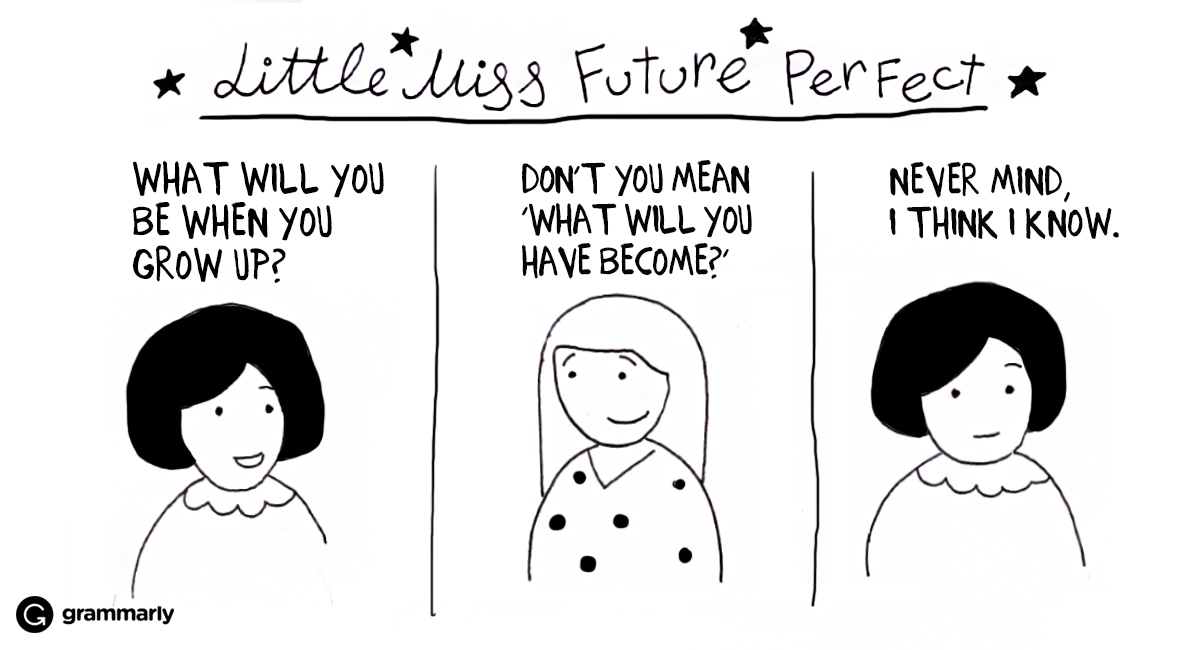
The future perfect is a verb tense used for actions that will be completed before some other point in the future.

The parade will have ended by the time Chester gets out of bed. At eight o’clock I will have left.

https://www.grammarly.com/blog/future-perfect/

Future Perfect Continuous Tense

The future perfect continuous, also sometimes called the future perfect progressive, is a verb tense that describes actions that will continue up until a point in the future. The future perfect continuous consists of will + have + been + the verb’s present participle (verb root + -ing).

https://www.grammarly.com/blog/future-perfect-continuous-tense/

Everyone I’ve ever worked with wants an edge …

When you’re seeking extreme or elite performance you need to maximize both what you put your attention on doing, and how you do it. This means that you need to know a few key things:

  • The Outcome – specifically what you are attempting to achieve or accomplish
  • Milestones – the steps to getting what you want that must happen in parallel or sequence
  • Metrics – precisely what to measure that will let you know that you’re getting what you want
  • Exit Criteria – knowing what achieving or accomplishing the outcome will be like so you know you’ve arrived

Getting “The Edge” all elite performers possess depends on your ability to imagine a future that hasn’t happened yet but will happen as you imagine it happening.
Exquisite Performance Happens In The Body First … And Then Follows In Time

There are two keys to imagining a future happening exactly as you intend it and then making it so …

  • The ability to language your future imagination and projections about the future as memories of what has already happened.
  • The ability to know within yourself as an embodied, body-based, feeling what it will be like for you when it has happened.

I’d also argue that the key to exemplary, elite leadership requires both of these keys to have been ingested, digested, and assimilated by you are automatic ways of being about your personal and professional intentions.

Most people who have seen great performances the achievements and accomplishments that result assume they are watching the performance where the result has been achieved or accomplished.

The performances that create the achievements or accomplishments that happen in real-time have already happened long before others witness what only happening for them in real-time.

The outcome that the performers realize in real-time in front of witnesses first happened for them when they had the embodied experience of it for themselves, and the many, many times they re-experienced it along the way to achieving or accomplishing it in real-time in the way others perceive it.

This is obvious in looking at any masterful athletic event or at any performance by great entertainers who spend weeks or months practicing for that specific event, and years developing the mastery to achieve and accomplish the outcome … e.g.: winning a gold medal, getting a Grammy or Oscar, or any other achievement or accomplishment of the same caliber … being awarded a Nobel Prize.

If this is the kind of elite performance and outcomes you aspire to you must become a master of creating futures before they exist, and that means mastering the two keys to creating futures that happen as you imagine and intend them …

It All Starts Here: Temporal Shifting (The Precursor to Time-Sliding)

“Once you’ve read this you will become what you are not yet but soon will be!“

In my training programs for my clients, including my executive and entrepreneurial clients, organizational and team leaders, and especially when I’m training other professional change artists … consultants, coaches, trainers, therapists, hypnotists, etc. … I refer to this kind of sentence as using hypnotic protocol.

When you use hypnotic language structures you force a specific cognitive process intentionally, it’s almost as though the structure of your language becomes a cognitive instruction itself.

When you read or hear, “Once you’ve read this you will become what you are not yet but soon will be!” in order to make sense of it you must move through time and construct a future-based temporal position to unfold the meaning contained within it.

Let’s dissect this sentence from beginning to end so we can see the loops created within it …

“Once you’ve read this …” assumes this will happen in the near future as most people will deconstruct the language … again, like an instruction, or almost a command.

Then we find the embedded phrase, “… you will become …” this is clearly an instruction or embedded command that remains undefined, i.e.: become what?

What follows is an ambiguous reference that can only be deciphered by the reader or listener who experiences it in reference to themselves … “… what you are not yet …” this presupposes both that there is something they are not yet, as well as in implied assumption about something they want to or would like to become that they need to fill in and complete in order to make sense of it.

This particular phrase, “… what you are not yet …” tends to shift things for most people because they move to a completely constructed reference that is this purely future based, or possibly exists outside of time in terms of any linear sequencing. It begins to set up a movement to a past reference about the future having already happened … just not yet.

When the temporal shift happens, from present to future, and then to past, for most folks there’s a vestibular shift as well meaning their sense of relative balance shifts because it feels like there’s a somatic movement of their center from one point to another. This is a very powerful thing to be able to do … with others or for yourself!

The end of the sentence “… but soon will be.” does double duty, it forces them to occupy the space where what has not happened yet has happened and shifts the experience to being experienced as a memory, something I refer to as creating a Future Memory … a thing that has happened, just not yet.

This is because in part the word “but” serves to negate what has just preceded it, i.e.: “… but soon will be.” is preceded by and immediately follows, at you are not yet …” When you negate “… what you are not yet …” the assumption is that you actually are already that which you are not yet.

The idea that you are already that which you are not yet creates confusion in the present that can only be resolved by moving to a future-based position where what has not yet happened in the present already has happened, or the creation of a Future Memory.

Creating a Future Memory is a critical step in establishing the mindset required to take action in the present that exceeds expectations built on either past performance or present evidence … this is the secret sauce of elite leadership … i.e.: both self-leadership and the leadership of others.

The temporal shifts that happen when you structure language in this way happen both mentally and physically … semantically and somatically. I build the entire SomaSemantics model around this way of using language to create transformational change.

Using the SomaSemantics model to create transformational change happens in communication as transmission (the sentence above and it’s breakdown forms an example of transmission), as well as in reception (the noticing of how someone is responding to communication interactions both semantically – the meaning they derive from the communication … and somatically – the shifts in their body responses as they experience the communication, e.g.: proprioceptive/postural changes … movement, gestures, expressions … literally any observable somatic adjustments including micro-muscular adjustments, physiological changes – breathing rate, blood flow changes indicated by skin color changes … eye dilation, focal positioning and blink rate …

It’s all patterns …
(everything that can be noticed counts)

The Art of Adumbration

What I’m pointing to and depending upon rests on the presumption that humans prefer patterns of familiarity, and when they encounter something that is uncertain or unknown they do whatever it takes to make the adjustments necessary in their perception and experience to re-find and re-set themselves on familiar ground.

Getting this idea about the human tendency to find and create patterns of familiarity is central to getting the power of adumbration and adumbrating …

We (humans) experience time as a pattern. Some time patterns are familiar … the movement of the sun throughout the day, the cycles of the seasons. When these patterns are disturbed in some way … a full solar eclipse or a particularly unseasonably hot or cold spell when we expect weather that’s more familiar to us … we feel off-center about what’s happening and desire a return to the pattern more familiar to us.

The key components of these experiences are the physical, somatic adjustments we make as we are going through the mental, semantic impressions they create in us. To make sense of what’s happening and find ourselves able to return to our center requires we create a vestibular adjustment in how we feel. Literally for most people, especially untrained individuals, unfamiliarity and uncertainty create a sense of being off balance that is vestibularly experienced as an actual body feeling.

When we are vestibularly uncertain we feel a certain compulsion to make proprioceptive adjustments to get to where we need to be to re-set our centers to a position of balance. An extreme example of this might be the vertigo some people feel when they experience something so unfamiliar or unexpected that they cannot find anywhere to place it in the framework of their thinking.

The shifts that happen when we are confronted by something that we have no framework to make any sense of create a simultaneous mental and physical instability that seems outside of or beyond reality as we know it. In these moments the most important and urgent thing will be to find the way to make sense of the experience, and place it into a familiar enough sense of what’s happened, happening, or will happen that their sense of reality becomes stable for them again.

When observing and working with extremely well-trained, elite performers like … special-ops U.S. Navy SEALs, U.S. Army Delta Force commandos, or U.S. Marine Force Recon teams, U.S. Navy “Top Gun” type fighter pilots, S.W.A.T. teams, Hotshot and Smokejumper wildland firefighters, extraordinary surgeons, world-class litigators, professional boxers, and championship martial artists … they all have the unique ability to deal with the flow of what’s happening in real-time despite the expectation of how things were supposed to have happened or should have unfolded for them. Then understand and accept the reality of uncertainty and chaos, and are able to adjust and respond in relation to the outcome they most desire despite the seeming evidence inhibiting their progress moving forward to achieve or accomplish it.

Superior leaders in business also understand and accept the reality of uncertainty and chaos, and they use it to their advantage. In most leadership positions there is a competitive field in which the strategies and plans they make, and the actions they take, happen. This looks and feels very much like the kind of performance we see when we examine the thinking and actions of other elite performers in other domains of excellence.

The ability to succeed in a competitive environment, where others are trying to gain the competitive edge, demands an exquisite precognitive ability to predict where the system is going as things are unfolding in real-time, and to act in relation to the intended future that hasn’t happened yet, but will if the right actions are taken now.

Using this knowledge of how we process our experience relative to our pre-existing frameworks and patterns of understanding can be remarkably useful. We can establish patterns of familiarity or unfamiliarity that lead to a natural presumption of where what we’re experiencing is likely to lead next, and our drive to continue or create a sense of stability will take over allowing us to fill in the blank spots in our understanding. It’s critical to realize that our drive for stability can and will override our ability to perceive reality with an explanation that fits our previous and current understanding and the framework that supports that understanding.

When our sense of familiarity with the unfolding pattern that we are experiencing becomes disrupted a vacuum that needs to be filled by us to return to the stability of understanding we demand opens and the most immediate explanation offered will be accepted and used to fill it.

The sense of the vacuum in reality that we experience in moments of uncertainty and chaos can only be resolved in a way that serves us best by either having elite preparation and the knowledge, skills and experience in dealing with uncertainty and chaos as it’s happening, or preparing ourselves to organize and align to a certain future outcome despite out current unfolding experience and the evidence it presents to us … or ideally both!

The vacuum that’s created in these situations provides us with a hypnotic opening that we can insert a suggestion into that will be likely to be accepted and used to make sense of what happened, is happening, and will happen.

Therefore, the ability to notice these patterns of familiarity and aberration to the familiar, especially regarding the ability to predict where the system is headed as they are unfolding is the art of adumbration.

No other skill creates as much advantage or gives you as much of an edge in responding to create the outcomes you desire than the ability to adumbrate the situation you are experiencing, and maybe no more significantly than in human interaction and communication.

Adumbration as Somatic Awareness
You ability to adumbrate begins with your sensitivity to your own somatic experience.

Begin able to notice the first and smallest sense of physical response in your body gives you what you need to open your awareness of adumbrating the situation.

Your body will respond to signals in the system, especially to subtle changes and shifts to the familiar, faster than your conscious awareness of those signals.

The ability to keep your awareness of these somatic adjustments gives you the adumbrative edge you need to stay ahead of where the system is going before it gets there …

Literally, the ability to track your own subtle somatic shifts as they are happening is the holy grail and rosetta stone to adumbrating and making the changes that allow you to position yourself where you need to be to get the outcomes you intend so that your experience is that you’re in the future waiting for the past to arrive to where you positioned to receive it and experience it in the way you derive the most value from in being in that particular position.

Preframing your experience to benefit you begins with using the structure of hypnotic language and protocol with yourself.

One group of folks that must do this professionally to succeed are traders in any of the markets … commodities, equity, currencies, etc. These folks are invested in reading patterns of activity that are suggestive of where the market will go, and take a position now that anticipates it arriving to where they predict it to be at some given point in the future. Active traders also make more specific presumptions about when the market will get there and time their trades to take advantage of the patterns of activity they are tracking.

When you speak with many of the most successful traders you’ll find they speak of a feeling they get about a trade. They track real information that arises in congregate and total for them as a feeling, and they may or may not then validate their feelings by backtracking and future projections based on the feeling they get using the information available to them.

There are also many very successful traders who will say that they cannot fully explain why they knew to make a particular trade but they felt it. Digging deeper you find in speaking to these successful traders that over their years of developing their skill and expertise they taught themselves and learned which signals to pay attention to, and what specific physical feelings meant about taking a trade or not.

In working with elite, successful business professionals, such as the executives in multinational companies and break-through entrepreneurs that have been my clients, I’ve found the best of the best do the same thing relative to the decisions they make as the most successful traders. They track real information that arises as a feeling for them about what to be doing and how to do it, based on a future projection that may or may not have a basis in previous results they can point to or use from the results produced in the past.

The ability to trust their “unreasonable” expectations about the decisions they make about the direction to take moving forward regarding taking massive “unreasonable” action and gambling on a potential opportunity, or pulling back from what seems an obvious win, when others in their space are tracking along with the obvious and familiar unaware of the future looming before them, separates what I refer to as elite, successful business professionals and the average executive or entrepreneur.

Often the way they speak to themselves, literally in terms of their internal dialogue about what they are noticing and deciding about, builds the confidence to set “unreasonable” expectations and to take the “unreasonable” action. When they express their thoughts externally you can hear how they construct their internal dialogue … e.g.: “When we have crossed the billion dollar revenue mark we will have already established a position on the market that will be far ahead of our competitors or their ability to catch up with where we now are relative to them.”

This kind of language is framed in what grammaticians call, Future Perfect language.

Future Perfect languaging is the essence of time sliding, adumbrative thinking and the ability to stand in a future that hasn’t happened yet, but will.

Time Sliding And Noticing The Somatic Signals

When I’m training folks to develop the elusive nature of profound adumbration and the skills of effectively predicting the most likely futures that align most closely with their intention I begin with the body.

Even when it may seem that I am doing language training, as when I’m teaching time-sliding language patterns, I am pointing to and emphasizing what happens somatically.

The ability to notice the vestibular and proprioceptive shifts associated with choosing an unknown future position to build your present operating consideration on forms the deep, cutting edge you need to go where you need to be to receive the future you are creating and intend to reap.

The kinds of futures I’m referring to are those realized by super-successful traders and the elite, successful business professionals I’ve referenced already. These are folks like Steves Jobs stepping into a future expectation and building technology that makes no real sense in the moment it emerged under his direction … the original iPod formed the basis, understanding, and desire for the iPhone that has been the company’s biggest success long before the iPhone existed or made any sense in the market as it was when he was making the investment to make it happen. I’d vehemently argue that Jobs was standing in the space of the success of the iPhone when he made the decision to invest in the first prototype of the original iPod.

Jobs repeated that success with his vision for the iPad, and we can point to any number of break-through entrepreneurs and thought-leaders in tech that followed the same patterns of massive investments in a future that didn’t exist when they made their decisions to make the investments they did. We see this in other spaces as well when we look to the history of inventions that shouldn’t have happened or couldn’t be done … the Wright Brothers ridiculous attempts (and failures) at creating a heavier than air flying machine (while everyone else was betting on zeppelins and balloons!).

First there’s a feeling of possibility, then a translation into future perfect internalized hypnotic language, then the internalized language is projected externally as time-sliding language expressed in future perfect continuous form, and finally we see the realized outcome of this process … long after the person who had the initial feeling felt it.

The key to getting here before you do begins with developing the ability to notice and trust the feelings you have about the future that are present in the current patterns as they are unfolding in real-time. When you can reliably notice the feelings about what’s about to happen but hasn’t yet in a meaningful way you can then practice translating them into time-sliding language.

The ability to use time-sliding language that references somatic experience, and creates it for those who read and/or hear it as well, generates the responses that make the intended future possible and bring it to full realization.

You must begin with tuning your awareness about the subtle, indistinct feelings you have about what’s unfolding to be able to recognize the patterns they suggest about what could and will be unfolding that is present in what’s enfolded and hasn’t yet become present.

It’s also imperative that you build confidence in your ability to notice and recognize these subtle signals to take even “unreasonable” action based on them that results in your system coming to rest …

Your system “comes to rest” when the embodied physical experience and cognitive mental experience are completely aligned and integrated into a singular common expectation about the future, a future expectation that flows naturally from the singularity you contain within … from this position it becomes virtually inevitable that what you intend indeed comes to pass, building a recursive reinforcing loop of confidence that radiates from you in everything you do, such that others experience it building trust and confidence in your ability to lead them as well.*

This is all very possible as I know, because I’ve trained clients globally to do it with surgical precision … this is the great adventure … knowing where you’ll be with certainty before you get there!

*NOTE: The idea expressed in the conception of “the system coming to rest” above is the essence of the triad, POWER | CREATIVITY | INFLUENCE. where POWER is the ability to take the action that creates the outcomes you intend, CREATIVITY is the ability to remain adaptable in face of uncertainty and chaos, and INFLUENCE is the ability to ENGAGE, ENROLL, AND EMPOWER others to create outcome that exceed those you are capable of creating on your own, that forms the fundamental leadership model within the MythoSelf Process work. This triad is the basis of self-leadership and the leadership of others.

Best,

Joseph Riggio, Ph.D.
Architect & Designer of the MythoSelf Process and SomaSemantics
Sullana, Peru – 8 July 2023

P.S. : If you want to experience this in our upcoming live, intensive training and leave with your adumbrative ability turned on and tuned it … join me and Al Ridenhour for Generative Flow five-day intensive training at The Fives all inclusive resort, Playa del Carmen on the beach in Cancun, Mexico from 3-7 October this year!!!

Get all the info you need here:

The Five-Day Intensive
GENERATIVE FLOW℠ Training

with Dr. Joseph Riggio &
Lt. Col. Al Ridenhour U.S. Marines Ret.

https://www.eventcreate.com/e/generativeflow

Filed Under: Behavioral Communication, Blog, Business Performance, Cognitive Science, Elite Performance, Language & Linguistics, Personal Transformation, Transformational Change & Performance, Transformational Communication

Mapping Consciousness

Mapping Consciousness

by Joseph Riggio · Aug 23, 2022

Thoughts on Werner Erhard’s EST, Richard Bandler’s NLP and Joseph Riggio’s MythoSelf Process Models

“A map is not the territory it represents, but if correct, it has a similar structure to the territory, which accounts for its usefulness.” – Alfred Korzybski

This may be one of the most used, most misquoted, and most misunderstood comments driving multiple models of human cognition and behavior.

Maps, Territories and Models

The reason I say this about the Korzybski quote “A map is not the territory it represents, but if correct, it has a similar structure to the territory, which accounts for its usefulness.” is because it’s so often presented as, “A map is not the territory.” FULL STOP!

“A map is not the territory.” is a very different notion than “A map is not the territory it represents, but if correct, it has a similar structure to the territory, which accounts for its usefulness.” READ THEM BOTH CAREFULLY, AND NOTICE WHAT THEY ARE POINTING TO SPECIFICALLY.

I am a picky user of language, because language is our primary means of representing “what is”… i.e. the world, reality … and we act on our representations of “what is” NOT on “what is.”

Language is a composition of symbols in a syntax and grammar that give rise to semantic form, i.e.: meaning, or more accurately, the meaning we apply to the sequence of symbols in the language we use (see Saussure and his comments on signals and signifiers for more clarity). 

The semiotician, Umberto Eco, introduced a concept about text as potentially “open” versus “closed,” meaning that the texts are “fields of meaning” and not “strings of meaning.” This idea gives the semantic power (the ability to create and choose meaning) to the reader versus the author. Even when the author might clearly intend a meaning in an open text, it is the reader that confers it.

I believe that this is also true in verbal communication, i.e.: that the listener confers meaning, and not the speaker. 

Based on this observation the author and the speaker create fields of meaning from which their readers and listeners can confer the meaning they intend, without trying to close the system. 

To confer meaning in an open system the author or speaker need then to infer the meaning in the way they present the information they are representing, because the reader and listener will always interpret what is written or spoken and not simply absorb it “as is” unchanged. To do this requires a deep understanding of how the intended audience will transform what is presented as they interpret and incorporate it for themselves. There are some cases in theater and film that I can think of where the playwright or screenwriter has done this particularly well.

Presenting meaning in theater and film has the advantage of a four-dimensional format to express the intended meaning via physical expression and interaction with all that implies, happening through movement in space and time. The richness of the four-dimensional aspect of representation more closely simulates our lived experience than can be expressed in a two-dimensional format like text. Text however has the advantage of remaining more open, leaving more room to imply meaning without directly conferring it. Speaking can also remain more open in this way, with the advantage of simultaneously layering inferences in the non-verbal aspect between the speaker and listeners. 

Hypnotic protocol takes advantage of this open framework in speaking, and in the hands of a master writer in text as well. Inference resides at the heart of hypnotic protocol. By the precise and creative use of suggestion a pathway can be formed that provides the least resistance for the listener or reader to confer meaning. Many playwrights and screenwriters use hypnotic protocol to create the experience they want to confer to their audience, leaving less room for interpretation as the actors’ work unfolds the story being represented by them.

Let’s bring this back again now, with the fullness of what I’ve shared to the comment by Korzybski, “A map is not the territory it represents, but if correct, it has a similar structure to the territory, which accounts for its usefulness.” Maps seek to capture in representational form the structure of a territory, e.g.: a context or process, that allows the user to navigate and transverse the territory the map represents with a degree of confidence that they will successfully get from where they begin to where they intend to arrive.

The consideration of Korzybski’s comment then isn’t that maps aren’t what they represent, i.e.: “The map is not the territory.” but that maps are tools to navigate and transverse territories that when “correct” will be useful in doing so. Keeping this in mind we can move on to models which provide a similar if not the same function.

EST, NLP & the MythoSelf Process Models:

All three of these models, EST, NLP and the MythoSelf Process model, use the fundamental concept that Korzybski suggests in what may be the most famous quote coming from his own General Semantics model, i.e.: “A map is not the territory it represents, but if correct, it has a similar structure to the territory, which accounts for its usefulness.”

Werner Erhard and EST:

In the case of EST, NLP, and the MythoSelf Process a model of reality, or more precisely, a model of how to conceive of reality and our interactions in it, is organized and presented. 

I am a huge fan of Werner Erhard’s work and his EST model. In that work, Werner points back to some of the fundamental notions of Martin Heidegger’s ontological and phenomenological philosophy, especially his considerations on “being.” To massively simplify that application portion of Werner’s model he points to the perceiver of a context as giving meaning to the context, literally bringing the context into being by conferring meaning. He takes this idea to an extreme in suggesting that by our “word” – literally our speaking into being – we bring contexts forth and can transform ourselves and the world we occupy by doing so. 

The inverse of this is also true of Werner’s work, that by not “being our word” we live in a state akin to an automaton simply responding to the context we encounter like “meat machines” moved around by the feelings aroused by the stimuli we experience. The process that functions to create the cause-and-effect response of the so-call meat machine is the “story” we are living inside of that we presume is real, when in fact it’s just the stories that have been conferred upon us, that we have now colluded with, and from there bring forth new stories that contain the same contexts as the stories we have incorporated. This process creates a never-ending loop of repeating the same story of our life over and over with little or no relief. 

By “speaking our word” we can bring new contexts into being, and transform the story into the one we desire wholeform. One of the flaws I perceive in the EST model is the suggesting that we lead from “being” and not “thinking” or “doing” … and, and yet there is not mechanism or process provided for creating our “word” and thereby transforming our “story” without the “thinking” required to do so. The EST model can be a very powerful to create transformation, but requires a devolution into solipsisim to function as it’s presented. 

If I take the EST model literally the Rene Descartes ontological catch phrase, “I think, therefore I am.” becomes “I think it, therefore it is.” Without too much stretching the EST model can viewed through Korzybski’s conception of maps, as a ontological distortion that might read, “The map IS the territory.” 

Richard Bandler and NLP

The NLP model starts in a very different place than the EST model. NLP begins with the idea that what we know as being real is really representation, and the process we use to create, manipulate and utilize our representations determines how well they will work for us in creating the outcomes we desire. 

Werner Erhard in the EST model suggests that transformation happens by speaking it into the world, ignoring the story of how we have known the world to be, and choosing a context that brings into being our intentions. This process, as I’ve presented it above, is known in EST circles as “being your word,” i.e.: because I say it is so it will be so. (NOTE: I love this idea, even as I see the flaws in it … flaws I see even when it works. Being personally driven in a phenomenologically empirical way to arrive at my own conceptions, the human cost of this method of living and bringing into being my intended outcomes is just too high for me to personally accept.)

In the NLP model as presented by Richard Bandler there is a cognitive process that begins and ends in representational forms of sensorial experience that are able to be intentionally modified and manipulated to create a better map of the world from the point of view of functional usefulness. The individual who perceives the world does so by the way they represent the world to themselves internally, as well as to the degree that they are able to observe the world as it is, i.e.: to align their internal representations in a way that accurately describes the external context as it is now. The step after being able to accurately represent the world as it is now, is to have the flexibility to represent the world as you’d like it to be, and to manipulate the way you internally represent your experiences to generate responses that bring about your desired outcomes. 

NLP also has a secondary application of being able to map the way others internally represent the world to themselves by calibrating their verbal and non-verbal expressions in communication. A significant part of the process of mapping the internal representations of any context, i.e.: past, present or future, is contained in the language use to express the context by the language user. 

Withing the NLP model you have multiple sub-models that are designed to make sense of the language patterns of the user, e.g.: the Meta-Model and Meta-Programs, and to use language interventions to modify these patterns to a more useful form, e.g.: reframing and hypnosis. In addition NLP users are trained to notice the non-verbal aspects in communication as well, for instance the representational system preferences of an individual in context, e.g.: visual vs auditory, or visual to auditory, or visual and auditory. Any combination and sequence of the sensory modalites can be present, and a skilled NLP user will be able to discern by tracking language usage and non-verbal patterns what these combination and sequences are as they communicate and calibrate what they are observing. 

In the NLP model this ability to calibrate the way contexts are represented internally, and to modify these representations allow the NLP user to transform their experience of the context, make new choices, and create the intended outcome with much greater facility. It is also possible to use these same skills in communicating with other to bring about intended outcomes with them as well.

Joseph Riggio and the MythoSelf Process Model

Joseph Riggio (me, in the third person) has designed the MythoSelf Process model drawing on and from both of the models presented above, the EST and NLP models. In addition there is a deep draw on and from Roye Fraser’s Generative Imprint model. 

The Generative Imprint model can be considered an applicaiton of the NLP model emphasizing the access to the excitatory bias and using wholeform communication to do that, and then leaping beyond the representation of reality within the framework of the excitatory bias to a deeper transcendent experience of being alive in a wellformed way that expresses as a pervasive sense of wellbeing and infinite possibilities. In Roye’s model this transcendent experience is the Generative Imprint and is held in “symbolic, iconic, representational form.”

“Form” is a critical consideration in Roye’s model and work. He literally being from and ends what happens in the model by accessing the form of the Generative Imprint. Accessing the Generative Imprint aligns an individual with themselves in relation to their sense of place and possibility to the Universe or the Cosmos as it’s unfolding in real time. The experience of accessing the Generative Imprint brings the indvidual into a very hightened sense of being present through time, i.e.: their past, present and future, in a deeply aware, sensorial way.

I was a student of Roye’s in an intensive seven-year apprenticeship, becoming deeply immersed in the Generative Imprint model, how to access it and apply it for myself and with others. The main processes used to access and elicit the form of the Generative Imprint are based in the NLP model and it’s applicaitons.

After working closely with Roye and observing how he interacted with his clients over several thousands of hours in the training and clinical context with him there was no doubt regarding the intensity of his use of somatic form as well as semanitc form in his work. This observation led me to the first expression of what is now the MythoSelf Process model. The first unique distinction I brought to the MythoSelf Process model that moved it some distance away from the other three models I have been presenting and discussing is the primacy of the use of the body and tracking somatic from at the macro and micro levels of expression. 

Somatic Form in the MythoSelf Process Model

The main premise of the MythoSelf Process model has always been that the ontology of the individual is grounded somaticaly, i.e.: in the body. The somatic form gives rise to semantic form as sensorial experience is expressed in body sensations and responses. In the MythoSelf Process model we know reality as we experience it in sensorial form before there is any post-sensorial representation. 

This idea of pre-representational sensorial form drives all of the transformational interventions within the MythoSelf Process model that allow a user to access and modify their awareness of reality and being, as well as the reponses available to them to take action in the world creating their intended outcomes. 

In the MythoSelf Process model we hold a primary presumption that all of our experiences, including the realization of our intended outcomes, are a function of the action we take and choose not to/fail to take. The action we take are our behavioral responses, so if we desire anything in our lives, including the desire for it to be different in some way we need to modify our behavioral responses that keep the way we experience our lives as we do intact. 

Because we accept that we are ontologically grounded somatically, and our sensorial awareness drives our experience and way of knowing the world, we cannot change our behavior without first changing how we are in ourselves, i.e: somatically, and the way we experience the contexts we occupy sensorially. So within the MythoSelf Process model transformation becomes a soma-semantic function of shifting the sensorial filters we use and the way we sort and process the information we are experiencing and responding to in the action we take (or choose not to/fail to take).

This distinction of driving behavior sensorially, but shifting what and how we are perceiving in and about the contexts we occupy create a significant distinction in the MythoSelf Process model as a a priori model of behavioral change. Within the model we never seek to directly change behavior, instead we simply change the perceptions of reality we hold in the contexts we occupy, and those we intend to occupy, and allow our behaviors to follow form that way of perceiving ourselves and the context we are in or are moving towards. (NOTE: This process can be, and often is, applied to past contexts and events as we consider them too, leading to a reorganization of how we know the world about us and ourselvees in relation to it to be, including our relationships with others … past, present and future.)

The Use of Story in the MythoSelf Process Model

A final commnent on the MythoSelf Process model for this writing concerns the use of story, specifically autobiographical narrative, in creating and stablizing the awareness of ourselves in relation to a specific perceptual position we hold and operate from to create our intended outcomes. This idea that story contains and holds our awareness intact connects the MythoSelf Process to Werner’s EST, Bandler’s NLP and Fraser’s Generative Imprint models. A distinction in the applicaition of story in the MythoSelf Process model is that we hold story as “open” versus “closed” in the way Umberto Eco suggests is possible. In the MythoSelf Process model a facilitator working with a client will create a story-form that infers the possibilities of creating and experiencing the intended outcomes of the client. The story-form connects both the specific autobiographical narrative of the individual client to the “field of meaning” that is also suggested by other stories in mythic form that support the individual in remaining in choice regardless of the extant, empirical evidience that suggests a given path, allowing them to draw on a much wider and bigger range of human experience and possibilities than they could contain on their own.

Joseph Riggio, Ph.D.
Sarasota, FL, 23 Aug 2022

Filed Under: Blog, Cognitive Science, Human Systems, Language & Linguistics, MythoSelf Process Training, NLP, NLP & Hypnosis, Personal Transformation, Story, Transformational Change & Performance, Transformational Communication, Uncategorized

Communication Mastery

Communication Mastery

by Joseph Riggio · Aug 21, 2022

Thinking is Communication … Communication is Thinking

I was speaking with a client this morning and it came up again …

THINKING IS COMMUNICATION … COMMUNICATION IS THINKING

It’s an idea that’s plagued me for half a decade now. It’s remarkable how clearly this makes sense to me today … how obvious it is to me.

Every once in a while I like to revisit the essence of what I do and why I do it, with and for my clients … i.e.: what value I bring to the work I do and am paid for with and by clients.

Here’s my latest update on that consideration, as of this Sunday afternoon, as I sit contemplating it here on 21 August 2022.

Introduction and History:

But let’s go back thirty years or so when I was first coming into the world of NLP, and it was introduced to be as a human communication technology. At that time the idea was that NLP was a way of considering communication and its implications in human interaction. Alongside the idea or interpersonal communication, it was also presented to me that NLP was an intrapersonal human communication technology too.

In the world of NLP the way we process language (the “Linguistic” part of NLP, “Neurolinguistic Programming”) was the critical consideration, especially the nature of syntactical processing, or the sequencing of the internal representations we use to think. In NLP terms this is the V-A-K-O/G representational systems comprised of V-visual, A-auditory, K-kinesthetic, O-olfactory, and G-gustatory, also know as a 4-tuple, where O & G collapse into an overlaid, singular representational form.

Beyond the primacy of the representational systems processing, NLP also looks at linguistic processing, the nature of how language creates representations and meaning. So there are models within the NLP model that address how we process language, like the Meta-Model which looks at the processes of Generalizing, Distorting and Deleting information in linguistic representations, or Meta-Programs which look at how we preference and evaluate language on a continuum of opposites to make sense of and create meaning from linguistic representations.

Then I think forward from that early indoctrination in the NLP model to my years of studying with Roye Fraser, including his training me in the model of work he developed, the Generative Imprint model. The Generative Imprint model is a meta-application of the NLP model that uses a unique positive orientation based in the excitatory bias, using a wholeform structure of perception and communication.

As I think about the years of apprenticing with Roye what stands out most is his use of hypnotic language to create wholeform interactions. Roye’s use of language was exquisite and aimed at what he referred to as the “symbolic, iconic representation” of the Generative Imprint, or a way a person knew themselves to be whole and complete, where they experienced a pervasive sense of wellbeing. This was his forte, and his raison d’etre too.

In the early years of working with Roye I came up with my own application of the Generative Imprint model I called the Mythogenic Self Process (the “myth-making” self process), which I later modified and shortened to the MythoSelf Process. The naming of the MythoSelf Process for my model has remained consistent now for almost 25 years, although the model has been through many revisions and refinements.

It took many years for me to clarify the essence of these models, NLP, the Generative Imprint model and my own MythoSelf Process model. As I was doing this I continued to explore and study other models as well, some philosophic, some psychologic, some an overlay like phenomenology and phenomenography, some others like linguistic and mathematical models, and a deep dive into brain-, neuro- and cognitive- sciences..

However, only after I seriously dove into the exploration and study of cybernetic systems in modeling human cognition and communication was it that all the pieces began to come together. This was the beginning of a profound understanding of the structure of wholeform thinking and communication I had mastered, under Roye’s tutelage and with his intense mentoring.

The Development of SSCT | Sensory-Systems Control Theory

Once I got that deep cybernetic patterns of human perception and cognition I could clearly see the connections between sensorial awareness and symbolic representation that form the basis of what we refer to as thought, and from thought, mind.

It became obvious to me that we transform our direct sensory experiences into symbols of representation so rapidly that there is no temporal gap for all intents and purposes between the two, i.e.: sensations instantaneously are translated into symbols in our conscious cognitive experience. This process is so instantaneous and absolute that reality as we know it is comprised of the symbolic representations we derive from sensory experience, and not based on the actual sensory experience itself.

This led me to develop the theory of human cybernetic cognition that progresses from sensory experience to perception, from perception to sense-making, from sense-making to meaning-making, from meaning-making to decision-making, and from decision-making to action-taking (behavioral response). I refer to this sequential process as the “Ladder of Perception.”

Most of the Ladder of Perception occurs outside of conscious awareness in the feed-forward system from sensation to response. With training the cognitive processing from perception to decision-making can be made conscious in hindsight, looking back from action-taking/response through each of the preceding steps of the Ladder of Perception model.

With advanced training and diligent practice the processing of the steps of the Ladder of Perception can become available consciously as they are happening, and with further advanced training before they happen in the cognitive sequence. When the process that will happen in the cognitive sequence can be considered before it has occurred and created a feed-forward effect in the system adumbration of the unfolding situation becomes possible.

When you can adumbrate the situation you are experiencing, what will most likely happen based on what has happened and is happening is revealed and can be acted upon before it happens as it will if the system is allowed to continue unfolding on the path it is currently taking.

Adumbrating gives you the opening and opportunity to intervene in a system before the event you want to alter has occurred, reshaping the context and framework to allow a different and most desirable outcome to become possible than is possible in the way the current context and framework are organized and being held.

The SSCT | Sensory-System Control Theory is a model that suggests that behavior is shaped at the level of sensation, and by changing the nature of perception behavior can be shaped and will follow. When we can and do choose what and how we are perceiving in the contexts we engage in we can shape the behaviors we need to express that will create the outcomes we desire. Obversely we cannot shape behavior by trying to change our behavior directly, since all behavior is an outgrowth of perception, and if the perceptions remain unchanged our behaviors will always revert to those in alignment with our perceptions.

Sensorial Awareness as Symbolic Representation

Ultimately we want to be able to choose the outcomes we create by our behaviors, because while we cannot necessarily control the contexts we find ourselves in, we do have control over what and how we are perceiving within and in relation to the contexts that contain us.

When we choose our perceptual position we can then manifest and enact the behaviors most likely to produce the outcomes we desire. Choosing our perceptual position requires us to become aware of the symbolic representations we are responding to in the context. By noticing the symbolic forms we are responding to, we can choose to shift our perceptual position until we generate the symbolic form that will and does allow us to manifest and express the most useful behavior in regard to creating the most desirable outcome.

One of the most potent ways to shift the symbolic representation is to shift the filters we are using for our primary way of attending to what we’re experiencing at the sensorial level of awareness.

This can include changing the primary filter, say from visual to vestibular, or auditory to proprioceptive, as well as changing what we noticing for within a given representational system and how we’re noticing for that information sensorially prior to the transform from perception to sense-making (NOTE: in the MythoSelf Process model in addition to the V-A-K-O/G 4-tuple we extend it to a 7-tuple of primary representational systems, V-A-K-O-G- and Vs-vestibular and P-proprioceptive).

Then as we progress through the Ladder of Perception sequencing we can force the sorting pattern of information that would best support our manifestation and expression of the behavioral response most likely to create the outcome we desire. When we shift the filters and force the sorts in this way we begin to reset the processing pattern we use in relation to this situation and the creating the outcomes we desire. Within the MythoSelf Process model this is called “creative expression.”

Creative expression can be partially or fully realized, and is or is not, by the facility that you have with shifting the filters and forcing the sorts to create the behavioral manifestation and expression that most aligns with your ability to create the outcomes you desire. The more elegant the pattern of behavior, the more we can say that you are realizing the fullness of you most profound, potent and powerful creative expression.

When you a fully realizing your creative expression in the behaviors you manifest and express you are living in the most aligned way possible with your innate sense of self, and aligning with that in regard to your external performance. In this way you have begun to create the outcomes you desire by being most who you are, and reducing the friction and compromise in the system. Ultimately when you have refining this pattern and made it the default way you take action the system comes to rest, there is no urgency, stress, anxiety or conflict you experience in taking action in this way.

We can say that when the system is at rest, and you are expressing yourself in the most elegant way possible you are in a state of flow, or what we call your State of Perfection.

By applying the SSCT | Sensory-System Control Theory to notice what happens at the sensorial level of awareness, and in the translation to symbolic representation prior to taking action, we can refine the perceptual position to bring the system to rest.

When you have patterned in the requisite perception training to notice the perceptual position you are holding and its effect on the Ladder of Perception sequencing, and you are capable of choosing the position you adopt and hold to bring the system to rest, you are accessing the reference point of your State of Perfection.

Since the process requires you to attend to your sensorial awareness in a pre-representational way, it is useful to think of this as a somatic intention that occurs in direct sensorial experience had in the body-mind, before the translation to symbolic representation. Only after you have processed the sensorial experience somatically can you accurately identify the accuracy of the symbolic form to the sensorial reality. This transformation from sensation to symbol is a semantic transformation, turning direct sensorial experience into meanings that can ignite conscious decision-making leading to deliberate action-taking, i.e.: in response to an intentional outcome.

THINKING IS COMMUNICATION … COMMUNICATION IS THINKING

So we’ve now come full circle …

We are virtually always acting on the symbolic representations of reality we create from our sensorial experiences. The manipulation of symbolic representation is what we call thinking. Thinking in this way, as symbolic manipulation, operates as a communication process in terms of the use, interactions, applications, and manipulations of symbols, e.g.: words … i.e.: thinking is communication.

In addition to words, symbols can also be communicated in any sensory form we are capable of processing, e.g.: the modalities of the 7-tuple. We are capable of, and do, process symbolic form internally as intra-systemic cognition (processing of information that is self-generated – our own internal thoughts) and inter-systemic cognition (the processing of information that is externally present to us). We can also make a case for inter-subjective cognition as being processed in the space we share with others in simultaneity.

However, what I’ve come to treat as most significant is the communication process itself. I have seen that when you learn to communicate with an exquisite level of clarity and precision internally and inter-personally your ability to express elite levels of performance follows inevitably.

What I mean by elite levels of performance is the ability to consistently maximize positive consequences and minimize negative consequences in the manifestation of your desired outcomes. When you are expressing elite levels of performance, most typically from a flow state or your State of Perfection, you create the outcomes you desire with the minimal cost of time, energy, and resources, including your personal goodwill. We refer to this way of performing as “effortless” in the sense that you proceed through the process of perception, decision-making, action-taking, and adapting that cycle iteratively based on the feedback you get from taking action without any undue urgency, stress, anxiety or conflict.

From the outside looking in, the outcomes you produce when you are operating in alignment with your State of Perfection being and remaining intact appears effortless, and you experience it as being effortless as well, .

When you communicate with others you are expressing your thinking, and they experience your thinking as a process or their own thinking … i.e.: communication is thinking.

Therefore as I consider where I bring the highest value to my clients I realize over and over again it resides in the way I help them recognize the quality of their communication, with themselves and with others, and to refine it to higher levels of quality.

People who work with me begin to recognize the inconsistencies in their thinking and communication processes and begin to experience significant changes in their life as they improve their ability to think and communicate exquisitely.

If you’re serious about wanting to experience the state of flow, effortless performance and the kind of exquisite thinking and communication I’m referring to here let’s find a time to chat.

In the meantime I’d love to read your thoughts and open a channel to exchange our observations and considerations as you have them too.

Best,

Joseph Riggio, Ph.D.
Sarasota, FL

Filed Under: Blog, Cognitive Science, Elite Performance, General, Human Systems, Language & Linguistics, NLP, NLP & Hypnosis, Personal Transformation, Transformational Change & Performance, Transformational Communication, Uncategorized

“I”Am A Narrative

“I”Am A Narrative

by Joseph Riggio · Dec 23, 2020

Searching for the Self …

Probably since we first became self-aware humans have been exploring and attempting to make sense of the concept of the self, or the “I.”

Maybe these times more than any other in recent history demand that we achieve the self awareness necessary to process reality as it is … and not as we hope for it to be …

Modern cognitive neuroscience suggests that the “I” must be a function of neurological interactions happening deep in the brain, most of which are occurring at a pre-conscious level of awareness. These interactions are a function of neuronal functions and synaptic connections that happen as a result of what can generally be called learning.*

Exposure and interaction with the external world form patterns that become imprinted in the brain in a process called myelination. These interactions include the sense of self that arises as physical awareness of one’s being, largely experienced and organized in the cerebellum. My sense of this process is that “rear brain” cerebellar processing interacts with “front brain” neocortical processing to create an awareness that forms the self we know ourselves to be.

A neuroscientist, Dr. Masao Ito at the Riken Brain Science Institute in Japan, suggests that it is the cerebellar processing that forms what he referred to as the “implicit sense of self.” In fact, these particular interactions that form the implicit sense of self, or the awareness of the “I” are a kind of recursive, infinite loop that regress upon itself, until only the representation of the “I” remains on the internal screen of our mind as an absolute representation that seems immutable. Yet we also know at another level that this “sense of self’ changes through time.

Essentially I interpret this thinking about the “I” that I know myself to be as a set of neurological interactions as a pattern held intact around a central conception that has many representations that have varied over time. The “I” I know myself to have been at say 7 or 8 years old, doesn’t not correlate in a one to one, isomorphic way with the “I” I know myself to be today. Yet that earlier “I” of 7 or 8 I do know to be a representation of myself from another time.

The kind of variation of my sense of myself as “I” has many forms that are equally me, at points in time that can vary by years or decades, or for that matter minutes or maybe even seconds, as when a particularly strong emotion overtakes me and changes my sense of myself seemingly instantaneously. Yet, some core sense of self, i.e.: “this is me,” remains throughout the varied representations I have as I experience them through time.

The Narrative Of The Self

This “sense of self” as I’m referring to it is contained in narrative, where narrative is the sequencing of events within events as they unfold, e.g.: this happens then that happens … and so on. It could also be languaged as, “this happened, then that happened” or “this happened, then this is happening” or even, “this happened, now this is happening, and then that will happen” so time becomes flexible within narrative.

Also, time isn’t limited to progressing from past to future in narrative, e.g.: because I know that this will happen, I remember that happening, and now this is happening, where the placement in time can be freely moved between moments, in the past, present or future, in any ordering so chosen by the narrator/author. Entire events can disregard any point in time in narrative such that every that has occurred, is occurring or will occur, is the only time referenced.

For each consideration of time, events also need some place to occur as well, e.g.: that happened there, this is happening here, and what will happen will be felt both here and there. This confluence of space and time, is a space-time moment, which I’ll call a “moment” for simplicity, meaning that a “moment” is a reference to a specific space-time where the event in a narrative happened, is happening or will happen.

In any moment each of us has a sense of self that we reference as our “I”… the “I” … or more concisely, simply “I.” Each of the “I”s I experience is considered within the context of the narrative that I hold about the event and the moment within which it occurs. Let me make this clear about the universality of what I am saying to include the event of just thinking about my “I” … for example, who “I” am, or who am “I” … such that there is no experience of self that does not happen as a moment in the narrative.

Since the “I” remains malleable in regard to the moment in which the “I” engages in action in the world, the question of which “I” has the experience comes up as a natural consequence of this understanding. Furthermore, the “I” that has the experience also determines the actions that I take, and the outcomes I produce (including of course not producing an outcome that I intend).

Given all of this, it makes it essential to have some sense of the “I” that would be most likely to haven the experience I want to be having, as well as the “I” most likely to produce the outcomes I intend. Or stated differently, what narrative most likely supports my having the experience I want to be having, and producing the outcomes I intend?

Another, maybe more direct and simple way to consider all of this could be stated as …

The narrative I am holding and operating from determines the experiences I have as well as the outcomes I produce, so in taking control of my self narrative I can direct both the experiences I want to be having and the outcomes I want to be producing.

Fortunately for us we are organized innately to understand narrative, and we posses an innate skill in both responding to and creating narrative on the fly. This of course doesn’t mean we all do this as well as any other, any more than suggesting that we all walk, run or swim as effectively as any other person, but yet possess the innate ability to do these things naturally given the opportunity to do so.

Also, like walking, running and swimming we possess the ability to increase and improve our knowledge, skill and performace in responding to and creating narrative. This suggests that we have an ability to notice for what narrative we are experiencing and responding to with greater facility and effectiveness in regard to producing our intended outcomes, and the ability to increase our facility and effectiveness at creating narratives that are better suited to allowing us to have the experiences we most desire and, those we use in producing our intended outcomes.

Another way to refer to the self narrative form is by the phase “autobiographical narrative,” in this case this refers to the self narrative told by you, about you, to yourself, and to others as you choose. The autobiographical narrative is your “life story” … the way you represent who you have been, who you are and who you will become in narrative form.

If we accept these premises as true for us, then the ability to know you life story can be seen as critical to your self awareness, and more importantly to how you are directing yourself to have your experiences and, how you will respond to events and create the outcomes you do, or fail to do.

Building The Critical Narrative

The narrative you hold as your life story, the autobiographical narrative, is the key to organizing what I call the Ladder of Perception …

  • Perception
  • Sense Making
  • Meaning Making
  • Decision Making
  • ACTION! –> Results/Outcomes

We know the world, and our experience of the events that occur, as a function of who we know ourselves to be in relation to them. This begins with whether or not we even perceive them to begin with, i.e.: we have awareness of the event/s past the threshold of our sensory system processing them for sense making and meaning making.

There are perceptions that occur below the threshold of awareness … i.e.: we are present to the sensorial data, but what we perceive sensorially never reach the level of stimulation necessary for us to become consciously aware that we are perceiving the sensorial stimuli. Yet this transformation from simple impressions in our sensory system, to which we may be responding in a reflexive ways, never make it to the level of conscious processing, i.e.: they remain out of our conscious awareness.

For example many of our phyisological homeostasis responses operate in relation to external, environmental stimuli that we never become aware consciously until they exceed our thresholds of familiarity, comfort, priming , or targeting. Specifically, we can use the sense of temperature changes that we respond to almost instantly via our internal regulation system, keeping our core temperature steady, yet until the range of temperature change exceeds the threshold of comfort we remain largely unaware of these changes happening.

Familiarity and comfort remain largely out of our conscious awareness until these thresholds are breached, e.g.: how salty our food actually is when served and tasted. Yet both priming and targeting can influence the threshold levels we experience. For instance if we are specifically tasting food for the level of salt it contains we become much more sensitive to the taste impression of saltiness. The same is true if we are testing the ambient temperature, say with an intention to dress appropriately.

These threshold conditions are primed in part by the autobiographical narrative we hold, i.e.: how we know ourselves to be in relation to the events we experience. This tends to be especially true in regard to how we experience the “other” … those people we interact with in our lives.

We can build the experience of others into our life story in one way by categorizing people we know as well as those we don’t … e.g.: family, intimate/close friends, casual friends, acquaintances, strangers … enemies. As soon as we fit someone into a category our sense of them (in relation to ourselves, as well as who they are independently of us) becomes influenced by the category into which we’ve placed them.

This example of categorizing people as a reflection of our life story then runs into our ability to make sense of someone immediately upon recognizing them (perception –> sense making), and then almost as immediately making decisions about how to respond to their presence (sense making –> decision making). This in turn determines our response to them (ACTION!) and their response to our response (results/outcomes).

These loops then reinforce or diminish our sense of the validity of our life story as an accurate representation of reality. So for us, reality and the story we tell ourselves and others about it are the same. This remains true for us even when the evidence we’re confronted with presents a contrary view.

Dealing With The Cost Of “Truth”

When confronted with evidence contrary to our life story we typically experience extreme cognitive dissonance, leading to immediate rejection and avoidance in most people. I’d argue that only those who have specifically trained for dealing with cognitive dissonance when it arises in any other way fall into the trap of rejection and avoidance that allows them to keep their pre-existing life story intact.

You pay the cost of failing to produce the results and outcomes you expect, intend and desire … acting insanely, i.e.: being incapable of any action related to what is real beyond your projections of self … when you are living from, and operating in relation to, a life story that rejects and avoids contrary evidence.

Philosophers call this way of thinking and acting “solipsism” …

sol·ip·sism/ˈsäləpˌsizəm/ noun

  1. the view or theory that the self is all that can be known to exist.

Psychologically a solipsistic personality exhibits Solipsism Syndrome …

Solipsism syndrome refers to a psychological state in which a person feels that reality is not external to their mind. Periods of extended isolation may predispose people to this condition.

In my experience a large portion of my clients experience either periods of solipsism or respond solipsistically to events in their lives that are contextually driven. I’ve especially seen this when people are going through periods of personal and/or social transition. This prevents them from exiting the loop they find themselves in, where they seem unable to move beyond what limits them, often despite previous success (even in the same domain of consideration).

These folks seem categorically unable to process that “This isn’t That” … or the need to frame what they are experiencing in relation to their pre-existing life story, and the contextual framing represented by it. Their life story has become impenetrable in relation to whatever they are confronting that limits them.

Making the shift that allows your life story to be more porous and permeable in regard to what you confront that leads to a sense of cognitive dissonance provides both relief to the discomfort that leads ordinary folks to rejection and avoidance, and also a way to update your life story to encompass a greater range of possibilities in regard to creating results and outcomes … on your own and with others.

Helping clients make this shift is the primary thing I do … in my webinars and programs, in my 1-to-1 Private Work work with clients, in MythoSelf Process training and mentoring … essentially, I’m all (and to some degree “only” about) helping people to become aware of their life story, how it drives them, and showing them how to modify and update it.

While there may be a million and one ways to tap into the power of your life story, and what could be possible when you update it to more closely reflect reality “as it is” and not “how you want it to be” my singular approach aims at developing profound cognitive adaptability and maturity as personal developmental evolution to achieve new levels of awareness and personal performance. I call this approach the MythoSelf Process, and now you know a bit more about it too.

Joseph Riggio, Ph.D.
Architect & Designed of the MythoSelf Process and SomaSemantics
Sarasota, Florida

P.S. – If you’d like to arrange a time to explore and discuss working with me privately or joining one of my programs, including the upcoming 2021 MythoSelf Certification programs let’s chat about it …

Schedule A Complimentary Call With Joseph Here

If you’d prefer you can start by requesting more information about the upcoming 2021 MythoSelf Professional Training and Certification Programs …

2021 MythoSelf Professional Training and Certification Programs Info HERE

*NOTE: I dealt extensively with explaining the process of learning, presented as the concept of “wholeform learning” … what others might prefer to refer to as “natural learning” … in my book, “Experiencing The Hero’s Journey” available at Amazon and other booksellers.

Filed Under: Blog, Language & Linguistics, Life, Mythology, Story, Transformational Change & Performance, Transformational Communication, Uncategorized

Changing Minds …

Changing Minds …

by Joseph Riggio · Oct 28, 2020

Escaping The Matrix

“Remember … there is no spoon.”

(Author’s Note: This one is going to go deep fast, and then loop around a bit, all requiring some commitment, probably demanding a few readings, but I bet it will be worth many readings after you’ve read it once … ENJOY!)

Take A Walk With Me On The Wild Side of POWER | CREATIVITY | INFLUENCE

For thirty years I’ve been working with clients personally and professionally helping them become more:

  • Powerful in their lives, i.e.: able to take the action that leads to the results and outcomes they intend
  • Creative in how they approach thinking and decision-making, with an aim at helping them become more adaptable and artful in acting strategically
  • Influential in their interactions, becoming masterful at communicating authentically and persuasively to engage, enroll and empower others

This is ultimately about how you can develop deep personal mastery so you can create the life you want to be living … a life lived on your own terms, without compromise.

So if you’re ready walk with me for a bit and we’ll explore the journey I’ve take to where I am today in the work I do.

A Little Background:

In the early 1980s I began developing a model of thinking about thinking, or more specifically thinking about how to improve thinking, that I called “Transformational Applied Philosophy” … T.A.P.

I named what I was working on Transformational Applied Philosophy because I was focused on building a phenomenologically grounded model of transformational ontological change, designed around the work of a few philosophers I was reading deeply at the time.

The philosophers I was reading at the time included: Georg Wilhelm Fredrich Hegel (post-kantian logic and phenomenology), Edmund Husserl (existential phenomenology), Arthur Schopenhauer (aesthetic existentialism), Martin Heidegger (existential ontology), Maurice Merleau-Ponty (embodied ontological existentialism), Ludwig Wittgenstein (metaphysics and analytic philosophy of language), and John Searle (analytic and linguistic philosophy/philosophy of mind).

Then I went on and found a few more philosophers who I added to the mix of my reading, social ontologists like Gilles Deleuze, a couple of the hermeneutic philosophers like Jurgen Habermas and Hans-Georg Gadamer, and those in the domain of philosphy of mind, neurophilosophy, cognition and embodiment like Patricia Churchland and, George Lakoff and Mark Johnson.

All of that reading was significant because philosophy has been informing people about how to live their lives well, to find a path of authenticity and purpose. Reading philosophy can be challenging, it dense and sometimes very dry too. And, one thing literally leads to another … and another, and another … ad infinitum, until you’ve read the entire canon of Western Philosophy at least (which of course I haven’t, and neither has anyone I know of, but some professional philosophers sure seem to have read 90% of it!).

I still read philosophy actively, more of the later kind … philosophy of mind, cognitive science and neurophilosophy … and this forms a great deal of my background, and current focus, about how I think about thinking, and help others to think better … i.e.: with greater clarity and more precision, leading to a dramatic increase in the ability to think with passion and strategically.

My realization was that while approaching my work with clients philosophically had great and deep value, what I am aiming at required something more than what staying just in the domain of philosophy offers me and my clients.

Going Beyond The Basics

When I found them I fell in love with informal logic and embodiment. This was especially true as the embodiment movement led through the extended mind phase led by Humberto Maturana and Francisco Varela’s work (following Gregory Bateson), and evolved to an understanding enactivism/enactment, where the premise is that the mind exists in the interaction with the environment. Quite literally the environment, and the objects in it, the total context, is as much a part of the mind of the individual as the individual’s neural processing and physical/sensory experience.

So I began to look more and more into the domain of somatics and folks from F.M. Alexander to Moshe Feldenkrais to Thomas Hanna. That took me deep for many years, way into anatomy, physiology, and eventually into neuroscience too. But, because I was led there by an interest in the idea of undifferentiated body-mind singularity my focus for about five years centered on studying cerebellar response where movement predominates thinking, proprioception and vestibulation.

HEY, PLEASE STAY WITH ME … WE’RE GETTING THERE …

Somehow this stuff made sense to me as a set of intertwined connections linking and weaving it all together, especially when I began looking at it through the lens of narrative and mythology, and the structure of storytelling.

This phase of my work was deeply grounded in studying the work of Joseph Campbell, the renowned mythologist, and his “Hero’s Journey” model. There’s no way you can do this and avoid looking at the work of many other folks in related fields from psychology (e.g.: Carl Jung) to ethology (Konrad Lorenz) and anthropology (e.g.: Gregory Bateson), linking what I call the biological imperative with the creative imperative, leading to an aesthetic orientation.

Sometime in the late 1990s I was introduced to the work of Clare W. Graves, the developmental social pyschologist. Dr. Graves work impacted my thinking on many levels and shifted the framework of the model I been developing for almost ten years by that point. For the next ten years I would study the work of the post-autonomous, post-conventional developmentalists including Jane Loevinger, Susanne Cook-Greuter, and William Torbert.

OKAY, WE’RE THERE!!! (WELL ALMOST THIS TIME, REALLY …)

Mythological Expressions

By the early 1990s I’d begun referring to my model as “The Mythogenic Self Process” which became the “MythoSelf Process” by around 1994.

That was because of the impact of Joseph Campbell on my work. Adding up all the pieces led me to take a mythological turn, or what I think of equally as a narrative turn. I began to realize that our entire relationship to reality is structured like story, i.e.: in narrative or mythic form.

I’d moved well beyond the limited philosophical approach I’d begun thinking was the way to achieve significant transformational change with clients.

The way I approached transformation early on was based on a premise that the way we hold and process information in our brains as the manipulation of representations, both sensory memories and/or abstractions. That’s why I became (and to some extent remain) so fascinated with a philosophical approach. This approach has great validity when dealing with the cognitive process of making sense of and manipulating information, e.g.: language.

What was missing were the two elements that have become the signature pieces of the MythoSelf Process, sensorial cognition and dynamic movement. When I added these to using a narrative approach to uncovering the mythic form of the frame of reference that holds reality intact for an individual or organization, i.e.: the externalized temporally organized markers that are then internalized and acted upon, it all came together … finally!

(FWIW, I know this all very technical sounding, but I warned you up front this was going to take some commitment, but that it would be worth it, right? BTW, you can ask me about anything you want me to clarify in the comments section below.)

By 1999 I’d already begun training and certifying others to use the model and process I’d designed with great success.

For the next twenty years I’d continue to develop and refine the work I’d designed, and extended the reach of applications from sales and leadership training, to executive coaching, to team development, to intensive individual coaching, to mentoring coaches and consultants to use the model and process with client groups in virtually every specialization imaginable and with clients from eight to over eighty years of age.

What I had in hand was …

An aesthetically oriented, phenomenologically grounded and embodied model of transformational ontological changework that took into account developmental levels of awareness engaging the mythological form that supported the fundamental autobiographical narrative from which individuals and groups define reality as they know it to be in any given moment, operating it enactively.

WOW!!!

That’s surely a mouthful (and why I just refer to it simply as the MythoSelf Process model).

To get what it really is we’re dealing with all of that is actually essential. What makes this so strange to consider however is the typical orientation to reductionism, silos and linear thinking versus synthesis, integration and systemic thinking.

BUT … you can’t deal with dynamic complex systems, e.g.: human systems, without addressing the reality of that they are in fact dynamic complex systems!

The model of transformational changework I built, the MythoSelf Model, then is a model that shifts the fundamental way you perceive, think about and act in the world.

What’s at the center of the model is the shift in thinking from linear to systemic, and from fuzzy to precise. This requires a whole new way of using your brain than most people have ever experienced, one that is both more integrated and, far more embodied and wholeform than your education has ever made available for you to access.

Two other aspects of using your brain in this way is how embodied the experience becomes as you being thinking through and with body-based processing (somatically organized) as well as mentally-based processing (semantically organized) as an enfolded and entwined processing model of thought … and, how sensual and aesthetic this way of thinking is organized. When using the MythoSelf Process model as the basis of how you experience, perceive, process and act in the world aiming for beauty and elegance in form becomes a most sought for characteristic. Essentially this drives sensuality into decision making and performance (strategic action aimed at an intended outcome), making them beautiful as well.

Storytelling & Narrative Communication As A Control System

Way back when … virtually at the same time I began this journey from my study of the philosophers I’ve already mentioned, I also was beginning to read in the field of cybernetics, and cybernetic control systems based in communication.

I felt from the start that there was a direct correlation between what I was reading in cybernetic theory and the work I wanted to master in helping individuals and organizations make transformational changes. What I couldn’t put together was the mathematical orientation of many of the cybernetic thinkers I was studying at the time and how to apply them directly to helping people make the changes they desired.

The idea of systems that provided and operated on feedback made perfect sense, yet the mechanism of how to apply this directly with my clients eluded me for many years. It took the connection between mythological form/narrative and developmental theory to make sense of it as I now have and apply in my work with clients.

While the idea of a primary cybernetically organized mechanism to assist clients to make change made perfect sense, the specific methodology was a bit trickier to fully explicate and define.

When I brought together all of the systemic work I had been doing with individuals and organizations, as well as the mechanism of mythological form/narrative applied within a developmentally organized approach, it all became very clear that what I knew was working could be codified.

Stories are intrinsically cybernetic in the sense that they are self-contained systems. In stories language “controls” the movement of the narrative in terms of content, space as place, and temporality.

Where someone perceives themselves in space and time relative to the content in consideration determines what the content represents to and for them, and what’s possible as a result.

Narrative structure is based in organizing temporally, and placing actors and agents in relation to one another relatively in space, i.e.: who’s affected by the events that happen and how, where the events are happening, as well as when the events happen, are all part of narrative structure.

Organizing the stories we tell ourselves and others, as well as the stories others tell … especially those they tell about us … are all part of the mythic form of our life that organizes who we know ourselves to be in relation to reality as we know it to be.

Therefore the most powerful skill we can possess may be our ability to design, craft and tell potent stories … in storytelling we contain POWER | CREATIVITY | INFLUENCE simultaneously. When we tell stories intentionally, to ourselves or others, we shape and reshape reality as we know it, and in regard to how we relate to it.

Transformational storytelling sits at the heart and soul of the MythoSelf Process model. Storytelling is the essential and central skill that allows someone to create a future possibility that doesn’t exist for them as they are today. Using stories also opens up the possibility of shifting away from those things that limit an individual or organization.

I’ve designed the MythoSelf Process to allow facilitators of the Process to help clients make significant shifts towards what they want, as they simultaneously reset their relationship to what had been limiting them in the past, using narrative form as a means of updating their personal mythology.

Using a wholeform approach that takes into account sensorial and dynamic movement processing, as well as content driven sense-making, meaning-making and decision-making, defines the MythoSelf Process more than just a narrative or storytelling methodology as they are normally approached.

The MythoSelf Process creates a new wholeform reality by blending somatic and semantic modeling within a narrative, storytelling process that resets the temporal and spatial relationship of a client to the future-based position they intend to achieve.

Holding The Space For Clients Until They Can Hold It For Themselves

The new wholeform reality created by combining somatic and semantic modeling using a narrative, storytelling approach shifts the filters of perception and the sorting patterns that lead to sense-making, meaning-making and decision-making that precede taking action that produced the results that lead to achieving outcomes.

Only when an individual’s or organization’s filters and sorting patterns are fully organized and aligned with the outcome that’s intended, will the trajectory of action create the results needed to achieve the outcome that’s desired.

By shifting the filters and sorting patterns to align with a newly intended future, the individual or organization shifts the way they are paying attention, what they notice for, and how they notice for it, as well as what it means, needed to create that future intended outcome. This amounts to stepping into and living a new story that forecasts and leads to a new emergent reality.

Like this, what to do becomes obvious, even when it requires significant work to accomplish. In this way, operating from within the new story structure, moving towards the new emergent reality becomes effortless … regardless of how challenging it may be to do what’s necessary.

As the agent of change, “I” was the primary mechanism I had been seeking, and the specific way I could organize myself in relation to my clients to assist them in bringing about the change they sought when they engaged me became instantly clear as well (although it’s taken me another ten years to document and codify it fully).

There are two aspects to applying the MythoSelf Process in the way I have been building up to and describing … first by establishing the stories that need to be told and re-told, and second by holding a position in relation to your client that demands they operate from the position they’ll be in when they achieve their outcome. Doing this requires understanding all the “science” part of what I’ve been laying out here, as well as the “art” of knowing how to step into and adopt the position of choice.

In this way bits and pieces of what your clients need to be aware of starts becoming obvious to them. As the become aware of what they need, they simultaneously become more able to hold the position they need for themselves where noticing in this way is automatic and natural for them (without needing you to provide the structure and stimulus to prompt them to hold this position).

Over time the new position, actually a new reality for them, becomes how they are without effort or trying, it’s quite literally who they become (with your help of course, until you don’t need to help anymore).

This is a radical departure from how most processes, approaches, methodologies and models of transformational change operate. In virtually every other way of prompting transformational change it’s what the change artist does with or to the client that makes the difference. In the MythoSelf Process model the way you are as you do what you do with or to the client is what makes all the difference.

“Holding the position” is a cybernetic process, and personal communication … including the art of storytelling … is the ultimate control function in the system.

Stories form the mechanism to provide the intervention, or interventions, required to shift the system so the individual can find a way to permanently occupy the new position of choice, opening the pathway to a new possibility, a new future, beyond what would have been possible before resetting the system to the new position created in the relationship between the client and the facilitator.

In the end becoming that person, the one who can hold the position necessary makes it all worthwhile to have done all the reading, study and the thousands of hours of client work required to know how to discover what to do and how to do it, and then to do it.

Best,

Joseph Riggio, Ph.D.
Architect & Designer of the MythoSelf Process

Sarasota, FL

P.S.: – If you would like to discuss the MythoSelf Process more, either as a coach or consultant … or, with the intention of exploring how experiencing the MythoSelf Work might help you personally … let’s talk, set up a complimentary consultation at your convenience: Schedule Time To Talk With Joseph Now

Filed Under: Blog, Business Consulting, Business Performance, Coaches & Consultants, Coaching, Cognitive Science, Elite Performance, General, Human Systems, Language & Linguistics, Life, Mentoring, Mythology, MythoSelf Process Training, Personal Transformation, Story, Transformational Change & Performance, Transformational Communication, Uncategorized

Ontological Integrity

Ontological Integrity

by Joseph Riggio · Apr 13, 2019

The restoration of ontological integrity. 

“The conflict about who I was, what I know to be true innately and intimately, and what I was taught to believe is the truth about the world, fractured my sense of self … i.e.: my ontological integrity. Instead of remaining secure both in who I was and how to aim myself into my future, I had conflict.”   Today I would argue that the ontological crack is really a separation between accepting direct sensory experience, and how someone has been taught (by choice or coercion). In the process of being taught they learned to think about what they experience other than as they themselves experience it directly. We are taught to turn sensation into ideation … lived experience into abstractions and the representations we substitute for it. We learn to “process” our experiences to project meaning onto them, not to have our experiences directly and perceive meaning based on what we experience as it emerges and unfolds before us. In not knowing how to have the experience of our life in favor of “processing” our experience, we do not just lose touch with the direct sensation of what is happening as we experience it … we lose ourselves as well. Mistaking ontological longing for existential longing, i.e.: mixing up your desire to know yourself as you are, with the desire to find meaning and purpose in your life, especially in your work, is common when your ontological integrity has been compromised. Doing what you are doing and accepting it for what it is, and no more than that … i.e.: farming makes you a farmer because you are farming, not because G-d destined you to have a farmer’s soul … provides existential peace. Today we are taught in every way that we must find our purpose to experience existential relief, substituting what we do for who we are, as the basis of our being. Depending on how you look at it this is either insanity … or what must be a leading cause of it. A way of talking about being at and operating from your center is, “Bringing the system to rest.” Being “at rest” refers to the entirety of your experience in the world … internally, your body-mind experience, and in relation to the system that you are a part of that simultaneously contains you externally. When you are “at rest,” you are settled and at ease, without conflict, internally and externally … simply resting in a “Ready State.” In the Ready State you can easily take action … or not … there is no hesitation or urgency to act, both are equal and remain fully available based on circumstance and choice. The beginning point is somatic integration, becoming aware of what you are experiencing as you are experiencing it, i.e.: awareness that is sensory-based and embodied. This sounds remarkably obvious and simple, and it is once you have learned how to do it. Yet without access to the Ready State being aware of what you are experiencing, as it happens, is somewhere between unlikely and impossible. At first I bought the theory that experiencing extreme stress as you make “progress” in your life is normal, and I thought I was sane, or at least as sane as anyone else I knew. Then I began waking up and realized I was truly living an insane life within an insane social model. When I sought relief, I found that all the ordinary physical and/or psychological medical references controlled by the insane society I was living in had to offer me were ways to modulate and cope with the “symptoms” of stress I was experiencing. Like this, I was lost and had no easy or clear way back to sanity on my own. I was caught in the web, but I knew enough to recognize that struggling against it would only ensnare me further. While I did not have a path to freedom yet, I decided that I had to begin to make my moves within the structure of the system without attracting to much undue attention from it. From where I stood it appeared to me that “the only way out was through” … so I dove in, going deeper, becoming fully present to the insanity I was living.  
(Excerpts taken from: “Experiencing The Hero’s Journey”   by Joseph Riggio, edited 13 April 2019)

Filed Under: Blog, General, Life, Story, Transformational Communication, Uncategorized

Seeing Wholeness

Seeing Wholeness

by Joseph Riggio · Dec 17, 2018

The Key To Transformational Embodiment 

About 30 years ago I began searching for the universal ”skeleton key” to transformational change.

By the mid-1990s I had come to the conclusion that the ”key” to transformational change was part of what I began calling the somatic ground of being … embodiment … the foundation of ontological experience and awareness. This led to an approach using somatic interventions to instigate ontological transformation.

I remember sitting in the “Hypnotorium” with Roye at the front doing something with someone, a piece of profound transformational hypnosis.

This is very different from what many think of as hypnosis, i.e.: “You are getting sleepy … your eyes are getting heavy, tired, and they want to close … just let them close, NOW … going deeper into a deep, deep sense of relaxation … let yourself float down, even deeper, still …” and then some suggestions about stopping smoking or losing weight, or some other habit interruption and reframing.

It’s also obviously very different from stage hypnosis, (same script followed by), ”Now you will follow my suggestions … when I snap my fingers you will open your eyes, and when I mention the word “hypnosis” you will cluck like a chicken …” No, not anything like that at all.

Transformational hypnosis was … is … the art of shifting the ontological awareness you operate from about reality, what is real and how it is organized, and most importantly your place in relation to it.

Within the art of transformational hypnosis there is an intention not to change symptoms or behavior at the surface, but the structure of your perception at a deep and essential level, all the way down to the core of your sense of identity.

Now the way I was learning about how Roye worked was presented in what he referred to as “wholeform” … never truly broken down into steps to follow, but instead presented as a complete piece of work.

Someone would come in and present a life issue they were facing and within … a significant choice in a relationship maybe, or the need and desire to make a major change in their profession or lifestyle, it might be they were dealing with a major loss and were struggling with processing it fully, and as often it would have been someone who was simply stuck and yearning for a breakthrough to an imagined future that infuriatingly continued to elude them.

Roye would refer to whatever it was that the person presented as the ”presenting problem” and point out that it was simply the lens to a solution. The trick of course was to be able to elicit and discern the solution that had been obfuscated by the presenting problem and remained unavailable to the one presenting it.

So I would come, a couple or a few times a month, or even weekly, to sit in the Hypnotorium with Roye to learn the secrets of the deep art of transformational hypnosis. I have to admit that for months the entirety of it eluded me and all I could gather from what he was doing at the front of the room was bits and pieces of technique.

Maybe I would pick up a way of leading someone into an altered state with some bit of language. Or, I’d notice that Roye would alter his posture to be more like the person he was working with, and yet with all these bits and pieces I was gathering my skill remained mostly limited to working at best at the surface of things.

Then it happened …

I think maybe I was tired, or frustrated, but I’d given up trying to “get it” and I just sat there as Roye was doing a piece of work with someone and I saw the whole thing!

This wasn’t the process he was using, or what he was doing, it was what he was noticing about the person in front of him. They are the whole thing!

This is where the magic happens. I got that absolutely in that instant, as fleeting as it was and as difficult to recapture. By trying to “get it” … looking and listening for what it was, I remained unable to get the “whole thing” … the entirety of what happens moment to moment as you are with someone.

The “whole thing” is the entirety of how someone is organized in any given moment AND how they change moment to moment in an endlessly choreographed dance of dynamic movement.

This way of seeing became the essence of the work I do and teach in MythoSelf Process and Soma-Semantics models.

I proposed we have a fundamental, ontological state of being that is innate to us, because of the deep integration between the somatic and semantic structure of wholeform experience that treats the body-mind as an integrated singularity. This state of being always emerges in wholeform as a singularity all at once.

The wholeform ontological structure contains the entirety of the way we are within our bodies, how we use them, move within them and move through them, and the language forms that arise to inform us and others via the descriptions of the subjective experience we are having as we do.

One of the primary teaching distinctions of the MythoSelf Process and Soma-Semantics is the art of Seeing Wholeness.

Yet Seeing Wholeness remains elusive, as it did for me for months of my early training with Roye, only becoming apparent in that first instance as a wholeform experience of undifferentiated wholeness that was the true essence of the person I saw for the first time that day.


Seeing The Wholeform Of Wholeness:

To see wholeness you cannot be looking for the pieces or the parts, as wholeness only exists in the wholeform.

This is what makes it so hard for folks to learn … the letting go of trying to see what they cannot yet discern for themselves.

For most people to learn to see wholeness you must allow yourself to see it through the eyes of someone who can already see it, and see what they are seeing, not what you are looking for yourself.

This of course is a kind of trick you must learn for yourself, i.e.: to see through the eyes of another.

What you’re noticing for is the entirety of whatever you are present to, not the parts of the entirety. Of course the entirety includes you, since you are present as well.

Wholeness always includes whatever happens between you and what you are noticing, and it is there that the magic of the wholeform experience becomes most present … in the space between.

To put this another way, I always feel the wholeform experience before I can see it, but once I can feel it I can’t help but to see it as well.

What we call adumbration in the MythoSelf Process and Soma-Semantics training forms the basis for seeing wholeness … the ability to foresee what is emerging as it emerges, or even a microsecond or so before it is apparent in any ordinary sense of being able to see it.

As crazy making as this seems to see wholeness you must allow yourself to feel it coming before it’s there within yourself. Then you must allow yourself to stop looking for anything and just notice for everything, because when you are tracking for wholeness everything changes all at once.

When you are noticing for wholeness you do not only notice that someone has moved an arm or a leg, or that they smiled or frowned, or that their voice changed in someway such as increasing or decreasing in volume or pitch. You notice for the way they are now entirely different AND they moved an arm or a leg, or that they smiled or frowned, or that their voice changed in someway such as increasing or decreasing in volume or pitch.

By getting caught by the arm or a leg moving, or that they smiled or frowned, or that their voice changed in someway such as increasing or decreasing in volume or pitch, you lose the sense of the wholeform, and you lose any ability to see wholeness.

Wholeness flows.

Wholeness doesn’t exist in any moment and it does in every moment. It is the ability to see the grand pattern of change and transformation, and to notice for how that pattern organizes itself in alignment with some future, teleological wholeform possibility.

Using the information that is present by tracking the Soma-Semantic (whole)form you can then assist whomever you are working with to align themselves with that wholeform possibility as the possibility of choice. This then becomes the trajectory along which they propel themselves into their chosen future.

NOTE FOR MYTHOSELF PROCESS FACILITATORS AND TRAINERS:

When you can do this you are doing the MythoSelf Process, and only when you are doing this, doing anything else is something, but not the MythoSelf Process.

Merry Christmas 2018!

Joseph Riggio, Ph.D., Parsippany, NJ
Architect & Designer of the MythoSelf Process,a SomaSemantics and Generative Flow

Filed Under: Behavioral Communication, Blog, Coaching, NLP, NLP & Hypnosis, Transformational Change & Performance, Transformational Communication, Uncategorized

Next Page »

© 2025 ABTI | Joseph Riggio International · Rainmaker Platform

Privacy Policy

  • Services
  • Log In