
This website or its third-party tools use cookies which are necessary to its functioning and required to improve your experience. By clicking the consent button, you agree to allow the site to use, collect and/or store cookies.
Please click the consent button to view this website.
I accept
Deny cookies Go Back
  • Skip to primary navigation
  • Skip to main content

ABTI | Joseph Riggio International

  • Home
  • Meet Joseph
    • To Sicily And Back … A Love Story
    • JSR Short Bio & CV
    • Abbreviated CV Timeline
  • BLOG :: “Blognostra”
  • Contact
You are here: Home / Archives for Mythology

Mythology

Hi, I’m from New Netherland …

Hi, I’m from New Netherland …

by Joseph Riggio · Feb 20, 2017

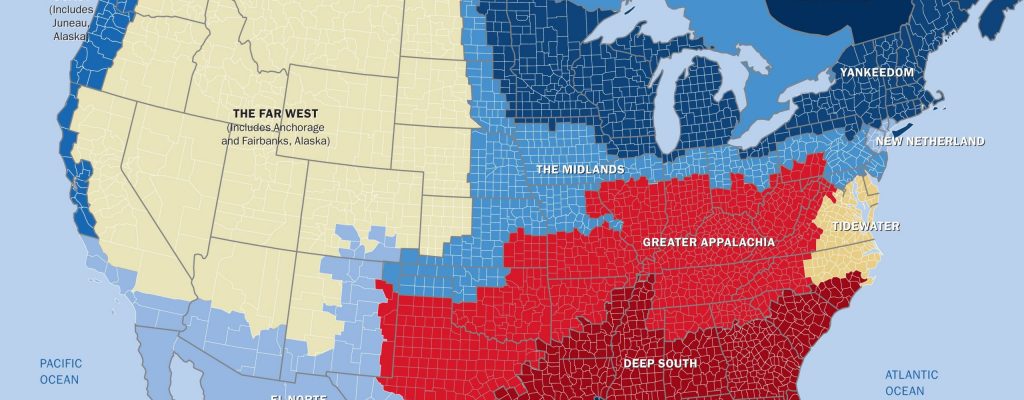
11 nations of the US Map

The US really has 11 separate ‘nations’ with entirely different cultures

(From Business Insider July 27, 2015)


In my work I travel extensively, and I’ve been fortunate enough to visit many countries and also to meet many people who live in those countries. In some I’ve even built lasting friendships.

When I speak to my foreign friends about the United State I keep trying to explain that distinction that the United States is really very, very different depending on where you are from and/or living.

Colin Woodward is a journalist, who’s originally from Maine, making him a true Yankee born in the nation of Yankeedom according to what he writes in his book, “American Nations: A History of the Eleven Rival Regional Cultures of North America.” 

In this book he makes the cogent argument that America is really a nation of nations, and not one undivided nation coast to coast as we have been led to think about it. 

Of course, I’m not suggesting that politically the United States of America is not one sovereign nation under the Constitution organized as a Federal Republic of individual sovereign States, and neither is Colin Woodward. The argument is that the regions of the United States have such unique points of view that they can be looked at as absolutely distinct, similarly to the individual nations of Europe for instance.

I totally agree with his fundamental premise that the United States is regionally diverse … politically, economically, socially and in terms of the basic and fundamental things we value the most from region to region. Using his book as the starting point then …


Here are my tongue-in-cheek analysis and observations on the article:

I’m from what the author, Colin Woodward, calls, “New Netherlands” … and I now live in what the author refers to as “The Midlands.” I have both friends and family in “Yankeedom,” and on “The Left Coast,” as well as in “The Deep South” but most of those are displaced “New Netherland-ers.”

I know people from all the other regions and find it easier and more difficult to relate to their way of seeing the world depending on where they are from on this map. Sometimes I think those of use from the New Netherlands are the hardest for folks from almost all the other regions to fit in with over the long haul, because we’re both headstrong and pushy about our beliefs in a way that comes across as harsh, abrupt and/or rude to most others.

Once they know you’re from the New Netherlands they’ll accept the attitude that brings, but that isn’t the same as liking it. Those of us from the New Netherlands have just as hard a time at the close-minded, myopic ways we sometimes perceive those from these other nations operating. It’s also sometimes difficult to deal with what we see to be the naive and privileged attitude of the Left Coast-ers.

However, for New Netherland-ers it all begins and end with “Attitude” …

New Netherland-ers are particularly proud of their “Attitude” and see it as quite special, even unique. There’s a time element to it, i.e.: they expect everything to happen “yesterday” and only minimally accept “now” as an answer for when. They move fast and live fast, much faster for instance than the rest of the nations indicated on the map, with some few exceptions in the largest cities in Yankeedom, The Midlands, Tidewater, and surprisingly The Deep South, but that’s because of how many displaced New Netherland-ers there are in some of The Deep South cities.

The Greater Appalachia, The Far West and El Norte are foreign lands for us from the New Netherlands. We try not to go there, except for those New Netherland-ers who somehow have opted out of real life and work, and have the time to ski. Otherwise we avoid the natives of those regions, because we’ve heard strange stories of abductions and dueling banjos, a ritual we don’t actually comprehend ourselves.

One of the unique aspects of each of the nations of the United States are our food rituals …

The New Netherlands boasts a remarkably varied ethnic smorgasbord of foods … Italian (predominate), Chinese, Indian, Japanese, Greek, French, German, Ethiopian, Jamaican … and it goes on and on. We often refer to the option to go out by the question, “What do you want to eat tonight?” meaning which kind of ethnic cuisine. The other unique thing about food in the New Netherlands is that it is the only place on the planet with authentic pizza – forget Naples!

The other regions also have their unique cuisines … the southern New France has something they call “creole” food … worth a trip across the border to get. Tidewaters does some remarkable things with seafood, and the Midlands and some of Appalachia are masters of a meat dish called, bar-b-que. The Left Coast is highly influenced by both Asian and Mexican cooking, and you’ll find some unique fusions of these cuisines there, as well as an assortment of ethnic foods rivaling the New Netherlands. El Norte of course is where they have mastered the art of what’s called “Tex-Mex” cooking as well as some truly traditional Mexican foods. I’m not sure if or what they eat in Yankeedom or The Far West, but I hear it’s got to do with a lot of lobster, beef and dairy.

But, above and beyond all of these distinctions of the nations of the United States we see some of the greatest ways they differ politically and socially. What each region needs and wants in these arenas isn’t just different or unique, but literally oppositional.

For instance while the New Netherlands shares much in common with The Left Coast in many ways, they are in many other ways almost in direct conflict on some major political issues and how they think about social justice. In the New Netherlands it’s all about “applied politics and social justice” a kind of social street code. On The Left Coast it’s much more about an idealism and activism that’s divorced from the reality of many, if not the actual majority, of the inhabitants. I think I’d apply the word “gritty” to the politics and social issues of the New Netherlands, where I’d call them “idealistic” on The Left Coast. So sometimes those of us from the New Netherlands see the Left Coast-ers as somewhat prissy in their approach, while I’m guessing they see our way of attacking the same issues as aggressive.

The other regions also have their thoughts and approaches to politics and social justice. I don’t feel equipped to address them as they often make little to no sense to me personally. Like many of the Midland-ers have a kind of live and let live attitude they share with much of New France as I see it, while the Greater Appalachians and The Far West-ers have a more “Don’t Tread on Me” attitude they share in common with much of Yankeedom. The Deep South, again along with much of Greater Appalachia, is still trying to get past 1865 and into the modern world I think I live in, but I get that’s just a point of view for both of us. Tidewater folks really believe they are a separate country, and are more or less just annoyed to be attached to the mainland and have to deal with its issues along with their own, but they’re happy at least that they run the country-at-large. El Norte … who the hell know what they’re all about, except possibly wanting to annex the area they live in back to Mexico???

So it’s really useful for folks outside the United States to get that there is no such thing as “an American” if you’re thinking about some creature that’s the same from coast-to-coast.

It’s also just as useful for Americans to get that we are a divided people united by choice and affiliation, and that a dominant federal government or system doesn’t truly serve as it did when we were evolving from thirteen colonies to the fifty states we’ve become. We haven’t even included the lands of Polynesia or The Far North here either, just to make the issues even more complex.

Trying to unite our great country as fifty individual sovereign States under one singular federal government that we allow almost absolute power over us legally and economically is no longer as feasible or useful as it once was in simpler times. It may be that we look to this map to establish regional governments, that abide to a common agreement to collaboration via a centralized federal government, but with much more autonomy from it than the States are currently operating under, despite the promises of the Constitution that officially governs us, but has been continually degraded over time. Let the regions rule their lands and their people, and make the federal government beholding to them instead of the other way ’round.

Joseph Riggio, Ph.D.
Architect & Designer of the MythoSelf Process and SomaSemantics

P.S. – As always I’d love to read your own observations and comments … in fact I’m already looking forward to them!

P.P.S. – The original article from Business Insider, Jul. 27, 2015, can be found here: “This map shows the US really has 11 separate ‘nations’ with entirely different cultures” and you’ll find the book by the author, Colin Woodward, on Amazon here; “American Nations: A History of the Eleven Rival Regional Cultures in North America”
Filed Under: Blog, General, Human Systems, Life, Mythology

Deciphering The Narrative

Deciphering The Narrative

by Joseph Riggio · Aug 15, 2016

How Do You Make Sense Of The World?


If you’re like most folks … you don’t.

Sorry to be so blunt but them’s the simple facts.

Most folks just “accept” the world as it’s presented to them, and don’t do much about trying to establish how they are perceiving what they experience or from what position they are experiencing it from either.

I’ve been reviewing where my clients report getting the most benefit from the work we do together, and I think more importantly where the evidence is that they have made some kind of significant positive changes as a result of the work we’ve done.

It seems it boils down to just a few simple things we do …

  1. Establishing a very clear perception of the patterns they are living from and their personal myth/story
    (i.e.: the autobiographical narrative that contains their personal myth/story)
  2. Developing the ability to “read” the Signals in the System to decipher the narrative that’s present
    (i.e.: patterns in the information they are exposed to, as well as reading between the lines for information that’s missing)
  3. Recognizing the narrative that others are operating from and the patterns of their behavior
    (i.e.: noticing for how others make decisions and take action, and the ways that differs from person to person)
  4. Gaining the ability to act on one’s own independently and to communicate with others effectively
    (i.e.: making things happen on one’s own and with others, including the ability to effectively set boundaries and influence others)

When these few things happen in the work I do with others some amazing things happen as a result.

Again, keeping it simple, what everyone wants from the work I do with them is some variation on number four above …


Gaining the ability to act on one’s own independently
and to communicate with others effectively

However, getting the ability to do so requires that 1, 2 and 3 are in place as well.


Living The Narrative 

fish_mosaic_1 300pxWe all “swim” in the waters of culture in the same way fish “swim” in the sea.

And, in the same way we might speculate that fish don’t think much about the water they’re swimming in, except when they are challenged by it in some extraordinary way … say encountering highly polluted seas, lakes, rivers or streams … we too don’t much notice our culture.

We might also extend the speculation to those particular fish who are apt to on occasion breach the surface and escape the ever present ubiquitousness of the water they dwell in to notice that there’s something beyond what they experience as ordinary and normal, in this case the entirety of the sky above the surface of the waters that contain them.

I’d go so far as to suggest that fish are more likely to breach the surface of the water than we are to breach the boundaries of our culture …

And there’s the rub …

To get more specific the “ocean of culture” we swim in is bounded by the narrative that contains it. In the same way the ponds and lakes have edges, rivers and streams have banks, and oceans have shores cultures are limited by they narratives that define them.


The challenge for most people is that the narrative has become what is real …
it is their reality in the same way the water is reality for a fish.


Okay, I’d agree with anyone who says that we can’t be without a narrative of some kind. It seems the dilemma of humanity that we are capable to both recognizing that we are living within a narrative, and noticing that the narrative is just made up … a creation of our collective agreement and imagination.

Reconciling the dilemma that the narrative is both “real” and “unreal” at the same time without giving into it is a bit more challenging.

  •  The narrative is “real” in that it sets the frame for how we interpret what is happening and in turn what to do about it.
  • The narrative is “unreal” in that it is simply one one of an infinite number of ways to interpret what what is happening.

So what are we left to do about it then?


Escaping The Charybdis

Charybdis was a whirlpool that devoured ships foolish enough to dare to sail too close. The option for a ship captain was to dare the Scylla, a dangerous rocky shoal that would tear ships to pieces instead.

The ancient Greeks described both of these originally as sea monsters that would attacks unwary captains, annihilating their ships and their crew.

In our current world we too run the risk of being devoured if we dare to venture too close perceptual reality versus the cultural narrative we’ve been led to believe as what is real … yet like Odysseus in Homer’s Odyssey, we must endure this very challenge if we intend to realize the possibility of awakening beyond the illusions of culture.

Left unchallenged the filter of culture determines how we will interpret the entirety of our life experiences and the meaning we make of them.

The collective agreements of culture are designed not only to inform us about reality, but also to shape how we perceive all the events and information we encounter.

One of the most pervasive and “essential” truths we learn within the culture of modernity assumes that we are informed because we are literate and educated … beyond this we often make the leap to the further assumption that this means we are also intelligent, when the evidence gathered from how we most often go about our lives and the current state of the world seems to suggest that nothing could be further from the truth.

We are a species hovering on the edge of destruction … not only of ourselves, but seemingly threatening the entire basis of life in the biosphere … and yet we continue unabated with the same patterns of action that brought us here.

The first thing we must agree to accept, if we intend to do anything about this state of affairs personally and collectively is …

The current narrative is broken!

The story we are living our lives from no longer supports life as the basis upon which it rests. Instead we are living from a story that has its foundations in fear and greed, built on the assumption that the only way to have enough is to get more.

We seem to desire a life worth living, filled with deep meaning and purpose attached and connected to others in meaningful and caring, if not loving, relationships.

But such a life has been supplanted by a life organized around earning a living that exceeds what we need to survive and prosper in the service of productivity and consumption.

  • We are fed lies that support a system where the majority of people live in servitude to a micro minority elites who run a corrupt and rigged system.
  • We have been led to believe that we have a say in the way that society is organized and managed, yet most of our laws are designed to improve the quality of life of the very few at the top, while minimally allowing those at the bottom merely to survive.
  • We buy into this system of lies and misinformed beliefs after more than a decade of compulsory education followed by up to another decade of voluntary education that we’ve been told is “the great equalizer” when the evidence is that some of the most privileged in our society only became that way after dropping out and opting out of the very system we’ve were led to believe would be our salvation if we just stayed the course.

When we navigate the narrative based on the evidence we find that the very systems we’ve are told will save us actually enslave us … one of the most unforgiving being the schooling we received that conditioned us to perform at the bequest of the experts and masters like trained circus animals performing on demand …

The “Gold Star” effect spanning the time from the first encounter in school with the teacher acting as overlord in the classroom, handing out rewards for good performance, to the time we either awaken, retire or die in the hands of a system that teaches us first and then tells us for the remainder of our lives … Be Good and Fit In.

Yet this narrative has been so cleverly woven that the majority living under its cloak of deception fail to see it as other than reality itself. 

However, immediate escape is available to anyone who simply recognizes the narrative for what it is … a tale told by an idiot, full of sound and fury signifying nothing.

That choice is ready at hand to anyone who wants it and opens the way to beginning to notice and perceive the signals in the system for what they are and not what we are told to believe they are … learning to trust ourselves above the overlords who would have us believe that without them and their guidance we would be lost.


The Gateways Of Perception

The beginning of the transformation from being the good boy or girl who has learned to fit in starts when we reject the veneer of truth spewed forth from the media, the politicians and the educators who swear to keep us informed and educated posing as the whole truth, when in fact it is nothing more than the tidbits they are willing to share that continue to support the story that enslaves us if we let it.

You do have a choice … accept that you are living within a perceptual position that continues to allow you to perceive and see the yourself, the world around you and your place in it as you do from that position … and that your perception isn’t what’s necessarily real. 

While you may not be able to escape the human condition of living from a perceptual position you have choices about what position you choose to inhabit at any given moment in time and space.

One of the great “truths” that has been thrust upon us from those who have spent lifetimes exploring the development of what it means to be fully human suggests that we are capable of accessing and holding multiple perceptual positions. 

Each one of these perceptual positions acts like a distinct gateway to perception and shapes what you experience and the meaning you give to your experience.

Change your perceptual position and another gateway opens for you to an alternative future with a multitude of alternative possibilities. 

This has become the essence of the work I offer to those I work with individually and organizationally … exploring with them the scope of possibilities that appear when another gateway of perception is chosen. 

While I focus on eight primary gateways of perception that have been the most fully explored and are most readily accessible, recognized and understood, I accept that the potential number of gateways humans are possible of accessing may be infinite.

What may be most useful in beginning the quest to decipher the narrative is simply the willingness to release the death grip on a singular perspective and gain access to the choice of standing at the gateways of perception that most serve the outcomes you desire.

Having read this far it’s likely you’ve already taken the first step … 


Bon voyage,

Joseph Riggio, Ph.D.
New Hope, PA


Filed Under: Blog, General, Human Systems, Life, Mythology, Transformational Change & Performance, Uncategorized

The GOD Code

The GOD Code

by Joseph Riggio · Jun 21, 2016

Disclosing Spiritual Self-Deception …

FULL DISCLOSURE WARNING: I’m frackin’ pissed … and the following post is sure to piss some people off too, and just so you know I use bad words below according to the word police who think some words are more entitled to be used than others!!!

I watched two short videos today that got me thinking … so, here I find myself sitting in front of my computer thinking about you and me, and what I do for a living that connnects us.

The first video was about “Life Coaching” recommmended by a colleague. It was one by JP Sears on his Ultra Spiritual page. He makes satirical videos about the “spiritual lifestyle and being a spiritual warrior” like, “The Tao of the Man Bun” … so you can learn how to join the New Age elite.

The second was by a well known coach who was not being satirical and talking about spirituality much more seriously, heck he even sounded serious talking seriously about what it takes to be serious about serious spirituality … well maybe I was wrong and it was a satire!

The essence of the second talk was an age old idea called “The Master Game” a phrase I first saw coined in a book by Robert S. de Ropp, originally published in 1968.

Of course no self-respecting life coach will every tell you the sources of their profound and unique revelations … so like all references this reference is never actually referenced and the idea is presented as totally original and emergent from the mind of the life coach (are you beginning to get the kind of stuff that pisses me off?).

BTW I’ve read and loved De Ropp’s book many, many moons age, long before I had “snow on top” as the Japanese masters like to say. FWIW he doesn’t present “the Way” in seven simple steps or three principals or any of that pseudo-spiritual crap (sorry to those of you who have bought into the New Age B.S. hook, line and sinker … but as per Lao Tze who wrote another great book in the genre:

”The Way that can be told of is not an unvarying way;

The names that can be named are not unvarying names.

It was from the Nameless that Heaven and Earth sprang;”

(Watley, trans. from Wikipedia: https://en.wikipedia.org/wiki/TaoTeChing)

Now let me share with you the essence of the book and the talk using the same references, albeit using different words making it totally unique and original, that I watched so we can start from a common point of reference …

You are really NOT you, you are more than you … in fact you are everything and everyone, pure embodied consciousness … the only reason you think you are you is because you have succumbed to thought i.e. bad ego informed thinking and social projections … and, now that you know that you can overcome the ego and social projection that you actually exist and return to the pure consciousness that you really are … i.e.: G-d, who by the way doesn’t exist either.


Pseudo-Spiritual Awakening

This is the essence of many pseudo-spiritial awakenings posing as enlightened souls who are now experiencing non-dualism by having shed their identities as individuals.

Of course these newly hatched spiritual beings still have the burden of body they have to use to drag their souls around, but soon that too will pass and they will regain their rightful place as the G-d of the Universe that they actually truly are … the creator of all and everything, omniscient and omnipotent.

At least the Hindus believe that this projection is actually all just a dream that Vishnu is having and none of it actually exists … that I can buy into totally, ‘cause I believe that I exist in my own dreams when I have them too.

The Abrahamistic monotheists believe there is a G-d and that G-d is beyond human understanding or containment, and frankly that makes more sense to me as well.

But the idea that I “incarnated” to have a “human experience” as a “spiritual being” because somehow being purely spiritual wasn’t actually spiritual enough and I needed to incarnate in corporeal form to experience my way back to what it is to be be spiritual is FRACKIN’ INSANE!!!

This is the worst logic I’ve ever encountered …


Why I’m Pissed Off …

Okay, again so we’re clear, I don’t want to interfer with anyone’s desire for or approach to spiritual awakening.

Fuck it man, just do your thing!

(Note: I came of age during the 1960s and 70s and the term “man” was a common non-gender reference from a patriarchal society trying to free itself from being a patriarchal society, later replaced by “dude” that also attempted to do the same thing, but less successfully because it actually did become associated with boys or men thereby extending the patriarchal forms it was intended to obliterate, thereby requiring the addition of “girl” as in “you go girl” to the common vocabulary to balance the lingo of the emergent post-partriarchal system that such changes in language forms are intented to bring about … “do your thing” from the same era of the 60s and 70s is more self explanatory.)

What I’m pissed off about are two things …

  1. The idea of pseudo-spiritual teaching posing as deeply profound consciousness raising and transformative work
  2. The positioning of pseudo-spiritual teachers who are incredibly materialistic in their approach to “spiritual” enlightenment leading incredible numbers of discontents further into the maya of their own delusions

Now to be sure, I’m no spiritual teacher, guru or Zen master, although I do think the Zen masters from the golden age of Zen are particularly cool and relevant cats to attend to in the writings and teaching we have from them, e.g.: Nagarjuna, a personal favorite of mine, who wrote “Fundamental Verses of the Middle Way”

[BTW, if you actually want to read and understand Nagarjuna I suggest you get the version of his bookshops by Gudo Wafu Nishijima and Brad Warner that makes it much more approachable than 99% of the more scholarly translations – http://amzn.to/28JEji1. (Brad Warner is a young, Gen X, ordained Zen priest and ex-Japanese monster movie fan and claymation animator, who’s one of my favorite writers on the topic, e.g.: “Hardcore Zen” another worthwhile book in the genre IMO – http://amzn.to/28M4GWW).]

Okay, now that we’re totally clear on what I’m not, i.e.: a spiritual teacher, guru or Zen master, here’s my 50 cents on the topic at hand …

Being “spiritual” has nothing to do with being “materialistic” … LITERALLY NOTHING!!!!


Being Spiritual

So, being spiritual doesn’t mean you’ll get rich … as far as I can tell G-d, Vishnu or Buddha don’t give a flying fuck about whether you’re rich or poor … because, spirituality and materiality are two completely different domains of experience.

You can be spiritual and poor, or spiritual and rich … and you can be either poor or rich and not be spiritual at all!

Are you getting it (my POV and why I’m pissed this morning)???

By the same token you can be spiritual and blissful or spiritual and miserable … or even spiritual and not give a fuck either way!

Another one of my favorite authors on spirituality is U.G. Krishnamurti (not J.K. Krishnamurti of Theosophy and Blavatsky fame.). Try his book, “Mind is Myth” for a taste – http://amzn.to/28M5PxW .

U.G. blows away about 99% of the spirituality bullshit and the bullshit spiritualists. He’s also not particularly happy about anything, or blissful … or for that matter disillusioned or sad or anything else, i.e.: he pretty much makes it clear that he doesn’t really give a fuck. I LOVE THIS GUY!!! (That’s the opposite of being pissed off BTW.)

I’m just tired of hearing all the old ways repurposed for a new and modern audience that trivializes or monetizes them for the personal gain of the presenter.

Even when the presenter is authentic in their beliefs, and their audience authentic in their acceptance and the value you find in the pablum being offered as spiritual steak, it pisses me off!


Why I Do Give A FUCK …

Okay, so why bother writing this at all???

Because the deep spiritual ways … Jewish, Christian, Islamic, Hindu, Buddhist … you choose your path, e.g.: Native American Spirituality, Siberian Shamanism … whatever, do indeed point to “The Way” IMO.

“The Way” as I use the term here is that which is beyond the self (small “s” intentionally).

To paraquote one of my intellectual heroes and mentors, Joseph Campbell …

“The hero is committed to something larger than themselves.”

We are in a state of flux … in society, in the world, in our professional and personal lives.

We are raising children without a shred of resilience, who require “safe spaces” and “trigger word warnings” on university campuses to feel complete, whole and secure as they move through the world … or they collapse in a heap of emotional overload and require counseling and reparations (of course reparations, because after all a significant sum of money will repair their damaged or broken soul considerably, right?) … and pseudo-adult, pseudo-intellectual university chancellors, presidents, deans and chairs who support them!!!

We have pseudo-adults who cannot and do not take responsibility for their beliefs or actions, even after it has been pointed out to them they actually own both … instead they blame “mommy” or “daddy” who didn’t love them enough or at all, or who left them when they were young and now that have an irreparable hole in their soul … or the system or the man … or white priviledge, black hoodlums, immigrants, the godless, the fundamentally religious … there’s always someone to point a finger towards for these folks.

We have and support politicians who are ruthless and self-serving, and an entire system that allows and even encourages “politics for profit.”

We have a movement here in the U.S. of A. in the 2016 election cycle of people who believe it’s time for a woman to be President as though one’s genitals are up for election …

WHAT THE FUCK HAS GONE WRONG WITH US???!!!!!????


The Re-Enchantment of the Self

From an anthropological, psychological profiling position it’s seems simple enough … society is under a mass delusion and it’s members are hypnotized into what appears to be a form of group insanity.

Or going back to one of my uber sources, Joseph Campbell the renowned mythological scholar, again …

We don’t have a cosmology that supports us and the soceity we are living in today … so we depend mostly on cosmologies that are multiple millennias older than we are to make sense of the world based on a way that no longer exists.

This opens the door for pseudo-spiritual teachers and outright spiritual charlatans to occupy our minds and hearts, leading us astray in our desire to regain our center … and, from my view at the edge of the stage it’s causing us untold amounts of misery.

I could list the things I see …

  • environmental degradation to the point of dead bio-zones that once flourished with life …
  • totalitarian, oppressive political regimes posing as democratic states offering their citizens the illusion of freedom while indenturing them to the bankers that keep them eternally indebted and working as serfs for the system …
  • abject poverty raging across the globe for a majority of the people living on it, while others live in decadent abundance , conspicuous consumption and wasteful ignorance …
  • and there are more …

But, these are all just symptoms of a deep spiritual vacuum that appears when we are left without a cosmology that fits the times and helps us to make sense of our lives in the shadow of the ineffable.

We are spiritually adrift because we are bereft of a cosmology, or as I say it … we are suffering from mythological distress.

As individuals and as a people we have lost our way, and to find the path we must approach it in that order IMO … we must find ourselves and then our people.

When we discover the center of our being, who we essentially are before all else, we will liberate what it has always been possible for us to become … i.e.: fully human.

Our humanity allows us to connect and participate in the lives of others, to become part of society that we find ourselves within, that contains us and washes over us endlessly with the primordial promise of culture as we know it to be … informing us about what is real and what is not.

Only once we’ve uncovered and made free the unchangable center of ourselves can we hope to withstand the waves of culture pointing us to the “real” and directing our attention away from and outside of ourselves.

Yet, time and again, when I have sat with those who have begun to realize themselves as they are … unchanging and unchangable … they are free to come out and play in the world as it is, without demanding it to be different or changing for them to be at peace with it either.

So this is why I’m pissed … the world does indeed need spiritual warriors to survive, thrive and prosper … and those warriors need to be outward looking, not lost in the contemplation of themselves as the center of the Universe and demanding repartaions when they could be walking lightly and sharing this window of light we call our lives with those they love and the world-at-large.

We do need heroes … those who are committed to something greater than themselves … and heroes need to know the myth they are living so they can escape it and live they myth they are …

Namaste,

Joseph Riggio, Ph.D.

Architect & Designer of the MythoSelf Process and SomaSemantics

Filed Under: Blog, General, Human Systems, Life, Mythology, Uncategorized

Why Bother …

Why Bother …

by Joseph Riggio · Sep 23, 2015

River - MorgueFile - New Zaeland 2014_18 - 200px

 (… or, what is liminality, and what’s it got to do with you???)

It happens to everyone … the kind of trauma that causes a set-back, or downright stops you in your tracks.

The trauma doesn’t have to be big, although it might be, but even a small trauma can:

  • slow you down …
  • cause you to question yourself …
  • break your confidence …
  • lead you into a state of depression …
  • or … shut you down completely

My trauma knocked me right off the tracks … and at first I didn’t even know it!

In fact my trauma wasn’t a single trauma it was a series of three traumas that came one on the heels of the other in just a few short years … first a huge financial set back (in excess of $1,000,000 USD) … then major disruption and decline in my business to the point where we had virtually no new clients for almost a full two years … and finally, an overwhelming personal tragedy that virtually brought me to my knees.

What’s interesting is that virtually no one knew that these traumas had this affect on me. Looking in from the outside I seemed to just keep going, but the reality was that for a few years “my get up go, just gone and went.”

I knew on the inside that I just wasn’t particularly motivated to take the big steps forward I also knew that I was capable of, but couldn’t get myself to achieve.

This was the worst part … knowing that I was capable of doing so much more and not being able to get to it.

I was stuck.

I even knew what to do … but I just wasn’t doing it.

In my GETTING UNSTUCK program I talk about this as “Unconscious Limitations” … what you don’t know about yourself that holds you back from …

  • becoming yourself fully
  • doing what your capable of doing
  • realizing your full potential

… and …

  • getting the kind of results and outcomes that are possible when you’re operating at your best

This is how I was caught after one too many traumas to shake off quickly … as I was always used to doing in the past.

I was experiencing “liminality” …

Liminal Space

A “limen” is the smallest possible thing you are capable of detecting, or the threshold condition for an effect to begin.

Liminality refers to the “in-between” … when you are no longer in the world as you knew it to be, and you’re not yet beyond it to the next thing either … you remain “in-between.”

After a trauma, we’re almost always experiencing “liminality” and find ourselves stuck in “liminal space” … in a state of transition, not knowing where you are anymore nor where you going … at least not fully, or with any sense of deep comprehension.

What’s interesting to me is what causes us to experience trauma …

  • failing to succeed where we thought we would … or should
  • an off-hand, stray comment that leaves us reeling
  • personal loss like a failed relationship or a death
  • failing health, an accident or serious medical incident
  • financial, career or business set-back … or outright failure

When we look closely we might recognize that we experience sensitizing imprints on a regular basis. While we won’t experience everything bad that happens to us as a trauma, some of them are … and those are the ones that create set-backs in our lives that we may find difficult or impossible to get over on our own.

When this happens we’re experiencing “liminality.” … we feel lost, or even trapped, in a maze of our own making.

The Apathy of the “Lotophagi”

We may seem to have amnesia about our part in constructing the labyrinth we’re trapped in, usually because the construction happens in the blink of an eye … literally faster than we can think.

So when we realize stuck in liminal space, we seek the guide that will point the way out, or a map that shows us where we are, where the exits are located, and the paths open to us to get from here to there.

Sometimes we spend so much time in the labyrinth that we begin to become comfortable living within it, and it begins to feel like home to us. This is the mythical danger associated with the sophoric lotophagi, i.e.: the lotus eaters of the Homeric epic the Odyessy.

”I was driven thence by foul winds for a space of 9 days upon the sea, but on the tenth day we reached the land of the Lotus-eaters, who live on a food that comes from a kind of flower. Here we landed to take in fresh water, and our crews got their mid-day meal on the shore near the ships.

When they had eaten and drunk I sent two of my company to see what manner of men the people of the place might be, and they had a third man under them. They started at once, and went about among the Lotus-eaters, who did them no hurt, but gave them to eat of the lotus, which was so delicious that those who ate of it left off caring about home, and did not even want to go back and say what had happened to them, but were for staying and munching lotus with the Lotus-eaters without thinking further of their return; nevertheless, though they wept bitterly I forced them back to the ships and made them fast under the benches.

Then I told the rest to go on board at once, lest any of them should taste of the lotus and leave off wanting to get home, so they took their places and smote the grey sea with their oars.”

The great seduction is to fall asleep, like Odysseus’ men in the land of the lotus eaters, to our own predicament, and to fail to notice that we are in the maze. Then when we arise from our slumber, finding it as hard as Odysseus’ sailors to leave the place where we find ourselves. Yet desperately seeking to find a way back home.

Coming Back to “Home Base”

When I awoke from my own dazed condition, and found myself deep in liminality, I realized I had to shake off the desire to doze again … peaceful in my apathy. I knew I wanted more from life than to coast through, because I had seen some difficult days.

The question was how to revive myself to a fully awake state. I knew that the first few steps would be the most difficult of all … and yet these were also the most essential steps I could … and would … take.

I also knew to that to fully enliven my drive to rediscover myself I had to fight the urge to accept the obvious as evidence of truth … I had to dig beyond that to my core, to reawaken my essential self.

So I set up a regimen that associated a sense of recursive, iterative inquiry to linking intention to action. I think the fundamental ground of performance is linking connection to action.

1) Remembering to link intention to action became my first step out of the maze.

Because I couldn’t discover what I didn’t know and couldn’t see for myself I had to work with what I had access to, my perceptions, my decisions, my behaviors and the results I produced.

2) Noticing the sequence that connected my perceptions to the results I produced, through my decision and behaviors, became my second step.

Then I knew to improve my performance, i.e.: to improve the linkage between my intention and the action I took, would be to record and measure the value of each link in the chain. I had to create a system to measure the value of the steps I took in moving through the sequence of perception, decision-making, behavioral response and results.

3) Establishing and tracking the metrics of my process became the third step beyond the threshold of the liminal space that had trapped me.

Once I could track the movement of my process in real time using the metrics I had established I was able to begin thinking about how to improve the process. Using the data I was tracking and gathering I began altering the things I was doing seeking to identify the things that made a difference.

4) Building a feedback loop using the information I was uncovering, and refining my process by focusing on what worked and eliminating what didn’t, became the forth step to improving my performance.

Now I had the skeleton key to the final step in my perfomance improvement process … the path out of the labyrinth of liminal space … uncovering what I could not see for myself.

While I still couldn’t notice what I couldn’t see for myself, my process left a trail of evidence I could and did begin to track that pointed to the invisible. Although my unconscious limitations remainded beyond my ability to recognize, I could notice for the contexts where I found myself getting limited … this proved to be the key to unlock the gate that freed me.

Instead of trying to figure out what was going on that was unconscious for me, I began noticing where I was limited and what my behavioral responses were in those contexts … then I began changing my behaviors without worrying myself about why I had behaved as I had before.

5) The final step in finding my freedom and fully regaining myself was choosing to do what was not automatic or familiar … I began exploring the idea of becoming comfortable with uncertainty, even the chaotic … and choosing intentional and unfamiliar actions that were most likely to produce my outcomes, even when they were counter-intuitive.

Following these steps I began rebuilding my business and my life. It took a little while but I woke up completely and re-discovered myself again. In fact in many ways my life today is more completely aligned with who I most am more than ever before.

It feels like the first time I can honestly say I’ve truly come home to myself since I was a child. I’ve regained the surety of being myself in a way that is usually associated only with the innocence of youth.

Yet, what may be most interesting to me is that I feel like I’m more aware of the dichotomies of life than ever before … and, in my newfound innocence I find myself simply able to accept them as part and parcel of life and move on.

Maze - Morge-file7541243010745 - 200px

Escaping the Maze … Beyond the Labyrinth

Now I’ve begun refocusing the work I’m doing too. It’s the same process I’m working with, but the focus is on choosing to limit what I’m doing with it and for whom.

I’ve been moving toward working with people and organizations in liminal space for the last few years, and I’ve amped it up even more recently.

  • These are folks who are in transition themselves, or lost between transitions.
  • Maybe it’s someone who is moving between jobs, or coming out of corporate/organizational life and trying to discover the next thing for themself.
  • I’m finding that I’m attracted to folks who are deeply confused about where they are in their lives, while doing their damnest to remain where they are and doing what they do … and not so strangely they’re attacted to me and the work I’m doing too.

Usually this is about going beyond the discovery phase and onto how they relate to others … leaving behind some of the folks who are most familiar to them … and making new connections, or reconnecting, with people who have now become important in their lives in new and exciting ways.

Sometimes the work I do involves groups or teams of people. I love helping people learn how to go beyond competition to collaboration … and to develop the communication tools necessary to begin performing at an elite level.

The most complete expression of the work I’m doing these days, the MythoSelf Process Professional Training, though is actually teaching the process to people who want complete access to it in their lives for themselves and to share with others that are important to them. Those who get hooked even stick around to become skillful enough to become certified MythoSelf facilitators themselves.

FWIW I’ve never felt more complete or satisfied!

I tell you all this to let you know if you’re struggling with liminality yourself there’s a good chance with some persistence you could come out the other side even stronger and more fulfilled than ever.

The hardest part of the journey is always taking the first step as they say … yet, it could be as simple as waiting at the edge of the river for the ferryman, ready with coin in hand to be ferried across the threshold to the other side.

When you get there look me up …

Buona Fortuna & Abundaza,

Joseph Riggio, Ph.D.
New Hope, PA

P.S. – I’m running another session of GETTING UNSTUCK, the live webinar series, starting on October 13th. If you’re interested in learning more stay tuned and I’ll get you the details … if you can’t wait drop me a line.

Filed Under: Blog, Elite Performance, Life, Mythology, Transformational Change & Performance, Transformational Communication, Uncategorized

Is The Future Of The Universe Uncertain?

by Joseph Riggio · Nov 4, 2012

CAUTION: Please don’t read my musings on the nature of the Universe, Reality and How To Live Your Life Well … unless you already know me or it’s just gonna piss you off …


I’ve been exploring the concept of teleology for years. That the future “pulls” the present towards it forms the basis of teleological consideration. Or maybe it would be better put to say that the present contains the future that draws it forward within it.

Understanding that the teleological consideration differs from the idea of historical precedent driving the system forward  resides at the core of the consideration I’ve been exploring. In other words there are two primary explanations that are used to explain why the system evolves/unfolds as it does:

  1. The system is deterministic and like a billiard table the events that have been set in motion create effects in the system that continue driving the system forward until all the energy in the system is used and the system runs down in entropic ruin.

  2. The system is teleological and is heading to an end point that is given and pull the system forward in a particular direction in an ongoing way such that it cannot but manifest the form that is intended by the system in the same way that a seed cannot but produce the plant it contains.

I don’t actually believe in either explanation myself, and at the same time I am much more a fan of the latter in terms of the way I choose to organize my own personal experience on a pragmatic level. However …

I don’t believe the system even exists as is popularly expressed or experienced within the current paradigms … e.g.: religious, scientific, social, etc.

My personal experience is that the evolution/unfolding of the Universe is simultaneously unknown and complete, i.e.: the Universe is neither evolving or unfolding … and that our experience of it in ordinary terms is simply a reflection of a source experience that goes beyond anything comprehensible within the construct of a material Universe operating within the boundaries of physical laws (even at the quantum level), and/or constrained by space and or time.

The closet description I get of this comes from the work of quantum physicist David Bohm, and his work “Wholeness and the Implicate Order” where he poses that Information not Matter or Energy forms the essential structure of the Universe.

So the question, “Is The Future Of The Universe Uncertain?” becomes an essential, or “deep,” question. From this question we can begin to uncover what I refer to as what is “real” – the essence of what you can count on to be true based on your own self-verification alone.  Answering a “deep” question becomes important only if you want to become free in the sense of becoming a fully realized adult human being, fully developed and mature in your own right

When you get beyond the childish illusion that life as you know it is “happening out there” somewhere, being able to self-determine your experience becomes the primary objective. It forms the entire basis for having your own life versus the one imposed upon you from birth. This is what I refer to when I use the words “free,” “freedom,” or “liberation” in the context of living  your life.

We are taught two conflicting ideas that by the time most folks are in young adulthood trap them, A) that we are self-determining, i.e.: we possess free will, and B) that the Universe is deterministic and therefore our destiny is out of our hands, i.e.: we are the product of our ancestry, environment and personal history and trapped to live out our lives within those boundaries. In some cases there is a belief in a G-d or gods that also play into the equations tilting the deterministic trajectory of our lives one way or another. So we lose twice, A) we’re responsible for everything we do and must suffer the consequences therein, and B) we have no real control over our lives and therefore must accept our fate.

Yet what if both scenarios are simply incorrect, i.e.: the result of wrong thinking perpetuated by millennia of wrong thinking, deepened by theologians, philosophers and scientists ad infinitum???

What if everything we experience is simply subjective hallucination, phenomenological projection, imagination … what if our entire lives are just what we make up about them?


What if David Bohm is right, and the Universe is structured on Information and not Matter or Energy? What would that mean to living your life out as you know it?

Well this has been part of the essential quest I’ve been on for two and half decades. I’ve answered it fully for myself … and I’m what you can call both self-realized and self-satisfied, but I’ve continued seeking the means to articulate the premise I’ve been living in the work I do, including my efforts at writing about it … like here in Blognostra.

It continues to intrigue me that some folks want to know what the benefit of becoming self-realized and self-satified as a fully adult human being, i.e.: attaining fully maturity and the realization of our potential as human beings, is … and the answer continually comes up NOTHING … not a darn thing, other than the reward of being an adult human being.


The reward of being an adult human being of course is that you’ve stopped living the lie, the illusion … you’ve taken over your life, and you can begin to have the experience of living it … YOUR LIFE!


This was enough for me to trash everything I thought I had when I began this journey, including trashing all the beliefs I had about what made being in the journey worthwhile, e.g.: fame, fortune, relationships … and I replaced those beliefs with a burning desire to become free. By “burning desire” I mean an internal fire that consumed me as I knew myself to be then … someone I long ago stopped being.

What I now know is that the future of the Universe is meaningless, largely because what we think of as “the Universe” doesn’t exist as we think of it … “IT” merely is and isn’t becoming anything it isn’t already … it’s done, and so are we … from the moment we are conceived.

I had to get there, to the conclusion above, after many years of burning away all the beliefs that had become stacked and layered and intertwined about the “real” nature of the Universe as a physical, energetic experience held in a space-time continuum, quantum or otherwise.

In getting there I had to burn away all the illusions I had about who I was … who I am … who I could … would … will be/become … and get that I am done, as done as the Universe already is done. I could make it simple or trite, depending on your point of view, by saying we are literally dying from the moment we are born, but that wouldn’t capture the truth of that simple statement within the paradigm of denial most people are living from today.

A bit less trite would be the more direct comment that life is meaningless … utterly, dismally meaningless … but, despite the truth of that statement, saying it that way would engender despair in many of my readers and prevent them from reading on to the deeper message I want to convey.

From where I stand today, the realization that life is meaningless is also meaningless … and that amuses me to no end. I get who I am … what I am … the singularity that is evident when you take but the time to look … and ask the questions that lead to the irreconcilable truth … the truth of what is real when there is nothing left to consider and you’ve reached in inevitable end.

So then,


After you’ve reached the end, decided to do the work required to grow up, toss aside the standard bullshit that surrounds 99% of what most folks consider ‘truth’ or ‘the way it is’ what they consider ‘real’ … and you come to the actual realization that no matter what you do you’re already dying and when it’s done it won’t matter a scat … you can begin to consider what to do with whatever time you’ve got left.


This is when it get’s interesting … and a teleological proposition comes in handy …

But let’s save that for another time, eh?


Joseph Riggio, Wise Fool – Provocateur Extraordinaire

Copenhagen, Denmark


PS – HEY … you wanna really be provoked … and maybe gain the life you’ve been missing?

Come to MythoMania 2012 at the end of the month in Princeton, NJ … register here:

MythoMania 2012 Register NOW

Two days with me … a few MythoSelf pros … food, fun and lots of naked romping in the woods

(NOTE: Just kidding about the naked romping in the woods part … unless you find yourself in the mood to organize that outing yourself after hours … who knows … MythoMania has been known to create more and few ‘unexpected’ outcomes …)

Filed Under: Blog, Cognitive Science, Life, Mythology, Transformational Change & Performance

Mentoring, Magical Thinking & Myth

by Joseph Riggio · Mar 26, 2012

The Danger of Magical Thinking In The Hands Of Would-Be Mentors Cannot Be Overemphasized If Your Serious About Your Success!

Every couple of days I drop my my Facebook page to see who’s posted what – and today what came up for me is the foolishness of magical thinking, especially when it’s presented by someone who’s out there mentoring people.

Today  I began writing a long response to someone on Facebook who is a well known trainer running mentoring programs and offering mentoring to individuals about magical thinking based on a post he put up. I decided after about three minutes of writing to delete it not to embarrass a colleague in a public forum, however the bitter taste of his folly still lingers and I need to spit it out.

While I don’t spend hours a day doing “social media” there are a couple of groups there I participate in on occasion. Most of these are about NLP, hypnosis, changework, performance or transformation … and posting in the last category often get my goat, because they so often wander into the land of magical thinking.

However, before you think this is going to be a posting about Facebook, LinkedIn or any other social networking site in the interest of full disclosure you need to know I’m far from being the “social networking maven.” Despite my familiarity and knowledge of the medium, it’s just too time consuming to be everywhere all the time – and make no mistake about it that’s what it takes to be a social networking maven … huge commitments of time, energy and effort.

I’m reminded of my own rejoinder to folks about how to create outstanding results where you want them …

“Where you put your attention, is where you’ll get your results.”

This in turn reminds me of another idea a colleague and friend of mine, Matt Furey, first introducted me to:

The Law of Practice

“The Law of Practice” is Matt’s companion to the “Law of Attraction” that makes a magical idea practical IMO.If you want to get more of how Matt thinks about this I recommend his book, “Expect to Win, Hate to Lose” it’s incredibly inspiring, informational and entertaining as hell too, if you haven’t read it yet, go and buy it now.

I’ve been on about the idea of putting your attention where you want your results for over ten years now. To me this is akin to the law of practice at an attentional level, i.e.: keeping your focus where you want to see the results and outcomes of your life happening. Matt’s idea of The Law of Practice takes this another step forward IMO.

To sum up Matt’s idea briefly it’s that while there are a ton of people who are talking about The Law of Attraction, and the The Secret that it supposedly holds, almost no one is revealing that you only get your results when you add in The Law of Practice, i.e.: you have to take action. The practice Matt refers to is two-fold, practice as in the continual refinement and honing of your knowledge and skills, and practice as in taking continual action as in a disciplined way of acting in the world. I couldn’t agree with Matt more on this one … I think he’s not only right on, but without The Law of Practice, The Law of Attraction isn’t only ineffective, it’s downright dangerous!

But I’m probably a bit ahead of myself here … so I’ll slow down a bit and take it step-by-step with you.


Magical Thinking:

Magical thinking often goes something like this …

“In the beginning there was a unified singularity smaller than a grape. Then something shifted in that singularity – badda bing, badda boom – and the Universe as we know it began at what is now known as the Big Bang!

From that single event and that grape sized mass  all of the known Universe emerged, speeding away from the place where it all began at incredible speeds. First the debris from the Big Bang began to collect in clouds, and under the force of gravity those clouds began to collect and become stars. Because those stars where packed in a space much smaller than the Universe occupies today they collided and from those collisions new stars were born, some smaller and some larger … and those stars spawned other forms of matter … denser than the matter of stars. From this more dense matter planets, moons, asteroids, comets … were formed as well.

Over billions of years as the Universe expanded it cooled. Some of the stars collected systems of denser matter around them by the force of their enormous gravitational field. These became solar systems, and in even larger collections of stars and solar systems loosely knitted together by forces both known and unknown, galaxies formed as well. Yet everything there ever was and ever will be was contained in that single grape-sized mass at the beginning. Here on Earth some of that matter spawned life, and again over more billions of years life evolved to become humankind, made of the same stuff as the stars. So you can say you are made of stardust … and that would be accurate.

Well we also know that at the quantum level all matter is connected. When you split an atom and observe the separate particles racing away from one another you can measure their spin as positive or negative, a clockwise or counter-clockwise spin. However, what’s amazing is that when you act on one particle and change it’s spin by forcing it to pass through a strong magnetic field the other particle that was paired with it instantly changes its spin as well. Despite begin separated by vast distances, the two particles remain entangled with one another energetically.

Since we are made of the same stuff that the particles are made of then it is reasonable to acknowledge that once we’ve connected with someone we remain energetically entangled with them as well. This is the miracle of quantum entanglement and energy. It’s what the mystics have said throughout the ages and now science is giving us proof that they were right all along. In fact when we look at the world at a quantum level we realize there’s nothing there, literally … there’s just potentiality until we observe it, at which point the potential becomes manifest depending on what we’re looking for in it.

The mystics and sages have been telling us this as well, that the entire Universe is a projection of our consciousness … that we create reality with our minds. Before we project our consciousness into the Universe it’s just random potentially, and only when we do does it become manifest and real. We have the potential to create our realities at the quantum level by learning to project our consciousness in specific and concentrated ways to manifest anything we desire. This is the essence of The Law of Attraction that the mystics and the sages have known all along …”

Of course I could make the story longer and more complex, but that covers at least the basics … and a good hypnotic tale it is too! It presumes a hermetic, tautological reality. It uses logical chaining and cognitive inertia to pull the reader/listener along. It presents seemingly convincing science to support the argument being made. It’s emotionally compelling, i.e.: most people want to believe it. These are all sound hypnotic storytelling techniques, and there are more, but that’s not what the point of this post is about today – let’s leave it at saying that to/for an untrained, non-critical reader this is very believable story on the surface.

The problem with this story and all others like it is that it’s pure bunk wrapped up in pseudo-scientific speak. Sure some of the facts are true enough based on our current state of cosmological understanding, e.g. the Big Bang theory, basic quantum physics ideas like entanglement … but they are presented out of context and used to support a spurious argument at best.

The most significant aspect of this kind of telling is that it satisfies our G-d quest, i.e.: the desire to have the mysteries of the Universe explained. This may or may not be a result of a G-d gene that programs us to seek a metaphysical answer to the realities of the Universe that we confront as humans, but regardless of the cause the quest persistently remains a part of our longing. I refer to this as an ontological longing, a desire to know what and who we are … and to fit that into an understanding of our place in the Cosmos.

However as soon as we begin to apply even the most basic scientific analysis to the “science” used in magical thinking it begins to fall apart rapidly. Here are two simple examples …

Claim: “We are made of stardust.”

Analysis: Yes, we are formed of the same atomic and sub-atomic particles at the physical level as stars. However stars are made up of elements all much lighter than iron when they are living and active. As soon as iron begins to form in stars as a result of the process of nuclear fission occurring within them, they begin to rapidly collapse, die off and go nova. The physical world we live in, are constructed from and contain within us, is comprised of elements much denser than iron that are stable and required for life as we know it in human terms. No star could survive in a “human condition.”

Claim: “We are energetically entangled.”

Analysis: Even particles that display quantum entanglement show no evidence of being entangled energetically. There is no transfer of energy that is discernible, nor is there any time that can be discerned for this transfer of energy to occur in the instantaneous response of the entangled particles to the state change in the other. This can only be accounted for as informational, not energetic. The brilliant quantum physicist, David Bohm, makes this clear in his seminal work, “Wholeness and the Implicate Order”  about the role of information at the quantum level and the hidden variables required to create a satisfactory explanation of quantum behavior at a macroscopic level. David Bohm uses the representation of a holographic universe to make sense of the role of information as enfolded or unfolded in physical reality, a much better way to explain entanglement than energetically.

Now here’s the major problem with all of this … people are pre-disposed to believing magical thinking, they want to believe it and they will believe it despite the overwhelming evidence to the contrary – in matters where the evidence matters. For instance there is no escaping that we are a superstitious species, most likely the only superstitious species that ever evolved on the planet. Yet most people can discern the difference from superstition and what’s real, e.g.: breaking a mirror is not really going to create a seven-year bad luck streak. But when presented with magical thinking, the same impulse that gives rise to superstition, i.e.: spurious cause-and-effect linkages, rushes up and takes over … because, unlike with much superstition, the suggested result is so desirable in so many instances of magical thinking.

When someone who is a trusted source, e.g.: a mentor, is added into the mix, the potential for being misled by magical thinking mantras becomes wildly exaggerated. There are thousands of people who have been under the sway of husksters selling false belief to the tune of millions or maybe even billions of dollars fueling this fire of misinformation.

Magical thinking satisfies the ontological longing in the same way meth-amphetamine releases the rush of dopamine that produces extraordinary sensations of satisfaction and pleasure in the brains of addicts.

In the world of modernity or post-modernity, where as Nietzsche put it “G-d is dead.” (German: “Gott isht tot.”), there is a innate compulsion to experience the satisfaction of having the answers to unanswerable mysteries of the Cosmos, the understanding that comes with having those answers and the sense of profound relief and pleasure at having something to look to for the explanation that satisfies our ontological longings and desire … and magical thinking fulfills that desire brilliantly.


Myth, Mythos and the Mythosphere

In the work I do mythological form plays an extremely important role, allowing me perceive, access and modify the narratives that my clients are operating from, both individual and organizational clients. I normally refer to this as the semantic structure, meaning the entire representational form of the gestalt worldview of the client. This is how the client perceives, represents and relates to what they think of as “real” or “reality” in a conscious, i.e.: representational, way.

The reason I refer to it as mythological has to do with the structure of conscious, representational awareness. The renowned comparative mythological scholar, Joseph Campbell, gave a form to the structure of mythology when he published his seminal work, “The Hero With A Thousand Faces.” Rather than present myths as stories that were told, he used those stories to unveil the structure beneath them. This structure is form of what he referred to as “becoming human” … the journey from birth and immaturity to adulthood and maturity. Within that journey he speaks of the phases of human experience moving from dependence, to independence, to interdependence – thus becoming fully human. What’s interesting of course is that not everyone becomes fully human according to this model, with some people never moving beyond dependence to independence, and many people finding themselves stuck at independence, and others stuck in the transitions between phases, e.g.: dependence-independence or independence-interdependence.

The relative position – from dependence, to independence, to interdependence – that someone occupies within the structure of the “Hero’s Journey” is revealed in the Life Story they hold and operate from in their life.

The autobiographical narrative is held and told with very unique and specific characteristics, depending on where a person resides in their journey to becoming fully human. The story someone is living is their gestalt worldview, and one way it can be interpreted is using the filter of Campbell’s “Hero’s Journey” model leading from dependence to interdependence. Along the trajectory of this journey the desire to satisfy the ontological yearning to know who we are is encapsulated in the narrative that is a person’s Life Story in any given moment. To what extent the ontological yearning is satisfied will be revealed by the structure of the story someone holds, i.e.: their gestalt worldview in terms of their autobiographical narrative.

The advantage of using mythological structure to analyze the autobiographical narrative someone reveals in the way they express their Life Story is that it offers clues about what to be doing to help them move along the trajectory to becoming fully human as Campbell put it, and also to relieve the pressure of the ontological longing. Unlike magical thinking, mythological form is fully vetted over many millennia of human history. Rather than working with magical thoughts that are perceived to be representative of extant reality, mythology treats the stories we hold as metaphorical. The distinction that myths suggest possibilities and pathways versus absolute truths or cosmic laws of some kind is overwhelmingly significant from the point of view of the mentoring process. Mythology, again according to Joseph Campbell, should be treated as connotative rather than denotative.

In the mentor’s role using mythological form creates access to the autobiographical narrative … the gestalt worldview … and an elegant means of shifting it to a more mature and useful position. This is the entry point to creating transformational change at the conscious level of what I’ve referred to as representational reality … the way we perceive the world to be, and the way we represent it to ourselves and others. This is the structure we use to make sense of the world. Changing the structure of the autobiographical narrative changes what things mean to us, and how we experience the events of our lives. However the most powerful aspect of working mythologically is that it takes the control out of the hands of the mentor and gives back the control to the client. This distinguishes working mythologically from magical thinking in a radical way … rather than being subject to the whims and winds of the Universe, the individual who possess mythological knowledge takes control of their life.

Maybe this is most clearly presented in Joseph Campbell’s stated four functions of mythology:

1) To explain the mystery and awe of the Cosmos

2) To present the cosmology of the times according to the latest scientific and technological understanding of the times

3) To inculcate and teach the social mores and rules of the culture and society

4) To reveal the path of self-knowledge to uncover one’s essential identity, relieving the ontological yearning to know oneself

The wonder is that when working mythologically a mentor can walk with a client sharing all four of these steps on their journey to becoming fully human.

While not every mentor is mythologically trained or capable, those that are stand apart in their ability to expose the magnificence often lying dormant in their clients waiting only for the fresh breath of inspiration to awaken and be realized. Owning and applying this knowledge, skill and ability as a mentor could be called applied wisdom … because after all the first Mentor was Athena in disguise … another role familiar to the best mentors, the trickster provocateur.


P.S. – Check out my newest workshops: Experiencing Transformational Performance, 2 Extraordinary Days  with Dr. Joseph Riggio: Experiencing Transformational Performance (http://tiny.cc/hs5rbw)

Filed Under: Blog, Life, Mentoring, Mythology, Transformational Change & Performance

Applied Mythology 101: Reflections On Heroes, Mentors and Stories

by Joseph Riggio · Feb 26, 2012

Applied Mythology, ala Dr. Joseph Riggio and the MythoSelf Process, Is NOT About The Telling Of Old Stories …

Applied Mythology IS ABOUT How To Incorporate The Structure Of Mythic Form Into Your Life To Make It More Whole and Wellformed … i.e.: More Blissful


Heroes and Mentors

I have a couple or “Intellectual Heroes and Mentors” folks whose intellectual/academic work has spurred me on in my work. Some of my heroes and mentors I found many years ago, some are newer to me. These are folks I’ve spent a lot of time with, reading their books, writing about their ideas, incorporating and applying their ideas in my own work, using what they developed as a platform to leap from in developing my own fledgling conceptualizations, methods and processes … and finally, in some cases, coming to the point where I truly believe I have mastered the ideas they wrestled with first and made accessible to me in their life’s work.

When I talk my intellectual heroes and mentors I’m not talking about the folks who necessarily had the most actual influence in my life. The folks who had the most influence in my life would include those closest to me, family, some teachers, friends and very near the top Roye, my own mentor for nearly twenty years.

My intellectual mentors and heroes are folks like,

  • Carlos Castaneda (yes … it’s true, very influential to my thinking in my late teens and early twenties … his writing opened up the entire possibility of alternative realities and magical thinking to me)
  • Suzuki Roshi and Alan Watts (very early on … around 11 years old … I began to become interested in and to train in martial arts, this led me to writings about Zen, Taoism and Bushido, and by 15 I was “sitting” regularly myself … and reading Watts caused me to question everything)
  • Milton Erickson (in my twenties I developed a profound fascination with hypnosis and began reading intensely on the subject … then I found Milton Erickson, and everything I’d though about hypnosis shifted for me)
  • F.M. Alexander, Moshe Feldenkrais and Thomas Hana (the idea of how the body was influencing the mind … and subsequently my behaviors had me … for more than a few years, from my mid-twenties through to my mid-thirties, I was diligently working to figure out where the interface was and how to operate it)
  • Dudley Lynch (leading me to) Clare W. Graves (there was something in Dudley’s book “Strategy of the Dolphin” that caught my attention deeply when it came out … later I found he was pointing to a true genius of social evolutionary thinking, Dr. Graves … I’ve now spent many hundreds (or possibly thousands) of hours deeply contemplating and applying the Graves model in my work)
  • Edmund Husserl, Soren Kirkegaard, Martin Heidegger, Ludwig Wittengenstein, John Searle et al … (I tracked the movement of modern philosophy from phenomenology, through to existentialism, and then onto analytic philosophy I delved deeply into what these folks had to say about the Philosophy of Mind … and by the time I got to the analytical philosophers what they were saying about language and reality as well)
  • Charles Sanders Pierce, John Dewy, William James, Richard Schusterman, et al … (I love the work of the American Pragmatists … this is a philosophy that draws deeply upon the aesthetic and it speaks to me deeply … I get the sentiment and the soul of pragmatism, in the way that it shows up in life, like no other philosophy)
  • Joseph Chilton Pearce, Daniel Siegel, David Abram, Jeffrey Schwartz, George Lakoff, Mark Johnson, Nicholas Humphrey, et al … (there a whole host of neuroscientists, linguists, cognitive scientists, etc. who are exploring the ideas that are at the heart of my fascinations and they have all at one time or another influenced my thinking … some more deeply than others)
  • Richard Bandler & John Grinder (I’ve read everything they’ve written … jointly and solely … some of their books ten or more times … and some I barely got through once … but the work of NLP still holds my attention like little else, especially in the direction it took under my tutelage with Roye)
  • Joseph Campbell (I saved him for the last because he surely ranks as one of the folks I literally consider to be an intellectual hero and mentor to me … much of my thinking has been influenced by the writing and speaking of Joseph Campbell and his take on the structure and form of mythological thinking)

Believe me that’s the short list … but I want to share a range of the kind of folks I’ve been paying attention to over the years. It has been a funky, fun, interesting and enlightening journey … and I’m guessing I’m now about halfway there.


So What’s This Got To Do With You?

HECK … ONLY EVERYTHING …

I’ve laid it out before and I’ll do it again … YOU ARE YOUR STORY!

The sources that inform your story contribute to the form it takes … i.e.: WHO YOU BECOME! Of course, I’m not saying that you become the story of the sources that inform your story, you become something like a multi-hued reflection of the multiplicity of sources that you continue to absorb that inform the story you are living. Keeping it simple if you were to see a tree from the point of view of an Impressionist painter reflected on water, the seemingly infinite number of leaves are the equivalent of the sources that inform your story … and there is a main trunk that is unique and singular as well.

Now, before I keep jumping forward let me make it really clear that within the structure of where I place my attention, “YOUR STORY” is really a bunch of stories that are interwoven like a tapestry that forms what you experience as the ground of being in your life … for you this tapestry defines “what is real” and how to make sense of what you encounter in an ongoing way. I use the word STORY and not tapestry because for most people the tapestry I refer to is experienced in the form of an autobiographical narrative.

NOW HERE”S A MAJOR POINT …

Most people experience their own unique autobiographical narrative as “absolute” … meaning that at any given moment in time what you believe to have happened and is happening is actually true to fact for you. For example you believe you are reading these words and in this moment no one could dissuade you about that as being a fact. This is true even though there are a thousand other things that are true in that moment that just passed and in this one as well … that you ignored, deleted and distorted.

Let’s expand that one just a little … you think you are reading “THESE WORDS” – but YOU ARE MUCH MORE LIKELY TO BE READING WHAT YOU THINK THESE WORDS MEAN … and not the words themselves. Let me demonstrate what I mean … in an hour you’ll have a memory of reading this, but what will you remember, the words you’re now reading, or what you think these words mean? It’s that simple at one level and it’s levels all the way down …

For most people this also represents what they experience their memories like as well, i.e.: absolute narratives of what happened. You are as likely to do this about what happened less than a minute ago as you are about what happened a decade ago … and you’re as likely to be just as wrong about both. It would be foolish to trust that you’re memories are accurate to fact, they’re just not. You can find overwhelming evidence that your memory works as a flawed system, and that may in fact be in your best interest. So while you’re memory may be flawed, your memory will be how the world world was and continues to be for you.

Okay so what does this have to do with you again?

At the most basic level it would be useful to recognize that what you are creating in your interactions with others aren’t really experiences, but flawed representations of those experiences called memories. People will not remember what you say or do, they will remember the impression of what you say or do has on them … and it will be different from what you say or do in some measure, large or small.

We could go on with the practical aspects of what this has to do with you, but for now I’ll stop with that example there.

The main point you want to get from this, if you get anything at all, would be that they are all stories … and those stories collect into an Über Story that becomes the Gestalt you are living. The gestalt of your life may be best thought of as a “reality filter.”


Living Your Life Story

I’ve been making the point that you are living your Life Story. This story represents only one way of interpreting all the events that have happened and are happening, as for as long as you have this story, what will happen too.

You have no choice but to live your Life Story … BUT you do have a choice over what story you are living!

[NOTE: You may want to add into this narrative that you’re reading now that one of the most powerful ways to choice your Life Story would be to pick the stories that go into it.]

The stories you accept as being “real” are only a part of the construct of your Life Story, i.e.: your memories of your experiences as you know them to be. In addition to the things we experience, and the things we “know” there are the things we can’t explain … that we yearn to have an explanation for nonetheless, e.g.:

  • Why do bad things happen to good people? …
  • Why did that happen to me, and not to them? …
  • Why did that happen to them, and not to me? …
  • Why am I here? …
  • Who am I? …

 This may be the most profound function of myth,
to answer the unanswerable.

Now I am not saying that myth, or more properly in the way I am using this idea – mythic form, has literal, concrete answers. Rather than providing literal, concrete answers myth shows the way … it’s is about the path, the journey, the process … not about the content. Myth gives us what we cannot possess … as way to see ourselves. The eye cannot see itself, the finger cannot touch itself … the eye must have a reflection of itself to “see” itself, the finger must be touched to “touch” itself … in this way myth provides the reflection and the touch for us to know ourselves beyond ourselves.

Myth places the most significant and urgent information “out there” beyond the limits of how we “know” things to be … including ourselves. This information may be simply revealing, “Oh, now I see how I am like that too.” … or educational/instructive … “Now I get how I can move beyond this moment in which I have been stuck.” or it may reveal, educate and instruct us about others and the world we share, “Ah, now I get how he/she/they think the world must be.”

This information comes to us as an impression, not as a “fact” or “absolute.” Myth offers us the means to use our innate intuitions about the world to construct a reality that fits our experience. The opportunity myth provides can and will take us beyond self-imposed and socially-imposed limitations if we allow it. We are built to “guess” at “what the world ‘is’ out there” – we don’t have the equipment to “know” the world out there, we miss too much of it, and make up most of it as we go along. The philosophers, psychologists, cognitive scientists, neuroscientists … and others have been hard at work for centuries proving how limited and flawed our perceptual capacities are in fact.

To use a Robert Anton Wilson phrase:

“Whatever the Thinker thinks, the Prover proves.”

(from Prometheus Rising)

So you can say, once we find the way to reset our “Thinker” we have found the way out of our own limiting beliefs … because the “Prover” will prove whatever the “Thinker” thinks!

The trick to resetting the “Thinker” has always been the same … A, B, C

  • A) Give the “Thinker” new data in the form of experience and information to work with
  • B) Make the experience and information that you provide the “Thinker” with emotionally compelling … i.e.: make it “feel really good” or “feel really bad“
  • C) Create a recursive somatic loop in the “Thinker” that connects the experience and information to the feeling in the body where it will be stored and accessed/re-accessed later


“We act based on how we “feel” about things that prompts us to “think” things are as they are for us … i.e.: change the association to how we “feel” about things and we change what we “think about them.”

“Applied Mythology, as mythic form, gives us the mechanism to change how we feel about what we think.”

“We can update our Life Story by encountering powerful stories that are emotionally compelling and create new associations between what we “know” and how we “feel” about it … this has always been the appeal and power of mythology, literature, theater … and more and more today the stories we encounter in film.”

– Joseph Riggio, Ph.D.


This is my quest … to follow my myth wherever it leads … and for now it leads me to be an applied mythologist.

So I have an invitation for you … will you join me on your journey?

As always I look forward to seeing, reading and responding to your comments …


Joseph Riggio, Ph.D., Princeton, NJ

Architect and Designer of the MythoSelf Process & Soma-Semantics


PS – There will be an Applied Mythology 102, or 202, someday soon … promise. In that installment I’ll share some of my thoughts about the “Social Myths” that keep us stuck where we find ourselves today … and some possible stories that might help to free us in the societies we are constructing going forward … my little take on “Social Ontology”


Filed Under: Behavioral Communication, Blog, Cognitive Science, Language & Linguistics, Life, Mythology, Story, Transformational Change & Performance

« Previous Page

© 2025 ABTI | Joseph Riggio International · Rainmaker Platform

Privacy Policy

  • Services
  • Log In