This website or its third-party tools use cookies which are necessary to its functioning and required to improve your experience. By clicking the consent button, you agree to allow the site to use, collect and/or store cookies.
Please click the consent button to view this website.
I accept
Deny cookies Go Back
  • Skip to primary navigation
  • Skip to main content

ABTI | Joseph Riggio International

  • Home
  • Meet Joseph
    • To Sicily And Back … A Love Story
    • JSR Short Bio & CV
    • Abbreviated CV Timeline
  • BLOG :: “Blognostra”
  • Contact
You are here: Home / Archives for Life

Life

Revisiting Bliss …

Revisiting Bliss …

by Joseph Riggio · Dec 21, 2015

Follow your bliss …

and the universe will open doors

where there were only walls.

Joseph Campbell

 

Coffee & Croisant Sq 200px


Wow!


I was a little stunned myself at how much more clarity and focus about what counts in life can be achieved in about the time it takes to have a cappuccino and a croissant.


If you’re … lost … tired … unmotivated … or, yearning for something elusive that you hope will give you the sense of destiny and  fulfillment you desperately desire … but have been unable to find … what I discovered accidentally one morning over breakfast with a friend may just be the answer you’ve been looking for …

But first indulge me in sharing a little bit of background.
Joseph Campbell is remembered by many for his injunction to …

Follow your bliss …

It always amazes me how little people expect of life that really counts for something, and how hard they are willing to work to get it.


I think that’s mostly because they don’t get what Joseph Campbell meant when he referred to “bliss” …

Most people think “BLISS” refers to being happy or comfortable, or more than that a kind of ecstasy of spirit. 

Yet, I’m confident it has nothing to do with any of those things …

As I understand it, and work with my clients around it, “BLISS” refers to being fully and completely aligned with one’s self … identifying and moving in sync with your true nature.

Think about it … Joseph Campbell says when you follow your bliss “the universe will open doors where there were only walls” … he says nothing about feeling “happy” or “being comfortable” …

In Joseph Campbell’s magnum opus, “The Hero With A Thousand Faces” … he lays out the structure of the “Hero’s Journey” and shows us that the hero/heroine must enter the “belly of the beast” first … facing their fears and overcoming many trials before achieving their bliss.

But, while the “Journey” can be wrought with difficulty it doesn’t have to be that way …

Joseph Campbell also points us to other aspects of the “Hero’s Journey” … in this case specifically the “Guide” and the “Magic Helper” … Luke Skywalker’s “Obi Wan Kenobe” and “Hans Solo” in StarWars, or Daniel’s “Mr. Miyagi” and “Ali” from The Karate Kid are examples … but, my favorite guide and magic helper are Carlos Castaneda’s “Don Juan” (Juan Mateus) and “Don Genaro” (Genaro Flores).

The guide and the magic helper are crucial when you are ready to transcend what limits you.

In the past there were many who fulfilled these traditional roles of guiding the seeker over the threshold … the shaman … the medicine man/woman … the witch doctor … the priest/priestess … and on and on.

Today some hope for this kind of facilitation with their psychologist, counselor or therapist … yet the medical models these folks work from is often completely lacking in achieving such transcendence.

However, all is not lost … there are still some models which seek to fulfill these sacred roles … I got this many years ago when I was apprenticing with Roye, my own mentor.

A little over two months ago I began something extraordinary … a *NEW* program for one to one private work I designed, i.e.: the Breakfast Discovery Process … an extremely focused, a single 45 minute coaching session.

Both my client and I agree at the outset that the intention of our time together will be to arrive at an extraordinary clarity about the current situation and the realization of a direction leading forward … a path through the next steps to take.

According to great Swiss psychologist, Carl Jung, there are two tasks of life:

  • In the first half of life arriving at ego differentiation … to find yourself at home in the external world.

  • In the second half of life the task becomes about … discovering who you are as an individual.

I had a conversation about a month ago with a twenty-something client who was striving to achieve the realization of the first task … to find himself at home in the external world, i.e.: to know what to do with his life.

The conversation began naturally enough, around how he was not sure about what to be doing with his life … the direction he should be taking to build a career and find success in his life. The real issue was one I’ve heard again and again, “I get started on something new with a sense of excitement and hope that this thing will be it … then I quickly get bored and disinterested.”

Twenty-somethings … Thirty-somethings … even some Forty-somethings find themselves lost in this loop … looking for bliss in their lives, but only finding boredom instead. 

This comes with incredible possibility … with options and choices, i.e.: boredom common to folks who are ambitious and desire more from life than a guarantee of a place to go from 9-5 everyday and a paycheck at the end of the week.

Transcending the re-occurring boredom that comes with opportunity requires a special kind of vision and perspective to see beyond the obvious. Yet, when that special perspective is achieved what had been hidden with it becomes obvious as well.

This is the foundation for BLISS.

We discussed a lot of things, beginning with an exploration of where he’d been in his life and where he found himself in the moment … all very casual, all very conversational.

At some point he began revealing his deeper thoughts and desires … what really held him back and where he really wanted to be … what it was exactly that he was revealing, all spoken outside of his conscious awareness (… and that’s what made is so unavailable to him).

Although it was now obvious to me the path forward remained inaccessible to him …

The key to his movement was actually remarkably simple … a single powerful insight followed by an equally powerful single action were all it took to transform his blindness to clarity.

A critical point is that insight without action is most often meaningless … yet, insight followed by action can be the most powerful transformative process available to you.

Now like most things … any old action won’t cut it.

The action must be precisely aligned with the insight, and the insight must cut through to the core of your hidden identity to create the alignment that leads to BLISS.

My client wanted to know the next steps …

  • First of all he was (and is) a truly talented programmer … code comes to him like babbling comes to a baby.
  • He was a dream employee for every up and coming start up he ever worked for … for the first month or two … and then he’d simply get bored and lose interest in the project and ultimately the company.
  • Then he’d move along to the next bright and shiny thing that came along (usually at an increased salary and bonus package) … doing well, until that too got boring … and so it went.
  • What he kept missing … that was actually supremely obvious despite how elusive it was for him … was that he was the world’s best starter and problem solver when it came to coding … and the world’s worst finisher … he didn’t get bored with coding, he got bored with finishing.
  • What he was really missing was a way to structure his talent in relation to a team that could and would support what he was best at … that would allow him to step away and move on as soon as he began to get bored BEFORE he lost interest.
  • Next step … get hired in a leadership role with a team under him to support his remarkable talent as a coder and a way to keep him motivated about moving the project forward without him having to be responsible for doing it himself.
  • So we designed a way for him to find and move into role where he could get just that, including all the steps he needed to take immediately to make that happen … and he was on his way.

Okay, so you get the idea … a carefully crafted conversation that leads to the insight and action creating the transformation from existential angst to BLISS is what my accidental discovery led me to … and I built an entire process to deliver this kind of clarity to anyone who wants it in about 45 minutes.

I call this process the Breakfast Discovery Process (or BDP in my personal shorthand).

I have a limited number of openings available at the current investment level … and when they are gone the price will more than double.

I’m also including bonuses worth more than three times what the current investment for BDP | Breakfast Discovery Process is today that you’ll get when you register before 1 January 2016.

Here’s your link:

Get all the details and register here:
The Breakfast Discovery Process


All the best,

Joseph Riggio, Ph.D.
New Hope, PA

PS – If you are ready to get started here’s the place to register before the program investment more than doubles (from $447 to $975) … and you’ll get my year-end special bonus package when you sign-up before the 1st of January 2016 … including permanent access to TCP | The Complete Package … my premier Personal Development DFY (done for you) program, and Story Control … the complete videos from the three-day program I ran with Jamie Smart … the bonuses alone are worth about three times what I’m charging for the BDP | Breakfast Discovery Process before I raise the price in less than two weeks from now.

The Breakfast Discovery Process

 

Filed Under: Blog, Life, Mentoring, Story, Transformational Change & Performance, Transformational Communication

Why Aren’t You Following Your Bliss?

Why Aren’t You Following Your Bliss?

by Joseph Riggio · Oct 2, 2015

“Follow your bliss …

If you do follow your bliss,
you put yourself on a kind of track
that has been there all the while waiting for you,
and the life you ought to be living
is the one you are living.
When you can see that,
you begin to meet people
who are in the field of your bliss,
and they open the doors to you.
I say, follow your bliss and don’t be afraid,
and doors will open
where you didn’t know they were going to be.
If you follow your bliss,
doors will open for you that wouldn’t have opened for anyone else.
”

– Joseph Campbell


coffee cup - MorgueFile - DSCN4799 400pxToday I realized just why so many folks aren’t living the life they are capable of, making the difference in the world they can, or realizing the rewards that comes with being aligned with their bliss.

In my brain dump of what happened this morning for me and a friend over breakfast and a cup of coffee (or two) I’ll reveal what I realized and give you the structure I used to discover it, share some of the tools that helped me get there, and tell about how you can uncover your own bliss and begin living the life of your dreams in about the time it takes to share a leisurely cup of coffee with a friend.

I was having breakfast with a long-time client of mine who’s become a colleague and friend, Mike. We were at a nice little place near where I live about 2 miles west of the Delaware River on the Pennsylvania side. Nothing fancy, just clean good food, in a clean modern, small eatery.

We were chatting about this and that, when the conversation turned to how he is going about making a living today. That’s when things got interesting.

He’s got a classic problem that limits him from making the living he should be making in my opinion. From all accounts, using standard measures and looking from the outside in he’s doing everything right. However, I don’t use those measures and I always work from the inside out.

In some ways, all but actually having what he wants and deserves, he’s living the American dream. He runs his own business, doing work he’s really good at, calling the shots with what he does with his time and when he does it.
He makes a decent living, and the potential to grow his business much larger and more profitably is fantastic too. But, he’s still lost from my point of view.

Without going into deep details to protect Mike’s privacy I can simply say that he’s currently running a consulting practice. Within that practice his attention is divided at least three ways.

First, he consults with business clients helping them to grow their businesses, and he’s quite good at it.

Secondly, he works with individuals coaching them to improve their focus and personal performance as professionals.

Finally, he runs a small business where he uses all the skills he sells to others as a consultant helping them to grow their businesses.

It’s the first two pieces of his business that are causing all the issues he has as far as I’m concerned, even though those two pieces represent seventy percent of his income.

The third piece, the small business he runs outside of his consulting practice is where all the opportunity is, but he treats it like a hobby instead of a real business.

Yes, it’s true that he makes the lion’s share of his income from his consulting practice, and the lion’s share of that income comes from working on other people’s businesses.

Yet, the most consistent income he has, the income he can count on year in and year out, is the income from the small business he’s running – the business he runs like a hobby.

So we chatted a bit more. I drew out of him some critical details that you must know if you want to organize yourself and your life to do what you do best, to follow your bliss, and to get all the juice and sweetness that you’re capable of squeezing out of your life … in fact I’d say this is the only way to find out where the low hanging fruit is that makes what most folks call “work” effortless and joy for those who discover their secret calling …

Here’s some what I drew out of him …

  • His preferred way of working
  • His preferred way of relating to others
  • His default profile of dealing with authority
  • How he creates value and where he contributes most
  • What he wants to give to those he cares most deeply about
  • What his long term personal goals and dreams actually are
  • What would be possible if he consolidated all his efforts in one focused, singular, strong direction …

Of course there was more to it than just asking a few questions, like uncovering his personal mythology and autobiographical narrative that drove his behavior up until now … what’s prevented him not just from being all he can be someday, but who he actually already is right now.

After about a thirty minute conversation, where I used virtually all the skills I’ve developed over 25 years of working with clients of all kinds, of every age and background, including some who are struggling to figure out their first tentative steps and those who are stretching themselves beyond established positions as elite, high performers, he suddenly got it!

It became crystal clear to him where the opportunity in his life should be, where he had to focus his attention in the upcoming weeks and months, and when he does not only what’s possible, but also what his life will be like when he does.

He was excited about what felt like the scales falling from his eyes … and I was excited for him too.

We had completely discovered his real calling, how he can focus himself to align himself completely with his natural talents, skills and proclivities, and create the life he’s been trying to get to with all of the rewards that will come with living into it.

We then spent another ten minutes of so discussing the specifics of what to be doing, we uncovered the next three or four specific things to be doing immediately that will put the plan into action, and allow him to put all his eggs in one basket like he should have been doing all along.

I’ve literally had this conversation with dozens of clients, and I realized today how potent and powerful this specific protocol of discovery is for someone. You see in the past I’d only done this kind of thing for clients who had engaged me to work with them on an intensive or long-term basis.

This is just so important if you want to be having the experience of your life … the one that is uniquely your own!!!

There are just really two things that stop people from achieving everything they are capable of depending on how they are organized …

1) You don’t have the ability to have enough flexibility in the way you think about things and the choice about how to do things to make the impact in the world you’re capable of making … to, “put a dent in the Universe” as Steve Jobs said.

2) You don’t have the clarity to choose where to place your attention fully to focus your energy to create the kind of massive difference that you will once you have direction … “When you stand in that sliver of space that is completely and utterly you, then will you be truly awesome, wonderful, magnificent.” – one of my personal quotes.

The conversation I had with Mike this morning allowed me to help him get both outcomes, more choices and ways to think about how he could work on his “hobby” full time, and the ability to put all of his attention in one direction consolidating his energy with laser-like focus to achieve maximum results.

After our short chat he had both the ideas he needed to make a huge difference in his life and the specific ways to begin taking action that would make that difference possible and present for him too. This is the key to what makes this process of potent and powerful, moving past indecision and, linking together intention and action.

This is fundamental key to all success … taking meaninful, directed action!

Yet, what stops so many people isn’t that they aren’t willing to do what it takes actually, but that they get stuck because they don’t know where to put their attention, or what to do about it once they figure that out for themselves.

I’ve built a bit of a reputation for making dramatic changes in people’s lives over a cup of coffee at a breakfast table, driving around showing folks the local sites, smoking a cigar in my “other office,” or having a quiet drink and a chat together. The “trick” in the process is the intensity of attention I bring to our chat, my decades of skill and the converational quality of how I work with clients to help them discover the deepest, most natural part of themselves.

Today I realized that I can run this process with anyone who ready to discover their true passion, their true calling, their natural gifts and the direction for uncovering the life of their dreams … what we might call the ability to find and follow one’s bliss.

I hadn’t thought of it this way before, but I decided this morning to make this “Breakfast Discovery Process” available to anyone who’s ready to find and follow their bliss as a stand-alone service.

I realize that very few folks can afford to pay for a full-day or two of Intensive Private Work with me, that comes with six months to a year of follow-up access that some of my most elite clients fly in from around the world to spend with me at $25,000 to $45,000.

Even though my client thought what we did was probably worth at least $10,000 to hiim, I realized that it couldn’t even be the normal $2500 I charge for remote, virtual coaching by telephone or Skype if I wanted it to be within reach of just about anyone.

Maybe if it were just half of the $2500 I charge for normal remote, virtual coaching, $1250, it would be fair. Or, I thought maybe I could cut even that amount in half again … $625. That when it started to feel just about right to me.

But, I wanted to make it a no brainer!!!

How much would it have to be so that anyone who was really ready to get their personal formula for finding and following their bliss wouldn’t really have to think much about it???

Although, I think that I could easily charge many of my clients $625 and they’d jump all over it, or even $1250 and many would be signing up for it … I wanted to keep my promise to myself to make it affordable for just about anyone who was really, deeply ready to change their life and discover the path and direction to being living into their dreams.

So I decided tonight to make the “Breakfast Discovery Process” available for less than than even the number I’d come to earlier today, $625, and make personal, one-to-one “Breakfast Discovery Process” coaching with me available at just $447.

Here’s my ten step outline of how it will work if you’ve read this far and are still interested in joining me:

1) You’ll register and pay to block the time for private coaching via telephone or Skype with me.

2) I’ll give you access to my private client’s only, coaching platform.

3) Once you’re a registered coaching client you’ll get my detailed client “Discovery” questionaire and fill them out right there on my private client site and indicate they’re ready for me to look over.

4) When I get the notification that you’ve completed the client “Discovery” questionaire I’ll go in and review it completely to get ready for our session together.

5) You’ll schedule a convenient, private time to speak with me on my online private client appointment scheduler right there on my private client’s only, coaching platform.

6) At the appointed time we’ll speak for about 45 minutes and I’ll do the entire “Breakfast Discovery Process” with you (it can be anytime, like those 24 hour New Jersey diners that serve breakfast all day long).

7) During our call together I’ll be building a MindMap of what we discuss and give you access to it as well.

8)Then you’ll go in over the next week or two, review it, change it, add to it and fill in what’s missing based on what we discuss during our call.

9) When you’re done with that part of the process, you’ll notifiy me on the private client’s only, coachign platform and I’ll take another look at what you’ve done, make my notes and comments to what’s there … and,

10) Once you’ve reviewed the refinements I’ve made alongside your own notes you’ll be on your way, ready to re-start your life perfectly aligned with your following your bliss.

This is a powerful and potent way to get your life on track and to give yourself the boost you need to get going, and to know your going in the proper directon for you … living your life and not a life that was chosen and decided for you by someone else, regardless of where you find yourself today.

For the time being I’m running this program in a limited way to make sure I have time to schedule everyone who signs up in a timely manner, therefore I’ll only be scheduling a maximum of 4 people a week at first.

Once I have a better sense of the interest and time I need to invest to deliver what I know this process is capable of delivering properly I may expand the program, and expect I may need to adust what I charge for it as well. Anyone who signs up as long as the registration page is open will be guaranteed a spot in the program at the current investment level, and I will do my best to get you in as soon as possible on a first come, first serve basis.

If anything about my “Breakfast Discovery Process” resonated with you, and you’d like to experience and replicate what happened this morning when I had a chat over breakfast with my colleague, click on the link below, be one of the first to register for some private time with me, and we’ll get started figuring out the formula for you to begin following your bliss …

Get all the details and register here:
The Breakfast Discovery Process

https://josephriggiointernational.securechkout.net/2016-BDP-Coaching

All the Best,
Joseph Riggio, Ph.D.

New Hope, PA

P.S. – If you’re ready to fly, check out the details of the “Breakfast Discovery Process” and find out what we can do in about the time it would take for us to have a chat over a leisurely cup of coffee together:
The Breakfast Discovery Process (https://josephriggiointernational.securechkout.net/2016-BDP-Coaching)

Filed Under: Blog, Elite Performance, Life, Transformational Change & Performance, Uncategorized

Why Bother …

Why Bother …

by Joseph Riggio · Sep 23, 2015

River - MorgueFile - New Zaeland 2014_18 - 200px

 (… or, what is liminality, and what’s it got to do with you???)

It happens to everyone … the kind of trauma that causes a set-back, or downright stops you in your tracks.

The trauma doesn’t have to be big, although it might be, but even a small trauma can:

  • slow you down …
  • cause you to question yourself …
  • break your confidence …
  • lead you into a state of depression …
  • or … shut you down completely

My trauma knocked me right off the tracks … and at first I didn’t even know it!

In fact my trauma wasn’t a single trauma it was a series of three traumas that came one on the heels of the other in just a few short years … first a huge financial set back (in excess of $1,000,000 USD) … then major disruption and decline in my business to the point where we had virtually no new clients for almost a full two years … and finally, an overwhelming personal tragedy that virtually brought me to my knees.

What’s interesting is that virtually no one knew that these traumas had this affect on me. Looking in from the outside I seemed to just keep going, but the reality was that for a few years “my get up go, just gone and went.”

I knew on the inside that I just wasn’t particularly motivated to take the big steps forward I also knew that I was capable of, but couldn’t get myself to achieve.

This was the worst part … knowing that I was capable of doing so much more and not being able to get to it.

I was stuck.

I even knew what to do … but I just wasn’t doing it.

In my GETTING UNSTUCK program I talk about this as “Unconscious Limitations” … what you don’t know about yourself that holds you back from …

  • becoming yourself fully
  • doing what your capable of doing
  • realizing your full potential

… and …

  • getting the kind of results and outcomes that are possible when you’re operating at your best

This is how I was caught after one too many traumas to shake off quickly … as I was always used to doing in the past.

I was experiencing “liminality” …

Liminal Space

A “limen” is the smallest possible thing you are capable of detecting, or the threshold condition for an effect to begin.

Liminality refers to the “in-between” … when you are no longer in the world as you knew it to be, and you’re not yet beyond it to the next thing either … you remain “in-between.”

After a trauma, we’re almost always experiencing “liminality” and find ourselves stuck in “liminal space” … in a state of transition, not knowing where you are anymore nor where you going … at least not fully, or with any sense of deep comprehension.

What’s interesting to me is what causes us to experience trauma …

  • failing to succeed where we thought we would … or should
  • an off-hand, stray comment that leaves us reeling
  • personal loss like a failed relationship or a death
  • failing health, an accident or serious medical incident
  • financial, career or business set-back … or outright failure

When we look closely we might recognize that we experience sensitizing imprints on a regular basis. While we won’t experience everything bad that happens to us as a trauma, some of them are … and those are the ones that create set-backs in our lives that we may find difficult or impossible to get over on our own.

When this happens we’re experiencing “liminality.” … we feel lost, or even trapped, in a maze of our own making.

The Apathy of the “Lotophagi”

We may seem to have amnesia about our part in constructing the labyrinth we’re trapped in, usually because the construction happens in the blink of an eye … literally faster than we can think.

So when we realize stuck in liminal space, we seek the guide that will point the way out, or a map that shows us where we are, where the exits are located, and the paths open to us to get from here to there.

Sometimes we spend so much time in the labyrinth that we begin to become comfortable living within it, and it begins to feel like home to us. This is the mythical danger associated with the sophoric lotophagi, i.e.: the lotus eaters of the Homeric epic the Odyessy.

”I was driven thence by foul winds for a space of 9 days upon the sea, but on the tenth day we reached the land of the Lotus-eaters, who live on a food that comes from a kind of flower. Here we landed to take in fresh water, and our crews got their mid-day meal on the shore near the ships.

When they had eaten and drunk I sent two of my company to see what manner of men the people of the place might be, and they had a third man under them. They started at once, and went about among the Lotus-eaters, who did them no hurt, but gave them to eat of the lotus, which was so delicious that those who ate of it left off caring about home, and did not even want to go back and say what had happened to them, but were for staying and munching lotus with the Lotus-eaters without thinking further of their return; nevertheless, though they wept bitterly I forced them back to the ships and made them fast under the benches.

Then I told the rest to go on board at once, lest any of them should taste of the lotus and leave off wanting to get home, so they took their places and smote the grey sea with their oars.”

The great seduction is to fall asleep, like Odysseus’ men in the land of the lotus eaters, to our own predicament, and to fail to notice that we are in the maze. Then when we arise from our slumber, finding it as hard as Odysseus’ sailors to leave the place where we find ourselves. Yet desperately seeking to find a way back home.

Coming Back to “Home Base”

When I awoke from my own dazed condition, and found myself deep in liminality, I realized I had to shake off the desire to doze again … peaceful in my apathy. I knew I wanted more from life than to coast through, because I had seen some difficult days.

The question was how to revive myself to a fully awake state. I knew that the first few steps would be the most difficult of all … and yet these were also the most essential steps I could … and would … take.

I also knew to that to fully enliven my drive to rediscover myself I had to fight the urge to accept the obvious as evidence of truth … I had to dig beyond that to my core, to reawaken my essential self.

So I set up a regimen that associated a sense of recursive, iterative inquiry to linking intention to action. I think the fundamental ground of performance is linking connection to action.

1) Remembering to link intention to action became my first step out of the maze.

Because I couldn’t discover what I didn’t know and couldn’t see for myself I had to work with what I had access to, my perceptions, my decisions, my behaviors and the results I produced.

2) Noticing the sequence that connected my perceptions to the results I produced, through my decision and behaviors, became my second step.

Then I knew to improve my performance, i.e.: to improve the linkage between my intention and the action I took, would be to record and measure the value of each link in the chain. I had to create a system to measure the value of the steps I took in moving through the sequence of perception, decision-making, behavioral response and results.

3) Establishing and tracking the metrics of my process became the third step beyond the threshold of the liminal space that had trapped me.

Once I could track the movement of my process in real time using the metrics I had established I was able to begin thinking about how to improve the process. Using the data I was tracking and gathering I began altering the things I was doing seeking to identify the things that made a difference.

4) Building a feedback loop using the information I was uncovering, and refining my process by focusing on what worked and eliminating what didn’t, became the forth step to improving my performance.

Now I had the skeleton key to the final step in my perfomance improvement process … the path out of the labyrinth of liminal space … uncovering what I could not see for myself.

While I still couldn’t notice what I couldn’t see for myself, my process left a trail of evidence I could and did begin to track that pointed to the invisible. Although my unconscious limitations remainded beyond my ability to recognize, I could notice for the contexts where I found myself getting limited … this proved to be the key to unlock the gate that freed me.

Instead of trying to figure out what was going on that was unconscious for me, I began noticing where I was limited and what my behavioral responses were in those contexts … then I began changing my behaviors without worrying myself about why I had behaved as I had before.

5) The final step in finding my freedom and fully regaining myself was choosing to do what was not automatic or familiar … I began exploring the idea of becoming comfortable with uncertainty, even the chaotic … and choosing intentional and unfamiliar actions that were most likely to produce my outcomes, even when they were counter-intuitive.

Following these steps I began rebuilding my business and my life. It took a little while but I woke up completely and re-discovered myself again. In fact in many ways my life today is more completely aligned with who I most am more than ever before.

It feels like the first time I can honestly say I’ve truly come home to myself since I was a child. I’ve regained the surety of being myself in a way that is usually associated only with the innocence of youth.

Yet, what may be most interesting to me is that I feel like I’m more aware of the dichotomies of life than ever before … and, in my newfound innocence I find myself simply able to accept them as part and parcel of life and move on.

Maze - Morge-file7541243010745 - 200px

Escaping the Maze … Beyond the Labyrinth

Now I’ve begun refocusing the work I’m doing too. It’s the same process I’m working with, but the focus is on choosing to limit what I’m doing with it and for whom.

I’ve been moving toward working with people and organizations in liminal space for the last few years, and I’ve amped it up even more recently.

  • These are folks who are in transition themselves, or lost between transitions.
  • Maybe it’s someone who is moving between jobs, or coming out of corporate/organizational life and trying to discover the next thing for themself.
  • I’m finding that I’m attracted to folks who are deeply confused about where they are in their lives, while doing their damnest to remain where they are and doing what they do … and not so strangely they’re attacted to me and the work I’m doing too.

Usually this is about going beyond the discovery phase and onto how they relate to others … leaving behind some of the folks who are most familiar to them … and making new connections, or reconnecting, with people who have now become important in their lives in new and exciting ways.

Sometimes the work I do involves groups or teams of people. I love helping people learn how to go beyond competition to collaboration … and to develop the communication tools necessary to begin performing at an elite level.

The most complete expression of the work I’m doing these days, the MythoSelf Process Professional Training, though is actually teaching the process to people who want complete access to it in their lives for themselves and to share with others that are important to them. Those who get hooked even stick around to become skillful enough to become certified MythoSelf facilitators themselves.

FWIW I’ve never felt more complete or satisfied!

I tell you all this to let you know if you’re struggling with liminality yourself there’s a good chance with some persistence you could come out the other side even stronger and more fulfilled than ever.

The hardest part of the journey is always taking the first step as they say … yet, it could be as simple as waiting at the edge of the river for the ferryman, ready with coin in hand to be ferried across the threshold to the other side.

When you get there look me up …

Buona Fortuna & Abundaza,

Joseph Riggio, Ph.D.
New Hope, PA

P.S. – I’m running another session of GETTING UNSTUCK, the live webinar series, starting on October 13th. If you’re interested in learning more stay tuned and I’ll get you the details … if you can’t wait drop me a line.

Filed Under: Blog, Elite Performance, Life, Mythology, Transformational Change & Performance, Transformational Communication, Uncategorized

Freedom is just another word …

Freedom is just another word …

by Joseph Riggio · Sep 21, 2015

Plugboard-eniac4 175px


… and Freeing Your Mind is where to start!


When I think about “freedom” I think about something that goes beyond place and time.

For instance most folks think of freedom as:

The ability to do what they want, when they want, where they want, whenever they want … or something like that from my observations.

But, that presupposes something that is very typically missing more often than not … the fundamental ability to have a choice in the first place.

Ah, but there’s the rub …

To begin with to have a choice you must first be free of preconceived notions and knee-jerk responses, and so few of us are even a little bit free of those bits of installed mind programs.

From the very beginning, maybe even in the womb, we are being programmed with what to like or dislike, what is good or bad, what to desire or reject … and on and on. Yet we think the things we choose are our preferences most of the time, and not just pre-conditioned responses.

If only that were true …

I’m not here to tell you that your full of it … but I am here to tell you that you are full of pre-conceived notions and knee-jerk responses you think are choices and preferences. Heck, even the way you just responded to reading that last sentence probably falls into the category of pre-conceived notions and knee-jerk response.


Your “brain” ain’t your “mind” … at least not in the way I use those terms.

An easy analogy to use in making my point would be the distinction between “hardware” and “software” in a computing system.

The “hardware” part is analogous to the brain part in humans, the wetware that runs the “software” part.

This would include things like the brain and the central nervous system, and also things like the sense organs and the parts that comprise them as well, e.g.: your eyes, ears, nose, tongue and skin.

When thinking about the wetware connected to and part of the brain system as I’m using that terminology here the “hardware” mechanisms that provide the input and throughput for the compound senses like balance and proprioception are also part and parcel of what I’m referring to as wetware.

Then you have the “software” that runs on the “hardware,” which in the case of the human brain may be a configuration of the “hardware” itself.

The particular patterns of connections in the brain may be what comprise the programs we run, like the plugboards in early computers . In order to run an instruction set on these early computers wires would have to be physically rerouted to the appropriate connections on a plugboard with dozens or hundreds of fixed, pre-programmed microcircuits (see the image attached to this post above – Programming the ENIAC – Columbia University).

When the plugboard had the wires connected in a particular pattern the particular instruction set associated with that pattern would run, and only that instruction set. If you wanted to run a different calculation, based on a different instruction set, you would have to physically remove the wires from the plugs that linked the pre-programmed microcircuits in the existing order they were in to do it. Then you would have to re-route the wiring to the new configuration that provided the instruction set you now intended to run.

In many ways the human brain seems to be organized much like the early computers were with their pre-programmed microcircuits. Except in the case of the humans the preprogrammed microcircuits are the distinct patterns of neuron firing across the synapses that comprise the wetware of the brain.

The patterns of neural firing in the human brain are preprogrammed by virtue of familiarity. In the cognitive sciences we say that synapses that fire together wire together, meaning that the pattern of use determines the ease of recreating that pattern again.

The more a particular synaptic pattern fires the more it becomes myelinized. Myelin is the fatty sheathing that surrounds healthy nerves and facilitates the transmission of nervous impulses along their pathways. The better a nerve is myelinized the more easily, efficiently and effectively it seems that impulses are able to flow through it.

Nerves also seem to become more myelinized through repetitive use, i.e.: the more a particular pattern is used the more it becomes grooved in as the preferred pathway taken in response to a particular stimulus or category of stimuli. This allows us to build very rapid responses to common action scenarios when exposed to familiar stimuli or a category of stimuli, for example:

There is a particular way you tie your shoes, right lace over left lace first, or visa-versa. Doing it any other way feels unfamiliar and awkward.  Yet, tying your shoe laces the way it’s been programmed is so familiar and comfortable it has likely become second nature, and you can probably do it at a pre-conscious level, while attending to something else on a more conscious level. 

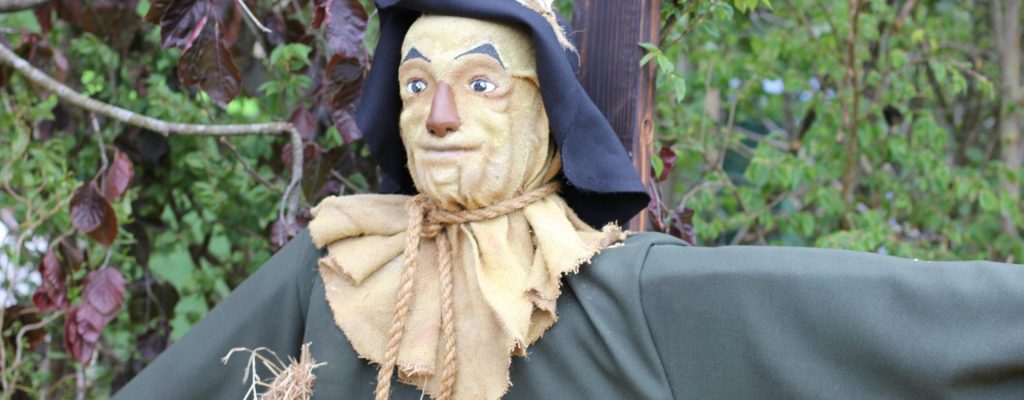
Wizard of Oz Scarecrow - MorgueFile-IMG_3130 175px Your choices aren’t only limited to the way you tie your shoes … and we’re not in Kansas anymore! 

So following the logic of the pre-programmed brain patterns we can begin to discuss, “What is the mind?” 

In some ways I think it would be fair to consider the “mind” the patterns of neural connections in the “wetware” that we use in thinking consciously, pre-consciously, sub-consciously and trans-consciously.

These patters of wetware connections at one level are what thought is as we understand it today. However, there seems to be more to mind though than just the wetware connections, because we retain an ability to override the preferred patterns grooved into the wetware and do creative, impulsive, spontaneous and original things.

This ability to create unique responses is grounded in the brain (or the total configuration of the wetware in the body-at-large), and at the same time it exceeds the patterns previously organized in the wetware configuration and familiar within it.

Every time you respond as you have “without thinking” you are NOT expressing freedom or choice,  you are expressing a pre-conceived notion or knee-jerk response grooved into the patterns in your wetware … like a pattern in the way the wires are configured in the plugboard of the ENIAC at any given time. In this way you are literally only capable of running the particular instruction set associated with that configuration in response to the presenting stimulus – you aren’t “thinking” you’re just following the actions associated with that instruction set.

Have a choice, or being free, requires you have options when acting in relation to any presenting stimulus.  

So freedom isn’t being able to do what you want, when you want, where you want, whenever you want … unless you have a choice about doing it at all!


“FREEDOM” is a Mind Game … but you have to first take control of your brain to have access to your mind.

This is something I learned early on in my NLP days … to use a quote from Richard Bandler, one of the co-developers of NLP:

Brains aren’t designed to get results; they go in directions. If you know how the brain works you can set your own directions. If you don’t, then someone else will. – Richard Bandler (http://www.azquotes.com/quote/703363)

In Richard’s book, Using Your Brain For a Change: Neuro-Linguistic Programming says he’s going to give the reader “a manual for running the brain” and in my opinion gets at least part of the way there in his descriptions, instructions and examples.

One of the things that’s interesting to me about “Using Your Brain For a Change” is that Richard never really talks about the hardware as wetware as I have above. Instead of getting into the whole discussion about neural patterns as they operate at a physical level Richard spends all his time discussing our representations of reality, i.e.: how the patterns we make about the world and ourselves are organized.

In particular the discussion of how we organize our representations of reality in this book by Richard Bandler are focused on what he refers to as “submodalities” … unique distinctions about the elements of perception that determine  how we make sense of what we perceive and what meaning we attach to those perceptions.

The submodalities of perception are organized into configurations, i.e.: “submodality configurations” that are more significant than any individual submodality standing apart from the pattern of the configuration as a whole.

Submodality configurations are comprised of two aspects that are equally important:

The Semantics of Submodalities: these are the way in which the particular submodality of perception is present in the representation of reality as it is known to you, e.g.: the unique color of someone’s eyes as you recall it and where you “see” that image in your mind’s eye, as well as the brightness, angle of view, distance from you and the way you hold the totality of the representation in regard to the visual image … as a photograph or video for instance.

The Syntax of Submodalities: this is the order or sequence in which the submodality configuration that forms your perception of reality is represented and attended to by you, e.g.: you can notice first the visual submodalities and then the auditory submodalities, or you might notice them in wholeform all at the same time as you would were they occurring in real time, and you might also notice the unique pattern of the submodality in stages as well, first noticing the color, then the brightness, then the angle and so on … and by virtue of the order or sequence the submodality configuration take on a logic unique to the syntax you use.

What Richard explores and examines in his work is both the semantics and syntax of “subjective experience” and how we can alter that for ourselves.

There is a powerful perceptual logic in the semantics and syntax of submodalities, and what’s unique to this logic to me is that it is non-linguistic, and therefore can be held and experienced in wholeform, i.e.: beyond the limits of language.

While language is always digital, with one element … a word, a sentence, a paragraph … distinct from the one before it and the one after, indeed from all other words, sentences and paragraphs, and by it’s very nature needing to be experienced separately from them, life occurs in wholeform, i.e.: all at a time, simultaneously.

Language is also always ordered sequentially and linearly, once more separating it from the experience of life, where many things can and do happen in simultaneity.

Submodalities are a kind of a bridge between the direct sensory experience of wholeform life as it happens and our processing of our conscious experience of life as what happened. They (submodalities) are magical, like the Old Norse runes, they are the elements from which we can conjure our subjective experience as we see fit.

“I, master of the runes conceal here runes of power. Incessantly plagued by maleficence, doomed to insidious death is he who breaks this monument. I prophesy destruction.” – Björketorp Runestone, 6th C. Sweden

Or one more, suggesting a runic use benevolently capable of giving life to the dead …

I know a twelfth one if I see,
up in a tree,
a dangling corpse in a noose,
I can so carve and colour the runes,
that the man walks
And talks with me.

– Odin

Hávamál, Codex Regius 13 C.


The relationship between Subjective Experience … Freedom … and Choice/Choosing

Until we have access to how we are choosing what we are responding to and how we respond to it, we have little or no choice … and, without the option to choose we have no freedom.

Now here’s a critical distinction … we may not always be able to choose “what is” or the elements we are experiencing in our reality, but we always have options about what we choose to make of what we’re experiencing.

How we make sense of things and what we allow them to mean to us is always in our control … when we are able to access the process we use to make sense of and make meaning from the presenting stimulus of our subjective experience. 

In this way, even when we are “objectively wrong” we get to choose our own experiences, and from there what and how we choose to respond to as it appears to us.

Here’s another Richard Bandler quote to tie things together:

The greatest personal limitation is to be found not in the things you want to do and can’t, but in the things you’ve never considered doing. – Richard Bandler (http://www.azquotes.com/quote/703366)

This is the essence of freedom (and mind) as far as I’ve concerned … i.e.: being about to choose what isn’t and hasn’t yet been.

Someone in prison who gets this idea fully can choose “FREEDOM” while doing the time of their sentence. Someone being beaten can choose to make it means something other than the loss of control of their experience.

Regardless, of the circumstance or situation if you can choose what something means to you, you can be free.

One of my favorite scenes of all time is from the 2006 James Bond movie  “Casino Royale”  with Daniel Craig, playing Bond. He’s being tortured by the criminal mastermind, Le Chiffre, played by the actor Mads Mikklesen. He’s in great pain and likely to be killed imminently in this particular scene:

Bond: I’ve got a little itch … down there. Would you mind? No! No! No! No. To the right. To the right. To the right!

Le Chiffre: You are a funny man, Mr. Bond.

Bond: (Laughing) Yeah! Yes, yes, yes. Now the whole world’s gonna know that you died scratching my balls.

Now that’s having control of one’s “subjective experience” and choosing in the most dire of circumstances!!!


In the end it ain’t what you can or can’t do … or be … it’s the choices you make with what you’ve got.

In the follow up to the scene from “Casino Royale” above Bond is next seen recuperating from his trauma in a hospital accompanied by his paramour in the film, Vesper, played by Eva Green. They are on a lawn and he is clearly weak and debilitated after his ordeal.

Vesper: Hello.

Bond: Hello.

Vesper: You all right? I can’t resist waking you. Every time I do, you look at me as if you haven’t seen me in years.

Bond: It makes me feel reborn.

Vesper: If you’d just been born …wouldn’t you be naked?

Bond: You have me there.

Vesper: You can have me anywhere.

Bond: I can?

Vesper: Yeah. Here, there, anywhere you like.

The scene continues a bit further in the dialogue …

Vesper: You know, James …I just want you to know that if all that was left of you … was your smile and your little finger … you’d still be more of a man than anyone I’ve ever met.

Bond: That’s because you know what I can do with my little finger.

Vesper: I have no idea.

Bond: But you’re aching to find out.

Vesper: You’re not going to let me in there, are you? You’ve got your armor back on. That’s that.

Bond: I have no armor left. You’ve stripped it from me. Whatever is left of me …whatever I am … I’m yours.

There’s something particularly remarkable in these two scenes to me.

There’s something particularly powerful about the nature of having control over one’s self, including the ability to let go … to be fully present to “what is” as well as one’s self and what one wishes to be experiencing in the moment, regardless of what the evidence is that is presenting itself in that moment.

I’d even argue that in terms of mythic form, in this moment captured by these actors, Bond is everyman and Vesper is everywoman … the ideal of the anima/animus as the blended being becoming whole and complete. Wonderful!

The conclusion I reach is that FREEDOM is more a powerful and potent force than PERFORMANCE.

Even though I make much of my living, and devote much of my life’s work to assisting others with mastery in terms of performance, i.e.: linking intention to action in terms of the results and outcomes they achieve, freedom is the real treasure … i.e.: having what you want as you want what you have.

Buona Fortuna & Abundanza,

Joseph Riggio, Ph.D.

New Hope, PA

Filed Under: Blog, Cognitive Science, Language & Linguistics, Life, NLP & Hypnosis, Transformational Change & Performance, Transformational Communication

Killing Me Softly …

Killing Me Softly …

by Joseph Riggio · Sep 7, 2015

Altruism’s Big Hidden Secret

Before I begin going too fast and too far I want to share a little bit of my bias in the interest of full disclosure …

OLYMPUS DIGITAL CAMERA


I’m a big fan of the American myrmecologist (someone who studies ants) Edward O. Wilson.

 Wilson also conceptualized the field of sociobiology, or the study of the biological roots and implications of social order in living organisms from protozoa to humans (he got a bit of backlash for the suggestions that humans should be included in such a conceptualization, but did it nonetheless). He defines sociobiology as: “The extension of population biology and evolutionary theory to social organization”[1]

I’m loosely sharing the following based on what I understand Wilson’s take on the sociobiology of altruism to be. All credit for the concepts I’m sharing here go to him, all blame for any incorrect assumptions are mine alone.

Okay, now that we have that out of the way …

What Is Altruism? … a sociobiological perspective

Hard Altruism

From a sociobiological perspective E.O. Wilson suggests that a particular form of altruism, what he refers to as “hard altruism,” was first and foremost an evolutionary advantage that allowed some lines of humans to prosper over others in a competitive environment.

For example, if an individual were to sacrifice themselves to save another of their bloodline, especially a child, they increased the chances for that individual to go on to breed and pass along the genes they share.

If the genes of an individual include a drive to altruism, i.e.: self sacrifice to save another in one’s bloodline, then these genes would begin to flourish in the population as it grew.

While it may seem that dying to save another’s life is a poor way to pass along one’s gene, it must be taken at the higher level of gene transmission to be understood.

We all share genes with our kin. Mothers and father each share about 50% of their genes with their offspring, Brothers and sisters share about 50% of their genes in common, half brothers and sisters share about 25% of their genes in common as do nephews and nieces with their aunts and uncles (NOTE: only identical twin share 100% of the same DNA).

So if we save another in our bloodline, we are actually saving the genes we share to potentially be passed along to the following generations. Using this logic, if I sacrifice myself for someone in my bloodline I increase the changes of those genes making it to the following generations through the transmission via the individuals I save with my sacrifice. When my sacrifice is greater than 1:1, i.e.: my sacrifice saves more than one person in my bloodline, my contribution to the transmission of my genetic profile to future generations is enhanced.

Now to be clear, this is not suggested to be a conscious choice per se, “Hey if I kill that intruder at the cost of my own life and my entire family gets to live than my genetic profile has a greater chance of being passed along than if I let them die and survive by myself.” Instead the idea is that there were individuals who had this instinct or response, and over time via natural selection the function of altruism led to a propagation of those individual who shared this trait to prosper over those who did not.

Altruistic War???

Taken further this instinct or drive would lead an individual to proactively sacrifice themselves to ensure or preference the survival of their kin. This would lead to war when resources got scarce, even if those who want to war knew they were unlikely to survive. The need to secure resources for the survival of kin would exceed the need for one’s own survival based on the natural selection for hard altruism.

If we continue to extrapolate even the threat of scarcity might be enough to prompt a hard wired individual to proactively seek to eliminate the threat before it became a reality exerting pressure on the clan or tribe that included one’s kin … pre-emptive war or raids on neighboring clans or tribes.

If the issue of blood relatedness is taken into this equation we might speculate about homicide within the clan or tribe to favor one’s direct offspring leading to high rates of murder.

If you take this one step further it would be reasonable to expect that the favoring of male offspring over female offspring would also be favored, because in a lifetime a male may produce many more offspring than a female is capable of producing.

Now, Wilson doesn’t say this, and I’m not suggesting this “hard altruism” led to these results in human evolution, but the potential is there if the theory holds.

Yet, Wilson does speculate about the function of hard wired altruism in the waging of human wars, and the willingness for individuals to sacrifice themselves for the clan or tribe they belong to if there is a perceived threat to it. I take this further and speculate that this may play a role in the kind of behavior we see in things like suicide bombers and some of the terrorist behavior leading to mass killings of innocents.


Soft Altruism

The Other Altruism

Edward Wilson also proposes a different kind of altruism, what he refers to as “soft.” In soft altruism the individual is driven to perform altruistic action that will potentially have a benefit to themselves as well. This is the kind of altruism that most people think about when the world “altruism” is used, not the kind that leads to self sacrifice predominately, or the kind that leads to war and murder (hard altruism).

Soft altruism is seen when someone shares their piece of bread with another, or does some act of charity. While there may not be the expectation of immediate return on investment for such action, there is a case to be made for that in evolutionary terms.

Imaging a clan or small tribe of proto-humans or early humans eking out a living in a harsh, competitive environment. The sharing of food would become a way of insuring that when food was scarce it would be used to support the largest numbers of people within the clan or tribe, versus hoarding which would limit the survival of the largest number.

Social Predation and Altruism

In a social species this is an important asset, especially when you consider a predatory species that hunts for food. Humans share a unique trait with other social predatory species, which are few in number on the planet, they hunted and killed animals larger than themselves for food with primitive implements long before killing such animals was assured in the hunt. When compared to other social predatory species humans are in a class by themselves for the size animals they hunted and killed proportionate to themselves.

By example the evolutionary record shows that humans would hunt and kill animals as large as full grown, healthy, adult elephants regularly. Not even a lion pack would take on a full grown, healthy elephant unless it was particularly desperate, and then the outcome would be far from assured. But humans took on such game regularly it seems.

In the case of more modern humans, still using paleolithic technology, game as large as water buffalo and bison were a common food source. Again no other predatory species, social or not, regularly hunts full grown, healthy animals this large proportionate to themselves. If we choose to use extreme examples the Inuit still hunt and successfully kill walrus and whale using primitive weapons (by modern standards).  Even a polar bear would be hard pressed to attack an adult male walrus, and would only attempt to do so on land, and then only in desperation. But it is a common for Inuits to hunt and successfully kill walruses in the spring.

The risk taken in such hunts is itself altruistic, the sharing of meat (and other items from the kill) is an extreme form of soft altruism when the kill is shared with those who did not participate directly in it. But the risk of not sharing would mean the potential of being ostracized by the clan or tribe, and in a primitive environment that would decrease the chance of survival many times over.

We see this behavior in many of the social predators; e.g.: lions, wolves, african cape dogs, hyenas … but not in solitary predators; e.g.: tigers, foxes, leopards, bears. So while humans aren’t alone in terms of food sharing, they are unique in the degree to which it is ritualized and formalized in the species.

Other Forms of Altruism in Human Systems

Another way that altruism appears in human systems is via non food sharing care that is exhibited, often to those who are not direct blood kin. Humans have a long recorded history of caring for those who are less fortunate than themselves when the other is unable to care for themselves.

A strong example of this is the taking in of an orphaned child that is not kin. Or the adoption of a child that is less fortunate and can be given greater opportunity to survive and prosper in the adopted home.

Of course any time care is given to another without the expectation of direct return we see this as an act of altruism. But altruism also exists where there is the exception of some form of return for the act performed.

When a “favor” is given with the expectation that it may be returned someday, either directly or indirectly, that too is a form of soft altruism, and would have strong precedent in evolutionary terms as well.

If I can expect that either I or my kin would benefit from an act of kindness I perform today it would behoove me to perform it even if I don’t get an immediate reward for doing so. Over time this ritualized performance of altruistic acts would become part of the background of culture and raise the status of the individual within the group who performed them as well. So in this case altruistic acts would potentially directly benefit me with acts in kind offered at some future point in time, or alternatively by raising my status within the group.

This kind of soft altruism has become ritualized to the point of professionalism in some quarters. I would argue that the entire lobbying industry in the U.S. political system is a form of systematized, ritualized altruism. The lobbyist asks a politician for the favor of a vote on a particular topic of interest to the group they represent with the expectation that in the future the politician can expect the support of that group for their accommodation. It might even be argued that the entire structure of the lobbying industry as it exists is based on the premise that if I scratch you back today, someone coming up after me in the future will scratch my back, ad infinitum, securing the role of the lobbyist within the systematized and ritualized walls of politics at large.

Take from an evolutionary point of view such altruism would give the altruist a potential survival advantage, and again this argues for a basis in the long road of human evolution and the genetic potential carried from thousands of generations of individuals, and now embedded in the social fabric, albeit largely invisibly so.


Does Altruism Have A Future? 

Personally I’d argue that we’d have a hard time breeding out altruism from the human species at this point, but culturally modifying how it’s expressed is an entirely different story it seems. While biological evolution occurs regularly, compared to cultural evolution its movement is glacial (although with climate change that’s not the same metaphor it used to be).

We have already seen major shifts in the ethics and etiquette expressed in modern human societies. It’s almost impossible to read a cultural magazine, read a newspaper or watch a news program without some complaint about the decreasing moral values that sustain a desirable kind of altruistic ethics and etiquette we’d like to see on a regular basis.

While the fundamental genetics for altruism are probably largely unchanged in the last generation or so, the way we express ourselves socially has radically shifted.

Take as example the idea of chivalrous behavior from as recently as the 1950s here in the U.S. to the fostered equality between the sexes at the start of the 21st century leading to some very different ways that men and women now interact.  It could be argued  in many cases that a lower degree of civility exists today than ever … despite the arguable increase in equality between genders in other terms.

While there has always been tension between integrated and assimilated individuals within cultures, especially in those cultures that are high context and kin driven, there is more animosity than every between citizens and immigrants in many places around the world than ever as well.

In the past immigrants were expected to integrate and assimilate, and even when it wasn’t elegant eventually found a way to do so. Now we see a significant proportion of immigrants who demand the right to retain their cultural, ethnic, religious, moral, sexual or language habits or preferences accommodated in the societies into which they emigrated without having to or being expected to integrate or assimilate. This has raised tensions in many societies to untenable levels of discomfort for many.

This could be considered a kind of perversion of altruism when viewed from a sociobiological perspective. If the majority group holds an altruistic form of cultural preference to accommodate the “other” and the minority group is willing to use that altruism to their sole or unique benefit than the function of altruism becomes distorted for the majority who accommodate the minority. It could be argued further that it is only when the function of altruism potentially benefits the entirety of the population exhibiting it that the sociobiological benefits of altruism are realized.

If this were extrapolated to the “Nth” degree we might see a future where only hard altruism remains, as held and fostered by the minority groups perpetrating it. This would be a disaster of enormous proportions using Wilson’s speculations. From a a Gravesian point of view (levels of development within Clare W. Graves’ model of human social-cultural-biologial evolution) the system corrects such errors by evolving culturally to modify the values held to support the greatest gain for the many over the few, to the point of preferencing ever larger systems. The suggestion within the Graves Model is that eventually the “system” becomes the planet that is preferenced over any group inhabiting it. I personally believe we are on the cusp of this level of developmental evolution.

Capitalism and Altruism 

If my take on cultural evolution is correct vis-a-vis the Graves Model evolving to correct for the perversion of altruistic impulses in the many to favor the few (think about the 1%/99% argument in the Occupy Wall Street movement of 2011), than the system will shift to a means of caring the many over the needs or desires of the few.

Now if this correction as I put it comes to pass it will be a hard pill to swallow for some. There are people on both ends of the few who will be impacted. Those who are living at the extremes of wealth or privilege for instance will not be preferenced the way they are today by the system. There will be much less disparity between the extremes of wealth (as only one example of privilege or preference), but a greater more equanimous distribution of resources, as well as a more equal access to resources.

As an example, think about the elimination of “elite” schools in favor of less schooling available to average or mediocre students with more attention on offering specialized “elite” education to those exhibiting the greatest potential to utilize it, and other opportunities offered to those who demonstrate less potential or talent. No more quota systems or weighted advantage for the disenfranchised or disadvantaged, but no need either.

No more Harvard or Oxford for the rich, privileged and connected, but a pure meritorious system. But, the caveat would be that at any time someone shows the potential and/or talent to succeed in such an institution the doors would become open to them, not just at 17 or 18 on the basis of past performance as an adolescent and a standardized test or two.

This same kind of thinking would extend to the larger social and political systems. Think about the potential of a political system where we would vote on the platforms of the candidates only, without knowing the individual we are voting for by personality. We could arrange a system based on open access to the platforms via Internet cafes opened and run by the government solely for this purpose like public libraries, and these cafes would then also become the voting “booths” of the future as well.  Of course we could also have a vetting process to insure that they were legally able to hold office, that including the question of any obvious ethical breach that might make the unsuitable to do so.

Now extend the thinking once again to the business systems and apply only those regulations that insured the distribution of resources, including profit, proportionally to everyone in the organization. A “founder” could be rewarded for their contribution in a single payment of sorts for taking the initial risk and coming up with the initial concept at some rate against the success of the enterprise using a formula for potential future growth out to a specific point in time, say ten years. Or they could exit with a payment of a specific percentage of the value of the entity at any point in time up to ten years, but no more than say 10% of the total value of the entity regardless of the percentage held (as a public company, private companies could be organized differently).

Individuals who come in with specific an highly desirable skills could be given a kind of joining bonus when they start working for an organization, but then fall into a compensation plan that is much flatter than the ones commonly scene today. Even private companies would be forced to follow this flatter plan for compensation.

Shareholders would be forced to take a limited return on investment of any company they held stock in and pay a much higher percentage of unearned income than those paying taxes on earned income (the exact reverse of today’s model of taxation in the U.S. and most other places). This would force a greater valuation of the contributions of the working class, while still rewarding those with wealth to invest. To make this work of course the return on investment for shareholders would have to be weighted by their ability to realize capital gains in addition to dividends paid on their investments.

An Altruistic Transition to the **NEW** Capitalism

We could have a single moment of amnesty for the super wealthy today to take advantage of a last time to payout against their current holdings before moving into a new system, but they would no longer be able to realize the long term advantages of accumulated wealth as they had in the past or current systems. In all cases when such systems went on too long either revolt or conquest led to their demise, with those who had accumulated enormous wealth standing the most to lose, including their lives.

There are a lot of potential issues to be dealt with in such a scheme, but with modern technology all are doable today. The bigger issue is cultural willingness and acceptance to force such a change before a crisis that forces it upon us, e.g.: bloody revolution.

One of the critical factors in establishing such a **new** system would be the lack of governmental regulations. The system needs to be open to exploration and risk. Those who take risks would be responsible for them personally as well as organizationally. For instance if an organization allowed a researcher to do research that caused harm to others both they and the individual causing harm would be held culpable in the full. This would extend the most grievous outcomes for those bringing risk to others in unwarranted and unacceptable ways, especially if the motive were to realize profit.

In such a system non-human interests would be treated with the same degree of protection regarding risk as humans. These non-human interests might include the environment, such as the oceans and seas, water ways, air quality, soil quality. And we would extend this kind of responsibility to biological non-human entities as well, such as plants, animals, and the mirco-biome of the planet.

Making the system self-regulation with the responsibility of assuming 100% of the risk in aiming to realize profit would reverse hundreds or thousands of years of culture of course, but the alternative might be a corruption of the altruistic instinct that leads to our eventual total demise as a species, and even something potentially worst than that.

Joseph’s Pitch

Okay … short and sweet to end this monologue.

To move in the direction I suggest would mean the evolution of a **new** mind that precedes and exceeds the **new** system.

Fortunately I am suggesting that just such a **new** mind is coming into being even as I write this diatribe on altruism and the **new** system. And, FWIW I believe that business will lead the way, albeit not as we understand “business’ as it is today … but business in the ideal sense of serving a community that includes the producers and the consumers equally with the intention of improving the quality of life for all concerned.

My own small role is to live near the edge of this vision as pioneer speculator with an intention to translate the data present at that edge into usable “mind technologies” we can access and implement now.

Joseph Riggio, Ph.D.
New Hope, PA

P.S. – As always I look forward to your comments and reactions to this bit of current speculation of mine too `’~> … please drop them in place below for me.

Filed Under: Blog, Business Performance, Human Systems, Life

The Nature of Change

by Joseph Riggio · Jun 12, 2013

“Happiness is never really so welcome as changelessness.”

-Graham Greene


I often get asked something like, “Why bother?” … because it’s unclear to most folks exactly what it is that I do.


It’s usually a sign of some confusion that I get asked such a thing, because the connection between the work I do … the actual service I provide … is often unclear, even to my clients … except for the results they get. It’s why they keep coming.

To be fair what is unclear is “HOW” what I do works, NOT the outcomes I produce.

The outcomes, the “WHAT” that clients want, are attained within the work we do together … that’s clear.

However, from my point of view the “HOW” is much more interesting than the “WHAT” … despite how obscure it can seem to the uninitiated.


Separating “THIS” and “THAT” … or,
Unraveling the “X/Y Paradigm”


In the simplest terms I am a “Change Artist.”

That is, I help individuals and organizations make changes they want or need to make … for whatever reasons they may have to do so.

To be more specific, I am a “Healer” … in the most traditional sense of that word.

For most people the word “Healer” is a mystery of sorts, carrying a ton of semantic baggage with it.

However according to Webster’s 1913 edition of the dictionary a Healer is:

“One who, or that which, heals1.”

I prefer this quote in describing a Healer myself:

“Healing is really just a common job, there are lots of healers. She was one, I was one. Doctors, therapists, nutritionists, acupuncturists, dentists, shamans, physical therapists, editors, divorce lawyers, plumbers; there are healers everywhere. I used words and emotion to help people heal. He, I was told, used something along with words and emotion. That’s what interested me, the something else.“

  • Bill Bruzy (2009-09-15). I Took the Buddha Shopping (Locations 68-71). Kindle Edition.

I too help people to heal with “something else“.

The “healing” I provide people with happens through facilitating change.

If we dig a bit deeper we would come to a more interesting tidbit about the nature of the work I do, and that is that I am actually promoting “changelessness” in the work I do with clients.

You see I’m Graham Greene on this one, that “changelessness” is more welcome by most people than happiness. BUT unlike Graham, I believe that perceiving and experiencing the extant changelessness at one’s core is what they actually seek … NOT the changelessness he refers to on the outside, i.e.: no change in the context of their lives, stability and consistency over all.

Folks are simply confused about this, and it’s what I believe leads to confusion in my work too.


I’m never confused about what I do, or for that matter, what I’m doing when I’m working with clients … I’m aiming at what is changeless in the individuals and organizations I work with, and making that manifest and extant in how they experience themselves.


Sometimes it’s also about how people in relationships experience what is changeless in their relations … but it’s always the same old, same old … or as my teacher, mentor and friend would tell me … “Joseph you’re a one trick pony.


The real trick is the paradox that to become changeless you must first change, and I am gifted at provoking change in people.


Healing Beyond Words …


What’s sometimes surprising to me is how the obviousnesss of what I do escapes folks, even those I’ve worked with for years sometimes.

Sure, they get the outcomes the come for … the the “HOW” seems elusive, or invisible, to them somehow.

What they miss most of all is that what they really get is healing … deep, profound, unspeakable healing.

This is understandable, how they miss the healing part of it … because it’s beyond words, and beyond the common paradigm. WHAT I do, and HOW I do it, are beyond how “it’s done” in the modern framework.


Heck, if I more openly called what I do “healing” or called myself a “Healer” most folks who don’t yet know me would be more likely to use the label “quack” … especially when I refer to healing relationships and organizations!


I’m guessing though that quite a few of the folks who do know me, when they read this, will get exactly what I’m talking about … and may even wonder why I don’t more often use these terms in referring to what I do or myself.

There is another part of the “trick” I do. My “trick” depends on helping my clients get to NOTHING before they get what they want.

This is where we separate the clients who will make and those that will go back to where they’ve always been … those who choose the red pill and those who choose the blue pill.

“Morpheus: This is your last chance. After this, there is no turning back. You take the blue pill – the story ends, you wake up in your bed and believe whatever you want to believe. You take the red pill – you stay in Wonderland and I show you how deep the rabbit-hole goes.“

From: The Matrix (1999)

It’s about the choice between the path of seeking change or unveiling one’s changelessness and learning to remain constant in that.

It’s about the freedom to become who you are … fully, completely and wholely … and in that healing what ails you. In becoming changeless, even when the disease remains … the discomfort is relieved.

The idea of becoming changeless is far beyond “healing” as most people have been taught to think about it … it’s about leaving the Matrix behind.

Profound healing is NOT about getting better, or getting past or over what ails you, or learning how to cope with it either.

Profound healing is stepping into your life “as it is” without changing a thing … and in that finding the enchantment, wonder and awe present in this moment.

Then and only then, when you’ve stepped beyond the Matrix, delved into the deepest regions of your being, and begun to experience the essential nature of your changelessness, can you begin to re-emerge into the world proper and choose the life you will lead.


Maybe even more acurately than calling myself a “Change Artist” or “Healer” .. in the tradition of Tarkovsky I should call myself a “Stalker”2. This is very particular and peculiar skill … one I seem to have a proclivity and prodigious training for as well3.


Joseph Riggio, Ph.D.
Princeton, NJ


  1. From The Collaborative International Dictionary of English v.0.48 ↩
  2. A guide who leads others into the “Zone” where their deepest desires are revealed, and their wishes granted. ↩
  3. My everlasting thanks to Roye Fraser. ↩


PS – Summer Intensive Training w/Dr. Joseph Riggio:


MythoSelf Behavioral Communication
Professional Certification Training

Presented by ABTI | Princeton and Acuity World, DK

SPECIAL ONE WEEK ONLY OFFER
(expires 19 June 2013)


Opps … I made a BIG MISTAKE …

My partner Henrik Wenoe, at Acuity World has been on my case for weeks (months really) to announce this training program to my list … but I’ve simply been swamped.

The Early-Bird pricing “officially” ended on 15 May 2013 … and here we are almost a month later and I haven’t even let folks know about this powerful program we’re running this summer.

So I’m taking the blame and doing what I can to make it up to you …

For the next week you can still get the Early-Bird pricing for either attending the event live in-person, or via Live Internet Simulcast (there’s even an option to pre-purchase just the videos) … when you register directly using this link:

MythoSelf Behavioral Communication – Summer Intensive

You’ll SAVE $3000 from the Regular Investment for this 12-day Intensive program when you attend it live (BTW the investment includes room and board with three meals a day, snacks and coffee/tea/water all day long).

If you want to attend via the Live Internet Simulcast … now broadcast in HD via my private LiveSteam MythoSelf Channel … or pre-purchase the HD video recordings, you’ll be able to take advantage of the Early-Bird pricing as well.

BUT … you must act immediately to get the Early-Bird Pricing (there’s also a three-payment plan I’ve set up for you as well if you want to spread out your payments over three months) …

Here’s the link you need to use to register and get the Early-Bird pricing:

MythoSelf Behavioral Communication – Summer Intensive


[NOTE: The full program brochure is here: http://www.acuityworld.com/pictures_da/med_clips/Joseph%20Riggio_2013.pdf]


Filed Under: Behavioral Communication, Blog, Language & Linguistics, Life, NLP & Hypnosis, Transformational Change & Performance, Transformational Communication

Foolish Wisdom … Making The World Go ‘Round …

by Joseph Riggio · Nov 13, 2012


“Foolish wisdom is about dealing with the world in ways you have not before …”


Challenge is …
Most folks can’t get out of their own way

What I mean by “most folks can’t get out of their own way” is that they lead with their limitations. Of course, they don’t mean to … heck, they don’t even know their doing it 90-plus % of the time … but they do nonetheless.

The reason most folks lead with their limitations can be boiled down to just a few things:

  • Their limitations are intertwined with their “success formula” – i.e.: how they know to create the successes they do

  • They perceive the world from a limited point of view that’s relatively fixed and unchanging, i.e.: myopic perception

  • What they’ve experienced is what they think they’ll always experience, i.e.: they project their past into their future

  • The education they’ve had defines the world for them as they know it, i.e.: they haven’t learned to use their senses

  • Reality as they know it to be has a singular form that’s unchanging, i.e.: they seldom if ever challenge their beliefs

  • Truth/Knowledge/Learning … whatever … all exist “out there” beyond them, i.e.: expertise is external to them

I’m sure I could extend the list, but why? If you don’t get the pattern from what I’ve included above, more items in the list isn’t going to make it any clearer for you. In fact I could probably make it just one list item and cover the whole gambit …

  • Only socially validated and reinforced values are acceptable to them, i.e.: what they know instinctively and intuitively is put aside when they are confronted by others who demand socially acceptable “proof” … they are externally organized and other-referencing, versus internally organized and self-referencing

Now there’s nothing wrong with being externally organized and other-referencing per se … BUT it’s a function of interplay between context and content … and timing. When you know you don’t know, and you seek external input, from experts or otherwise, that’s wise … BUT, when you have gathered the information and knowledge you need the ultimate decision about what it means always remains personal … ONLY YOU CAN DECIDE WHAT’S TRUE FOR YOU.

This may seem obvious and self-evident, and to a very great extent it should be and is so. The challenge for most people is clear however …

SELF-DOUBT

FWIW I’m a big fan of doubt … until I don’t. To quote my own mentor, Roye Fraser …

“When in doubt don’t.” 

What Roye taught was that doubt meant, “not enough information” – simply meaning, you need to gather more information than you have, so you can remove the doubt. So until you become settled within yourself don’t take any action you don’t need to take before you need to take it.

The key in that statement is: “until you become settled within yourself don’t take any action you don’t need to take” …

Yet, the deep challenge for most people is they’ve never learned how to know when they are settled within themselves, so they continue to look for and count on external information and validation, i.e.: social proof.


What to do about it …
(escaping the pattern of leading with your limitations)

This is in a very large part why I’ve shifted the presentation of what I’m doing around to focus on the idea of “Foolish Wisdom” … i.e. dealing with the world in ways you have not before (that will make you more successful). 

“Foolish Wisdom” is the wisdom of the Fool

This seems so very self-evident, yet most folks have forgotten who or what the Fool truly represents.

The Fool doesn’t represent stupidity, mental limitation, sensory inhibition or even immaturity as some seem to think.

The Fool represents the innate, naive, childlike wisdom that perceives with clarity and without distortion what is happening around them. 

The Fool is NOT childish, but childlike … a distinct difference. The Fool first perceives and then acts, without prejudice. When you get that last statement you’ll get how profound the position of the Fool truly is … beyond where some vast majority of people can or do act from themselves.

Let’s step back for a moment to an earlier part of this post. Take a look at these four bullet points again in relation to the statement about who the Fool perceives and acts:

  • They perceive the world from a limited point of view that’s relatively fixed and unchanging, i.e.: myopic perception

  • What they’ve experienced is what they think they’ll always experience, i.e.: they project their past into their future

  • The education they’ve had defines the world for them as they know it, i.e.: they haven’t learned to use their senses

  • Reality as they know it to be has a singular form that’s unchanging, i.e.: they seldom if ever challenge their beliefs

You can see that if these bullet points are accurate about how most people operate, it’s almost diametrically opposed to how the Fool operates. The typical person’s operating position is mired in prejudice, based on what they have been taught, what they’ve experienced and what they already believe. As it says, “they project their past into their future” … and this applies to how they judge what they haven’t experienced or learned about yet.

In working with some of the largest, most progressive and most well-funded businesses in the world, I’ve had the opportunity to counsel the senior most leaders of those organizations regarding decisions they needed or wanted to make (and sometimes about the ramifications of decisions they’ve already made). I’ve also spent thousands of hours in rooms with these same folks doing developmental training and facilitation work with them.

What I’ve found again and again is that these bright, extremely well educated, accomplished and successful individuals sometimes don’t know their rectum from a hole in the ground when it comes to making good decisions, taking meaningful action and/or leading others to do the same!

The “standard path” that many senior business leaders take (and you can include most entrepreneurs, business owners and professionals in this group too) … is to use past performance to determine the future direction and action they should, will and do implement. STUPID! STUPID!! STUPID!!! Not only do they do this in their organizations as leaders … often based on “best business practice” bullshit … they also do it in their personal lives. STUPID! STUPID!! STUPID!!! (I can’t say or emphasize this enough regarding this ridiculous pattern of thinking and behavior.)

Okay, let’s back off a minute … calm down and cool off, shall we?

Why would anyone do this if it were such a stupid thing to do?

Three profoundly powerful reasons:

  1. Because it’s embedded in their success strategy

  2. Because they’ve learned that this is the way to do things

  3. Because it’s socially acceptable to do it this way 

  4. And, when they do they get massive CYA (Cover Your Ass) benefits

Simply put, they don’t know any better … so they do what they know.

On the other hand, the Fool always knows that they don’t know … so they can’t do (act on) what they don’t know … instead the Fool acts “in time” based on real data/information in the system as it emerges, i.e.: their perception, decision-making and action strategy is always emergent.


Where to go (I’m going …) from here …

I’ve learned a tremendous amount of how to help people make transformational change in the last two plus decades of doing the work I do … and most of it revolves around helping them to unwind bad learning.

The starting point of real change is the ability to accept that what you’re doing now, and the way you’re doing it doesn’t work … or at least doesn’t work as well as it could. You’d have to be willing to try what you haven’t tried before … and YOU can’t do that … literally!!!

YOU can’t do what you haven’t done/tried before, because YOU won’t even be able to recognize it if it bit you on your arse!!!

You can literally only see, hear, feel, taste and smell what you are already accustomed to … until the doors of perception you operate from are opened further than they are now …

YOU CAN’T DO THIS YOURSELF!!! …
It must be done from outside of YOURSELF

There are pretty much two ways to get there … i.e.: outside of yourself:


  1. You can step aside from what you now know and believe … putting all your learning, experience and beliefs aside


    -or- 

  2. You can allow someone who has been where you haven’t been perceptually to open the doors of perception for you


This is the work I’ve now committed myself to doing, i.e.: working with clients to provide them with Foolish Wisdom … pointing to the emergent present with enough clarity, humor and provocation so that they can see, hear, feel, taste and smell it for themselves. 

In this regard I see myself as the “Wise Fool” leading the way by proving that I don’t know … claiming to neither possess nor offer anything except the most valuable thing of all for the truly wise … NOTHING.

Hell, that must be a claim you can believe …

“When you come to me I promise you I’ll do my best to neither have nor give you anything, and if we’re successful you’ll leave with NOTHING for yourself.” 

There’s really only one good reason to pursue Foolish Wisdom for yourself …

Because you want to make better decisions and take more meaningful action in your life.

By making a commitment to become a Wise Fool yourself –

  • you’ll become a better leader …

  • you’ll experience life more fully …

  • you’ll transcend the limitations that you now encounter repeatedly …

  • you’ll find a way to achieve what you haven’t before …

  • you’ll transform your relationships – with your spouse/lover, children, parents, friends, employer, employees, co-workers – EVERYONE …

you’ll begin …

Having the experience of YOUR life!
(both on your own and with others)

Foolishly yours,


Joseph Riggio, Wise Fool and Provocateur Extraordinaire

Princeton, NJ


PS – Soon enough I’ll be announcing my workshops for 2013 … in the meantime you can still register to attend the MythoMania program here in NJ on Nov 29 and 30, Thursday and Friday … and it’s almost FREE, my gift to the MythoSelf community each year …


MythoMania 2012 Register NOW


Filed Under: Behavioral Communication, Blog, Business Performance, Cognitive Science, Life, Transformational Change & Performance

« Previous Page
Next Page »

© 2025 ABTI | Joseph Riggio International · Rainmaker Platform

Privacy Policy

  • Services
  • Log In