This website or its third-party tools use cookies which are necessary to its functioning and required to improve your experience. By clicking the consent button, you agree to allow the site to use, collect and/or store cookies.
Please click the consent button to view this website.
I accept
Deny cookies Go Back
  • Skip to primary navigation
  • Skip to main content

ABTI | Joseph Riggio International

  • Home
  • Meet Joseph
    • To Sicily And Back … A Love Story
    • JSR Short Bio & CV
    • Abbreviated CV Timeline
  • BLOG :: “Blognostra”
  • Contact
You are here: Home / Archives for Elite Performance

Elite Performance

The State of the Practice: ABTI | Joseph Riggio International

The State of the Practice: ABTI | Joseph Riggio International

by Joseph Riggio · Dec 29, 2019

Entering A New Decade – 2020 Update

Howdy …

 

Here’s a little sandwich I’m building for those of you who have some interest in working with me professionally at some point, as well as those who have worked with me in the past or are working with me now.

NOTE: This meal is for anyone who’s been paying attention, and wants to kick ass, take names and get on with having YOUR life … 

First the bottom slice of bread, that the rest of our meal together today will be built up from …
(we’ll add condiments later on):

Okay let’s start with some self revelation … it’s my 6th decade here on Planet Earth, or Gaia as some folks prefer to think of her (yes, I think she’s a she because she is fertile and fecund).

That little tidbit ain’t so meaningful by itself, but very few little tidbits are meaningful outside of context, so let’s add some context.

This is all about where I’ve been (very little actually about that) and where I’m aiming (almost everything else here is about that) as a professional expert advisor, mentor, coach, consultant and trainer.

So now little juicy tidbits won’t be here about my personal life behind closed doors (sorry if you might have wanted or even expected that from me … maybe another time, with photos).

Of course all this is only meaningful to the extent that you care, and more to the point — in the way it may impact or effect you personally.

So I’m aiming this update at those folks who have worked with me before and who’s life/business I’ve impacted, those who are working with me now and are hoping for a positive impact and effect in the work we’re doing together, and also to those who may consider working with me in the future as well.

Now that we’ve covered the preamble and framing stuff let’s go to the meat of cheese of it all …

It’s significant that after living on her ample bosom I can happily report that Mother Earth has treated my particularly well, and I am both well satisfied and well positioned to continue with sojourn here for a while longer (Trans.- basically I’m in great health, good spirits and prepared to leap forward from the base of learning and experience I’ve accumulated in the past six decades).

For about three of my six decades I’ve been working at learning and applying stuff about the human condition to various and sundry aspects of creating an extraordinary life. Some folks say I’ve gotten pretty good at it too.

Here’s a short list of some of the sundry things I’ve put my attention on over the years:

  • Teaching NLP and communication skills
  • Learning and using Roye Fraser’s ‘Generative Imprint’ model working with folks and help them discover, access and sustain what it’s like for them to be at their best, and operate from there consistently
  • Working with individual clients and some small groups to provide personal interventions around issues like health and wellbeing, personal and professional relationships, career and business issues … doing what now today might be called coaching, but I still prefer the term I learned with Roye, “doing a piece of work”
  • Architecting and designing the MythoSelf Process model, originally called the Mythogenic Self Process, as an aesthetic model of embodied ontology using somasemantic interventions
  • Developing ways to integrate the NLP model and Roye’s model together building customized sales and leadership development training solutions for business/professional clients
  • Designing positively organized strategic solutions for my business/professional clients and assisting them to integrate and implement them
  • Training, certifying and licensing folks, who were interested and committed, to facilitate and train the MythoSelf Process, the model of work I’ve been at since 1990
  • Developing and delivering online training programs built around the MythoSelf Process model, and integrating that with other things, like business development and communication skills.
  • Training and mentoring coaches and consultants in building their business and deepening their skills
  • Working with high achieving individual clients on personal as well as professional issues like their relationships, business transitions, legacy …

So you can see I’ve been busy … and growing.

But, as I’ve noticed is so often the case, as people get older the circle closes, and they return to their roots. So it is for me.

My love is the MythoSelf Process work, and helping people to develop the fundamental life perspective it fosters … what is best called having a “possibility mindset” … seeing the world through a lens of opportunistic thinking and linking that to taking action.

Now this is a remarkably simplistic way of referring to what I do with people, but it gives us a place to begin and orient from as I go a little deeper.

What’s required to access and sustain a possibility mindset is a new perspective about life, and that perspective is that it’s always working, even when it may seem from a particular place and stance that it is not.

A simple example of having a possibility mindset is the idea that all endings are also new beginnings.

It’s also about recognizing the possibilities or opportunities that abound in the present moment.

So, in part it’s also about developing a specific kind of intuition to notice for what is present but unseen, including the emergent future possibilities — something I refer to as adumbration, or the art of foreseeing the immediate future that’s unfolding in this moment.

I can go on, but the work is complex, deep and profound in so many ways, all of which enhance and create a robust richness in living one’s life, both on own’s own and with others (now you can see why I so love doing this work).

What this means is that I’ll be rolling up a lot of what I’ve done and have been doing, some of it that I’ll only be doing in the future with partners I have built significant relationships with who are peers and colleagues in delivering what I think of as some of the best training, consulting and coaching programs on the planet, but other than that it will disappear from my personal portfolio of work.

The work that will happen only in conjunction with my partners will be everything I’ve done before (as well as stuff I haven’t) that doesn’t specifically fit into what’s below.

I guess the question then becomes — what will I be focused on moving forward …

Simple …

  • One to one, and small group work, with high achieving individuals (and those who are truly aspiring to be high achieving themselves) … i.e.: doing a piece of work

    This is all about personal and professional interventions to develop the kind of intuitions that make living one’s life on one’s own terms effortless, Getting Unstuck, Breaking Through and Creating Results to put it another way — this is all about resolving the ways in which you get in your own way, and freeing yourself to see the world in ways you haven’t before or yet, to open you to the vast range of possibilities to have your life work as you wish and desire … on your own and with others, personally and professionally

  • A major shift to delivering Relationship Coaching and Training as a central theme of what’s coming — for folks who’ve been there and done that, and who are ready to build a relationship that fulfills them completely — what’s intended to be the “Last Chapter” … where you get to live “happily ever after …”

    I’ve been around long enough to know that we are embedded in our relationships, especially those that involve those we love — this work is about resolving what gets in the way of having the kind of relationship that happens in RomComs, Hallmark channel programming and romance novels (especially those with the steamy bedroom and beach scenes) — I’ve been aiming at this work actually for years, and I’ve done a lot of it, and now it will become a major focus on where I’m placing my time and attention on live programs going forward … if you’re on board, get ready for the ride of your life, because that’s the only one you’ll know after you’ve experienced what’s in store for you here

  • Running and delivering MythoSelf Process Training and Certification Programs internationally

    I’ll be running a limited number of MythoSelf Process programs for individuals internationally throughout the upcoming year with folks certified by me to deliver them, and turning over this part of the MythoSelf Process training to them more and more over the next two years (so if you’ve ever wanted to attend a MSE | MythoSelf Experience with me do it this year) … this is at the heart of the work I love, and part of what this means is that I’ll be focused on running and delivering certification programs, and for those who are interested and skilled offering licensing to run MythoSelf training themselves.

  • Working with Coaches, Consultants and Expert Advisors as a mentor and advisor to them

    I’ve been around a long time now and I have something to share with those folks who are interested in what I’ve gathered about this work — this is highly specialized work … and I intend for it to be very intensive and intimate work as well … for a very target group of folks, but where it’s a fit there’s a lot we’ll be doing together — business building, skills development, client insights …

And, that’s all folks!

Now you have the meat and the cheese (the work I’ll be doing with others, as well as a ton of what I intend to give away for free … a new podcast (or two), live video feeds, my ongoing writing (in some new places too) … we can call the condiments, okay?).

If you want the short summary … it’s all gonna be MythoSelf … MythoSelf all the way through and through (the exception being some of the work I do with my partners) … no matter how it’s dressed up, and all the other stuff falling away like a snake shedding it’s skin and revealing itself anew.

So to place the other slice of bread …

(the one that closes a proper sandwich, so you can pick it up and eat it with your hands, not that finicky, prissy shit of using a fork and knife, cutting away little bits to place in your dainty little mouth … my stuff is intended to take big old bites out of … this is stuff that will nourish your soul, as well as improve your life):

Look for some major changes in what I’m putting out in 2020 and beyond, as well as where you’ll find it … and some of the changes will be significant too.

I’m going to hand off or shut down a number of my FB groups, to focus much more on consolidating what I’m saying and to whom.

I’ll have some new places and ways of sharing what I’ve consolidated as parts of a singular message (can you guess what that is … ding, ding, ding right on! … all MythoSelf Process based stuff … stories, applications, examples … all of it).

I’ll be sending out a few emails shortly to invite anyone who’s interested to a few new things I’m setting up, so keep your eyes peeled (and if you’re currently in a program with me, watch especially carefully as we update everything there too … especially for you folks).

Thanks for listening 😉

Joseph Riggio, Ph.D.

Architect and Designer of the MythoSelf Process and SomaSemantics
December 29, 2019 (the end of an era)

PS – If you’re excited by any of this and want to discuss what’s coming up and how you might work with me, join a program or find out more before we come out with our major release of the new era information you can schedule a call with me here: Talk with Joseph


 

Filed Under: Blog, Coaching, Elite Performance, General, Human Systems, Life, Mentoring

This Ain’t No Zen!

This Ain’t No Zen!

by Joseph Riggio · Jun 27, 2018

If it ain’t Zen, WTF is the MythoSelf Process then???


Essentially the MythoSelf Process is the “the ability to freely play and take action” it’s about “being childlike and creative in the way you experience, approach and show up in the world” … but, it ain’t Zen, or any other frackin’ thing either … we’ll come back to all this, but first we need to lay some groundwork.


Sometimes folks who come to experience the MythoSelf Process or to learn “how to do it” meaning that they want to become proficient in running the process with others as well as for themselves, assume that the MythoSelf Process is “like” Zen or something.

Here’s the first rule of the MythoSelf Process (NO! The first rule of MythoSelf is NOT: “You do not talk about MythoSelf.”):

The first rule of MythoSelf is: “THIS IS NOT THAT.”

Let’s start there things are themselves, i.e: what they are, no more, no less and not “LIKE” something other than themselves, regardless of what we’re referring or pointing to, things are just themselves … objects, people, places, events, ideas, and yes, the MythoSelf Process is just the MythoSelf Process … it ain’t Zen (or any other bloody thing you can imagine in the distortions of your mind “it’s LIKE” … ‘cause it ain’t!).

Okay, so then what “IS” the MythoSelf Process???

The MythoSelf Process is dynamic, i.e.: it’s a process:

proc·ess

ˈpräˌses,ˈprōˌses

noun

  1. a series of actions or steps taken in order to achieve a particular end.”military operations could jeopardize the peace process”synonyms: procedure, operation, action, activity, exercise, affair, business, job, task, undertaking”investigation is a long process”

The MythoSelf Process “happens” (NOTE: it’s never “DONE” to someone, it “HAPPENS” with someone or a group of people).

The MythoSelf Process reveals what we call the “source code” that a person uses to know themselves to be alive. It uses an “if/then” algorithm, “if THIS, then THAT” … if “this” is present then I am alive.

This is the essence of awakening, becoming aware that you are alive, you are present, this is happening right here, right now … and you are able to remain present to it as it unfolds and is coming into being, moment by moment by moment responding to what “IS” …

”Like THIS …”

We often say, “Like THIS …” as a way of referencing what is present that acknowledges the presence of being alive to the individual experiencing the “this” of their own internal awareness.

Unlike many other approaches to “awakening” the MythoSelf Process bases the way to awakening in the experience of the body, the somatic experience, or how you notice yourself being in your body in this moment right here, right now.

Ultimately with training and experience you become able to track this experience almost unconsciously, but fully competently, making adjustments and compensating to be at your best at all times … or at the very least to know when you are not, and give yourself permission to get back to yourself before you make any major commitments or take any major action. (We usually recommend, “WHEN IN DOUBT, DON’T!”)

Signals in the System

The skill I’m referring to above is a subtle awareness to notice for the way you are in your body, or how your body is responding in the moment to what we call “The Signals in the System” or all the stuff that’s happening right here, right now, including all the stuff that’s happening internally for you … your thoughts, how you feel, where you are tense or relaxed, what urges you’re feeling, all those internal signals are part of the totality of what we call the signals in the system.

What you need to get for now is that the signals in the system we’re mostly concerned with are the ones that mostly go unnoticed, e.g.: what’s not being said, or the breeze that’s blowing as you’re thinking about how to invest the inheritance you just found out about from your great uncle George, or whatever. Signals in the system points to that stuff in the background, that’s there not just imagined or projected magically, but so often is left out of the calculation of what’s going on and how that’s affecting you and how you’re responding to what’s happening.

Okay, that might sound like a lot to keep track of, we know. Here are a couple of things that might help you relax about all the possible signals in the system that you could be noticing for:

  1. You don’t need to do anything about the signals in the system, just let them be for now
  2. You don’t need to even pay any particular attention to the signals in the system, as long as you know they are there even when you are not paying attention to them

What you do want to do about the signals in the system is pay attention to the ones you do notice!

If something stands out from the background to you, regardless of what it may be or how insignificant it may seem, just agree with yourself to notice it … trust us, there’s a reason you noticed it, there’s a reason your system responded to it. Now immediately check how you are in yourself, what are you doing in your body?

The easiest way to learn to check what’s going on within yourself, what you’re doing with your body, is to check for where you are holding any kind of tension. For now try to relax that tension and notice what happens as a result. You’re not trying to make a change in terms of what you notice, other than relaxing wherever you find tension in your body. Then, just notice what you notice. If it’s nothing, let it be. If you find you’ve changed the way your thinking, or what you’re thinking about, or how you’re feeling … or, if a sudden seemingly random thought pops up in mind … pay attention to that and consider what it means to you in terms of adjusting how you’ll respond to whatever is going on as a result of noticing what came up for you.

Eventually, with practice and some discipline, you’ll begin to “notice for” the signals in the system automatically, and the “distance” between the incoming signals as well as you internal signals, and your response will be virtually nonexistent, essentially you’ll begin to respond instantly and highly effectively with regard to moving in the direction of the outcomes you intend.

Taking Action … Playfully

So this brings us full circle.

When you are able to be present to what’s happening in the moment … right here, right now … you’ll find you’re able to respond to things in a way the feels like playing, as well as instantly and effectively, regardless of the context or circumstance.

This is the beginning of freedom, i.e: the freedom to take action.

Most people experience times where they are hesitant, or get caught and freeze, or maybe they wish they had responded differently after the fact.

Yet, when we watch children at play, while they may not like the outcome they seldom if ever go back and think, “I wish I had done that differently.” or get stuck in their play unable to act at all. They simply act out of their innate nature.

This is the idea of what we mean by becoming “childlike” … having access to your innate, natural way of taking action freely.

When you “arrive” at the point where you are both able to track the signals in the system in regard to your intended outcomes and you also have the ability to respond creatively, as though you are at play, you are free in a way very few adults will ever experience.

This is essentially what the MythoSelf Process leads to … “the ability to freely play and take action” it’s about “being childlike and creative in the way you experience, approach and show up in the world.” …

So, when someone asks, “Is the MythoSelf Process like Zen.” I get how they can be confused … but, regardless of where there may be similarities, THIS ISN’T THAT.”

If you are interested in learning more about the MythoSelf Process I’ve got a short video I made here: MythoSelf Professional Training

All the best,

Joseph Riggio, Ph.D.

Architect & Designer of the MythoSelf Process and SomaSemantics

P.S.: If you’re also interested in getting trained in the MythoSelf Process yourself you can also get that information here as well: MythoSelf Professional Training

Filed Under: Blog, Elite Performance, General, Human Systems, Transformational Change & Performance, Uncategorized

The Skeleton Key To Transformational Performance

The Skeleton Key To Transformational Performance

by Joseph Riggio · Jan 17, 2018

Why We Focus On Neurocognitive Developmental Training As The Basis Of Instigating Transformational Change And Peformance Breakthrough

At each stage of human existence the adult is off on his quest to his Holy Grail, the way of life he sees by which to live.
– Clare W. Graves


Because people get stuck when the worldview they are using doesn’t accommodate the outcomes they intend … they need a way to get out of their “stuck state.”

Neurocognitive Developmental Training provides the skeleton key that unlocks the mystery of success.

This is the essential and most rewarding reason “WHY” it makes sense to get Neurocognitive Developmental Training (NDT) … but, once you dive down the rabbit hole you’ll find so much more that will be valuable to you too.

Neurocognitive Developmental Training is all about building “(Human) Adaptive Intelligence” – i.e.: the ability to adapt your thinking to the situations and contexts you encounter and are engaged in at any given time.

When you put your attention on it, you’ll likely recognize that what I’m calling (Human) Adaptive Intelligence, or (H)AI, is an innate trait of almost everyone you’ve met and know, including yourself. However, you may also simultaneously recognize how most folks avoid “adapting” their way of thinking, or probably more frequently reach the limits of their capacity to adapt rather quickly.

So, why is it, if we all seem to possess the ability to use adaptive thinking, that we don’t more naturally, frequently, and easily do it?

I’d argue it’s because it makes us uncomfortable to operate outside of, or beyond, our most familiar ways of operating, in this case thinking and acting.

This is the clearly identified and documented psychological “Cognitive Dissonance Theory” …

attitude change cognitive dissonance cartoon
Cognitive Dissonance: https://www.simplypsychology.org/cognitive-dissonance.html


Essentially this theory states that people will avoid whatever is unfamiliar, and when they cannot make sense of the unfamiliar create a rational reason to explain what is unfamiliar within the boundaries of their current Model of the World, i.e.: their way of perceiving and making sense of the world around them, including their current beliefs and values.

Simply stated, Cognitive Dissonance Theory, suggests that people would rather live with discomfort and/or dissatisfaction, and continue to fail at succeeding in the ways the claim to most desire, than have to change their beliefs and values to match the situational and/or contextual evidence they confront, i.e.:

Therefore, unless AND until someone shifts the Model of the World they are operating from, they will keep repeating the same challenges they have confronted in the past, and fail to make the changes in their life would allow them to succeed, but cause them instead to continue failing in the same way that they always have in the past.– Joseph Riggio, Ph.D.

This presents people with a huge limitation in getting what they want, yet people will still avoid updating their Model of the World even when they recognize and know that’s what’s required of them to get what they want, and to find satisfaction and peace in their lives, all because the discomfort of making that change seems to them in the moment more disquieting and unreachable than not having the satisfaction and peace of getting what they deeply desire feels like to them now.

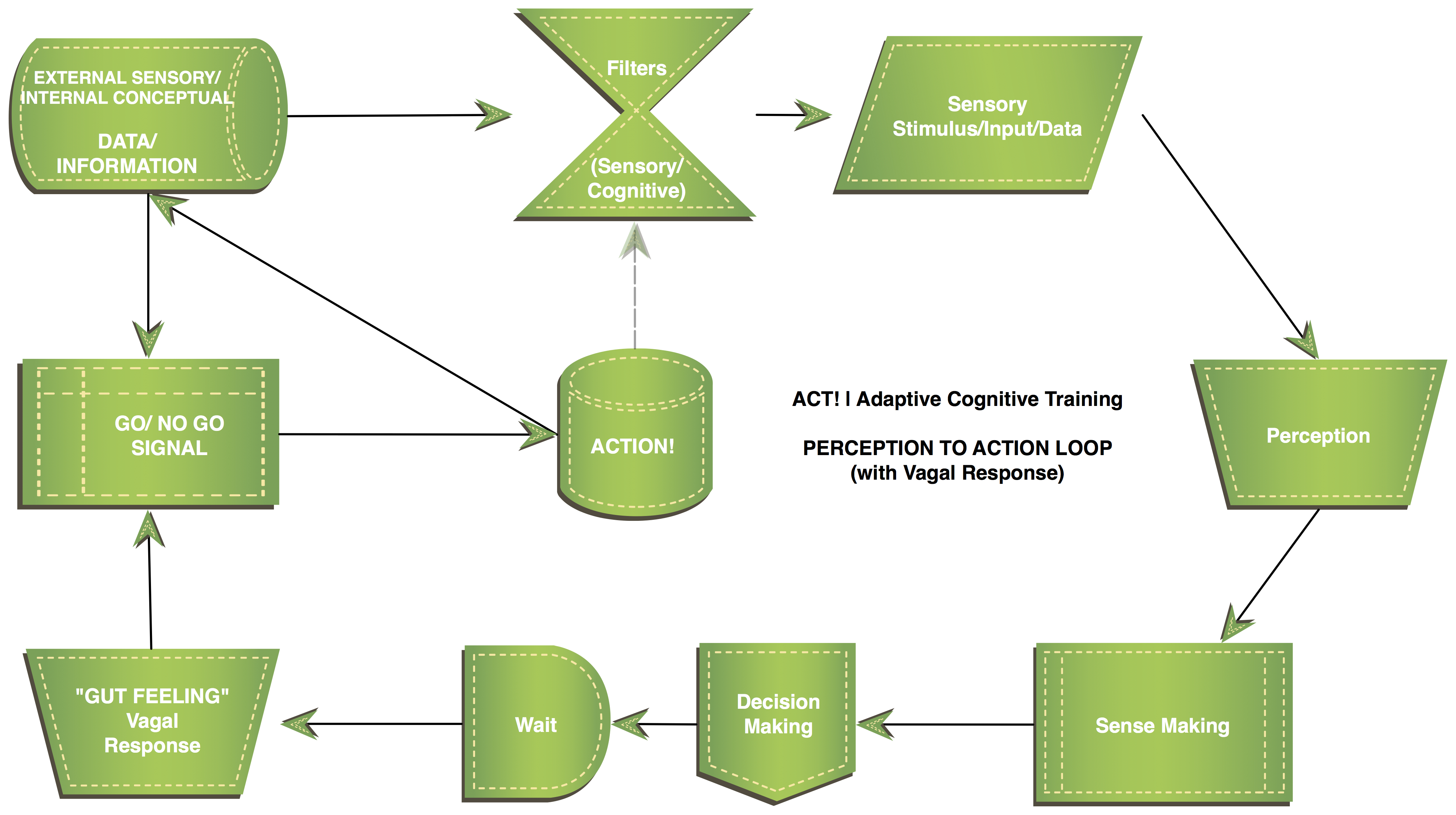
Ultimately most of us operate off of well established patterns of neurochemically and neurophysiologically ingrained behavior. These patterns arise in us as “GO” or “NO GO” signals.

Our “GO/NO GO” signals are actually organized somatically as well as psychologically, originating for the most part as shifts in our vestibular and proprioceptive systems, literally we “feel” in or out of balance, and like we’re stuck or motivated to take action.

This is deeply connected to the idea of  your “gut response” … that feeling in the pit of your stomach when you know something is wrong and it makes you a bit queasy or nauseous, or when something is very right and you feel a tingling warmth about it in your belly.

Most people have learned to override this primitive, instinctual system designed to serve as both an “early warning system” as well as a “alert system to opportunity” by processing the “signals in the system,” i.e: the data that’s present, rationally or logically instead.

So they lose out on the benefit of learning how to trust this ancient system of response that is designed to protect and serve them.

We now know, through recent neuroscientific research, that the “vagal pathway” a system of nerves that is dominated by the vagus nerve that runs from brain to the digestive organs, controls much of what we have historically thought of informally and colloquially as our “gut response” … that innate way of knowing what is bad or good for us, before we even have time to think about it.

Here’s a short list of some of the ways the vagal pathway is involved in our health and sense of wellbeing (http://upliftconnect.com/12-ways-unlock-powers-vagus-nerve/):

Vagus nerve dysfunction can result in a whole host of problems including obesity, bradycardia (abnormally slow heartbeat), difficulty swallowing, gastrointestinal diseases, fainting, mood disorders, B12 deficiency, chronic inflammation, impaired cough, and seizures.

Meanwhile, the vagus nerve stimulation has been shown to improve conditions such as:

  • Anxiety disorder
  • Heart disease
  • Tinnitus
  • Obesity
  • Alcohol addiction
  • Migraines
  • Alzheimer’s
  • Leaky gut
  • Bad blood circulation
  • Mood disorder
  • Cancer

So you can see that we’re looking at a very significant part of our nervous system as it affects us.

What I’ve found in my work with people is that the “GO/NO GO” signal we experience is also part of the vagal response system, and that it links to our vestibular (sense of balance) and proprioceptive (sense of self/movement) systems, the very thing that gives us the feelings of either being stuck or being motivated to take action.

As far as I can tell from my work with thousands of clients this function of the vagal response system is deeply intertwined with the Neurocognitive Developmental Level you are operating from as well. Literally, where in your brain you preference when you are noticing information in the environment, making sense of what you notice, making decisions based on what you perceive, and taking action based on the decisions you make.

Using my unique Neurocognitive Developmental Training technology, ACT! | Adaptive Cognitive Training, you can literally update your vagal response to be more resilient and effective in aligning your “GO/NO GO” signals to the actual signals in the system and the outcomes you want to achieve.

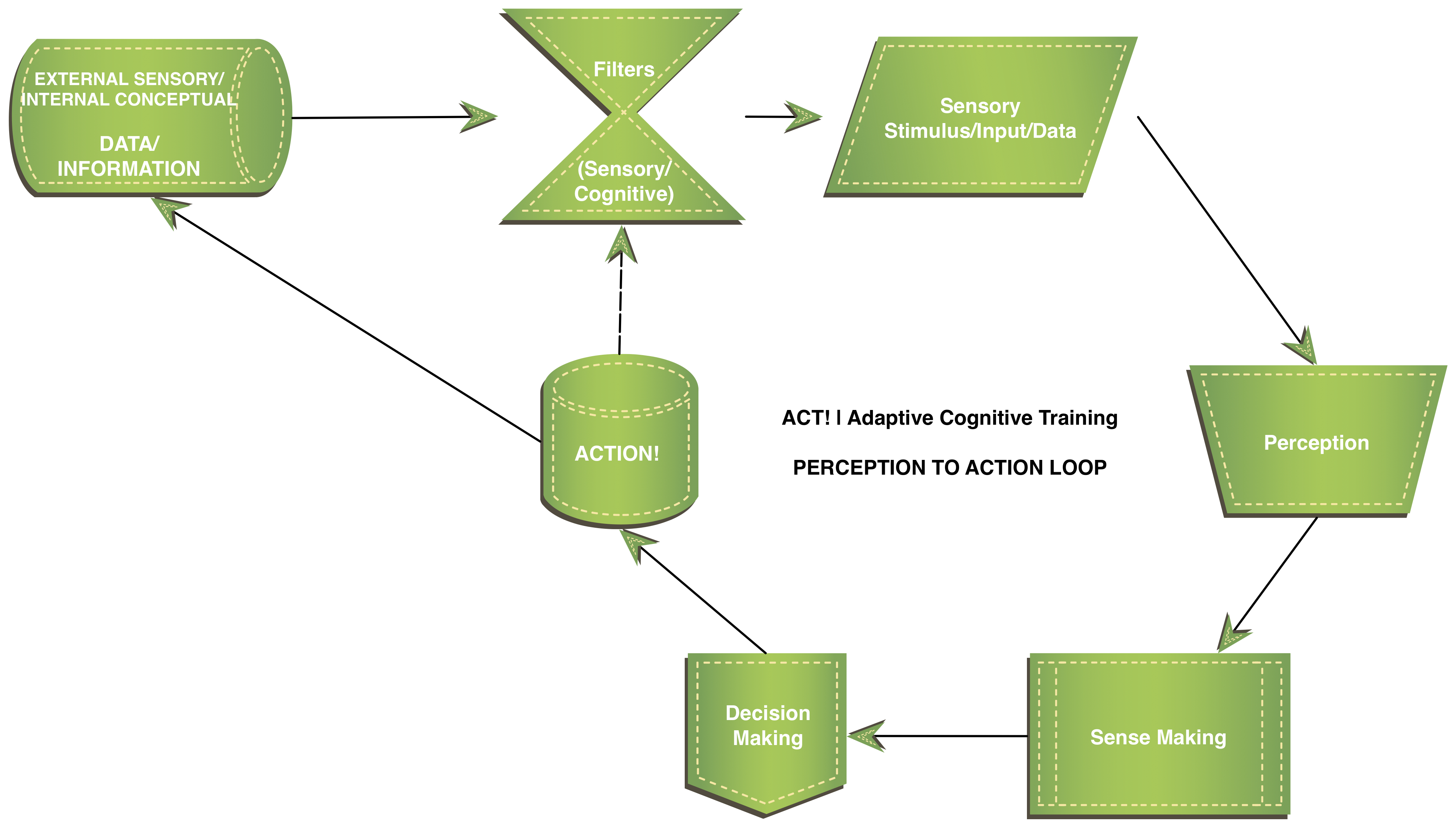
In the ACT! | Adaptive Cognitive Training model, I refer to the chain of processes from Sensory Perception to Sense Making to Decision Making to Action Taking, as the “Perception to Action Loop” in part because it’s both iterative and recursive, updating as it “loops” on itself.

Here’s a look at one way of graphically representing this system:

[File Download: ACT-PerceptiontoActionLoop]

If we add the ‘GO/NO GO” signaling process that operates through the vagal pathway the model might look like this …

[File Download: ACT-PerceptiontoActionVagalLoop]


In part, updating the Neurocognitive Developmental Level you’re operating from by default updates what you’re noticing for and how you notice for it in the environment – what I call your Perceptual Filters, and the way you make sense of information – what I call your “Sorting Patterns” … this has the effect of changing the decisions you make and the action you take, because you are noticing different information and making sense of it differently as well.

A simple example of this would be whether you are noticing for risk or opportunity, the sequence in which you do that (assuming you can notice for risk and opportunity), and the way you balance how you make sense of both in relationship to one another.

Someone who notices first for risk will tend to be “risk adverse” and protective of themselves and the relative safety of their current situation.

Someone who notices first for opportunity will tend to be “risk willing” and seek to leverage themselves and the possibilities in the current situation.

Now which one is the better choice is totally situational and contextual …

For example making a decision to walk through a dark alley late at night in an unfamiliar neighborhood to cut ten minutes off the time it would take to get to your hotel if you walked the long way might suggest that the more useful strategy is to first access the risk and act with some degree of risk aversion.

An alternative example might be making a decision to run an advertisement for your business that has an upside of 1000% return on the investment and only represents .01% of the revenue that a product or service currently generates suggests that the more useful strategy might be to first access the opportunity and act with some degree of risk willingness.

Understanding that you are not stuck to one fixed way of thinking about the world, or using one fixed, default pattern of response is the first step in freeing yourself to experience a major update to your worldview and the model of the world you operate from, as well as the ability to reap massive rewards associated with significantly increasing your level of adaptability.

When you engage in Neurocognitive Developmental Training you begin this process of loosening the lock hold that your current worldview has on you, and releases you from the limitations of the model of the world you are operating from now in those situations and contexts where it simply doesn’t serve you best.

Neurocognitive Developmental Training really gives you a smoother and more elegant access to the full range of (Human) Adaptive Intelligence, than you currently have now, and opens up your ability to access all of the Neurocognitive Developmental Levels that are innately available to you, even if you have difficulty accessing them now, or simply don’t access them at all yet.

“When man is finally able to see himself and the world around him with clear cognition, he finds a picture far more pleasant. Visible in unmistakable clarity and devastating detail is man’s failure to be what he might be and his misuse of his world.
This revelation causes him to leap out in search of a way of life and system of values which will enable him to be more than he has been. He seeks a foundation of self-respect, which will have value system rooted in knowledge and cosmic reality where he expresses himself so that all others, all beings can continue to exist.
His values now are of a different order from those at previous levels: They arise not from selfish interest but from the recognition of the magnificence of existence and the desire that it shall continue to be.”
– Clare W. Graves


Joseph Riggio, Ph.D.
Architect & Designer of the MythoSelf Process and SomaSemantics
Stockton, NJ in the Delaware River Valley

P.S. – You can also read more about ACT! | Adaptive Cognitive Training, the Perception to Action Loop, and Neurocognitive Developmental Levels here: Transformational Performance Breakthrough

Filed Under: Blog, Coaching, Cognitive Science, Elite Performance, General, Human Systems, Life, Transformational Change & Performance, Uncategorized

SENSING TIME

SENSING TIME

by Joseph Riggio · Sep 1, 2017

Time lines in an abstract spiral

Just like seeing or hearing TIME is a sense.

I was in a brief exchange with James Tsakalos, an NLP Trainer, colleague and FB friend of mine, about setting time frames in training events.

Fundamentally it was about when we begin and end training days with groups. I mentioned that I almost always begin the first day at 10:00 or 11:00, while I think James likes to start early. typically around 8:00.

My reasoning for this is that for most folks who work they typically begin their day earlier rather than later, say 8:00 – 9:00 versus 10:00 to 11:00, and starting at a different time signals very clearly “THIS is NOT THAT.”

The same can be said for other aspects of timing during the day, e.g.: ending times, or breaks … I usually break for 90 minutes for lunch, not 30 or 60 minutes. Again in part for the distinction that it makes versus many people’s standard routine, as well as because it gives them longer to integrate and incorporate the material we covered in the morning.

Also my lunch is ordinarily set at 1:00 PM/13:00, and it’s interesting how much that can shake people up who are habituated to an earlier time for lunch.


A Sense of Time

Most folks don’t think of TIME as a sense, but when you begin to you also get that time is a sense just like seeing or hearing, touch, taste or smell.

I also count vestibulation (balance) and proprioception (spatial & movement awareness) as senses. So in my world as a neuro-cognitive scientist there are eight senses I address that we use to discern data about the world we live in, move through, manipulate and experience. FWIW I don’t limit my list to just eight, I only keep these eight in the forefront of my awareness and in the loop when I’m discussing senses and sensation.

First a little background to where I’m going …

Way back when … I started my movement into consulting, coaching and training as a hypnotist and then I studied and became an NLP trainer. NLPers (those folks who are NLP practitioners) break down the five senses into what the call representational modalities, i.e.: visual (seeing), auditory (hearing), kinesthetic (feeling), olfactory (smelling), gustatory (tasting), shortened into the acronym VAK-O/G. Then they are trained to calibrate what representational modality that someone is accessing according to the VAK-O/G.

NLPers track the VAK-O/G representations that someone is using in a number of ways, but the most common are eye accessing (noticing where locationaly relative to the individual moving their eyes they rotate their gaze to, e.g.: upper left, lower right), language predicates, e.g.: “I see” … “It’s crystal clear to me.” … “You sound funny.” … “I’m feeling excited.” …, and in a more subtle and sophiticated approach by where in their body they are breathing from and the rate of their breathing, e.g.: upper chest, rapid breathing is associated with visual accessing verus lower belly, slow breathing with kinesthetic accessing.

Ideally NLPers want to cross calibrate and confirm their assessment of which representational modality a person is accessing by having two or more of these kinds of signals simultaneously happening, e.g.: they look up to their left (a visual access), while they say, “I observed you were moving a lot when I looked across the room.” and they say it quickly for them indicating a more rapid rate of breathing and expression associated with visual accessing.

Now, a bit later on in the development of NLP, let’s call it ten years to make it simple, one of the co-developers, Richard Bandler, began putting a lot of attention on what he called “submodalities” – or, more refined distinctions of the representational modalities. For instance if we use the visual representational modality (sight/seeing), we could speak to the distinctions of location … where is the image, what is the posititonal angle of the image (relative to the individual accessing it), how far away or close is the image … then there would be other things we could notice for as well, e.g.: size, color, brightness …

Okay, so as a NLPer I learned to calibrate and track for representational modality accessing and the finer aspects of sumbmodality distinctions. BUT, as a NLPer I was only introduced to these within the traditional five senses covered by the VAK-O/G list.


More Than The Traditional Five Senses

As I continued working with people, learning and studying I realized that I had to include both vestibulation (the vestibular process of the sensation of balance) and proprioception too (the awareness of spatial perception, our bodies in space relative to other objects, movement of our own body and other objects relative to one another, and the location and movement of our body relative to ourselves, e.g.: posture, limb articulation, etc. This radically changed how I worked with clients and over time how I perceived and experienced myself, and the world around me.

Then at some point I became aware of TIME as a sense like the traditional five senses, and vestibulation or proprioception. This was a powerful moment of awareness for me. To give some credit where it’s due I had some introduction to time as sense of sorts from other sources as well. NLPers also have an awareness of time, and they have a process they use called the “timeline” that indicated how people experience and position themselves relative to time. The NLP book that addresses the “timeline proccess,” “Timeline Therapry and the Basis of Personality” by Tad James and Wyatt Woodsmall. So I’d already had some influences vis-a-vis my discoveries about time with clients.

Time was a topic that the great American anthropologist E.T. Hall explored in his book, “The Dance of Time” and I’m a great fan and virtual student of his work. His work covered many “silent languages” as he referred to the non-verbal and cultural aspects of communication, perception and awareness in his many books. The more I learned about “silent languages” the more I became intrigued with how we perceive, think, process and act outside of the normally referred to ways that are what I’ll call fully conscious for now. In other words, some of what we do is available to use as a consciously aware experience we’re having or have had, and some of what we do is utterly outside of our conscious awareness and happens silently or invisibly as E.T. Hall might refer to it.

Time for most folks is outside of their conscious awarenss, except as they track it by the clock in modern life. Yet, internally we have incredibly sophisticated ways to track time that are organized primarily around the rising and falling processes of our internal physiology and its chemistry.


The Finer Distinctions Of Time … And Other Things Too

So as I continued my exploration of time I began to realize that time also has submodality distinctions, i.e.: finer ways of thinking about time than “it passes” or that it is a particular time based on the agreed to conventions of time … “clock time.” One of the things that both NLPers and E.T. Hall point out is that time “moves” differently for differnt people in different contexts and depending on what they are experiencing.

We’ve probably all experienced a time when we were with people we enjoyed being with and the sensation was that time just flew by and our experience with them was over in what seemed an instant. If you’ve ever been in a bureaucratic or institutional loop where you need to get something done, e.g.: renew your driver’s license or get a copy of your birth certificate, you might have experienced time moving much more slowly than the clock indicates, looking up after an hour and realizing it was actually only five minutes. Now if you love someone and you’re waiting to see them again multiple that by 10, and if you’re a five year old waiting for your birthday to arrive or Christmas maybe, multiple that by 100 (then of course when your birthday comes the party only lasts 1.5 seconds)!

But time does more than this … it also organizes our lives syntactically according to the rules of computation, e.g.: this happens before that and after this. Time therefore becomes the tableau upon which we write our lives in part, since we experience our lives syntactically, or happening in a sequence or events that occur according to the movemnt of time. The brilliant theoretical physicist and cosmologist, Stephen Hawking, wrote about time and space in his popular non-fiction book for lay folks (i.e.: those of us who aren’t theoretical physicists or cosmologists), “A Brief History of Time” where he lays out the relationship of time and space syntactically for the entire universe and everything in it as well.

This realization that time and space are singular leads to a secondary realization that the perception of time and space are also singular, meaning that for humans time and proprioception are singular as well. I’d argue that we also experiene balance as a function of time and space, making the actual human perceptual singularity the interwoven realtionality of time, proprioception and vestibulation. This is more than a little relavant with regard to action and outcomes too.


The Teleological Factor

Now to make things just a little more complex, I need to address the fact that I’m a “teleologist” by inclination. By that I mean that I think in terms of the future pulling us toward it versus the past pushing us forward.

So rather than being an artifact of our history we are artifacts of our futures … i.e.: we experience ourselves in relation to what has happened, just not yet. This is the teleological equation, and is built on the beliefs and expectations we hold about what will happen when we act or not. So we don’t act based on what we’ve experienced, but rather what we expect we will act upon and experience.

So this brings me around to my next point …

TIME IS A CONTEXT.

When I’m training I consider the context as important as the content I’m delivering. And I mean that literally. I organize the context as carefully, and often more carefully, than the content I deliver.

My shifting the relationship people in my training have, by doing something as simple as changing the start time to what might be “normally” expected, say 9:00 AM to 10:00 AM, it shifts the sense of where the participants are from “this” is like any other day, to “THIS” is NOT like any other day, “THIS DAY” is special in someway.

Now they reorganize their expectations to allow for something special to happen, making it that much more likely that something special will happen. There are many reasons that this can happen, but the simplest expectation is that because they are now experiencing themselves in relation to what’s happening as extraordinary compared to their normal day. When someone expects something out of the ordinary they begin to notice for it, even when it was something that was there all along. Even when what they are noticing for might have been missed or taken for granted before.

Also, one shift leads to another, when I shift the time frame that’s typical or normally expected, the relationship to time that someone hold shifts … like when they are on vacation and move through their day differently than when they are at work. So now we can use the presumption that when someone’s relationship with time has shifted and their hold on “normal” time is looser, and I can help them move through time differently.

For example, if there is something they want to attain or achieve that they perceive as far off in the future, when their sense of time is loosened we can shift it to bring it closer (remember my teleological premise of the future pulling us forward towards it … when that future is closer the pull tends to be stronger).

We gain another shift as well. When the pull of the future is stronger, because we’ve slid it closer in time, we also tend to become more adept at noticing for what will allow us to realize what we intend more effectively and efficiently. In some ways we shift the signal to noise ratio of what’s important to notice versus random data in the system that’s unimportant to us in regard to getting out outcome. This also allows us to adust and adapt more rapidly, and therefore we expend less energy and time getting to where we’re going.

So this simple thing of doing something outside of the expected, like starting an hour or so later than people are used to starting their day, becomes a vital contextual advantage to helping them make the shifts they need to so they can both succeed in getting their outcomes and geting them with less effort and time invested.


TRANSFORMATIONAL THINKING

There’s a big difference between shifting what someone thinks about and how someone thinks. To make big shifts in life it’s important to shift the way you think, NOT just what you think about, or how you think about it (whatever the “it” may be … money, relationships, health, fitness, security …).

The most significant thing that helps shift the way you think is shifting the way you experience the context you how whatever you’re thinking about within. Part of the premise I work from is that all thinking is both embodied and situated, i.e.: it occurs in and is shaped by the context it occurs within.

Now if we shift the context we will shift what is experienced within that context, since everything is experienced within the context it occurs within and is shaped by that context. Taking that a step further we can also presume, whether it’s true or not, that it’s possible that everything we expect to experience within a context is shaped by that context as well. Since we act upon and experience what we expect, how the context affects what we expect it also affects what we act upon and experience.

When you accept these presumptions of how context shapes experience you begin to recognize the the significance of shaping the context … hence the importance of shaping time as contextual frame and using it to help shape the way we think, and not just what we think about …


I’ve been describing it…
TIME IS A TOOL FOR TRANSFORMATION.


Joseph Riggio, Ph.D.
Architect & Designer of the MythoSelf Process and SomaSemantics

P.S. – I’d love to hear what you think too … leave me a comment below …

NOTE: Join the extended conversation in my FB group: GNAU Nation at: https://www.facebook.com/groups/GNAUNATION/

Filed Under: Behavioral Communication, Blog, Cognitive Science, Elite Performance, General, Language & Linguistics, Mind Games, Transformational Change & Performance, Transformational Communication

Leaping Forward …

Leaping Forward …

by Joseph Riggio · Jan 22, 2017

Preparing The Future …
Neuro-Evolutionary Modeling


I posted something on Facebook in response to comment made there about how someone wasn’t getting the point that the person posting was trying to make … not an uncommon scenario unfortunately.


But there are different reasons people won’t get a point someone is making … maybe the point isn’t being clearly made, or getting it requires a bit of background that’s missing, or sometimes it can just be that the people disagree and that creates a block in the communication.
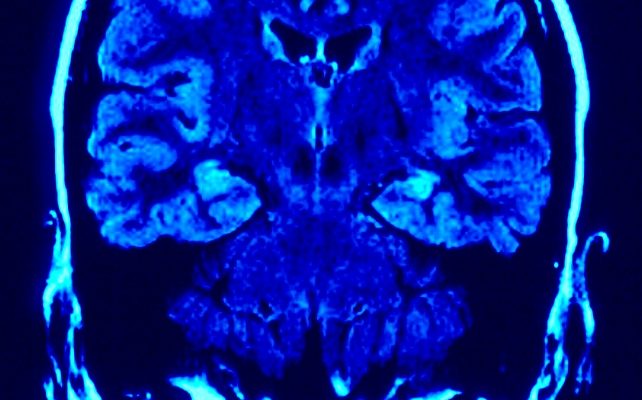


However, in this case I believe it was something else … a fundamental inability for people to see anything that’s beyond their neuro-evolutionary development.

Here’s my response to that posting:

I’m a big fan of neuro-evolutionary developmental modeling. Think of the work of Julian Jaynes and his bicameral mind theory, or the work of Clare Graves or Jane Lovinger, or E.O. Wilson’s work in sociobiology. This is where my attention has been for the better part of a decade now.

Rebecca Costa has summed up some of this work in her excellent book, The Watchman’s Rattle. In the book she speaks to the neuro-evolutionary trait of insight, technology, complexity and the collapse of civilizations. Well worth the read.

In my work I’ve been looking at a few things too … different from Costa or the others. I think some of my work is paralleling the things Ken Wilber has been speaking to most recently. My focus has been on how we create transformational change leading to a new position of consciousness and performance breakthroughs. NOT better performance where we already are, but performance we cannot get to from where or how we are today.

This focus forced me to look at the questions of power and complexity, and their relationships as contained in the interpersonal relationships in institutions and organizations. This is akin to what John Gatto found when deconstructing modern schooling, it’s process and intent.

Simply put there may not be a place for consensus if we want real change. This idea, of consensus, is mired in what Clare Graves points out is Level Six thinking, what Spiral Dynamics labels Green, and what Dudley Lynch calls First Dolphin or Enlightened Carp thinking.

The idea that we must create consensus and bring people along is an anchor we drag from a limited world view that has not yet leaped beyond systemic thinking to fractal thinking where deep complexity resides.

Rebecca Costa points to this limitation as reaching a cognitive threshold, and suggests it’s the basis for the collapse of civilizations. Her analysis and evidence is impressive. IMO many Western Europeans and North Americans are stuck there today, along with some others as well.

(Name Withheld) you’re suggesting something that remains in a blind spot to anyone who hasn’t fully evolved beyond Level Six mind.

This posting and the responses to it got me to thinking.


Is it unreasonable to consider that some folks are just not neuro-evolutionarily developed enough to perceive what others do as obvious?


This falls under the rubric of Developmental Modeling as I refer to it, or if I really want to be fancy about it, Neuro-Evolutionary Developmental Modeling.

In less fancy terms this is the assessment and modeling of the literal neuro-evolutionary developmental stage that someone is at, and the implications of what that means.

Let me put it another way …

My work as I said in my Facebook response focuses on:

“… how we create transformational change leading to a new position of consciousness and performance breakthroughs. NOT better performance where we already are, but performance we cannot get to from where or how we are today.”

This is about looking at levels of consciousness and meaning-making as I think about it.

There’s a cognitive consideration, i.e.: how we process information beginning with perception, moving through sense-making and decision-making, and respond in regard to the action we take and the action we choose not to take.

Within the scope of my consideration is how we process that information that leads to action, including what Cognitive Scientists refer to as Situated and Embodied Cognition.


Situated Cognition:

The school of thinking about situated cognition aligned with the cognitive scientists say that cognition is a function of where we are situated in space and time, i.e.: the situation and circumstance we find ourselves in determines how we think about the information available to us.

Simply put, cognitive scientists say that thinking cannot be separated from doing and context as a way to speak about situated cognition. The situation becomes part of our “cognitive process” as well as what we do internally with the information we have access to, including the way the information in the situation relates to other information in the situation.

For example, if we are in a diner and hungry and we see a menu advertising the “Burger Special” we will think about it differently than if we had just left a restaurant after a particularly satisfying meal and saw the same “Burger Special” advertised on a billboard as we were driving home. The situation and circumstance changes how we think about the information that’s present.

Another example might be, if we are in the diner and hungry, but we only have enough money for a cup of coffee we’d respond differently to the “Burger Special” advertisement than if we had sat down to eat with plenty of money in our pocket to choose whatever we want for dinner.

Also, what we bring to the situation ourselves affects how we process the information presented to us as well. For instance if we are vegans or eating a strict paleo/high-protein/low-carbohydrate diet will impact how we process the information about the “Burger Special” too.

The situation becomes part of our “cognitive process” as well as what we do internally with the information we have access to, including the way the information in the situation relates to other information in the situation.


Embodied Cognition:

Keeping it as simple as possible, when we refer to embodied cognition we’re referring to the idea that … we think like we do because we’re embodied in world.

This means that our thinking arises from the physical experience of having a body, and the way we experience things in and with our body.

While this might seem obvious at some level the more prominent position has been held for more than three centuries has been dualism, i.e.: the separation of body and mind. Cognitive scientists who hold a strong position about embodiment believe the mind arises from the structure, processes and actions of the body.

Early examples of embodied cognition arise in the world of the phenomenologists like Martin Heidegger, Maurice Merleau-Ponty and Pierre Teilhard de Chardin.

In the mid and late twentieth century some cognitive scientists went beyond the theories of dualism and the mind as an independent processing mechanism to considering a unified cognition that includes the body. Two of the folks who did a lot of work in the embodied cognition paradigm that influenced my thinking are Humberto Maturana and Francisco Varela. They studied and wrote about visual perception, including the biology of vision, like the physical aspects of the human eye, and how those physical aspects of embodiment effect how we perceive visually.

George Lakoff and Mark Johnson are two philosophers who are also in the embodied cognition camp who did a lot of work together around metaphor and embodiment. Their book Philosophy in the Flesh was one of the most influential early works in my own conception of mind. It was this book that led me to thinking about what cognitive scientists call enactivism.


Enactivism:

Enactivism postulates that cognition is a function of the tension between thinking and the environment, and the need or desire to respond to what’s happening. Specifically enactivism suggests that we shape our environments by the ways we respond and take action, shaping the environment in turn as we go.

This looping between the individual and their environment becomes a part of their cognitive processing, and as I think about it it’s here that situated and embodied cognition collide and become something more than either alone.

In some way we can say that enactivism brings about who we are as we know ourselves to be, as well how we know the world to be as we know it. Through enacting in the world we generate both ourselves and our sense about and knowledge of the world, including others.

This is where I mostly settle when it comes to how we process cognitively in a real sense of what happens as we’re processing information and acting on it.

Yet, I’m also influenced by other cognitive models that share how I think about enactivism, like neuro-evolutionary developmental models.


Neuro-Evolutionary Developmental Modeling:

For me the rubber hits the road when we’re talking about mental models when the dialogue revolves around neuro-evolutionary developmental modeling.

My early introduction to the idea of neuro-evolutionary developmental modeling was via the work of Dr. Clare Graves. The Graves Model lays out a double helix of stages of evolutionary bio-pyscho-social-cultural growth alternating between self-sacrificing and other-sacrificing. At each stage the dynamics of dealing with the limitations of the system the individual is contained in and relating to create a tension that leads to dialectical transformation.

According to Dr. Graves each stage of human evolutionary growth comes about as a result of dealing with the challenges presented by the environment they are contained in and operate in relation to until the operating paradigm itself becomes the generator of the challenges the individual confronts.

When the point where the operating paradigm generates irresolvable challenges as a result of functioning within it there is a point of dialectical transformation that is reached. It is at this point that individuals within the system respond by rejecting the present paradigm and leap to a new level of consideration that offers resolution to the challenges the extant operating paradigm generates.

In other words every human system can be defined by some set of boundary conditions that limit it to being what it is in the moment. These boundary conditions arise as a result of the values that are held as true, and in some regard sacred, within that human system. These values are designed to create a functioning system that resolves the challenges that system faces collectively, and become the agreed upon and accepted values of the culture.

Yet, these values require varying degrees of cognitive development to incorporate and act upon. The neuro-evolutionary developmental models I follow closely suggest that the human cognitive system evolved in relation to the stresses confronted at various stages of human evolution. Literally on one hand the brain evolved to access new ways and patterns of thinking, partially due to the interactions of the multiple brain modules that evolved in response to evolutionary pressures.

At each level of neuro-evolutionary development the individuals who have access to that level of development become able to perceive their environment in ways that individuals before them, who had not evolved that level of neuro-evolutionary development are able to comprehend. Quite literally the ability to perceive the information in the system is limited by the level of neuro-evolutionary development.

This shows up in application or practically in relation to the level complexity the individuals within a system are able to process the information present. The higher the neuro-evolutionary development of the individuals in the system the more complexity they can perceive and comprehend. These advanced stages of neuro-evolutionary development allow these individuals to make choices unavailable to those who cannot perceive and comprehend complexity at these levels.

One way to think about this would be as the scope and range of complexity that individuals in a system use to make decisions and take action. The higher the level of neuro-evolutionary development of an individual the greater the scope and range of choice they will have, theoretically giving them an edge in responding to the emergent conditions in any given system. However, there’s a strong caveat …

The theoretical best response will arise when the level of complexity present in the system and the level of neuro-evolutionary development are most closely aligned and matched. When the complexity of the system exceeds the level of the neuro-evolutionary development of the individual confronting it the lack of appropriate choices available will limit the individual to less than ideal choices and, corresponding less than ideal responses and outcomes.

Applying higher level choices in a system that operates at a lower level of complexity than the neuro-evolutionary developmental level being applied to make the choices acted upon often results in less than ideal responses and outcomes.


Therefore we can say that using the most aligned neuro-evolutionary developmental level to the situation and circumstance at hand results in the most ideal responses and outcomes being realized.

Yet, when someone simply doesn’t have access to the neuro-evolutionary developmental level required by the complexity in the system they will be limited to responding from the highest neuro-evolutionary developmental level they can access at present.

This is how individuals and system fail and go into devolution resulting in personal failure and civilization collapse.


I’m seeing more and more that individuals in our complex Western civilization are reaching cognitive thresholds, which define the limits of complexity they can perceive and comprehend. Yet the systems they are operating within require a higher level of neuro-evolutionary development then they currently have access to, to create useful choices that allow them to respond and produce the outcomes they desire.

The feelings they experience as result of reaching their cognitive threshold  include frustration, anger and despair. This leads to lashing out against others who are also experiencing the limits of their own cognitive threshold, albeit in ways different from their own.


Regardless of the level of neuro-evolutionary development that limit an individual from accessing the most useful choices to address the challenges they face, the result is the same … i.e.: they produce less then ideal responses and outcomes. 

In particular, as a result of their neuro-evolutionary developmental limitations, these folks believe they are addressing the challenges they confront in the most ideal way possible, yet the outcome they produce replicates the conditions to perpetuate the challenges they seek to resolve.

The key to resolving the limitations of neuro-evolutionary development begins with accepting that the choices available to you are constrained by your level of neuro-evolutionary development … and NOT the conditions of the challenges you face or the system they are contained within.


The first step forward then starts with exploring ideas and choices that are unfamiliar and unaccessible from the highest neuro-evolutionary developmental level you are most comfortable with today. This means opening yourself to the discomfort of confronting your most cherished values and beliefs for what they are … values and beliefs, not facts or truths.

Individuals who can do this … confront their most cherished values and beliefs and open themselves up to the discomfort of seriously considering that ideas and choices that are unfamiliar and unaccessible to them from where they are today … open themselves up to the possibility of creating responses and outcomes that were unavailable to them previously.

While this doesn’t necessarily mean they have actually evolved to a higher neuro-evolutionary developmental level, it doesn’t matter as much as having access to the strategies used by individuals who can operate at those higher levels.

But, it also requires accepting that until we actually evolve to a high neuro-evolutionary developmental level, we will remain blind to what we cannot perceive from the highest neuro-evolutionary developmental operating level we can access ourselves.

Despite the frustration, anger and despair this realization may bring, i.e.: that we are limited to the highest neuro-evolutionary developmental level we can access, it allows us to move beyond operating from distorted values and beliefs we impose, while ignoring real facts and truths that are evident to those who aren’t blind in the particular ways we are ourselves.

This work … guiding my clients beyond the limits of their current level of neuro-evolutionary development happens in my Foolish Wisdom program and private 0ne-to-one work. The feedback I get is that while the result is often transformational leading to significant performance breakthroughs, getting there isn’t always the most comfortable experience on the way, but worth it at the end.

I’d love to hear your thoughts …

Buona Fortuna and Abundanza,

Joseph Riggio, Ph.D.


P.S. – There is still time to get the details about the upcoming Foolish Wisdom program on 28 January in NJ …


FOOLISH WISDOM DETAILS


Filed Under: Blog, Business Performance, Cognitive Science, Elite Performance, General, Human Systems, Life, Transformational Change & Performance, Uncategorized

Which Brain Are You Using?

Which Brain Are You Using?

by Joseph Riggio · Mar 29, 2016

Silent Brain Learning

brain01 125NOTE: Read this article and watch the video first …

[The Enormous Power of the Unconscious Brain]

It’s a great article, but the journalist has it all wrong IMO. In fact he completely contradicts himself …

Silence is Golden

In the video you see the comparison between the journalist’s brain and the world-champ’s brain (that’s right the 10 year old is a world champion cup stacker … what have you done lately???).

In that video the journalist’s brain is lit up like a Christmas tree .. whle the champ’s brain is virtually silent. Yet the journalist claims he’s wired in the programming to his cortical processing to run the patterns he’s running without processing them.

That’s fundamentally absurd!!! (Go ahead, read the paragraph above again.)

The argument I’m making is that what the champ did was to get his brain out of the way (okay, not his whole brain, but the part we “think” with normally … or at least consciously … the cortical brain (the neocortex).

His brain is silent because it’s not working … and even the little blips we see have little to nothing to do with what his hands are doing.

That’s not about training the cortical processing, or learning to submerge the conscious processing function.

The champ used his neocortex to train his cerebellum to take over … i.e.: his Silent Brain!


Why Performance Mastery Is “Silent”

Performance is a function of the ability to act in response and relation to the stream of data flowing in the system that you’re operating in to create your intended outcome.

The more accurately you perceive and interpret the data present in the system, the more accurately you can adumbrate what’s coming next … and, make adjustment to your responses.

Ultimately, your performance is a function of behavior, i.e.: the actions you take and don’t take in response to the way you percieve and interpret the data in the system. The more closely your actions align with the simplest, most direct path with the least resistence between where you are in the present moment and what you intend as your outcome, the more elgant, efficient and effective your performance will be … let’s call this the “Path of Perfection.”

When you can act consistently and reliably along the Path of Perfection, you will gained mastery in that behavioral performance … whether that’s mastery in sports, communication, business … or some other domain of action.

This kind of performance, i.e.: mastery, is a function of processing done beyond the reach of cortical processing … or at least solely by cortical processing.

The primary driver of mastery at the behavioral level of performance is processed in the cerebellum.

This is the seat of the silent processing we see in the video of the champ’s brain …

He’s not showing activity in the neocortex, because he’s off-loaded the processing to the cerebellum and gotten his cortical processing out of the way of his faster, more elegant cerebellar processing.
 

Blind But Not Dumb

The cerebellum may be blind, but it’s not dumb.

Cerebellar processing operates differently from cortical processing because it’s non-representational.
We see this when the champ puts on the blindfold and still runs the behavioral performance as well as when he’s not blindfolded. Although he’s not getting any visual input his motor facilities still function as accurately in the task he’s trained them to do.

He’s using a combination of kinesthetic input and spatial mapping to function at that level of performance. This is the magic of training the vestibular and proprioceptive systems to take over for the more common sensory system processing task, e.g.: looking at the cups, his hands and what he’s doing with them.

The silence of the cerebellum is it’s trick. The cerebellar processing pathways are more efficient because they are closer to the direct sensory data. The cortex almost immediately transforms direct sensory data into representations, abstractions and intellectualizations … at least one step removed from the actual data itself.

One of the most obvious examples, especially if you have yet to master something at the level of the world cup stacking champion (5 seconds for that whole routine, again and again, even blindfolded) … is the transformation of direct emotional experience into an intellectualization. Anger, joy, grief, ecstacy … all have an actual body experience, a felt sense … but the way the average person experiences their emotions has as much or more to do with the associations they make with the way they label their experience.


Cerebellar Training & Learning

The basis of virtually all the work I do is framed in relation to moving unnecessary cortical processing out of the way of performance.
This is not saying there is no place for corical processing, of course our neocortex is one of our most amazing evolutionary gifts … but, all things at the right time and in the right place … preferencing cortical processing over all other kinds of “thinking” or kinds of neurological processing.

The real “trick” is knowing how to get the cortex out of the way, freeing it to do what it does best … i.e.: make connections in time and space that don’t yet exist … creating future memories.

To do that the behavioral part of performance must be off-loaded whenever possible to the more efficient cerebellum.

When the cerebellum is in charge of responding there is a direct line to taking action, that cortical processing must run through multiple channels to get to first, creating a slower, more cumbersome response.

For some people (especially those who remain untrained) in getting through the levels and complexity of cortial processing they run out of steam before they get to action, i.e.: they find themselves unable to take action or constantly hesitating and procrastinating when immediate action would have served them (and, possibly others) best.

Knowing how to organize yourself to take action is the key to mastery.

In otherwords, if you want to attain mastery you must develop the ability to train and learn at the cerebellar level of response.

When you’re ready give me a call …

(You’ll find my contact details here: Joseph Riggio DotCom)
Joseph Riggio, Ph.D.
New Hope, PA

PS – The most effective way “cerebellar training” I’ve ever put together is my “Foolish Wisdom” group coaching program. I’m running a program in New Hope, PA in a couple of weeks on Saturday & Sunday, 16/17 April 2016.

Check out the Foolish Wisdom Workshop details here:
https://www.amiando.com/HSNIUBF.html

Filed Under: Blog, Business Performance, Coaching, Cognitive Science, Elite Performance, Transformational Change & Performance, Uncategorized, Upcoming Events

Why Aren’t You Following Your Bliss?

Why Aren’t You Following Your Bliss?

by Joseph Riggio · Oct 2, 2015

“Follow your bliss …

If you do follow your bliss,
you put yourself on a kind of track
that has been there all the while waiting for you,
and the life you ought to be living
is the one you are living.
When you can see that,
you begin to meet people
who are in the field of your bliss,
and they open the doors to you.
I say, follow your bliss and don’t be afraid,
and doors will open
where you didn’t know they were going to be.
If you follow your bliss,
doors will open for you that wouldn’t have opened for anyone else.
”

– Joseph Campbell


coffee cup - MorgueFile - DSCN4799 400pxToday I realized just why so many folks aren’t living the life they are capable of, making the difference in the world they can, or realizing the rewards that comes with being aligned with their bliss.

In my brain dump of what happened this morning for me and a friend over breakfast and a cup of coffee (or two) I’ll reveal what I realized and give you the structure I used to discover it, share some of the tools that helped me get there, and tell about how you can uncover your own bliss and begin living the life of your dreams in about the time it takes to share a leisurely cup of coffee with a friend.

I was having breakfast with a long-time client of mine who’s become a colleague and friend, Mike. We were at a nice little place near where I live about 2 miles west of the Delaware River on the Pennsylvania side. Nothing fancy, just clean good food, in a clean modern, small eatery.

We were chatting about this and that, when the conversation turned to how he is going about making a living today. That’s when things got interesting.

He’s got a classic problem that limits him from making the living he should be making in my opinion. From all accounts, using standard measures and looking from the outside in he’s doing everything right. However, I don’t use those measures and I always work from the inside out.

In some ways, all but actually having what he wants and deserves, he’s living the American dream. He runs his own business, doing work he’s really good at, calling the shots with what he does with his time and when he does it.
He makes a decent living, and the potential to grow his business much larger and more profitably is fantastic too. But, he’s still lost from my point of view.

Without going into deep details to protect Mike’s privacy I can simply say that he’s currently running a consulting practice. Within that practice his attention is divided at least three ways.

First, he consults with business clients helping them to grow their businesses, and he’s quite good at it.

Secondly, he works with individuals coaching them to improve their focus and personal performance as professionals.

Finally, he runs a small business where he uses all the skills he sells to others as a consultant helping them to grow their businesses.

It’s the first two pieces of his business that are causing all the issues he has as far as I’m concerned, even though those two pieces represent seventy percent of his income.

The third piece, the small business he runs outside of his consulting practice is where all the opportunity is, but he treats it like a hobby instead of a real business.

Yes, it’s true that he makes the lion’s share of his income from his consulting practice, and the lion’s share of that income comes from working on other people’s businesses.

Yet, the most consistent income he has, the income he can count on year in and year out, is the income from the small business he’s running – the business he runs like a hobby.

So we chatted a bit more. I drew out of him some critical details that you must know if you want to organize yourself and your life to do what you do best, to follow your bliss, and to get all the juice and sweetness that you’re capable of squeezing out of your life … in fact I’d say this is the only way to find out where the low hanging fruit is that makes what most folks call “work” effortless and joy for those who discover their secret calling …

Here’s some what I drew out of him …

  • His preferred way of working
  • His preferred way of relating to others
  • His default profile of dealing with authority
  • How he creates value and where he contributes most
  • What he wants to give to those he cares most deeply about
  • What his long term personal goals and dreams actually are
  • What would be possible if he consolidated all his efforts in one focused, singular, strong direction …

Of course there was more to it than just asking a few questions, like uncovering his personal mythology and autobiographical narrative that drove his behavior up until now … what’s prevented him not just from being all he can be someday, but who he actually already is right now.

After about a thirty minute conversation, where I used virtually all the skills I’ve developed over 25 years of working with clients of all kinds, of every age and background, including some who are struggling to figure out their first tentative steps and those who are stretching themselves beyond established positions as elite, high performers, he suddenly got it!

It became crystal clear to him where the opportunity in his life should be, where he had to focus his attention in the upcoming weeks and months, and when he does not only what’s possible, but also what his life will be like when he does.

He was excited about what felt like the scales falling from his eyes … and I was excited for him too.

We had completely discovered his real calling, how he can focus himself to align himself completely with his natural talents, skills and proclivities, and create the life he’s been trying to get to with all of the rewards that will come with living into it.

We then spent another ten minutes of so discussing the specifics of what to be doing, we uncovered the next three or four specific things to be doing immediately that will put the plan into action, and allow him to put all his eggs in one basket like he should have been doing all along.

I’ve literally had this conversation with dozens of clients, and I realized today how potent and powerful this specific protocol of discovery is for someone. You see in the past I’d only done this kind of thing for clients who had engaged me to work with them on an intensive or long-term basis.

This is just so important if you want to be having the experience of your life … the one that is uniquely your own!!!

There are just really two things that stop people from achieving everything they are capable of depending on how they are organized …

1) You don’t have the ability to have enough flexibility in the way you think about things and the choice about how to do things to make the impact in the world you’re capable of making … to, “put a dent in the Universe” as Steve Jobs said.

2) You don’t have the clarity to choose where to place your attention fully to focus your energy to create the kind of massive difference that you will once you have direction … “When you stand in that sliver of space that is completely and utterly you, then will you be truly awesome, wonderful, magnificent.” – one of my personal quotes.

The conversation I had with Mike this morning allowed me to help him get both outcomes, more choices and ways to think about how he could work on his “hobby” full time, and the ability to put all of his attention in one direction consolidating his energy with laser-like focus to achieve maximum results.

After our short chat he had both the ideas he needed to make a huge difference in his life and the specific ways to begin taking action that would make that difference possible and present for him too. This is the key to what makes this process of potent and powerful, moving past indecision and, linking together intention and action.

This is fundamental key to all success … taking meaninful, directed action!

Yet, what stops so many people isn’t that they aren’t willing to do what it takes actually, but that they get stuck because they don’t know where to put their attention, or what to do about it once they figure that out for themselves.

I’ve built a bit of a reputation for making dramatic changes in people’s lives over a cup of coffee at a breakfast table, driving around showing folks the local sites, smoking a cigar in my “other office,” or having a quiet drink and a chat together. The “trick” in the process is the intensity of attention I bring to our chat, my decades of skill and the converational quality of how I work with clients to help them discover the deepest, most natural part of themselves.

Today I realized that I can run this process with anyone who ready to discover their true passion, their true calling, their natural gifts and the direction for uncovering the life of their dreams … what we might call the ability to find and follow one’s bliss.

I hadn’t thought of it this way before, but I decided this morning to make this “Breakfast Discovery Process” available to anyone who’s ready to find and follow their bliss as a stand-alone service.

I realize that very few folks can afford to pay for a full-day or two of Intensive Private Work with me, that comes with six months to a year of follow-up access that some of my most elite clients fly in from around the world to spend with me at $25,000 to $45,000.

Even though my client thought what we did was probably worth at least $10,000 to hiim, I realized that it couldn’t even be the normal $2500 I charge for remote, virtual coaching by telephone or Skype if I wanted it to be within reach of just about anyone.

Maybe if it were just half of the $2500 I charge for normal remote, virtual coaching, $1250, it would be fair. Or, I thought maybe I could cut even that amount in half again … $625. That when it started to feel just about right to me.

But, I wanted to make it a no brainer!!!

How much would it have to be so that anyone who was really ready to get their personal formula for finding and following their bliss wouldn’t really have to think much about it???

Although, I think that I could easily charge many of my clients $625 and they’d jump all over it, or even $1250 and many would be signing up for it … I wanted to keep my promise to myself to make it affordable for just about anyone who was really, deeply ready to change their life and discover the path and direction to being living into their dreams.

So I decided tonight to make the “Breakfast Discovery Process” available for less than than even the number I’d come to earlier today, $625, and make personal, one-to-one “Breakfast Discovery Process” coaching with me available at just $447.

Here’s my ten step outline of how it will work if you’ve read this far and are still interested in joining me:

1) You’ll register and pay to block the time for private coaching via telephone or Skype with me.

2) I’ll give you access to my private client’s only, coaching platform.

3) Once you’re a registered coaching client you’ll get my detailed client “Discovery” questionaire and fill them out right there on my private client site and indicate they’re ready for me to look over.

4) When I get the notification that you’ve completed the client “Discovery” questionaire I’ll go in and review it completely to get ready for our session together.

5) You’ll schedule a convenient, private time to speak with me on my online private client appointment scheduler right there on my private client’s only, coaching platform.

6) At the appointed time we’ll speak for about 45 minutes and I’ll do the entire “Breakfast Discovery Process” with you (it can be anytime, like those 24 hour New Jersey diners that serve breakfast all day long).

7) During our call together I’ll be building a MindMap of what we discuss and give you access to it as well.

8)Then you’ll go in over the next week or two, review it, change it, add to it and fill in what’s missing based on what we discuss during our call.

9) When you’re done with that part of the process, you’ll notifiy me on the private client’s only, coachign platform and I’ll take another look at what you’ve done, make my notes and comments to what’s there … and,

10) Once you’ve reviewed the refinements I’ve made alongside your own notes you’ll be on your way, ready to re-start your life perfectly aligned with your following your bliss.

This is a powerful and potent way to get your life on track and to give yourself the boost you need to get going, and to know your going in the proper directon for you … living your life and not a life that was chosen and decided for you by someone else, regardless of where you find yourself today.

For the time being I’m running this program in a limited way to make sure I have time to schedule everyone who signs up in a timely manner, therefore I’ll only be scheduling a maximum of 4 people a week at first.

Once I have a better sense of the interest and time I need to invest to deliver what I know this process is capable of delivering properly I may expand the program, and expect I may need to adust what I charge for it as well. Anyone who signs up as long as the registration page is open will be guaranteed a spot in the program at the current investment level, and I will do my best to get you in as soon as possible on a first come, first serve basis.

If anything about my “Breakfast Discovery Process” resonated with you, and you’d like to experience and replicate what happened this morning when I had a chat over breakfast with my colleague, click on the link below, be one of the first to register for some private time with me, and we’ll get started figuring out the formula for you to begin following your bliss …

Get all the details and register here:
The Breakfast Discovery Process

https://josephriggiointernational.securechkout.net/2016-BDP-Coaching

All the Best,
Joseph Riggio, Ph.D.

New Hope, PA

P.S. – If you’re ready to fly, check out the details of the “Breakfast Discovery Process” and find out what we can do in about the time it would take for us to have a chat over a leisurely cup of coffee together:
The Breakfast Discovery Process (https://josephriggiointernational.securechkout.net/2016-BDP-Coaching)

Filed Under: Blog, Elite Performance, Life, Transformational Change & Performance, Uncategorized

« Previous Page
Next Page »

© 2025 ABTI | Joseph Riggio International · Rainmaker Platform

Privacy Policy

  • Services
  • Log In