

This website or its third-party tools use cookies which are necessary to its functioning and required to improve your experience. By clicking the consent button, you agree to allow the site to use, collect and/or store cookies.
Please click the consent button to view this website.
I accept
Deny cookies Go Back
  • Skip to primary navigation
  • Skip to main content

ABTI | Joseph Riggio International

  • Home
  • Meet Joseph
    • To Sicily And Back … A Love Story
    • JSR Short Bio & CV
    • Abbreviated CV Timeline
  • BLOG :: “Blognostra”
  • Contact
You are here: Home / Archives for Cognitive Science

Cognitive Science

SENSING TIME

SENSING TIME

by Joseph Riggio · Sep 1, 2017

Time lines in an abstract spiral

Just like seeing or hearing TIME is a sense.

I was in a brief exchange with James Tsakalos, an NLP Trainer, colleague and FB friend of mine, about setting time frames in training events.

Fundamentally it was about when we begin and end training days with groups. I mentioned that I almost always begin the first day at 10:00 or 11:00, while I think James likes to start early. typically around 8:00.

My reasoning for this is that for most folks who work they typically begin their day earlier rather than later, say 8:00 – 9:00 versus 10:00 to 11:00, and starting at a different time signals very clearly “THIS is NOT THAT.”

The same can be said for other aspects of timing during the day, e.g.: ending times, or breaks … I usually break for 90 minutes for lunch, not 30 or 60 minutes. Again in part for the distinction that it makes versus many people’s standard routine, as well as because it gives them longer to integrate and incorporate the material we covered in the morning.

Also my lunch is ordinarily set at 1:00 PM/13:00, and it’s interesting how much that can shake people up who are habituated to an earlier time for lunch.


A Sense of Time

Most folks don’t think of TIME as a sense, but when you begin to you also get that time is a sense just like seeing or hearing, touch, taste or smell.

I also count vestibulation (balance) and proprioception (spatial & movement awareness) as senses. So in my world as a neuro-cognitive scientist there are eight senses I address that we use to discern data about the world we live in, move through, manipulate and experience. FWIW I don’t limit my list to just eight, I only keep these eight in the forefront of my awareness and in the loop when I’m discussing senses and sensation.

First a little background to where I’m going …

Way back when … I started my movement into consulting, coaching and training as a hypnotist and then I studied and became an NLP trainer. NLPers (those folks who are NLP practitioners) break down the five senses into what the call representational modalities, i.e.: visual (seeing), auditory (hearing), kinesthetic (feeling), olfactory (smelling), gustatory (tasting), shortened into the acronym VAK-O/G. Then they are trained to calibrate what representational modality that someone is accessing according to the VAK-O/G.

NLPers track the VAK-O/G representations that someone is using in a number of ways, but the most common are eye accessing (noticing where locationaly relative to the individual moving their eyes they rotate their gaze to, e.g.: upper left, lower right), language predicates, e.g.: “I see” … “It’s crystal clear to me.” … “You sound funny.” … “I’m feeling excited.” …, and in a more subtle and sophiticated approach by where in their body they are breathing from and the rate of their breathing, e.g.: upper chest, rapid breathing is associated with visual accessing verus lower belly, slow breathing with kinesthetic accessing.

Ideally NLPers want to cross calibrate and confirm their assessment of which representational modality a person is accessing by having two or more of these kinds of signals simultaneously happening, e.g.: they look up to their left (a visual access), while they say, “I observed you were moving a lot when I looked across the room.” and they say it quickly for them indicating a more rapid rate of breathing and expression associated with visual accessing.

Now, a bit later on in the development of NLP, let’s call it ten years to make it simple, one of the co-developers, Richard Bandler, began putting a lot of attention on what he called “submodalities” – or, more refined distinctions of the representational modalities. For instance if we use the visual representational modality (sight/seeing), we could speak to the distinctions of location … where is the image, what is the posititonal angle of the image (relative to the individual accessing it), how far away or close is the image … then there would be other things we could notice for as well, e.g.: size, color, brightness …

Okay, so as a NLPer I learned to calibrate and track for representational modality accessing and the finer aspects of sumbmodality distinctions. BUT, as a NLPer I was only introduced to these within the traditional five senses covered by the VAK-O/G list.


More Than The Traditional Five Senses

As I continued working with people, learning and studying I realized that I had to include both vestibulation (the vestibular process of the sensation of balance) and proprioception too (the awareness of spatial perception, our bodies in space relative to other objects, movement of our own body and other objects relative to one another, and the location and movement of our body relative to ourselves, e.g.: posture, limb articulation, etc. This radically changed how I worked with clients and over time how I perceived and experienced myself, and the world around me.

Then at some point I became aware of TIME as a sense like the traditional five senses, and vestibulation or proprioception. This was a powerful moment of awareness for me. To give some credit where it’s due I had some introduction to time as sense of sorts from other sources as well. NLPers also have an awareness of time, and they have a process they use called the “timeline” that indicated how people experience and position themselves relative to time. The NLP book that addresses the “timeline proccess,” “Timeline Therapry and the Basis of Personality” by Tad James and Wyatt Woodsmall. So I’d already had some influences vis-a-vis my discoveries about time with clients.

Time was a topic that the great American anthropologist E.T. Hall explored in his book, “The Dance of Time” and I’m a great fan and virtual student of his work. His work covered many “silent languages” as he referred to the non-verbal and cultural aspects of communication, perception and awareness in his many books. The more I learned about “silent languages” the more I became intrigued with how we perceive, think, process and act outside of the normally referred to ways that are what I’ll call fully conscious for now. In other words, some of what we do is available to use as a consciously aware experience we’re having or have had, and some of what we do is utterly outside of our conscious awareness and happens silently or invisibly as E.T. Hall might refer to it.

Time for most folks is outside of their conscious awarenss, except as they track it by the clock in modern life. Yet, internally we have incredibly sophisticated ways to track time that are organized primarily around the rising and falling processes of our internal physiology and its chemistry.


The Finer Distinctions Of Time … And Other Things Too

So as I continued my exploration of time I began to realize that time also has submodality distinctions, i.e.: finer ways of thinking about time than “it passes” or that it is a particular time based on the agreed to conventions of time … “clock time.” One of the things that both NLPers and E.T. Hall point out is that time “moves” differently for differnt people in different contexts and depending on what they are experiencing.

We’ve probably all experienced a time when we were with people we enjoyed being with and the sensation was that time just flew by and our experience with them was over in what seemed an instant. If you’ve ever been in a bureaucratic or institutional loop where you need to get something done, e.g.: renew your driver’s license or get a copy of your birth certificate, you might have experienced time moving much more slowly than the clock indicates, looking up after an hour and realizing it was actually only five minutes. Now if you love someone and you’re waiting to see them again multiple that by 10, and if you’re a five year old waiting for your birthday to arrive or Christmas maybe, multiple that by 100 (then of course when your birthday comes the party only lasts 1.5 seconds)!

But time does more than this … it also organizes our lives syntactically according to the rules of computation, e.g.: this happens before that and after this. Time therefore becomes the tableau upon which we write our lives in part, since we experience our lives syntactically, or happening in a sequence or events that occur according to the movemnt of time. The brilliant theoretical physicist and cosmologist, Stephen Hawking, wrote about time and space in his popular non-fiction book for lay folks (i.e.: those of us who aren’t theoretical physicists or cosmologists), “A Brief History of Time” where he lays out the relationship of time and space syntactically for the entire universe and everything in it as well.

This realization that time and space are singular leads to a secondary realization that the perception of time and space are also singular, meaning that for humans time and proprioception are singular as well. I’d argue that we also experiene balance as a function of time and space, making the actual human perceptual singularity the interwoven realtionality of time, proprioception and vestibulation. This is more than a little relavant with regard to action and outcomes too.


The Teleological Factor

Now to make things just a little more complex, I need to address the fact that I’m a “teleologist” by inclination. By that I mean that I think in terms of the future pulling us toward it versus the past pushing us forward.

So rather than being an artifact of our history we are artifacts of our futures … i.e.: we experience ourselves in relation to what has happened, just not yet. This is the teleological equation, and is built on the beliefs and expectations we hold about what will happen when we act or not. So we don’t act based on what we’ve experienced, but rather what we expect we will act upon and experience.

So this brings me around to my next point …

TIME IS A CONTEXT.

When I’m training I consider the context as important as the content I’m delivering. And I mean that literally. I organize the context as carefully, and often more carefully, than the content I deliver.

My shifting the relationship people in my training have, by doing something as simple as changing the start time to what might be “normally” expected, say 9:00 AM to 10:00 AM, it shifts the sense of where the participants are from “this” is like any other day, to “THIS” is NOT like any other day, “THIS DAY” is special in someway.

Now they reorganize their expectations to allow for something special to happen, making it that much more likely that something special will happen. There are many reasons that this can happen, but the simplest expectation is that because they are now experiencing themselves in relation to what’s happening as extraordinary compared to their normal day. When someone expects something out of the ordinary they begin to notice for it, even when it was something that was there all along. Even when what they are noticing for might have been missed or taken for granted before.

Also, one shift leads to another, when I shift the time frame that’s typical or normally expected, the relationship to time that someone hold shifts … like when they are on vacation and move through their day differently than when they are at work. So now we can use the presumption that when someone’s relationship with time has shifted and their hold on “normal” time is looser, and I can help them move through time differently.

For example, if there is something they want to attain or achieve that they perceive as far off in the future, when their sense of time is loosened we can shift it to bring it closer (remember my teleological premise of the future pulling us forward towards it … when that future is closer the pull tends to be stronger).

We gain another shift as well. When the pull of the future is stronger, because we’ve slid it closer in time, we also tend to become more adept at noticing for what will allow us to realize what we intend more effectively and efficiently. In some ways we shift the signal to noise ratio of what’s important to notice versus random data in the system that’s unimportant to us in regard to getting out outcome. This also allows us to adust and adapt more rapidly, and therefore we expend less energy and time getting to where we’re going.

So this simple thing of doing something outside of the expected, like starting an hour or so later than people are used to starting their day, becomes a vital contextual advantage to helping them make the shifts they need to so they can both succeed in getting their outcomes and geting them with less effort and time invested.


TRANSFORMATIONAL THINKING

There’s a big difference between shifting what someone thinks about and how someone thinks. To make big shifts in life it’s important to shift the way you think, NOT just what you think about, or how you think about it (whatever the “it” may be … money, relationships, health, fitness, security …).

The most significant thing that helps shift the way you think is shifting the way you experience the context you how whatever you’re thinking about within. Part of the premise I work from is that all thinking is both embodied and situated, i.e.: it occurs in and is shaped by the context it occurs within.

Now if we shift the context we will shift what is experienced within that context, since everything is experienced within the context it occurs within and is shaped by that context. Taking that a step further we can also presume, whether it’s true or not, that it’s possible that everything we expect to experience within a context is shaped by that context as well. Since we act upon and experience what we expect, how the context affects what we expect it also affects what we act upon and experience.

When you accept these presumptions of how context shapes experience you begin to recognize the the significance of shaping the context … hence the importance of shaping time as contextual frame and using it to help shape the way we think, and not just what we think about …


I’ve been describing it…
TIME IS A TOOL FOR TRANSFORMATION.


Joseph Riggio, Ph.D.
Architect & Designer of the MythoSelf Process and SomaSemantics

P.S. – I’d love to hear what you think too … leave me a comment below …

NOTE: Join the extended conversation in my FB group: GNAU Nation at: https://www.facebook.com/groups/GNAUNATION/


Filed Under: Behavioral Communication, Blog, Cognitive Science, Elite Performance, General, Language & Linguistics, Mind Games, Transformational Change & Performance, Transformational Communication

My comments on Social Ontology

by Joseph Riggio · Mar 18, 2017

[NOTE: Copied from http://blognostra.blogspot.in/2005/08/re-sv-mythoself-tm-my-comments-on.html … reposted here in full. Response on mythoself-tm@yahoogroups.com in response to the Social Ontology blog at www.blognostra.blogspot.com – simultaneously posted in both forums. – JSR]

Robert,

Life’s but a walking shadow, a poor player, that struts and frets his hour upon the stage, and then is heard no more;

I must admit I don’t “get it” … a lot of words and little point. You the “master” of “simplicity” taking so many words to say so little. I appreciate that Najma loved it so it of course may just be me, but with absolute honesty I don’t get it … at least in relation to Social Ontology … or even the ordinary construction of logical connections.

First, as always with you, I accept that this is ultimately a trance-lation from Swedish into Swenglish … (pronounced either ‘swing-lish’ or ‘sweng-lish’ if you prefer, for those who want to know). I also accept that Najma may speak Swenglish better than I, and that may make a difference. Yet, the connection to Social Ontology, even with these exceptions escapes me.

I want to “get it” … I really do … I read and re-read what I perceive to be your rambling statements … some of which I really liked … individually … and still I must make great leaps of faith to make them connect … faith I have in droves … faith in this connections that are at best so tenuous … I don’t lack … I simply refuse to expend.


It is a tale told by an idiot, full of sound and fury, signifying nothing.
– William Shakespeare


But, maybe, just maybe there is one ‘saving grace’ … the “bridge is just a bridge” part … maybe there you could have pulled it out of the fire of ill-formedness and illogic … you didn’t but …

Let me get to my more immediate point … (and then one more beyond that if you’ll allow me … of course I’ll be writing it, but only you can choose or not to read it) … (BTW is it helpful for me to segregate my comments aside by placing them aside in brackets … in this case indicated by parenthesis) … (I expect if you choose to reply you may go line by line, or paragraph by paragraph and delineate your response in that way … so I want to set it up so that you might use my structure of presentation to make an adequate analysis and rebuttal … let me know if this works for you.) …

My immediate point is that what you write about in your “Comments on Social Ontology” have little to do with Social Ontology. I do recognize that you are disturbed when I elucidate a point with what you consider to be extravagant language, when you believe I could use simple words that would suffice just as well. In part (have spent considerable time in Denmark) this may be an issue of speaking a language based in Old Norse and using lots of “imports” … like German, English and French words … where words are not presently available in the native tongue. Svenska (Swedish for those of us speaking English) is a language that originated in Northern Germany and was imported into Sweden becoming what is sometimes called Old Norse before continuing its evolution into modern Swedish. Discounting “new” compound words that are actually words created to express an idea by combining two or more simple words – similar to the German tradition of compounding words – the language is “vocabulary poor” compared to a language like English, English being one of the worlds richest languages in terms of vocabulary.

Now being “poor” in terms of vocabulary (or “rich” as the case may be) has it pros and cons (as do most things with alternates, or options attached to them – i.e.: a “this/that” framework or framing structure … the essential basis of choice and the decision-making process that follows from it). [Do you notice the cognitive linking and logical chaining? … Do you perceive it’s enhanced by the choice to use bracketing to segment out distinct tangential but separate ideas? … Do you notice that even though I’ve wandered greatly in my response to you, somehow the ideas seem to flow and remain connected? … Have you been able to track how exactly, with precision and specificity  I manage this “trick” of presentation? … just curious …]

Nothing can come of nothing.
– William Shakespeare

So back to Swenglish … the pro proposition of a “vocabulary poor”  language is that you must use the limited vocabulary to express even the most complex ideas … and sometimes the words themselves don’t actually exist to do this … SO THE CONCEPT MUST BE MADE BY INFERENCE … i.e.: the listener/reader must generate the meaning from the words expressed for themselves. This is an interesting form that generates a specific cognitive approach. The sender and the receiver in the communication “assume” active participation, that the “message” won’t be contained completely in the content of the “expression” of the message, but in the “interpretation” of the message. This particular cognitive structuring regarding communication creates a kind of “short-hand” in communication and leads to a preference for directness, simplicity and brevity. For an insight into the expression of this cognitive structure look at the design ethos of Scandinavia (hear I reference the swath of land ranging from Norway in the west and Finland in the east, all at a latitude north of Germany for all intents and purposes). The Scandinavian design ethos is also one of simplicity, purity that emphasizes clean lines, little decorative extravagance and very direct (some would not hesitate to say “elegant” – myself included) solutions. What you may find “missing” is the “playfulness” and “joy” found in more “extravagant” design – which lead us to …

The con proposition in a “vocabulary poor” language (Swedish compared to English in this particular case) is that somethings are in fact inferred and not expressed. The speaker/writer “intends” a message BUT it is up to the listener/reader to extract it. It is ultimately imprecise in terms of expressing more abstract considerations. Compare the art of Scandinavia pre-WWII with the art now being generated when a large majority of Scandinavians are learning to speak a second language (most typically German or English) and expanding the range of their vocabulary richness. If you want what I’d consider to be the most obvious representation of the Scandinavian ethos that arises from the cognitive structure I’m pointing to follow the “humor.” In most of Scandinavia humor is based in sarcasm. This is itself based in cynicism and irony which of course would work well within the structures I’ve indicated are most present in the cognitive structure driven by a “vocabulary poor” language. By example I give you the comparison between Existentialist philosophers Kierkegaard and Sartre (French being a much more “vocabulary rich” language in comparison to Swedish). It leads to a particular kind of purity in thought, but with little extravagance … what someone raised in a “vocabulary rich” language and the associated cognitive structure might perceive as morose.

Those of you familiar with  Edmund Sapir and Benjamin Lee Whorf and their propositions regarding the influence of language (specifically the specifically the “native” and “crib” languages of an individual) will understand the significance that the native language of a speaker may have on their cognitive structure and the preferences associated with it (the theory that Sapir and Whorf developed is known as the “Sapir-Whorf Hypothesis” by linguists and cognitive scientists). I am a “believer” in the premise of their propositions regarding the influence of language on the development AND APPLICATION of the cognitive structure of an individual. For those of you who want and/or prefer it more simply … the language you use (as a native speaker) will directly influence the way in which you think. In fact this idea would more accurately along begin to represent what I’m driving at then all of what you’ve written Robert. To say it succinctly and directly I’ll actually put it to Edmund Sapir in his own words:

“Human beings do not live in the objective world alone, nor alone in the world of social activity as ordinarily understood, but are very much at the mercy of the particular language which has become the medium of expression for their society. It is quite an illusion to imagine that one adjusts to reality essentially without the use of language and that language is merely an incidental means of solving specific problems of communication or reflection. The fact of the matter is that the ‘real world’ is to a large extent unconsciously built upon the language habits of the group. No two languages are ever sufficiently similar to be considered as representing the same social reality. The worlds in which different societies live are distinct worlds, not merely the same world with different labels attached… We see and hear and otherwise experience very largely as we do because the language habits of our community predispose certain choices of interpretation.” (Sapir, 1958 [1929], p. 69)

This is the whole point of what I’m driving at … it’s called Social Ontology … and the creation of a social reality, while what you write about is almost virtually all about a subjective reality (vs. the the inter-subjective position I write about). You are an individualist while I myself more and more find myself becoming a collectivist with a strong individualist consideration. Your entire post is about how an “individual” perceives the world apart from others and then acts upon this perception for all intent and purpose ignoring the impact and influence they have both upon and most importantly from others. That in fact a bridge is only a bridge because we say so … other wise it’s just a structure spanning some gap made of something. When does a fallen tree become a “bridge” or is the answer never? This is my point is unpacking the structure of the structure of how we get to thinking what we think. The fact that the Universe may be infinite is only significant in relation to something else … attached to the cognitive consideration of how space and our relationship with impacts and interacts with our decision-making process for arguments sake. Yet you present this a a poetic “Truth” … when what I am striving for and emphasizing in my work around Social Reality is the presentation of the distinctions between “Truth” (upper-case “T” to indicate some ultimate, inviolate, metaphysical Truth) vs. “truth” (lower-case “t” to indicate something believed to be so by an individual or group based on some empirical evidence they agree to share). The same applies to the distinctions I’m making regarding “Reality” and “reality.”

So while I don’t object to your writing I object to you referring to it as “Comments on Social Reality” and by inference associating that back to what I’ve written about … and the inclusive inferences in what you’ve written about that writing.

The ultimate expression of what I’d like to see is that you express what you are expressing in a way that is intelligible to those who are reading it with regard to the subject you suggest it is in reference to, in this case Social Ontology. And to use your own criteria of “simplicity” as the measure of worth and validity to do so with the extensive suggestion of inference. Do so directly. Say what you mean and want others to “get” from what you are offering. Do this if only within the overall structure of what you say otherwise. BUT … DAMN IT … DO IT!!!

I understand as well as any “staking out a position” … and I understand as well as any staking out that position by standing on the shoulders of giants who’ve come before. I’ve stated well and full that my work, the entire body of my work rests on the enormous foundation of the work I learned with Roye Fraser and most especially his work called the Generative Imprint™ and the Function Mode™ models. Stating anything less would be at the least crude/rude and at the most plagiarism (the most deadly of sins amongst academics and scholars …). However, it is also essential to note that my work resides on a foundation supported and enhanced by the work of Grinder and Bandler called Neurolinguistic Programming or NLP – and my position in regard to these developers is one of ultimate respect, even when I am in disagreement with them. Their work “allows” for my work to exist in the way that it does. Could I have reproduced this work independently … possibly … would I have, unlikely. So to dismantle this work without regard for how it finds its way so deeply into my own is not just disrespectful but duplicitous and deceitful in the extreme … as would be the disregard, dis-acknowledgement or dismantling of the work of so, so many others … including but in no way limited to Joseph Campbell, Sigmund Freud, Edward Hall, Clare Graves, Konrad Lorenz, John Searle … and on and on and on …

Nothing is so common-place as to wish to be remarkable.
– William Shakespeare

So let’s move on, shall we … towards an end to this particular rebuttal and reframe. The comments you make have little to nothing to do with Social Ontology and in fact are more poetry than exposition (when the perfect word is available it would be sacrilegious not to glory in its use …don’t you think). The comments you make if they are explanatory or pragmatic in any way are more about the nature of individual perception and expression, or as Bandler and Grinder exposed us to about thirty years ago – subjective experience. This is so much more the domain of phenomenology (as I have clearly expressed on my blog at: http://blognostra.blogspot.com in the earlier postings positioning my take on Social Ontology) then on anything resembling the inquiry I am making into inter-subjective experience (under the rubric, Social Ontology). Further I am taking a particular tack as I move on towards the inclusion and impact of language and specifically communication in the structure and form of Social Ontology as it relates to the construction of social reality.

What I am intending to unpack and make explicit (I personally much prefer the languaging of David Bohm here, “unfolding”) is the nature of the impact and influence of the social constructs of reality on the individual – who often perceive themselves as having their “own” experience when I propose they are most clearly not.

What I am proposing is that the individual, regardless of whom they may be, is having a social experience – even when they are alone. That all of the experience of the “individual” is in fact a social experience and it is perceived individually. So to unfold that point further … the individual has a social experience through an individual perception, or an inter-subjective experience that is perceived subjectively. This is a defining point in my argument (argument as in philosophical argument or proposition put forth in discourse).

The significance I am further bringing to this argument is one of application, that the inter-subjective experience of the individual is the basis of the reality they experience act upon (as well as from). That the inter-subjective experience is the basis of all action and behavior and that this action and behavior is premised in the inter-subjective frame that they reside within. Then further that this frame is constructed in part, albeit in large part, by the structuring of the shared communication of those who participate in it; and in some unique and specific cases most especially by their shared agreements.

[Now a quick aside – how are your comments in any way related to that discussion and argument? … Back to our main program …]

These agreements are largely, if not wholly (Don’cha ya’ just love that ambiguity?) contained in language. This gives rise to the latest direction I’ve taken which is to point towards the impact and influence others who “get” this level of Social Ontology and the structuring of social reality can have on those who don’t “get” that this is the basis of their reality and decision-making process. This is called alternately propaganda, persuasion and influence to name the most prevalent forms of the application. When it’s applied in a mass communication medium it can and does shift the basis of culture and the collective decision-making process engaged in by the individuals who populate that culture (and/or society). This is the realm of Politics (upper-case “P” vs. lower-case “p” which would alternatively apply to the interactions among individuals at a level below that of the “society-at-large” or in the modern sense “Government”).

So my intention is to “set my people free” … what’s yours???

Not wine … men intoxicate themselves; Not vice … men entice themselves.
– William Shakespeare

Best regards … until we meat again,

Joseph Riggio

Architect and Designer of the MythoSelf™ Process
http://www.mythoself.com

“Kick ass, take names” – Matt Furey (http://www.mattfurey.com)

On 12/8/05 05:43, “Robert” <robert@svensknlp.nu> wrote:


Reality, ongoing and working with and without constructing or not within any boundary.
It’s just made up, right in your mind anyway, right?

I was reminded about Milton Erickson in his ways he pursued I guess so many altered states and tested along his journey ways to shift between.
What he found or what he did with that skill and knowledge isn’t for me to say since I never met him.

There are some nice passages in the books about him some about reality and what it is and how to expand on that.

I was reminded earlier this week, that people are often very judgemental about new things, either it be a particular methodology or a particular view or whatever they judge it’s never about exploring new avenues.

The beach is filled with sand, each sand particle is in itself made up by even smaller stuff and in that smaller stuff there is even smaller stuff and then “again” you know and you guessed even smaller stuff!
If I didn’t know better, I bet it would end up empty?

And you guessed right, it does!

It becomes so empty in fact it’s so large it is called space. In relation to that space the sand particle seems large even as a universe some say. Which btw is infinite, that’s how large and small the universe is, it is contained in one single word, infinite, and that if you ask me is pretty neat.
Instead of using complex math describing the universe, we simply accept it is, infinite.

Then some people tries to describe the universe, and many get mad doing so since the universe is so big, remember I did say “infinite” and those scientist cant contain the whole universe in their heads at all. It gets to big, since the brain isn’t infinite but the imagination absolutely is.

Reality is such subtle thing, I worked with realties my whole life, my own and others, its many ways to slice an apple, the description started with NLP gave humanity a way to cut down the apples and oranges to a more down to earth examples where the descriptions could be better describing the reality ongoing and in NLP they named it “a model”.
They found out, its turtles all the way down, and then again another turtle all the way down, an infinite way to say, how big is the universe really?

Infinite of course!

If there is one thing that is clear, sound and felt as it is the one thing, maybe it isn’t and then again maybe it is not that, maybe I should look elsewhere?
Epistemology, the study of how we map cognitively the minds processes and adjusted with the NLP applications by mapping that with the NLP models have brought us truly Jedi Mind powers where we can sway and opinion with just a gesture and a smile and a word…as easy anchored and fired away.

Then a few Jedi’s said, this isn’t the way, we want power, and more of it.
They are known as powerful wizards and never explain what they do and wink and say, come here and become one of power since it is all unconscious ruled and controlled.
They even use waste powers as hypnosis in ways people never before have seen.

Then there was this voice in the crowd, what about just explaining what is going on, take away all the mystery and just plainly explain what it is?
The first night an attempt on his life was made. That power he wielded shined so brightly and was feared by the power wielders as the mightiest power of all and they all missed it.

Truth is what it is, reality for some and a misconception for others, but again, into the unknown we cast our self, and I just never really got it, how can it be unknown if we know it is unknown?
It is as so many argue it is in relation to what is known, the boundary, a string of ideas where your mind just knows this is this, and nothing else it can be, unless you learn NLP or such systems to create a diversion so your mind can hide contemplating that a bridge is a bridge and then it isn’t a bridge but stones and then even other materials in that and then…even more.

Then a few wise men said, just accept it, it is a bridge, then move on to the other side.

The other side?

Yea, while your thinking about the bridge and its reality, this side is crashing down into the sea…so..move it..

Fear is a great ruler of men.
Take away fear and the bridge even if it collapses only offers us the chance of swimming or learning to swim.
Which some would argue and rightly so that seems a tad late to do so.

I saw Dr Phil doing his “get real” workshops where he scare people and even before they end up in the workshop since they are confronting the fears about things like the bridges that collapses even before they do?

That’s the beauty of our minds we can in advance know what things are to be before we even are doing the activity at all!
Doing that into the level of a model where your model is as accurate as the reality it’s applied to is a rare ability, some might argue it is about then creating the reality in your head and I think they are right.
Is the model the reality it is applied to or is the model just a description of what is currently believed to be reality?
It seems it will be a tiny difference, subtle but that level of interaction between our senses and the thing out there as described very well using the epistemology and any further attempt to explain such difference will be just further models about what is infinite.

Then when we can just plainly sit down, eat an apple and look at the waves bathing us into the serenity of life.
Take a sand particle, identify with it in such a way it’s a whole reality of the universe being infinite, and that is just a model about the universe and how you as an observer affects it.

Consciousness allow us great things, what are you going to do today?

Let’s move along, the bridge is closing down.

Where do you want to go?

If there is no fear, life then unfolds, rightly so some would argue.

Infinite

Your best

/Robert
www.riggiomodel.biz <http://www.riggiomodel.biz/>
Kicking asses anywhere and bruising egos all over the world and still sitting there enjoying life.
(Also known as a green small guy by some)
Hey, somehow Lucas got his ideas, why not small green guys from outer space?
Space, a 5 year mission to explore.


Filed Under: Behavioral Communication, Cognitive Science, General, Language & Linguistics, Mind Games, NLP, NLP & Hypnosis, Transformational Change & Performance, Transformational Communication, Uncategorized

Leaping Forward …

Leaping Forward …

by Joseph Riggio · Jan 22, 2017

Preparing The Future …
Neuro-Evolutionary Modeling


I posted something on Facebook in response to comment made there about how someone wasn’t getting the point that the person posting was trying to make … not an uncommon scenario unfortunately.


But there are different reasons people won’t get a point someone is making … maybe the point isn’t being clearly made, or getting it requires a bit of background that’s missing, or sometimes it can just be that the people disagree and that creates a block in the communication.
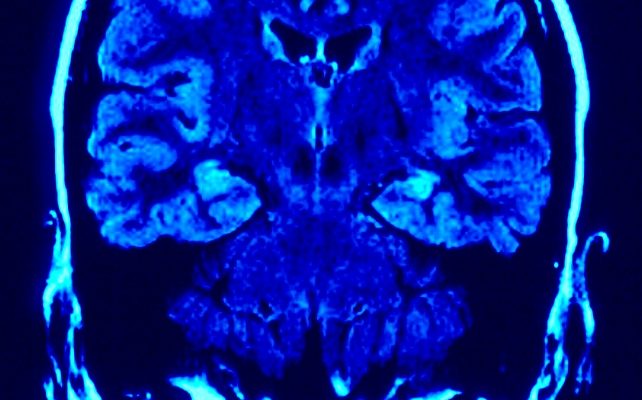


However, in this case I believe it was something else … a fundamental inability for people to see anything that’s beyond their neuro-evolutionary development.

Here’s my response to that posting:

I’m a big fan of neuro-evolutionary developmental modeling. Think of the work of Julian Jaynes and his bicameral mind theory, or the work of Clare Graves or Jane Lovinger, or E.O. Wilson’s work in sociobiology. This is where my attention has been for the better part of a decade now.

Rebecca Costa has summed up some of this work in her excellent book, The Watchman’s Rattle. In the book she speaks to the neuro-evolutionary trait of insight, technology, complexity and the collapse of civilizations. Well worth the read.

In my work I’ve been looking at a few things too … different from Costa or the others. I think some of my work is paralleling the things Ken Wilber has been speaking to most recently. My focus has been on how we create transformational change leading to a new position of consciousness and performance breakthroughs. NOT better performance where we already are, but performance we cannot get to from where or how we are today.

This focus forced me to look at the questions of power and complexity, and their relationships as contained in the interpersonal relationships in institutions and organizations. This is akin to what John Gatto found when deconstructing modern schooling, it’s process and intent.

Simply put there may not be a place for consensus if we want real change. This idea, of consensus, is mired in what Clare Graves points out is Level Six thinking, what Spiral Dynamics labels Green, and what Dudley Lynch calls First Dolphin or Enlightened Carp thinking.

The idea that we must create consensus and bring people along is an anchor we drag from a limited world view that has not yet leaped beyond systemic thinking to fractal thinking where deep complexity resides.

Rebecca Costa points to this limitation as reaching a cognitive threshold, and suggests it’s the basis for the collapse of civilizations. Her analysis and evidence is impressive. IMO many Western Europeans and North Americans are stuck there today, along with some others as well.

(Name Withheld) you’re suggesting something that remains in a blind spot to anyone who hasn’t fully evolved beyond Level Six mind.

This posting and the responses to it got me to thinking.


Is it unreasonable to consider that some folks are just not neuro-evolutionarily developed enough to perceive what others do as obvious?


This falls under the rubric of Developmental Modeling as I refer to it, or if I really want to be fancy about it, Neuro-Evolutionary Developmental Modeling.

In less fancy terms this is the assessment and modeling of the literal neuro-evolutionary developmental stage that someone is at, and the implications of what that means.

Let me put it another way …

My work as I said in my Facebook response focuses on:

“… how we create transformational change leading to a new position of consciousness and performance breakthroughs. NOT better performance where we already are, but performance we cannot get to from where or how we are today.”

This is about looking at levels of consciousness and meaning-making as I think about it.

There’s a cognitive consideration, i.e.: how we process information beginning with perception, moving through sense-making and decision-making, and respond in regard to the action we take and the action we choose not to take.

Within the scope of my consideration is how we process that information that leads to action, including what Cognitive Scientists refer to as Situated and Embodied Cognition.


Situated Cognition:

The school of thinking about situated cognition aligned with the cognitive scientists say that cognition is a function of where we are situated in space and time, i.e.: the situation and circumstance we find ourselves in determines how we think about the information available to us.

Simply put, cognitive scientists say that thinking cannot be separated from doing and context as a way to speak about situated cognition. The situation becomes part of our “cognitive process” as well as what we do internally with the information we have access to, including the way the information in the situation relates to other information in the situation.

For example, if we are in a diner and hungry and we see a menu advertising the “Burger Special” we will think about it differently than if we had just left a restaurant after a particularly satisfying meal and saw the same “Burger Special” advertised on a billboard as we were driving home. The situation and circumstance changes how we think about the information that’s present.

Another example might be, if we are in the diner and hungry, but we only have enough money for a cup of coffee we’d respond differently to the “Burger Special” advertisement than if we had sat down to eat with plenty of money in our pocket to choose whatever we want for dinner.

Also, what we bring to the situation ourselves affects how we process the information presented to us as well. For instance if we are vegans or eating a strict paleo/high-protein/low-carbohydrate diet will impact how we process the information about the “Burger Special” too.

The situation becomes part of our “cognitive process” as well as what we do internally with the information we have access to, including the way the information in the situation relates to other information in the situation.


Embodied Cognition:

Keeping it as simple as possible, when we refer to embodied cognition we’re referring to the idea that … we think like we do because we’re embodied in world.

This means that our thinking arises from the physical experience of having a body, and the way we experience things in and with our body.

While this might seem obvious at some level the more prominent position has been held for more than three centuries has been dualism, i.e.: the separation of body and mind. Cognitive scientists who hold a strong position about embodiment believe the mind arises from the structure, processes and actions of the body.

Early examples of embodied cognition arise in the world of the phenomenologists like Martin Heidegger, Maurice Merleau-Ponty and Pierre Teilhard de Chardin.

In the mid and late twentieth century some cognitive scientists went beyond the theories of dualism and the mind as an independent processing mechanism to considering a unified cognition that includes the body. Two of the folks who did a lot of work in the embodied cognition paradigm that influenced my thinking are Humberto Maturana and Francisco Varela. They studied and wrote about visual perception, including the biology of vision, like the physical aspects of the human eye, and how those physical aspects of embodiment effect how we perceive visually.

George Lakoff and Mark Johnson are two philosophers who are also in the embodied cognition camp who did a lot of work together around metaphor and embodiment. Their book Philosophy in the Flesh was one of the most influential early works in my own conception of mind. It was this book that led me to thinking about what cognitive scientists call enactivism.


Enactivism:

Enactivism postulates that cognition is a function of the tension between thinking and the environment, and the need or desire to respond to what’s happening. Specifically enactivism suggests that we shape our environments by the ways we respond and take action, shaping the environment in turn as we go.

This looping between the individual and their environment becomes a part of their cognitive processing, and as I think about it it’s here that situated and embodied cognition collide and become something more than either alone.

In some way we can say that enactivism brings about who we are as we know ourselves to be, as well how we know the world to be as we know it. Through enacting in the world we generate both ourselves and our sense about and knowledge of the world, including others.

This is where I mostly settle when it comes to how we process cognitively in a real sense of what happens as we’re processing information and acting on it.

Yet, I’m also influenced by other cognitive models that share how I think about enactivism, like neuro-evolutionary developmental models.


Neuro-Evolutionary Developmental Modeling:

For me the rubber hits the road when we’re talking about mental models when the dialogue revolves around neuro-evolutionary developmental modeling.

My early introduction to the idea of neuro-evolutionary developmental modeling was via the work of Dr. Clare Graves. The Graves Model lays out a double helix of stages of evolutionary bio-pyscho-social-cultural growth alternating between self-sacrificing and other-sacrificing. At each stage the dynamics of dealing with the limitations of the system the individual is contained in and relating to create a tension that leads to dialectical transformation.

According to Dr. Graves each stage of human evolutionary growth comes about as a result of dealing with the challenges presented by the environment they are contained in and operate in relation to until the operating paradigm itself becomes the generator of the challenges the individual confronts.

When the point where the operating paradigm generates irresolvable challenges as a result of functioning within it there is a point of dialectical transformation that is reached. It is at this point that individuals within the system respond by rejecting the present paradigm and leap to a new level of consideration that offers resolution to the challenges the extant operating paradigm generates.

In other words every human system can be defined by some set of boundary conditions that limit it to being what it is in the moment. These boundary conditions arise as a result of the values that are held as true, and in some regard sacred, within that human system. These values are designed to create a functioning system that resolves the challenges that system faces collectively, and become the agreed upon and accepted values of the culture.

Yet, these values require varying degrees of cognitive development to incorporate and act upon. The neuro-evolutionary developmental models I follow closely suggest that the human cognitive system evolved in relation to the stresses confronted at various stages of human evolution. Literally on one hand the brain evolved to access new ways and patterns of thinking, partially due to the interactions of the multiple brain modules that evolved in response to evolutionary pressures.

At each level of neuro-evolutionary development the individuals who have access to that level of development become able to perceive their environment in ways that individuals before them, who had not evolved that level of neuro-evolutionary development are able to comprehend. Quite literally the ability to perceive the information in the system is limited by the level of neuro-evolutionary development.

This shows up in application or practically in relation to the level complexity the individuals within a system are able to process the information present. The higher the neuro-evolutionary development of the individuals in the system the more complexity they can perceive and comprehend. These advanced stages of neuro-evolutionary development allow these individuals to make choices unavailable to those who cannot perceive and comprehend complexity at these levels.

One way to think about this would be as the scope and range of complexity that individuals in a system use to make decisions and take action. The higher the level of neuro-evolutionary development of an individual the greater the scope and range of choice they will have, theoretically giving them an edge in responding to the emergent conditions in any given system. However, there’s a strong caveat …

The theoretical best response will arise when the level of complexity present in the system and the level of neuro-evolutionary development are most closely aligned and matched. When the complexity of the system exceeds the level of the neuro-evolutionary development of the individual confronting it the lack of appropriate choices available will limit the individual to less than ideal choices and, corresponding less than ideal responses and outcomes.

Applying higher level choices in a system that operates at a lower level of complexity than the neuro-evolutionary developmental level being applied to make the choices acted upon often results in less than ideal responses and outcomes.


Therefore we can say that using the most aligned neuro-evolutionary developmental level to the situation and circumstance at hand results in the most ideal responses and outcomes being realized.

Yet, when someone simply doesn’t have access to the neuro-evolutionary developmental level required by the complexity in the system they will be limited to responding from the highest neuro-evolutionary developmental level they can access at present.

This is how individuals and system fail and go into devolution resulting in personal failure and civilization collapse.


I’m seeing more and more that individuals in our complex Western civilization are reaching cognitive thresholds, which define the limits of complexity they can perceive and comprehend. Yet the systems they are operating within require a higher level of neuro-evolutionary development then they currently have access to, to create useful choices that allow them to respond and produce the outcomes they desire.

The feelings they experience as result of reaching their cognitive threshold  include frustration, anger and despair. This leads to lashing out against others who are also experiencing the limits of their own cognitive threshold, albeit in ways different from their own.


Regardless of the level of neuro-evolutionary development that limit an individual from accessing the most useful choices to address the challenges they face, the result is the same … i.e.: they produce less then ideal responses and outcomes. 

In particular, as a result of their neuro-evolutionary developmental limitations, these folks believe they are addressing the challenges they confront in the most ideal way possible, yet the outcome they produce replicates the conditions to perpetuate the challenges they seek to resolve.

The key to resolving the limitations of neuro-evolutionary development begins with accepting that the choices available to you are constrained by your level of neuro-evolutionary development … and NOT the conditions of the challenges you face or the system they are contained within.


The first step forward then starts with exploring ideas and choices that are unfamiliar and unaccessible from the highest neuro-evolutionary developmental level you are most comfortable with today. This means opening yourself to the discomfort of confronting your most cherished values and beliefs for what they are … values and beliefs, not facts or truths.

Individuals who can do this … confront their most cherished values and beliefs and open themselves up to the discomfort of seriously considering that ideas and choices that are unfamiliar and unaccessible to them from where they are today … open themselves up to the possibility of creating responses and outcomes that were unavailable to them previously.

While this doesn’t necessarily mean they have actually evolved to a higher neuro-evolutionary developmental level, it doesn’t matter as much as having access to the strategies used by individuals who can operate at those higher levels.

But, it also requires accepting that until we actually evolve to a high neuro-evolutionary developmental level, we will remain blind to what we cannot perceive from the highest neuro-evolutionary developmental operating level we can access ourselves.

Despite the frustration, anger and despair this realization may bring, i.e.: that we are limited to the highest neuro-evolutionary developmental level we can access, it allows us to move beyond operating from distorted values and beliefs we impose, while ignoring real facts and truths that are evident to those who aren’t blind in the particular ways we are ourselves.

This work … guiding my clients beyond the limits of their current level of neuro-evolutionary development happens in my Foolish Wisdom program and private 0ne-to-one work. The feedback I get is that while the result is often transformational leading to significant performance breakthroughs, getting there isn’t always the most comfortable experience on the way, but worth it at the end.

I’d love to hear your thoughts …

Buona Fortuna and Abundanza,

Joseph Riggio, Ph.D.


P.S. – There is still time to get the details about the upcoming Foolish Wisdom program on 28 January in NJ …


FOOLISH WISDOM DETAILS


Filed Under: Blog, Business Performance, Cognitive Science, Elite Performance, General, Human Systems, Life, Transformational Change & Performance, Uncategorized

Which Brain Are You Using?

Which Brain Are You Using?

by Joseph Riggio · Mar 29, 2016

Silent Brain Learning

brain01 125NOTE: Read this article and watch the video first …

[The Enormous Power of the Unconscious Brain]

It’s a great article, but the journalist has it all wrong IMO. In fact he completely contradicts himself …

Silence is Golden

In the video you see the comparison between the journalist’s brain and the world-champ’s brain (that’s right the 10 year old is a world champion cup stacker … what have you done lately???).

In that video the journalist’s brain is lit up like a Christmas tree .. whle the champ’s brain is virtually silent. Yet the journalist claims he’s wired in the programming to his cortical processing to run the patterns he’s running without processing them.

That’s fundamentally absurd!!! (Go ahead, read the paragraph above again.)

The argument I’m making is that what the champ did was to get his brain out of the way (okay, not his whole brain, but the part we “think” with normally … or at least consciously … the cortical brain (the neocortex).

His brain is silent because it’s not working … and even the little blips we see have little to nothing to do with what his hands are doing.

That’s not about training the cortical processing, or learning to submerge the conscious processing function.

The champ used his neocortex to train his cerebellum to take over … i.e.: his Silent Brain!


Why Performance Mastery Is “Silent”

Performance is a function of the ability to act in response and relation to the stream of data flowing in the system that you’re operating in to create your intended outcome.

The more accurately you perceive and interpret the data present in the system, the more accurately you can adumbrate what’s coming next … and, make adjustment to your responses.

Ultimately, your performance is a function of behavior, i.e.: the actions you take and don’t take in response to the way you percieve and interpret the data in the system. The more closely your actions align with the simplest, most direct path with the least resistence between where you are in the present moment and what you intend as your outcome, the more elgant, efficient and effective your performance will be … let’s call this the “Path of Perfection.”

When you can act consistently and reliably along the Path of Perfection, you will gained mastery in that behavioral performance … whether that’s mastery in sports, communication, business … or some other domain of action.

This kind of performance, i.e.: mastery, is a function of processing done beyond the reach of cortical processing … or at least solely by cortical processing.

The primary driver of mastery at the behavioral level of performance is processed in the cerebellum.

This is the seat of the silent processing we see in the video of the champ’s brain …

He’s not showing activity in the neocortex, because he’s off-loaded the processing to the cerebellum and gotten his cortical processing out of the way of his faster, more elegant cerebellar processing.
 

Blind But Not Dumb

The cerebellum may be blind, but it’s not dumb.

Cerebellar processing operates differently from cortical processing because it’s non-representational.
We see this when the champ puts on the blindfold and still runs the behavioral performance as well as when he’s not blindfolded. Although he’s not getting any visual input his motor facilities still function as accurately in the task he’s trained them to do.

He’s using a combination of kinesthetic input and spatial mapping to function at that level of performance. This is the magic of training the vestibular and proprioceptive systems to take over for the more common sensory system processing task, e.g.: looking at the cups, his hands and what he’s doing with them.

The silence of the cerebellum is it’s trick. The cerebellar processing pathways are more efficient because they are closer to the direct sensory data. The cortex almost immediately transforms direct sensory data into representations, abstractions and intellectualizations … at least one step removed from the actual data itself.

One of the most obvious examples, especially if you have yet to master something at the level of the world cup stacking champion (5 seconds for that whole routine, again and again, even blindfolded) … is the transformation of direct emotional experience into an intellectualization. Anger, joy, grief, ecstacy … all have an actual body experience, a felt sense … but the way the average person experiences their emotions has as much or more to do with the associations they make with the way they label their experience.


Cerebellar Training & Learning

The basis of virtually all the work I do is framed in relation to moving unnecessary cortical processing out of the way of performance.
This is not saying there is no place for corical processing, of course our neocortex is one of our most amazing evolutionary gifts … but, all things at the right time and in the right place … preferencing cortical processing over all other kinds of “thinking” or kinds of neurological processing.

The real “trick” is knowing how to get the cortex out of the way, freeing it to do what it does best … i.e.: make connections in time and space that don’t yet exist … creating future memories.

To do that the behavioral part of performance must be off-loaded whenever possible to the more efficient cerebellum.

When the cerebellum is in charge of responding there is a direct line to taking action, that cortical processing must run through multiple channels to get to first, creating a slower, more cumbersome response.

For some people (especially those who remain untrained) in getting through the levels and complexity of cortial processing they run out of steam before they get to action, i.e.: they find themselves unable to take action or constantly hesitating and procrastinating when immediate action would have served them (and, possibly others) best.

Knowing how to organize yourself to take action is the key to mastery.

In otherwords, if you want to attain mastery you must develop the ability to train and learn at the cerebellar level of response.

When you’re ready give me a call …

(You’ll find my contact details here: Joseph Riggio DotCom)
Joseph Riggio, Ph.D.
New Hope, PA

PS – The most effective way “cerebellar training” I’ve ever put together is my “Foolish Wisdom” group coaching program. I’m running a program in New Hope, PA in a couple of weeks on Saturday & Sunday, 16/17 April 2016.

Check out the Foolish Wisdom Workshop details here:
https://www.amiando.com/HSNIUBF.html

Filed Under: Blog, Business Performance, Coaching, Cognitive Science, Elite Performance, Transformational Change & Performance, Uncategorized, Upcoming Events

Reinventing Reality …

Reinventing Reality …

by Joseph Riggio · Feb 23, 2016

Why Sir Issac Newton Had To “INVENT” Calculus … (and why his reason should matter to you)

Defying Gravity - One-person-acrobatic-jumping-scene-symbolize-vitality,-aspiration,-success,-progress-000010811119_400px“If you can’t tell if it’s reality you’re dealing with, you can’t possibly expect take action to create the results you want.” – Joseph Riggio, Ph.D. author of “The State of Pefection: Unleashing Your Hidden Code To Mastery”

For decades I’ve been on about the alignment between our perceptions of reality (all I believe we ever have with regard to our sense of reality and our ability to act in the world as we know and experience it) and …

What’s beyond beyond our subjective, or constructed, experience .. the manifest and extant data in the environment … “objective, empirical evidence” … what we must accept as true even when we don’t agree with it or like it … as we know it to be through our own empirical, sensory perceptual experience.

BUT … this is no ordinary or easy task … i.e.: arriving at an empirical experience of reality that simultaneously allows for what cannot be known except by one’s own subjective, empirical perception and understanding.

AND, I beleive it is what Newton solved in creating “the Calculus.”
Give me a minute or two more and I’ll explain why I believe that … and what it means to you too.


Newton’s “Fluxional” Calculus:

Okay, to begin with we can’t really know if it was actually Issac Newton or Gottfied Leibniz who actually invented modern Calculus (the term was in use long before either of these 17th century genius, but referred to mathematics in general before it was formalized in the approach that we simply refer to as “calculus” today).

And … I don’t really care either …

The reason I want to focus on Newton is because his path to “the Calculus” was more general and applicable, and less theoretcial and sweeping philosophically than Leibniz’s approach.

Leibniz believed that “the Calculus” was a metaphysical explanation of change, i.e.: beyond the material realm, but nonetheless fascinating as a method to explore what was not possible to capture in the physical plane of existence, his was the “Infinitesimal Calculus” the sought to explore infinitesimal events as they were held as concepts of thought.

Newton on the other hand saw Calculus as a general explanation of change, and in specific a way to mathematically understand, capture and describe the motion of objects … especially when dealing with the magnitude of the motion of the objects in question.

Another reason is that I love the way Newton referred to what we know think of as formalization of the Calculus he developed; “Fluxional Calculus” … it just appeals to me.

However, the deep distinction in Newton’s calculus was that he tried to avoid infinitesimals, i.e.: that which could not be grasped empirically, but defaulting to a strictly rigorous epiricism. His was a task of explaining “the indisputable fact of motion” by accepting that as objects moved they were transiting a path that was continuous and not made up of infinitesimally small increments of movement.

This is a distinction between the empiricism of the analog in motion and the imaginal of the digial points that a moving object occupys in some unique, divided and separate instant from all other instants it occupies along the path it transits.

&nspb;

Why Newton HAD To Invent Calculus”


It’s claimed that Newton “HAD” to invent the Calculus to gain acceptance of his theory of gravity with the Royal Academy of Science in England … and there’s some truth to that, but it wasn’t the only reason he began or became obsessed with the path that led to his Fluxional Calculus.

Newton HAD to invent calculus to give him a way to describe the world that had become empirically obvious and undeniable to him … a world filled with motion and change that was constant, continuous, inevitable and unbroken or indissolvable into discreet and distinct separate elements or moments in space or time.

One of the most fascinating things about Newton’s (and Leibniz’s) calculus, that described motion and change, to me was that it demanded the creation of an entire new system of mathematical representation for the elements and concepts that it was addressing and workign with as a “tautology” … a closed, self-contained, way of considering reality as we know it, with it own set of self-referencing, self-organizing principals, rules and language.


So Why Should You Care About Any Of This???


The reason to care about this is simple … because your life depends on it!

Okay … Okay … maybe I’m being a little melodramatic for effect.

BUT, let’s say that the quality of your life, and the experiences you have, do actually depend on it … i.e.: your ability to describe reality beyond yourself, or your solipsistic, singular way of knowing.

To put it another way … YOU NEED TO HAVE MULTIPLE POINTS OF VIEW TO MAKE SENSE OF ANYTHING BEYOND A WILD HALLUCINATION OF WHAT YOU THINK IS “OUT THERE” IN THE WORLD BEYOND YOURSELF … that thing we call “reality.”

You see your own personal experience of anything is “non-falsifiable” as your experience. Your experience is what it is absolutely, undeniably and indisputedly … just like an object in motion is an object in motion.

However, to make sense of your experience in relation to the world beyond yourself … the experience others are having – of themselves, of you, of the world you are experiencing in simultaneity … or, the events that are occuring that are beyond your ability to contain personally … just about any event that includes more than just you yourself experiencing just you yourself … you must have a way to “triangulate” and navigate your experience in reference to what is beyond just you.

(I recommend you slow down … go back … and re-read that paragraph a few more times. It’s both essential to what I’m offering you here, and also critical if you want the value of what I’m offering you here as well.)

This is the essence of the work I refer to as accessing “The State of Perfection” … a way of moving towards a more rigorous empiricial position that begins by having access to and the ability to sustain multiple points of view …

  1. One point of view that you must gain a handle on is what we can call a “first person point of view” (FP-POV). A FP-POV is the point of view that you have from within yourself, i.e.: your experience of your experience … the point of view that is absolute, undeniable and indisputable.
  2. Another point of view you can have is a “second person point of view” (SP-POV). A SP-POV is one in which you consider what it would be like to experience the experience you’re having if you were another person having the experience of being with you … having your experience.This one’s a little more complex in that you have to hold two points of view simutaneously to get there … the point of view of what it would be like to notice another person having an experience of being with you while you’re having the experience you’re having … AND, the point of view of noticing the experience that other person would be having of being with you.
  3. A third point of view could be one in which you are simply in an observer’s position noticing what there is to notice without referencing it as subjective experience … for example; “My arm is moving” as the pure experience of noticing that your arm is moving in detached way, almost as though it’s not your arm that’s moving … like you would notice someone else’s, anyone else’s arm moving. This would be a third person point of view (TP-POV).What’s significant is that you can extend the TP-POV to experiences that are not externally observable, for example: “I am angry … AND I’m feeling it as a tension in my abdominal area, while my hands and jaw are clenching, and I’m constracting all the muscles along my back from my waist to my next far more than I am usually aware of contracting them … and, I also notice that my field of vision seems to be much narrower and more tightly focused than is usual to me.” without becoming attached to any of that description beyond noticing what’s there … i.e.: not wanting or needing it to be anything other than or different than what it is “as is.”The TP-POV would then become a kind of “empirical” or “epistemlogical” phenomenology … i.e.: an examination of the content of your own experience as though from a position beyond, or outside of yourself, where you are extremely interested in and observant of the data about what you are experiencing without attaching any meaning to it beyond a pure description of what you’re observing about it.

When you can access these multiple points of view, especially a TP-POV … an epistemological phenomenological” point of view … you will be infinitely better at managing your perceptions and actions to direct them to the outcome positions you most want to attain.

This is how you will begin to gather the ability to optimize all your experiences … regardless of the circumstance or situation, on your own and/or with others.


So Why Bring Newton Into This Conversation About Optimal Experience Then???


There are two reasons that the discussion about Newton creating Fluxtional Calculus are important to this conversation …

  • First, because it clarifies the distinction of subjective and empirical perception. Newton based virtually all of his discoveries and genius on holding a TP-POV that opened up a window to perceiving reality from simultaneous, multiple points of view … a kind of “G-d’s Eye” position, where Newton could and did perceive more of the hidden and elusive nature of reality than is immediately or ordinarily observable.E.g.: that gravity was a universal and constant force, that was changed depending on the factors of mass and distance of the objects exerting and being effected by the force of gravity … or the idea that white light was only a single way of perceiving multiple spectrums or bands of light that were simultaneoulsy present and experienced by the human eye as a single band of light, i.e.: white light, and that white light is unique in that it contains all the other bands of light that humans are capable of perceiving.
  • Second, because Newton needed to create a separate specical language to describe the unique characteristics of reality that he was observing. Without the Calculus not only was it not possible to share with others what he was empirically observing as he experienced it … but it was impossible to share with them the ability to make similar observations and discoveries for themselves.Yet, with the new “language” of Fluxional Calculus anyone who choose to could use the tautological space created by it to replicate the observations of Newton from all three perceptual positions described above, a FP-POV, SP-POV or TP-POV, and also using this “language” begin to describe observations of their own and share them with others who could also experience them from a FP-POV, SP-POV or TP-POV for themselves including observations that Newton had not made, but opened up the possibility of making using the new form he had created and shared with them.


You Need A SPECIAL LANGUAGE To Describe The Otherwise Indescribable


In my own work, the MythoSelf Process model, I deal with an set of observations about the world that are premised on some special conditions as well …

  • Starting from a uniquely positive point of view – the “excitatory state” or the neurological condition of the system remaining open to the inclusion of new data, even data that is contridictory, unfamiliar or previously unknown or unaccceptable
  • Assuming a stance of possibility rather than limitation – the premise that any data, evidence or experience can lead to the next step to be taken toward as desired outcome, and not a limitation that prevents the possibility of achieving the outcome eventually
  • Using the body as the basis of primary data about what is happening, rather than the distortion of tranforming sensory data into intellectualizations and abstractions – holding an embodied and situated way of experiencing real and imaginal events by attending first and foremost to the sensorial data, i.e.: the experience of seeing, hearing, feeling, tasting and smelling, as well as the body sense of balance and proprioception in an integrated and cumulative way as the singluarity of the felt sense of the experience as well as the individual components that comprise it (the felt sense)
  • Organizing the totality of experience as containing the singularity of space and time as mythic form – understanding the primary autobiographical narrative that is your own Life Story, i.e.: who you perceive yourself to be in relation to the world-at-large and the cosmos within which that world is situated
  • Recognizing the “storied nature” of experience and how we tend to experience events in an integrated way happenign simultaneously in terms of all the data that is present along a continuum of time that we later describe in discreet packets of information – e.g.: first this happened and then that, separating the analog nature of actual space-time into a digital representation of space-time
  • Defaulting to the premise of wholeform learning and communication in that we accept that all experience is wholeform with all events containing all the information present in simultaneity – this presupposes that all of our experiences are also had in simultaneity with all of the data impressing itself on our senses as a singluarity in any given space-time moment, despite our desire to keep things discreet to make sense of them as individual events happening in parallel, i.e.: there is no separation posssible in the events we experience that happen in the same space-time moment
  • That we can and do create our own experiences, constructing them out of wholeform structures, and then accept our constructions as what is “real” – and, by accepting that our experience is at least in part “made up” by us in wholeform that we also have the ability to choose the form we give to our experience
  • That the primary mechanism we have for managing the way we construct our experience is somatic, i.e.: body-based, and that our somatic experience gives rise to our stories and the meaning we make of them, i.e.: our semantic experience – knowing that we only know what we know, and know what that (what we know) means, in the form of the stories we tell ourselves and others, and in the stories others tell us
  • Only be integrating and aligning the somatic and semnatic forms we hold can we arrive at an integrated sense of ourselves and the world-at-large, as well as the cosmos and our place in it – this is the basis for the approach and methodology I use in working with the MythoSelf Process model, i.e.: Soma-Semantics, a way of simulaneously accessing and address the somatic and semantic forms that are the ways we represent reality to ourselves and others

So, fundamentally to do the work I do I had to create a tautology for the model, i.e.: a self-contained, self-referencing, self-organizing system with it’s own set of principals and rules, as well as it’s own language … in much the same way that Newton and Leibniz had to do to form a way to capture and describe the nature of motion and change that is the Calculus.

In my case, the approach and methology of Soma-Semantics, is the form of describing how we capture and describe the nature of subjective experience and change within it. This is the basis for transformational change – the changing of our experince of reality NOT the change of what we do in response to our experience of realty.

Within the application of the MythoSelf Process model from the transformational shift that becomes possible using the approach and methodology of Soma-Semantics, a second possiblity emerges … that of realizing a significant performance breakthrough, which is only possible to the extent that it is when transformational change has happened first, i.e.: a shift in the fundamental perception of reality.

The essential starting point for achieving transformational performance, where transformational change and performance breakthrough intersect, is the State of Perfection the state experience that is established at the start of the application of the MythoSelf Process work. Without this body-based, felt sense of being in the world what follows would not be possible, with it nothing remains impossible …

Yet, once you have accessed and sustain the State of Perfection all things become possible to you.


All the Best,

Joseph Riggio, Ph.D.

Creator of the MythoSelf Process and Soma-Semantics
New Hope, PA

23 February 2016

PS – If you are interested in experiencing the State of Perfection for yourself … click on this link for more:
The State of Perfection


PPS – I will be holding a special one time only 2-hour webcast event, “Accessing & Sustaining The State Of Perfection” on 8 March 2016

Filed Under: Behavioral Communication, Blog, Cognitive Science, Story, Transformational Change & Performance

Freedom is just another word …

Freedom is just another word …

by Joseph Riggio · Sep 21, 2015

Plugboard-eniac4 175px


… and Freeing Your Mind is where to start!


When I think about “freedom” I think about something that goes beyond place and time.

For instance most folks think of freedom as:

The ability to do what they want, when they want, where they want, whenever they want … or something like that from my observations.

But, that presupposes something that is very typically missing more often than not … the fundamental ability to have a choice in the first place.

Ah, but there’s the rub …

To begin with to have a choice you must first be free of preconceived notions and knee-jerk responses, and so few of us are even a little bit free of those bits of installed mind programs.

From the very beginning, maybe even in the womb, we are being programmed with what to like or dislike, what is good or bad, what to desire or reject … and on and on. Yet we think the things we choose are our preferences most of the time, and not just pre-conditioned responses.

If only that were true …

I’m not here to tell you that your full of it … but I am here to tell you that you are full of pre-conceived notions and knee-jerk responses you think are choices and preferences. Heck, even the way you just responded to reading that last sentence probably falls into the category of pre-conceived notions and knee-jerk response.


Your “brain” ain’t your “mind” … at least not in the way I use those terms.

An easy analogy to use in making my point would be the distinction between “hardware” and “software” in a computing system.

The “hardware” part is analogous to the brain part in humans, the wetware that runs the “software” part.

This would include things like the brain and the central nervous system, and also things like the sense organs and the parts that comprise them as well, e.g.: your eyes, ears, nose, tongue and skin.

When thinking about the wetware connected to and part of the brain system as I’m using that terminology here the “hardware” mechanisms that provide the input and throughput for the compound senses like balance and proprioception are also part and parcel of what I’m referring to as wetware.

Then you have the “software” that runs on the “hardware,” which in the case of the human brain may be a configuration of the “hardware” itself.

The particular patterns of connections in the brain may be what comprise the programs we run, like the plugboards in early computers . In order to run an instruction set on these early computers wires would have to be physically rerouted to the appropriate connections on a plugboard with dozens or hundreds of fixed, pre-programmed microcircuits (see the image attached to this post above – Programming the ENIAC – Columbia University).

When the plugboard had the wires connected in a particular pattern the particular instruction set associated with that pattern would run, and only that instruction set. If you wanted to run a different calculation, based on a different instruction set, you would have to physically remove the wires from the plugs that linked the pre-programmed microcircuits in the existing order they were in to do it. Then you would have to re-route the wiring to the new configuration that provided the instruction set you now intended to run.

In many ways the human brain seems to be organized much like the early computers were with their pre-programmed microcircuits. Except in the case of the humans the preprogrammed microcircuits are the distinct patterns of neuron firing across the synapses that comprise the wetware of the brain.

The patterns of neural firing in the human brain are preprogrammed by virtue of familiarity. In the cognitive sciences we say that synapses that fire together wire together, meaning that the pattern of use determines the ease of recreating that pattern again.

The more a particular synaptic pattern fires the more it becomes myelinized. Myelin is the fatty sheathing that surrounds healthy nerves and facilitates the transmission of nervous impulses along their pathways. The better a nerve is myelinized the more easily, efficiently and effectively it seems that impulses are able to flow through it.

Nerves also seem to become more myelinized through repetitive use, i.e.: the more a particular pattern is used the more it becomes grooved in as the preferred pathway taken in response to a particular stimulus or category of stimuli. This allows us to build very rapid responses to common action scenarios when exposed to familiar stimuli or a category of stimuli, for example:

There is a particular way you tie your shoes, right lace over left lace first, or visa-versa. Doing it any other way feels unfamiliar and awkward.  Yet, tying your shoe laces the way it’s been programmed is so familiar and comfortable it has likely become second nature, and you can probably do it at a pre-conscious level, while attending to something else on a more conscious level. 

Wizard of Oz Scarecrow - MorgueFile-IMG_3130 175px Your choices aren’t only limited to the way you tie your shoes … and we’re not in Kansas anymore! 

So following the logic of the pre-programmed brain patterns we can begin to discuss, “What is the mind?” 

In some ways I think it would be fair to consider the “mind” the patterns of neural connections in the “wetware” that we use in thinking consciously, pre-consciously, sub-consciously and trans-consciously.

These patters of wetware connections at one level are what thought is as we understand it today. However, there seems to be more to mind though than just the wetware connections, because we retain an ability to override the preferred patterns grooved into the wetware and do creative, impulsive, spontaneous and original things.

This ability to create unique responses is grounded in the brain (or the total configuration of the wetware in the body-at-large), and at the same time it exceeds the patterns previously organized in the wetware configuration and familiar within it.

Every time you respond as you have “without thinking” you are NOT expressing freedom or choice,  you are expressing a pre-conceived notion or knee-jerk response grooved into the patterns in your wetware … like a pattern in the way the wires are configured in the plugboard of the ENIAC at any given time. In this way you are literally only capable of running the particular instruction set associated with that configuration in response to the presenting stimulus – you aren’t “thinking” you’re just following the actions associated with that instruction set.

Have a choice, or being free, requires you have options when acting in relation to any presenting stimulus.  

So freedom isn’t being able to do what you want, when you want, where you want, whenever you want … unless you have a choice about doing it at all!


“FREEDOM” is a Mind Game … but you have to first take control of your brain to have access to your mind.

This is something I learned early on in my NLP days … to use a quote from Richard Bandler, one of the co-developers of NLP:

Brains aren’t designed to get results; they go in directions. If you know how the brain works you can set your own directions. If you don’t, then someone else will. – Richard Bandler (http://www.azquotes.com/quote/703363)

In Richard’s book, Using Your Brain For a Change: Neuro-Linguistic Programming says he’s going to give the reader “a manual for running the brain” and in my opinion gets at least part of the way there in his descriptions, instructions and examples.

One of the things that’s interesting to me about “Using Your Brain For a Change” is that Richard never really talks about the hardware as wetware as I have above. Instead of getting into the whole discussion about neural patterns as they operate at a physical level Richard spends all his time discussing our representations of reality, i.e.: how the patterns we make about the world and ourselves are organized.

In particular the discussion of how we organize our representations of reality in this book by Richard Bandler are focused on what he refers to as “submodalities” … unique distinctions about the elements of perception that determine  how we make sense of what we perceive and what meaning we attach to those perceptions.

The submodalities of perception are organized into configurations, i.e.: “submodality configurations” that are more significant than any individual submodality standing apart from the pattern of the configuration as a whole.

Submodality configurations are comprised of two aspects that are equally important:

The Semantics of Submodalities: these are the way in which the particular submodality of perception is present in the representation of reality as it is known to you, e.g.: the unique color of someone’s eyes as you recall it and where you “see” that image in your mind’s eye, as well as the brightness, angle of view, distance from you and the way you hold the totality of the representation in regard to the visual image … as a photograph or video for instance.

The Syntax of Submodalities: this is the order or sequence in which the submodality configuration that forms your perception of reality is represented and attended to by you, e.g.: you can notice first the visual submodalities and then the auditory submodalities, or you might notice them in wholeform all at the same time as you would were they occurring in real time, and you might also notice the unique pattern of the submodality in stages as well, first noticing the color, then the brightness, then the angle and so on … and by virtue of the order or sequence the submodality configuration take on a logic unique to the syntax you use.

What Richard explores and examines in his work is both the semantics and syntax of “subjective experience” and how we can alter that for ourselves.

There is a powerful perceptual logic in the semantics and syntax of submodalities, and what’s unique to this logic to me is that it is non-linguistic, and therefore can be held and experienced in wholeform, i.e.: beyond the limits of language.

While language is always digital, with one element … a word, a sentence, a paragraph … distinct from the one before it and the one after, indeed from all other words, sentences and paragraphs, and by it’s very nature needing to be experienced separately from them, life occurs in wholeform, i.e.: all at a time, simultaneously.

Language is also always ordered sequentially and linearly, once more separating it from the experience of life, where many things can and do happen in simultaneity.

Submodalities are a kind of a bridge between the direct sensory experience of wholeform life as it happens and our processing of our conscious experience of life as what happened. They (submodalities) are magical, like the Old Norse runes, they are the elements from which we can conjure our subjective experience as we see fit.

“I, master of the runes conceal here runes of power. Incessantly plagued by maleficence, doomed to insidious death is he who breaks this monument. I prophesy destruction.” – Björketorp Runestone, 6th C. Sweden

Or one more, suggesting a runic use benevolently capable of giving life to the dead …

I know a twelfth one if I see,
up in a tree,
a dangling corpse in a noose,
I can so carve and colour the runes,
that the man walks
And talks with me.

– Odin

Hávamál, Codex Regius 13 C.


The relationship between Subjective Experience … Freedom … and Choice/Choosing

Until we have access to how we are choosing what we are responding to and how we respond to it, we have little or no choice … and, without the option to choose we have no freedom.

Now here’s a critical distinction … we may not always be able to choose “what is” or the elements we are experiencing in our reality, but we always have options about what we choose to make of what we’re experiencing.

How we make sense of things and what we allow them to mean to us is always in our control … when we are able to access the process we use to make sense of and make meaning from the presenting stimulus of our subjective experience. 

In this way, even when we are “objectively wrong” we get to choose our own experiences, and from there what and how we choose to respond to as it appears to us.

Here’s another Richard Bandler quote to tie things together:

The greatest personal limitation is to be found not in the things you want to do and can’t, but in the things you’ve never considered doing. – Richard Bandler (http://www.azquotes.com/quote/703366)

This is the essence of freedom (and mind) as far as I’ve concerned … i.e.: being about to choose what isn’t and hasn’t yet been.

Someone in prison who gets this idea fully can choose “FREEDOM” while doing the time of their sentence. Someone being beaten can choose to make it means something other than the loss of control of their experience.

Regardless, of the circumstance or situation if you can choose what something means to you, you can be free.

One of my favorite scenes of all time is from the 2006 James Bond movie  “Casino Royale”  with Daniel Craig, playing Bond. He’s being tortured by the criminal mastermind, Le Chiffre, played by the actor Mads Mikklesen. He’s in great pain and likely to be killed imminently in this particular scene:

Bond: I’ve got a little itch … down there. Would you mind? No! No! No! No. To the right. To the right. To the right!

Le Chiffre: You are a funny man, Mr. Bond.

Bond: (Laughing) Yeah! Yes, yes, yes. Now the whole world’s gonna know that you died scratching my balls.

Now that’s having control of one’s “subjective experience” and choosing in the most dire of circumstances!!!


In the end it ain’t what you can or can’t do … or be … it’s the choices you make with what you’ve got.

In the follow up to the scene from “Casino Royale” above Bond is next seen recuperating from his trauma in a hospital accompanied by his paramour in the film, Vesper, played by Eva Green. They are on a lawn and he is clearly weak and debilitated after his ordeal.

Vesper: Hello.

Bond: Hello.

Vesper: You all right? I can’t resist waking you. Every time I do, you look at me as if you haven’t seen me in years.

Bond: It makes me feel reborn.

Vesper: If you’d just been born …wouldn’t you be naked?

Bond: You have me there.

Vesper: You can have me anywhere.

Bond: I can?

Vesper: Yeah. Here, there, anywhere you like.

The scene continues a bit further in the dialogue …

Vesper: You know, James …I just want you to know that if all that was left of you … was your smile and your little finger … you’d still be more of a man than anyone I’ve ever met.

Bond: That’s because you know what I can do with my little finger.

Vesper: I have no idea.

Bond: But you’re aching to find out.

Vesper: You’re not going to let me in there, are you? You’ve got your armor back on. That’s that.

Bond: I have no armor left. You’ve stripped it from me. Whatever is left of me …whatever I am … I’m yours.

There’s something particularly remarkable in these two scenes to me.

There’s something particularly powerful about the nature of having control over one’s self, including the ability to let go … to be fully present to “what is” as well as one’s self and what one wishes to be experiencing in the moment, regardless of what the evidence is that is presenting itself in that moment.

I’d even argue that in terms of mythic form, in this moment captured by these actors, Bond is everyman and Vesper is everywoman … the ideal of the anima/animus as the blended being becoming whole and complete. Wonderful!

The conclusion I reach is that FREEDOM is more a powerful and potent force than PERFORMANCE.

Even though I make much of my living, and devote much of my life’s work to assisting others with mastery in terms of performance, i.e.: linking intention to action in terms of the results and outcomes they achieve, freedom is the real treasure … i.e.: having what you want as you want what you have.

Buona Fortuna & Abundanza,

Joseph Riggio, Ph.D.

New Hope, PA

Filed Under: Blog, Cognitive Science, Language & Linguistics, Life, NLP & Hypnosis, Transformational Change & Performance, Transformational Communication

Foolish Wisdom … Making The World Go ‘Round …

by Joseph Riggio · Nov 13, 2012


“Foolish wisdom is about dealing with the world in ways you have not before …”


Challenge is …
Most folks can’t get out of their own way

What I mean by “most folks can’t get out of their own way” is that they lead with their limitations. Of course, they don’t mean to … heck, they don’t even know their doing it 90-plus % of the time … but they do nonetheless.

The reason most folks lead with their limitations can be boiled down to just a few things:

  • Their limitations are intertwined with their “success formula” – i.e.: how they know to create the successes they do

  • They perceive the world from a limited point of view that’s relatively fixed and unchanging, i.e.: myopic perception

  • What they’ve experienced is what they think they’ll always experience, i.e.: they project their past into their future

  • The education they’ve had defines the world for them as they know it, i.e.: they haven’t learned to use their senses

  • Reality as they know it to be has a singular form that’s unchanging, i.e.: they seldom if ever challenge their beliefs

  • Truth/Knowledge/Learning … whatever … all exist “out there” beyond them, i.e.: expertise is external to them

I’m sure I could extend the list, but why? If you don’t get the pattern from what I’ve included above, more items in the list isn’t going to make it any clearer for you. In fact I could probably make it just one list item and cover the whole gambit …

  • Only socially validated and reinforced values are acceptable to them, i.e.: what they know instinctively and intuitively is put aside when they are confronted by others who demand socially acceptable “proof” … they are externally organized and other-referencing, versus internally organized and self-referencing

Now there’s nothing wrong with being externally organized and other-referencing per se … BUT it’s a function of interplay between context and content … and timing. When you know you don’t know, and you seek external input, from experts or otherwise, that’s wise … BUT, when you have gathered the information and knowledge you need the ultimate decision about what it means always remains personal … ONLY YOU CAN DECIDE WHAT’S TRUE FOR YOU.

This may seem obvious and self-evident, and to a very great extent it should be and is so. The challenge for most people is clear however …

SELF-DOUBT

FWIW I’m a big fan of doubt … until I don’t. To quote my own mentor, Roye Fraser …

“When in doubt don’t.” 

What Roye taught was that doubt meant, “not enough information” – simply meaning, you need to gather more information than you have, so you can remove the doubt. So until you become settled within yourself don’t take any action you don’t need to take before you need to take it.

The key in that statement is: “until you become settled within yourself don’t take any action you don’t need to take” …

Yet, the deep challenge for most people is they’ve never learned how to know when they are settled within themselves, so they continue to look for and count on external information and validation, i.e.: social proof.


What to do about it …
(escaping the pattern of leading with your limitations)

This is in a very large part why I’ve shifted the presentation of what I’m doing around to focus on the idea of “Foolish Wisdom” … i.e. dealing with the world in ways you have not before (that will make you more successful). 

“Foolish Wisdom” is the wisdom of the Fool

This seems so very self-evident, yet most folks have forgotten who or what the Fool truly represents.

The Fool doesn’t represent stupidity, mental limitation, sensory inhibition or even immaturity as some seem to think.

The Fool represents the innate, naive, childlike wisdom that perceives with clarity and without distortion what is happening around them. 

The Fool is NOT childish, but childlike … a distinct difference. The Fool first perceives and then acts, without prejudice. When you get that last statement you’ll get how profound the position of the Fool truly is … beyond where some vast majority of people can or do act from themselves.

Let’s step back for a moment to an earlier part of this post. Take a look at these four bullet points again in relation to the statement about who the Fool perceives and acts:

  • They perceive the world from a limited point of view that’s relatively fixed and unchanging, i.e.: myopic perception

  • What they’ve experienced is what they think they’ll always experience, i.e.: they project their past into their future

  • The education they’ve had defines the world for them as they know it, i.e.: they haven’t learned to use their senses

  • Reality as they know it to be has a singular form that’s unchanging, i.e.: they seldom if ever challenge their beliefs

You can see that if these bullet points are accurate about how most people operate, it’s almost diametrically opposed to how the Fool operates. The typical person’s operating position is mired in prejudice, based on what they have been taught, what they’ve experienced and what they already believe. As it says, “they project their past into their future” … and this applies to how they judge what they haven’t experienced or learned about yet.

In working with some of the largest, most progressive and most well-funded businesses in the world, I’ve had the opportunity to counsel the senior most leaders of those organizations regarding decisions they needed or wanted to make (and sometimes about the ramifications of decisions they’ve already made). I’ve also spent thousands of hours in rooms with these same folks doing developmental training and facilitation work with them.

What I’ve found again and again is that these bright, extremely well educated, accomplished and successful individuals sometimes don’t know their rectum from a hole in the ground when it comes to making good decisions, taking meaningful action and/or leading others to do the same!

The “standard path” that many senior business leaders take (and you can include most entrepreneurs, business owners and professionals in this group too) … is to use past performance to determine the future direction and action they should, will and do implement. STUPID! STUPID!! STUPID!!! Not only do they do this in their organizations as leaders … often based on “best business practice” bullshit … they also do it in their personal lives. STUPID! STUPID!! STUPID!!! (I can’t say or emphasize this enough regarding this ridiculous pattern of thinking and behavior.)

Okay, let’s back off a minute … calm down and cool off, shall we?

Why would anyone do this if it were such a stupid thing to do?

Three profoundly powerful reasons:

  1. Because it’s embedded in their success strategy

  2. Because they’ve learned that this is the way to do things

  3. Because it’s socially acceptable to do it this way 

  4. And, when they do they get massive CYA (Cover Your Ass) benefits

Simply put, they don’t know any better … so they do what they know.

On the other hand, the Fool always knows that they don’t know … so they can’t do (act on) what they don’t know … instead the Fool acts “in time” based on real data/information in the system as it emerges, i.e.: their perception, decision-making and action strategy is always emergent.


Where to go (I’m going …) from here …

I’ve learned a tremendous amount of how to help people make transformational change in the last two plus decades of doing the work I do … and most of it revolves around helping them to unwind bad learning.

The starting point of real change is the ability to accept that what you’re doing now, and the way you’re doing it doesn’t work … or at least doesn’t work as well as it could. You’d have to be willing to try what you haven’t tried before … and YOU can’t do that … literally!!!

YOU can’t do what you haven’t done/tried before, because YOU won’t even be able to recognize it if it bit you on your arse!!!

You can literally only see, hear, feel, taste and smell what you are already accustomed to … until the doors of perception you operate from are opened further than they are now …

YOU CAN’T DO THIS YOURSELF!!! …
It must be done from outside of YOURSELF

There are pretty much two ways to get there … i.e.: outside of yourself:


  1. You can step aside from what you now know and believe … putting all your learning, experience and beliefs aside


    -or- 

  2. You can allow someone who has been where you haven’t been perceptually to open the doors of perception for you


This is the work I’ve now committed myself to doing, i.e.: working with clients to provide them with Foolish Wisdom … pointing to the emergent present with enough clarity, humor and provocation so that they can see, hear, feel, taste and smell it for themselves. 

In this regard I see myself as the “Wise Fool” leading the way by proving that I don’t know … claiming to neither possess nor offer anything except the most valuable thing of all for the truly wise … NOTHING.

Hell, that must be a claim you can believe …

“When you come to me I promise you I’ll do my best to neither have nor give you anything, and if we’re successful you’ll leave with NOTHING for yourself.” 

There’s really only one good reason to pursue Foolish Wisdom for yourself …

Because you want to make better decisions and take more meaningful action in your life.

By making a commitment to become a Wise Fool yourself –

  • you’ll become a better leader …

  • you’ll experience life more fully …

  • you’ll transcend the limitations that you now encounter repeatedly …

  • you’ll find a way to achieve what you haven’t before …

  • you’ll transform your relationships – with your spouse/lover, children, parents, friends, employer, employees, co-workers – EVERYONE …

you’ll begin …

Having the experience of YOUR life!
(both on your own and with others)

Foolishly yours,


Joseph Riggio, Wise Fool and Provocateur Extraordinaire

Princeton, NJ


PS – Soon enough I’ll be announcing my workshops for 2013 … in the meantime you can still register to attend the MythoMania program here in NJ on Nov 29 and 30, Thursday and Friday … and it’s almost FREE, my gift to the MythoSelf community each year …


MythoMania 2012 Register NOW


Filed Under: Behavioral Communication, Blog, Business Performance, Cognitive Science, Life, Transformational Change & Performance

« Previous Page
Next Page »

© 2025 ABTI | Joseph Riggio International · Rainmaker Platform

Privacy Policy

  • Services
  • Log In