This website or its third-party tools use cookies which are necessary to its functioning and required to improve your experience. By clicking the consent button, you agree to allow the site to use, collect and/or store cookies.
Please click the consent button to view this website.
I accept
Deny cookies Go Back
  • Skip to primary navigation
  • Skip to main content

ABTI | Joseph Riggio International

  • Home
  • Meet Joseph
    • To Sicily And Back … A Love Story
    • JSR Short Bio & CV
    • Abbreviated CV Timeline
  • BLOG :: “Blognostra”
  • Contact
You are here: Home / Archives for Business Performance

Business Performance

Pathways To A High Ticket Coaching Or Consulting Practice

Pathways To A High Ticket Coaching Or Consulting Practice

by Joseph Riggio · Sep 7, 2017

Or … The Gravesian Way To Making A Great Living As A Coach/Consultant/Trainer …
Graves Business Model Venn Diagram JSR


Okay … the idea of the Venn Diagram isn’t mine, but the commentary around it is …

Let’s take a closer look together … shall we?


Graves Business Model Venn Diagram JSR

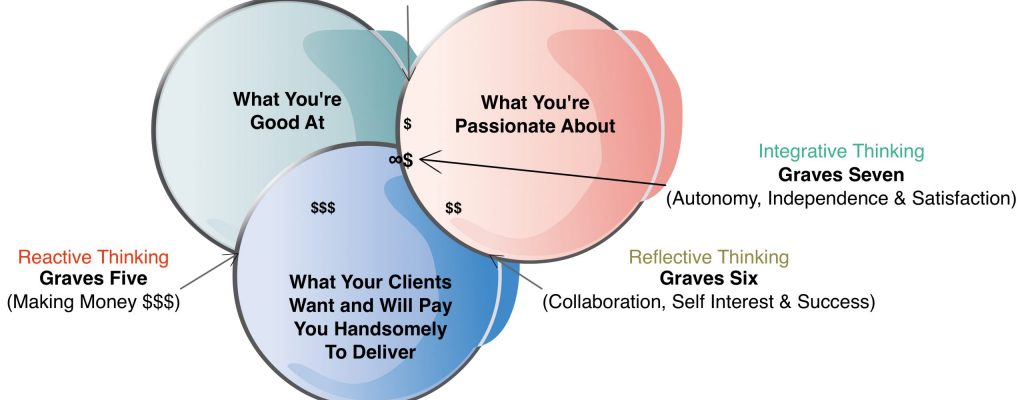
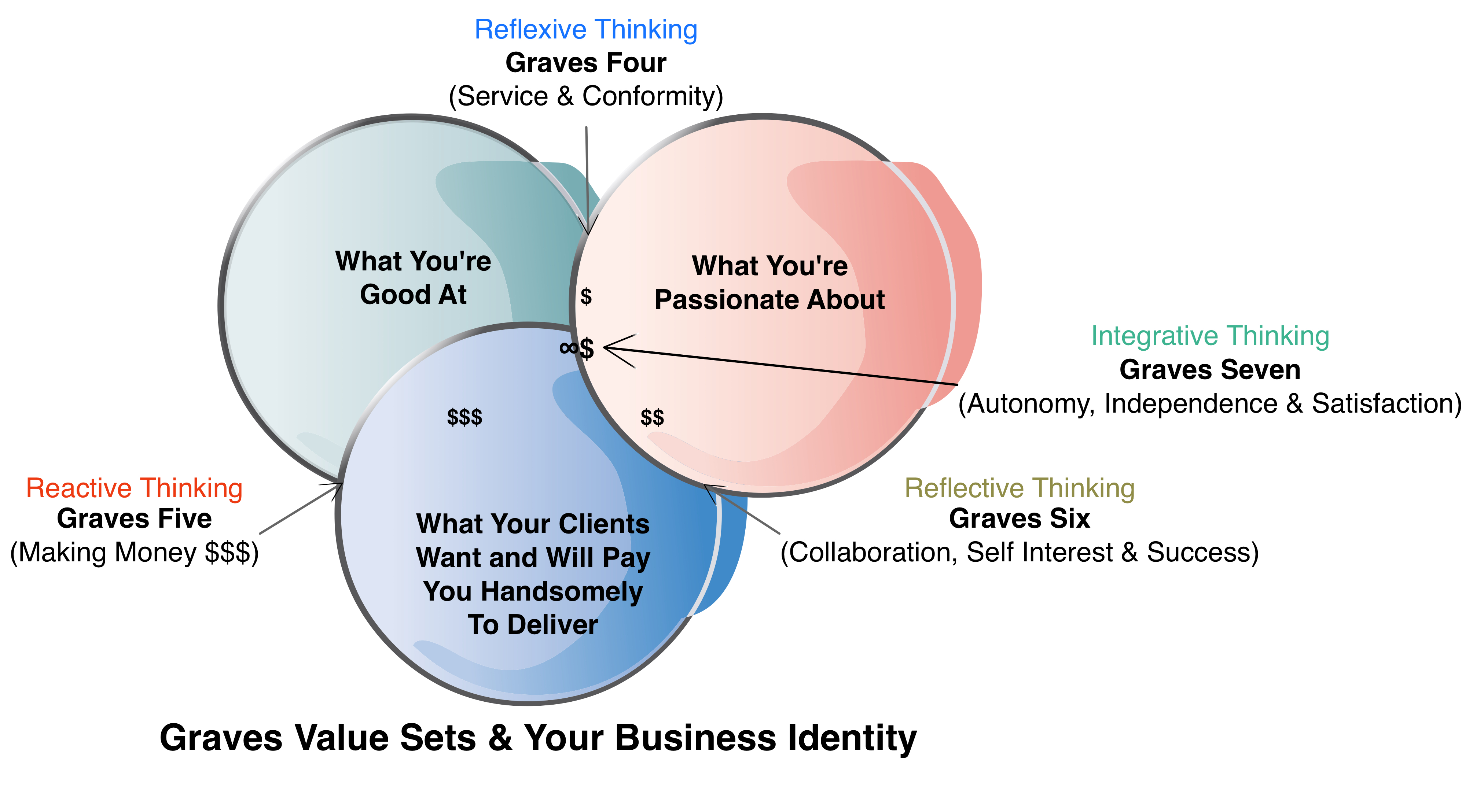
Most of the “Build Your Coaching Business Gurus” will point you towards what I’m calling out as the “Graves Six” position where you supposedly make money by pursuing your passion … e.g.: “Your Million Dollar Message” B.S.

BUT … while you can indeed make money by overlapping “What You’re Passionate About” resides and where “What Your Clients Want and Are Willing To Pay Handsomely To Get” overlap … there ain’t no guarantee that’s gonna happen …

BECAUSE there’s no guarantee that what you’re passionate about … or your message, life story, insights, calling, whatever … is going to resonate with what customers and clients are willing to pay handsomely for today.

Now if you notice most of these “Gurus” are following the path that most of the “OnLine Business/Marketing Gurus” will point you toward (and mostly follow themselves) … i.e.: the place where “What You’re Good At” and “What Clients Want and Will Pay Handsomely For” overlap. This is the Graves Five position on the diagram, and you can indeed make loads of money when you follow this path to riches.

In other words, the Graves Six “Do What You Love Gurus” seldom follow their own advice precisely, except when there’s a lucky accident and they are actually at the Graves Seven position (think Oprah Winfrey)

I point to this position in the middle of the diagram where all three circles overlap … (BTW this is where the money you can earn is for all intents and purposes unlimited), so it all comes together for them.

Just to complete the outer positions, 90% of folks who have businesses that are actually jobs are stuck in the Graves Four position, where “What You’re Good At” and “What You’re Passionate About” overlap. (NOTE: This is Michael Gerber of “The E-Myth” fame refers to as the technician’s entrepreneurial spasm.)


OKAY, SO HERE’S THE “SKINNY” AS I LIKE TO SAY …

YOU HAVE TO DECIDE EXACTLY “WHY” YOU WANT TO RUN A COACHING/CONSULTING/TRAINING BUSINESS!!!

Or, what you get from it will not necessarily be what you want or expect.

What To Do About It …

(If You Really Want To Build A High-Ticket Practice)

A great majority of folks who are good at what they do, but they ain’t making no money, are operating at a Graves Four position on this diagram. Simple and kind of stupid (I’ll explain why later on, give me a minute to get there …)

Most folks who are willing to do what it takes, are at a Graves Five position on the diagram, and are building businesses that make money, sometimes “tons of moolah,” but they aren’t necessarily that happiest folks on the planet (in fact they are often the most anxious folks on the planet, always waiting for the house of cards they built to implode).

When you leap to the Graves Six position you find that there’s a whole spectrum of success, from what is utter financial failure to super financial success and independent wealth. Yet, these folks are living in a dream expecting to live “the dream,” i.e.: doing well by doing good, regardless of the fact the reality is that most of the time they are more interested in what they want to do for themselves than helping out the world as a form of service or sacrifice.

Now that ain’t saying that folks who are operating out of the Graves Six Value Set aren’t doing good work, it’s just that the reality is that most of the time that decision is based on what NLPers (folks trained in neurolinguistic programming, or NLP) call “Sorting By Self” and “Internal Reference.” In other words they decide what’s most “right” by their own internal measure and not necessarily what would in fact most serve the world-at-large.

For example a whole lot of these folks drive expensive SUVs and many drive expensive sports cars, that ain’t doing a whole lot for the planet they claim to love, or being particularly respectful of the percentage of resources they use compared to the least privileged folks on the planet. And those in the coaching/consulting industry don’t stay local/buy local/work local either, because they are getting on planes to go to the conventions where their “tribe” meets up and when they’re not flying to meet their “tribe” they’re looking to hook up with some tribe in Fiji or Patagonia or the Himalayas “on holiday.”

Once again, I’m NOT condemning these folks … good on the if they’ve found a way to satisfy their deepest desires and making the dosh they need to pursue them fully. BUT, as I said this is as much a lucky coincidence as it is strategic planning, and even then this is NOT the path to sainthood regardless of how many Salutations to the Sun you’ve done, or how many hours you’ve spent meditating mindfully, or even if you’ve spent two years of your youth in the Peace Corps.

The main point for anyone who’s trying to build a High-Ticket Coaching or Consulting Practice is to get that if you want to be on the path to success that IS strategic, then you’ve really got to look at WHY you want this and how you expect to pull it off in the real world where no one cares about your intention …


That’s right NO ONE CARES ABOUT YOUR INTENTION!

ALL FOLKS CARE ABOUT ARE WHAT THEY WANT AND HOW YOUR ACTIONS HELP THEM GET THAT OR NOT!

(NOTE: There is an exception to this as well … when folks believe and expect that you will help them get what they want, even when that doesn’t turn out to be true after the fact.)


So think about it … WHY DO YOU WANT TO BUILD A HIGH-TICKET COACHING OR CONSULTING PRACTICE???

In other words answer these two question for yourself:

1. What do you expect to get from building a high-ticket coaching or consulting practice?

2. How will getting this satisfy your deeper desires and values beyond JUST making money (unless your at Graves Five, JUST making money is NOT going to keep you happy).

Now going back a step …

If you both want to make money AND satisfy your deeper desires and values you’ll need to come to terms with a couple of things …

FIRST … you MUST satisfy the intention to serve your clients based on “What Your Clients Want and Will Pay You Handsomely For” … if you’re NOT starting here you are NOT operating strategically with regard to building a High-Ticket Practice.

AND … you MUST satisfy the intention to serve “What You’re Passionate About” as well.

Now, that may sound like I just recommended that you follow the Graves Six pathway to success, and that’s ALMOST correct, but as they say in the infomercial world … “WAIT THERE’S MORE!”

REMEMBER … there’s absolutely NO GUARANTEE that “What You’re Passionate About” and “What Your Client’s Want and Will Pay You Handsomely For” are aligned or will come together … if those two things aren’t also “What You’re Good At” too.

Because typically High-Ticket Clients almost always go to someone who is an expert, who does the best quality work, for what they want and expect to pay handsomely for as well. In other words, they seek out folks who are good at what they do as their primary criteria (even when they get it wrong because someone has created a reputation built on sand … probably a savvy Six BTW).


For BOTH YOU AND YOUR CLIENTS to be deeply satisfied you need to be in the Graves Five zone for them … AND the Graves Six zone for you!

And, in the world of this model Five and Six equal Seven when it comes to building a High-Ticket Coaching or Consulting Practice that satisfy BOTH YOU AND YOUR CLIENTS!


Summing It Up

Simply put STOP PAYING ATTENTION TO THE MAGICAL THINKING WORLD OF THE GET RICH QUICK BY DOING WHAT YOU LOVE Gurus!!!

While there’s nothing wrong with doing what you love … HECK I RECOMMEND IT … BUT, DO IT BY MOVING TO “SEVEN” AND HAVE IT ALL BY SATISFYING ALL THE FOLKS IN THE EQUATION … you just aren’t going to have the chance to work with the High-Ticket clients you want, or to strategically satisfy your desire to make more money … or get filthy, stinking rich for that matter … if you don’t move out of the position your in to a position where you really do satisfy all the people in the equation BASED ON THIER CRITERIA AND NOT YOUR ALONE.

As the wise men say, there are many paths to the top of mountain, but whether you get up there broken and defeated barely having survived, happily trekking with a merry band of sherpas and stopping for a week in basecamp before you turn around and head down never having seen the peak, or travel all the way in a luxury helicopter is up to you.

If you want you can indeed have it … and, knowing “WHO” you are, is at least as important as “WHAT” to do and “HOW” to do it.

So if your “guru” isn’t starting by putting you at the center of it all then at least remember this wise saying, CAVEAT EMPTOR (“buyer beware”)

Joseph Riggio, Ph.D.
Architect & Designer of the MythoSelf Process and SomaSemantics

P.S. – Let me know what you think below …

P.P.S. – If you’d like to move to “SEVEN” start by getting a little more clarity on your current identity and values in regard to your business, I can talk and walk you through where you are on the diagram today and help you make the move to the center of yourself in about 15 minutes . If you’re like to purse it you can schedule a call by clicking on this link: Get Some Clarity w/Joseph

Filed Under: Blog, Business Performance, Coaching, Mentoring, NLP, NLP & Hypnosis

Leaping Forward …

Leaping Forward …

by Joseph Riggio · Jan 22, 2017

Preparing The Future …
Neuro-Evolutionary Modeling


I posted something on Facebook in response to comment made there about how someone wasn’t getting the point that the person posting was trying to make … not an uncommon scenario unfortunately.


But there are different reasons people won’t get a point someone is making … maybe the point isn’t being clearly made, or getting it requires a bit of background that’s missing, or sometimes it can just be that the people disagree and that creates a block in the communication.
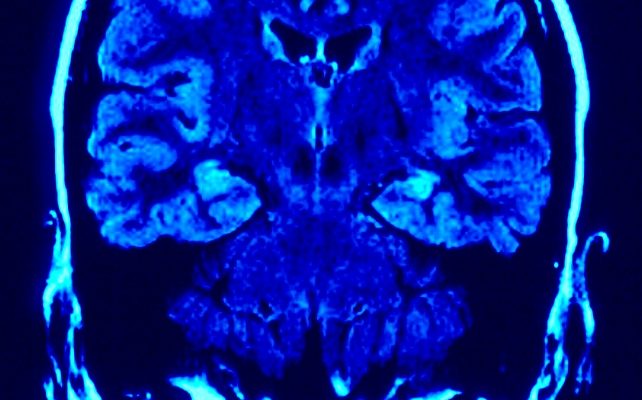

However, in this case I believe it was something else … a fundamental inability for people to see anything that’s beyond their neuro-evolutionary development.

Here’s my response to that posting:

I’m a big fan of neuro-evolutionary developmental modeling. Think of the work of Julian Jaynes and his bicameral mind theory, or the work of Clare Graves or Jane Lovinger, or E.O. Wilson’s work in sociobiology. This is where my attention has been for the better part of a decade now.

Rebecca Costa has summed up some of this work in her excellent book, The Watchman’s Rattle. In the book she speaks to the neuro-evolutionary trait of insight, technology, complexity and the collapse of civilizations. Well worth the read.

In my work I’ve been looking at a few things too … different from Costa or the others. I think some of my work is paralleling the things Ken Wilber has been speaking to most recently. My focus has been on how we create transformational change leading to a new position of consciousness and performance breakthroughs. NOT better performance where we already are, but performance we cannot get to from where or how we are today.

This focus forced me to look at the questions of power and complexity, and their relationships as contained in the interpersonal relationships in institutions and organizations. This is akin to what John Gatto found when deconstructing modern schooling, it’s process and intent.

Simply put there may not be a place for consensus if we want real change. This idea, of consensus, is mired in what Clare Graves points out is Level Six thinking, what Spiral Dynamics labels Green, and what Dudley Lynch calls First Dolphin or Enlightened Carp thinking.

The idea that we must create consensus and bring people along is an anchor we drag from a limited world view that has not yet leaped beyond systemic thinking to fractal thinking where deep complexity resides.

Rebecca Costa points to this limitation as reaching a cognitive threshold, and suggests it’s the basis for the collapse of civilizations. Her analysis and evidence is impressive. IMO many Western Europeans and North Americans are stuck there today, along with some others as well.

(Name Withheld) you’re suggesting something that remains in a blind spot to anyone who hasn’t fully evolved beyond Level Six mind.

This posting and the responses to it got me to thinking.


Is it unreasonable to consider that some folks are just not neuro-evolutionarily developed enough to perceive what others do as obvious?


This falls under the rubric of Developmental Modeling as I refer to it, or if I really want to be fancy about it, Neuro-Evolutionary Developmental Modeling.

In less fancy terms this is the assessment and modeling of the literal neuro-evolutionary developmental stage that someone is at, and the implications of what that means.

Let me put it another way …

My work as I said in my Facebook response focuses on:

“… how we create transformational change leading to a new position of consciousness and performance breakthroughs. NOT better performance where we already are, but performance we cannot get to from where or how we are today.”

This is about looking at levels of consciousness and meaning-making as I think about it.

There’s a cognitive consideration, i.e.: how we process information beginning with perception, moving through sense-making and decision-making, and respond in regard to the action we take and the action we choose not to take.

Within the scope of my consideration is how we process that information that leads to action, including what Cognitive Scientists refer to as Situated and Embodied Cognition.


Situated Cognition:

The school of thinking about situated cognition aligned with the cognitive scientists say that cognition is a function of where we are situated in space and time, i.e.: the situation and circumstance we find ourselves in determines how we think about the information available to us.

Simply put, cognitive scientists say that thinking cannot be separated from doing and context as a way to speak about situated cognition. The situation becomes part of our “cognitive process” as well as what we do internally with the information we have access to, including the way the information in the situation relates to other information in the situation.

For example, if we are in a diner and hungry and we see a menu advertising the “Burger Special” we will think about it differently than if we had just left a restaurant after a particularly satisfying meal and saw the same “Burger Special” advertised on a billboard as we were driving home. The situation and circumstance changes how we think about the information that’s present.

Another example might be, if we are in the diner and hungry, but we only have enough money for a cup of coffee we’d respond differently to the “Burger Special” advertisement than if we had sat down to eat with plenty of money in our pocket to choose whatever we want for dinner.

Also, what we bring to the situation ourselves affects how we process the information presented to us as well. For instance if we are vegans or eating a strict paleo/high-protein/low-carbohydrate diet will impact how we process the information about the “Burger Special” too.

The situation becomes part of our “cognitive process” as well as what we do internally with the information we have access to, including the way the information in the situation relates to other information in the situation.


Embodied Cognition:

Keeping it as simple as possible, when we refer to embodied cognition we’re referring to the idea that … we think like we do because we’re embodied in world.

This means that our thinking arises from the physical experience of having a body, and the way we experience things in and with our body.

While this might seem obvious at some level the more prominent position has been held for more than three centuries has been dualism, i.e.: the separation of body and mind. Cognitive scientists who hold a strong position about embodiment believe the mind arises from the structure, processes and actions of the body.

Early examples of embodied cognition arise in the world of the phenomenologists like Martin Heidegger, Maurice Merleau-Ponty and Pierre Teilhard de Chardin.

In the mid and late twentieth century some cognitive scientists went beyond the theories of dualism and the mind as an independent processing mechanism to considering a unified cognition that includes the body. Two of the folks who did a lot of work in the embodied cognition paradigm that influenced my thinking are Humberto Maturana and Francisco Varela. They studied and wrote about visual perception, including the biology of vision, like the physical aspects of the human eye, and how those physical aspects of embodiment effect how we perceive visually.

George Lakoff and Mark Johnson are two philosophers who are also in the embodied cognition camp who did a lot of work together around metaphor and embodiment. Their book Philosophy in the Flesh was one of the most influential early works in my own conception of mind. It was this book that led me to thinking about what cognitive scientists call enactivism.


Enactivism:

Enactivism postulates that cognition is a function of the tension between thinking and the environment, and the need or desire to respond to what’s happening. Specifically enactivism suggests that we shape our environments by the ways we respond and take action, shaping the environment in turn as we go.

This looping between the individual and their environment becomes a part of their cognitive processing, and as I think about it it’s here that situated and embodied cognition collide and become something more than either alone.

In some way we can say that enactivism brings about who we are as we know ourselves to be, as well how we know the world to be as we know it. Through enacting in the world we generate both ourselves and our sense about and knowledge of the world, including others.

This is where I mostly settle when it comes to how we process cognitively in a real sense of what happens as we’re processing information and acting on it.

Yet, I’m also influenced by other cognitive models that share how I think about enactivism, like neuro-evolutionary developmental models.


Neuro-Evolutionary Developmental Modeling:

For me the rubber hits the road when we’re talking about mental models when the dialogue revolves around neuro-evolutionary developmental modeling.

My early introduction to the idea of neuro-evolutionary developmental modeling was via the work of Dr. Clare Graves. The Graves Model lays out a double helix of stages of evolutionary bio-pyscho-social-cultural growth alternating between self-sacrificing and other-sacrificing. At each stage the dynamics of dealing with the limitations of the system the individual is contained in and relating to create a tension that leads to dialectical transformation.

According to Dr. Graves each stage of human evolutionary growth comes about as a result of dealing with the challenges presented by the environment they are contained in and operate in relation to until the operating paradigm itself becomes the generator of the challenges the individual confronts.

When the point where the operating paradigm generates irresolvable challenges as a result of functioning within it there is a point of dialectical transformation that is reached. It is at this point that individuals within the system respond by rejecting the present paradigm and leap to a new level of consideration that offers resolution to the challenges the extant operating paradigm generates.

In other words every human system can be defined by some set of boundary conditions that limit it to being what it is in the moment. These boundary conditions arise as a result of the values that are held as true, and in some regard sacred, within that human system. These values are designed to create a functioning system that resolves the challenges that system faces collectively, and become the agreed upon and accepted values of the culture.

Yet, these values require varying degrees of cognitive development to incorporate and act upon. The neuro-evolutionary developmental models I follow closely suggest that the human cognitive system evolved in relation to the stresses confronted at various stages of human evolution. Literally on one hand the brain evolved to access new ways and patterns of thinking, partially due to the interactions of the multiple brain modules that evolved in response to evolutionary pressures.

At each level of neuro-evolutionary development the individuals who have access to that level of development become able to perceive their environment in ways that individuals before them, who had not evolved that level of neuro-evolutionary development are able to comprehend. Quite literally the ability to perceive the information in the system is limited by the level of neuro-evolutionary development.

This shows up in application or practically in relation to the level complexity the individuals within a system are able to process the information present. The higher the neuro-evolutionary development of the individuals in the system the more complexity they can perceive and comprehend. These advanced stages of neuro-evolutionary development allow these individuals to make choices unavailable to those who cannot perceive and comprehend complexity at these levels.

One way to think about this would be as the scope and range of complexity that individuals in a system use to make decisions and take action. The higher the level of neuro-evolutionary development of an individual the greater the scope and range of choice they will have, theoretically giving them an edge in responding to the emergent conditions in any given system. However, there’s a strong caveat …

The theoretical best response will arise when the level of complexity present in the system and the level of neuro-evolutionary development are most closely aligned and matched. When the complexity of the system exceeds the level of the neuro-evolutionary development of the individual confronting it the lack of appropriate choices available will limit the individual to less than ideal choices and, corresponding less than ideal responses and outcomes.

Applying higher level choices in a system that operates at a lower level of complexity than the neuro-evolutionary developmental level being applied to make the choices acted upon often results in less than ideal responses and outcomes.


Therefore we can say that using the most aligned neuro-evolutionary developmental level to the situation and circumstance at hand results in the most ideal responses and outcomes being realized.

Yet, when someone simply doesn’t have access to the neuro-evolutionary developmental level required by the complexity in the system they will be limited to responding from the highest neuro-evolutionary developmental level they can access at present.

This is how individuals and system fail and go into devolution resulting in personal failure and civilization collapse.


I’m seeing more and more that individuals in our complex Western civilization are reaching cognitive thresholds, which define the limits of complexity they can perceive and comprehend. Yet the systems they are operating within require a higher level of neuro-evolutionary development then they currently have access to, to create useful choices that allow them to respond and produce the outcomes they desire.

The feelings they experience as result of reaching their cognitive threshold  include frustration, anger and despair. This leads to lashing out against others who are also experiencing the limits of their own cognitive threshold, albeit in ways different from their own.


Regardless of the level of neuro-evolutionary development that limit an individual from accessing the most useful choices to address the challenges they face, the result is the same … i.e.: they produce less then ideal responses and outcomes. 

In particular, as a result of their neuro-evolutionary developmental limitations, these folks believe they are addressing the challenges they confront in the most ideal way possible, yet the outcome they produce replicates the conditions to perpetuate the challenges they seek to resolve.

The key to resolving the limitations of neuro-evolutionary development begins with accepting that the choices available to you are constrained by your level of neuro-evolutionary development … and NOT the conditions of the challenges you face or the system they are contained within.


The first step forward then starts with exploring ideas and choices that are unfamiliar and unaccessible from the highest neuro-evolutionary developmental level you are most comfortable with today. This means opening yourself to the discomfort of confronting your most cherished values and beliefs for what they are … values and beliefs, not facts or truths.

Individuals who can do this … confront their most cherished values and beliefs and open themselves up to the discomfort of seriously considering that ideas and choices that are unfamiliar and unaccessible to them from where they are today … open themselves up to the possibility of creating responses and outcomes that were unavailable to them previously.

While this doesn’t necessarily mean they have actually evolved to a higher neuro-evolutionary developmental level, it doesn’t matter as much as having access to the strategies used by individuals who can operate at those higher levels.

But, it also requires accepting that until we actually evolve to a high neuro-evolutionary developmental level, we will remain blind to what we cannot perceive from the highest neuro-evolutionary developmental operating level we can access ourselves.

Despite the frustration, anger and despair this realization may bring, i.e.: that we are limited to the highest neuro-evolutionary developmental level we can access, it allows us to move beyond operating from distorted values and beliefs we impose, while ignoring real facts and truths that are evident to those who aren’t blind in the particular ways we are ourselves.

This work … guiding my clients beyond the limits of their current level of neuro-evolutionary development happens in my Foolish Wisdom program and private 0ne-to-one work. The feedback I get is that while the result is often transformational leading to significant performance breakthroughs, getting there isn’t always the most comfortable experience on the way, but worth it at the end.

I’d love to hear your thoughts …

Buona Fortuna and Abundanza,

Joseph Riggio, Ph.D.


P.S. – There is still time to get the details about the upcoming Foolish Wisdom program on 28 January in NJ …


FOOLISH WISDOM DETAILS


Filed Under: Blog, Business Performance, Cognitive Science, Elite Performance, General, Human Systems, Life, Transformational Change & Performance, Uncategorized

Which Brain Are You Using?

Which Brain Are You Using?

by Joseph Riggio · Mar 29, 2016

Silent Brain Learning

brain01 125NOTE: Read this article and watch the video first …

[The Enormous Power of the Unconscious Brain]

It’s a great article, but the journalist has it all wrong IMO. In fact he completely contradicts himself …

Silence is Golden

In the video you see the comparison between the journalist’s brain and the world-champ’s brain (that’s right the 10 year old is a world champion cup stacker … what have you done lately???).

In that video the journalist’s brain is lit up like a Christmas tree .. whle the champ’s brain is virtually silent. Yet the journalist claims he’s wired in the programming to his cortical processing to run the patterns he’s running without processing them.

That’s fundamentally absurd!!! (Go ahead, read the paragraph above again.)

The argument I’m making is that what the champ did was to get his brain out of the way (okay, not his whole brain, but the part we “think” with normally … or at least consciously … the cortical brain (the neocortex).

His brain is silent because it’s not working … and even the little blips we see have little to nothing to do with what his hands are doing.

That’s not about training the cortical processing, or learning to submerge the conscious processing function.

The champ used his neocortex to train his cerebellum to take over … i.e.: his Silent Brain!


Why Performance Mastery Is “Silent”

Performance is a function of the ability to act in response and relation to the stream of data flowing in the system that you’re operating in to create your intended outcome.

The more accurately you perceive and interpret the data present in the system, the more accurately you can adumbrate what’s coming next … and, make adjustment to your responses.

Ultimately, your performance is a function of behavior, i.e.: the actions you take and don’t take in response to the way you percieve and interpret the data in the system. The more closely your actions align with the simplest, most direct path with the least resistence between where you are in the present moment and what you intend as your outcome, the more elgant, efficient and effective your performance will be … let’s call this the “Path of Perfection.”

When you can act consistently and reliably along the Path of Perfection, you will gained mastery in that behavioral performance … whether that’s mastery in sports, communication, business … or some other domain of action.

This kind of performance, i.e.: mastery, is a function of processing done beyond the reach of cortical processing … or at least solely by cortical processing.

The primary driver of mastery at the behavioral level of performance is processed in the cerebellum.

This is the seat of the silent processing we see in the video of the champ’s brain …

He’s not showing activity in the neocortex, because he’s off-loaded the processing to the cerebellum and gotten his cortical processing out of the way of his faster, more elegant cerebellar processing.
 

Blind But Not Dumb

The cerebellum may be blind, but it’s not dumb.

Cerebellar processing operates differently from cortical processing because it’s non-representational.
We see this when the champ puts on the blindfold and still runs the behavioral performance as well as when he’s not blindfolded. Although he’s not getting any visual input his motor facilities still function as accurately in the task he’s trained them to do.

He’s using a combination of kinesthetic input and spatial mapping to function at that level of performance. This is the magic of training the vestibular and proprioceptive systems to take over for the more common sensory system processing task, e.g.: looking at the cups, his hands and what he’s doing with them.

The silence of the cerebellum is it’s trick. The cerebellar processing pathways are more efficient because they are closer to the direct sensory data. The cortex almost immediately transforms direct sensory data into representations, abstractions and intellectualizations … at least one step removed from the actual data itself.

One of the most obvious examples, especially if you have yet to master something at the level of the world cup stacking champion (5 seconds for that whole routine, again and again, even blindfolded) … is the transformation of direct emotional experience into an intellectualization. Anger, joy, grief, ecstacy … all have an actual body experience, a felt sense … but the way the average person experiences their emotions has as much or more to do with the associations they make with the way they label their experience.


Cerebellar Training & Learning

The basis of virtually all the work I do is framed in relation to moving unnecessary cortical processing out of the way of performance.
This is not saying there is no place for corical processing, of course our neocortex is one of our most amazing evolutionary gifts … but, all things at the right time and in the right place … preferencing cortical processing over all other kinds of “thinking” or kinds of neurological processing.

The real “trick” is knowing how to get the cortex out of the way, freeing it to do what it does best … i.e.: make connections in time and space that don’t yet exist … creating future memories.

To do that the behavioral part of performance must be off-loaded whenever possible to the more efficient cerebellum.

When the cerebellum is in charge of responding there is a direct line to taking action, that cortical processing must run through multiple channels to get to first, creating a slower, more cumbersome response.

For some people (especially those who remain untrained) in getting through the levels and complexity of cortial processing they run out of steam before they get to action, i.e.: they find themselves unable to take action or constantly hesitating and procrastinating when immediate action would have served them (and, possibly others) best.

Knowing how to organize yourself to take action is the key to mastery.

In otherwords, if you want to attain mastery you must develop the ability to train and learn at the cerebellar level of response.

When you’re ready give me a call …

(You’ll find my contact details here: Joseph Riggio DotCom)
Joseph Riggio, Ph.D.
New Hope, PA

PS – The most effective way “cerebellar training” I’ve ever put together is my “Foolish Wisdom” group coaching program. I’m running a program in New Hope, PA in a couple of weeks on Saturday & Sunday, 16/17 April 2016.

Check out the Foolish Wisdom Workshop details here:
https://www.amiando.com/HSNIUBF.html

Filed Under: Blog, Business Performance, Coaching, Cognitive Science, Elite Performance, Transformational Change & Performance, Uncategorized, Upcoming Events

Killing Me Softly …

Killing Me Softly …

by Joseph Riggio · Sep 7, 2015

Altruism’s Big Hidden Secret

Before I begin going too fast and too far I want to share a little bit of my bias in the interest of full disclosure …

OLYMPUS DIGITAL CAMERA


I’m a big fan of the American myrmecologist (someone who studies ants) Edward O. Wilson.

 Wilson also conceptualized the field of sociobiology, or the study of the biological roots and implications of social order in living organisms from protozoa to humans (he got a bit of backlash for the suggestions that humans should be included in such a conceptualization, but did it nonetheless). He defines sociobiology as: “The extension of population biology and evolutionary theory to social organization”[1]

I’m loosely sharing the following based on what I understand Wilson’s take on the sociobiology of altruism to be. All credit for the concepts I’m sharing here go to him, all blame for any incorrect assumptions are mine alone.

Okay, now that we have that out of the way …

What Is Altruism? … a sociobiological perspective

Hard Altruism

From a sociobiological perspective E.O. Wilson suggests that a particular form of altruism, what he refers to as “hard altruism,” was first and foremost an evolutionary advantage that allowed some lines of humans to prosper over others in a competitive environment.

For example, if an individual were to sacrifice themselves to save another of their bloodline, especially a child, they increased the chances for that individual to go on to breed and pass along the genes they share.

If the genes of an individual include a drive to altruism, i.e.: self sacrifice to save another in one’s bloodline, then these genes would begin to flourish in the population as it grew.

While it may seem that dying to save another’s life is a poor way to pass along one’s gene, it must be taken at the higher level of gene transmission to be understood.

We all share genes with our kin. Mothers and father each share about 50% of their genes with their offspring, Brothers and sisters share about 50% of their genes in common, half brothers and sisters share about 25% of their genes in common as do nephews and nieces with their aunts and uncles (NOTE: only identical twin share 100% of the same DNA).

So if we save another in our bloodline, we are actually saving the genes we share to potentially be passed along to the following generations. Using this logic, if I sacrifice myself for someone in my bloodline I increase the changes of those genes making it to the following generations through the transmission via the individuals I save with my sacrifice. When my sacrifice is greater than 1:1, i.e.: my sacrifice saves more than one person in my bloodline, my contribution to the transmission of my genetic profile to future generations is enhanced.

Now to be clear, this is not suggested to be a conscious choice per se, “Hey if I kill that intruder at the cost of my own life and my entire family gets to live than my genetic profile has a greater chance of being passed along than if I let them die and survive by myself.” Instead the idea is that there were individuals who had this instinct or response, and over time via natural selection the function of altruism led to a propagation of those individual who shared this trait to prosper over those who did not.

Altruistic War???

Taken further this instinct or drive would lead an individual to proactively sacrifice themselves to ensure or preference the survival of their kin. This would lead to war when resources got scarce, even if those who want to war knew they were unlikely to survive. The need to secure resources for the survival of kin would exceed the need for one’s own survival based on the natural selection for hard altruism.

If we continue to extrapolate even the threat of scarcity might be enough to prompt a hard wired individual to proactively seek to eliminate the threat before it became a reality exerting pressure on the clan or tribe that included one’s kin … pre-emptive war or raids on neighboring clans or tribes.

If the issue of blood relatedness is taken into this equation we might speculate about homicide within the clan or tribe to favor one’s direct offspring leading to high rates of murder.

If you take this one step further it would be reasonable to expect that the favoring of male offspring over female offspring would also be favored, because in a lifetime a male may produce many more offspring than a female is capable of producing.

Now, Wilson doesn’t say this, and I’m not suggesting this “hard altruism” led to these results in human evolution, but the potential is there if the theory holds.

Yet, Wilson does speculate about the function of hard wired altruism in the waging of human wars, and the willingness for individuals to sacrifice themselves for the clan or tribe they belong to if there is a perceived threat to it. I take this further and speculate that this may play a role in the kind of behavior we see in things like suicide bombers and some of the terrorist behavior leading to mass killings of innocents.


Soft Altruism

The Other Altruism

Edward Wilson also proposes a different kind of altruism, what he refers to as “soft.” In soft altruism the individual is driven to perform altruistic action that will potentially have a benefit to themselves as well. This is the kind of altruism that most people think about when the world “altruism” is used, not the kind that leads to self sacrifice predominately, or the kind that leads to war and murder (hard altruism).

Soft altruism is seen when someone shares their piece of bread with another, or does some act of charity. While there may not be the expectation of immediate return on investment for such action, there is a case to be made for that in evolutionary terms.

Imaging a clan or small tribe of proto-humans or early humans eking out a living in a harsh, competitive environment. The sharing of food would become a way of insuring that when food was scarce it would be used to support the largest numbers of people within the clan or tribe, versus hoarding which would limit the survival of the largest number.

Social Predation and Altruism

In a social species this is an important asset, especially when you consider a predatory species that hunts for food. Humans share a unique trait with other social predatory species, which are few in number on the planet, they hunted and killed animals larger than themselves for food with primitive implements long before killing such animals was assured in the hunt. When compared to other social predatory species humans are in a class by themselves for the size animals they hunted and killed proportionate to themselves.

By example the evolutionary record shows that humans would hunt and kill animals as large as full grown, healthy, adult elephants regularly. Not even a lion pack would take on a full grown, healthy elephant unless it was particularly desperate, and then the outcome would be far from assured. But humans took on such game regularly it seems.

In the case of more modern humans, still using paleolithic technology, game as large as water buffalo and bison were a common food source. Again no other predatory species, social or not, regularly hunts full grown, healthy animals this large proportionate to themselves. If we choose to use extreme examples the Inuit still hunt and successfully kill walrus and whale using primitive weapons (by modern standards).  Even a polar bear would be hard pressed to attack an adult male walrus, and would only attempt to do so on land, and then only in desperation. But it is a common for Inuits to hunt and successfully kill walruses in the spring.

The risk taken in such hunts is itself altruistic, the sharing of meat (and other items from the kill) is an extreme form of soft altruism when the kill is shared with those who did not participate directly in it. But the risk of not sharing would mean the potential of being ostracized by the clan or tribe, and in a primitive environment that would decrease the chance of survival many times over.

We see this behavior in many of the social predators; e.g.: lions, wolves, african cape dogs, hyenas … but not in solitary predators; e.g.: tigers, foxes, leopards, bears. So while humans aren’t alone in terms of food sharing, they are unique in the degree to which it is ritualized and formalized in the species.

Other Forms of Altruism in Human Systems

Another way that altruism appears in human systems is via non food sharing care that is exhibited, often to those who are not direct blood kin. Humans have a long recorded history of caring for those who are less fortunate than themselves when the other is unable to care for themselves.

A strong example of this is the taking in of an orphaned child that is not kin. Or the adoption of a child that is less fortunate and can be given greater opportunity to survive and prosper in the adopted home.

Of course any time care is given to another without the expectation of direct return we see this as an act of altruism. But altruism also exists where there is the exception of some form of return for the act performed.

When a “favor” is given with the expectation that it may be returned someday, either directly or indirectly, that too is a form of soft altruism, and would have strong precedent in evolutionary terms as well.

If I can expect that either I or my kin would benefit from an act of kindness I perform today it would behoove me to perform it even if I don’t get an immediate reward for doing so. Over time this ritualized performance of altruistic acts would become part of the background of culture and raise the status of the individual within the group who performed them as well. So in this case altruistic acts would potentially directly benefit me with acts in kind offered at some future point in time, or alternatively by raising my status within the group.

This kind of soft altruism has become ritualized to the point of professionalism in some quarters. I would argue that the entire lobbying industry in the U.S. political system is a form of systematized, ritualized altruism. The lobbyist asks a politician for the favor of a vote on a particular topic of interest to the group they represent with the expectation that in the future the politician can expect the support of that group for their accommodation. It might even be argued that the entire structure of the lobbying industry as it exists is based on the premise that if I scratch you back today, someone coming up after me in the future will scratch my back, ad infinitum, securing the role of the lobbyist within the systematized and ritualized walls of politics at large.

Take from an evolutionary point of view such altruism would give the altruist a potential survival advantage, and again this argues for a basis in the long road of human evolution and the genetic potential carried from thousands of generations of individuals, and now embedded in the social fabric, albeit largely invisibly so.


Does Altruism Have A Future? 

Personally I’d argue that we’d have a hard time breeding out altruism from the human species at this point, but culturally modifying how it’s expressed is an entirely different story it seems. While biological evolution occurs regularly, compared to cultural evolution its movement is glacial (although with climate change that’s not the same metaphor it used to be).

We have already seen major shifts in the ethics and etiquette expressed in modern human societies. It’s almost impossible to read a cultural magazine, read a newspaper or watch a news program without some complaint about the decreasing moral values that sustain a desirable kind of altruistic ethics and etiquette we’d like to see on a regular basis.

While the fundamental genetics for altruism are probably largely unchanged in the last generation or so, the way we express ourselves socially has radically shifted.

Take as example the idea of chivalrous behavior from as recently as the 1950s here in the U.S. to the fostered equality between the sexes at the start of the 21st century leading to some very different ways that men and women now interact.  It could be argued  in many cases that a lower degree of civility exists today than ever … despite the arguable increase in equality between genders in other terms.

While there has always been tension between integrated and assimilated individuals within cultures, especially in those cultures that are high context and kin driven, there is more animosity than every between citizens and immigrants in many places around the world than ever as well.

In the past immigrants were expected to integrate and assimilate, and even when it wasn’t elegant eventually found a way to do so. Now we see a significant proportion of immigrants who demand the right to retain their cultural, ethnic, religious, moral, sexual or language habits or preferences accommodated in the societies into which they emigrated without having to or being expected to integrate or assimilate. This has raised tensions in many societies to untenable levels of discomfort for many.

This could be considered a kind of perversion of altruism when viewed from a sociobiological perspective. If the majority group holds an altruistic form of cultural preference to accommodate the “other” and the minority group is willing to use that altruism to their sole or unique benefit than the function of altruism becomes distorted for the majority who accommodate the minority. It could be argued further that it is only when the function of altruism potentially benefits the entirety of the population exhibiting it that the sociobiological benefits of altruism are realized.

If this were extrapolated to the “Nth” degree we might see a future where only hard altruism remains, as held and fostered by the minority groups perpetrating it. This would be a disaster of enormous proportions using Wilson’s speculations. From a a Gravesian point of view (levels of development within Clare W. Graves’ model of human social-cultural-biologial evolution) the system corrects such errors by evolving culturally to modify the values held to support the greatest gain for the many over the few, to the point of preferencing ever larger systems. The suggestion within the Graves Model is that eventually the “system” becomes the planet that is preferenced over any group inhabiting it. I personally believe we are on the cusp of this level of developmental evolution.

Capitalism and Altruism 

If my take on cultural evolution is correct vis-a-vis the Graves Model evolving to correct for the perversion of altruistic impulses in the many to favor the few (think about the 1%/99% argument in the Occupy Wall Street movement of 2011), than the system will shift to a means of caring the many over the needs or desires of the few.

Now if this correction as I put it comes to pass it will be a hard pill to swallow for some. There are people on both ends of the few who will be impacted. Those who are living at the extremes of wealth or privilege for instance will not be preferenced the way they are today by the system. There will be much less disparity between the extremes of wealth (as only one example of privilege or preference), but a greater more equanimous distribution of resources, as well as a more equal access to resources.

As an example, think about the elimination of “elite” schools in favor of less schooling available to average or mediocre students with more attention on offering specialized “elite” education to those exhibiting the greatest potential to utilize it, and other opportunities offered to those who demonstrate less potential or talent. No more quota systems or weighted advantage for the disenfranchised or disadvantaged, but no need either.

No more Harvard or Oxford for the rich, privileged and connected, but a pure meritorious system. But, the caveat would be that at any time someone shows the potential and/or talent to succeed in such an institution the doors would become open to them, not just at 17 or 18 on the basis of past performance as an adolescent and a standardized test or two.

This same kind of thinking would extend to the larger social and political systems. Think about the potential of a political system where we would vote on the platforms of the candidates only, without knowing the individual we are voting for by personality. We could arrange a system based on open access to the platforms via Internet cafes opened and run by the government solely for this purpose like public libraries, and these cafes would then also become the voting “booths” of the future as well.  Of course we could also have a vetting process to insure that they were legally able to hold office, that including the question of any obvious ethical breach that might make the unsuitable to do so.

Now extend the thinking once again to the business systems and apply only those regulations that insured the distribution of resources, including profit, proportionally to everyone in the organization. A “founder” could be rewarded for their contribution in a single payment of sorts for taking the initial risk and coming up with the initial concept at some rate against the success of the enterprise using a formula for potential future growth out to a specific point in time, say ten years. Or they could exit with a payment of a specific percentage of the value of the entity at any point in time up to ten years, but no more than say 10% of the total value of the entity regardless of the percentage held (as a public company, private companies could be organized differently).

Individuals who come in with specific an highly desirable skills could be given a kind of joining bonus when they start working for an organization, but then fall into a compensation plan that is much flatter than the ones commonly scene today. Even private companies would be forced to follow this flatter plan for compensation.

Shareholders would be forced to take a limited return on investment of any company they held stock in and pay a much higher percentage of unearned income than those paying taxes on earned income (the exact reverse of today’s model of taxation in the U.S. and most other places). This would force a greater valuation of the contributions of the working class, while still rewarding those with wealth to invest. To make this work of course the return on investment for shareholders would have to be weighted by their ability to realize capital gains in addition to dividends paid on their investments.

An Altruistic Transition to the **NEW** Capitalism

We could have a single moment of amnesty for the super wealthy today to take advantage of a last time to payout against their current holdings before moving into a new system, but they would no longer be able to realize the long term advantages of accumulated wealth as they had in the past or current systems. In all cases when such systems went on too long either revolt or conquest led to their demise, with those who had accumulated enormous wealth standing the most to lose, including their lives.

There are a lot of potential issues to be dealt with in such a scheme, but with modern technology all are doable today. The bigger issue is cultural willingness and acceptance to force such a change before a crisis that forces it upon us, e.g.: bloody revolution.

One of the critical factors in establishing such a **new** system would be the lack of governmental regulations. The system needs to be open to exploration and risk. Those who take risks would be responsible for them personally as well as organizationally. For instance if an organization allowed a researcher to do research that caused harm to others both they and the individual causing harm would be held culpable in the full. This would extend the most grievous outcomes for those bringing risk to others in unwarranted and unacceptable ways, especially if the motive were to realize profit.

In such a system non-human interests would be treated with the same degree of protection regarding risk as humans. These non-human interests might include the environment, such as the oceans and seas, water ways, air quality, soil quality. And we would extend this kind of responsibility to biological non-human entities as well, such as plants, animals, and the mirco-biome of the planet.

Making the system self-regulation with the responsibility of assuming 100% of the risk in aiming to realize profit would reverse hundreds or thousands of years of culture of course, but the alternative might be a corruption of the altruistic instinct that leads to our eventual total demise as a species, and even something potentially worst than that.

Joseph’s Pitch

Okay … short and sweet to end this monologue.

To move in the direction I suggest would mean the evolution of a **new** mind that precedes and exceeds the **new** system.

Fortunately I am suggesting that just such a **new** mind is coming into being even as I write this diatribe on altruism and the **new** system. And, FWIW I believe that business will lead the way, albeit not as we understand “business’ as it is today … but business in the ideal sense of serving a community that includes the producers and the consumers equally with the intention of improving the quality of life for all concerned.

My own small role is to live near the edge of this vision as pioneer speculator with an intention to translate the data present at that edge into usable “mind technologies” we can access and implement now.

Joseph Riggio, Ph.D.
New Hope, PA

P.S. – As always I look forward to your comments and reactions to this bit of current speculation of mine too `’~> … please drop them in place below for me.

Filed Under: Blog, Business Performance, Human Systems, Life

Foolish Wisdom … Making The World Go ‘Round …

by Joseph Riggio · Nov 13, 2012


“Foolish wisdom is about dealing with the world in ways you have not before …”


Challenge is …
Most folks can’t get out of their own way

What I mean by “most folks can’t get out of their own way” is that they lead with their limitations. Of course, they don’t mean to … heck, they don’t even know their doing it 90-plus % of the time … but they do nonetheless.

The reason most folks lead with their limitations can be boiled down to just a few things:

  • Their limitations are intertwined with their “success formula” – i.e.: how they know to create the successes they do

  • They perceive the world from a limited point of view that’s relatively fixed and unchanging, i.e.: myopic perception

  • What they’ve experienced is what they think they’ll always experience, i.e.: they project their past into their future

  • The education they’ve had defines the world for them as they know it, i.e.: they haven’t learned to use their senses

  • Reality as they know it to be has a singular form that’s unchanging, i.e.: they seldom if ever challenge their beliefs

  • Truth/Knowledge/Learning … whatever … all exist “out there” beyond them, i.e.: expertise is external to them

I’m sure I could extend the list, but why? If you don’t get the pattern from what I’ve included above, more items in the list isn’t going to make it any clearer for you. In fact I could probably make it just one list item and cover the whole gambit …

  • Only socially validated and reinforced values are acceptable to them, i.e.: what they know instinctively and intuitively is put aside when they are confronted by others who demand socially acceptable “proof” … they are externally organized and other-referencing, versus internally organized and self-referencing

Now there’s nothing wrong with being externally organized and other-referencing per se … BUT it’s a function of interplay between context and content … and timing. When you know you don’t know, and you seek external input, from experts or otherwise, that’s wise … BUT, when you have gathered the information and knowledge you need the ultimate decision about what it means always remains personal … ONLY YOU CAN DECIDE WHAT’S TRUE FOR YOU.

This may seem obvious and self-evident, and to a very great extent it should be and is so. The challenge for most people is clear however …

SELF-DOUBT

FWIW I’m a big fan of doubt … until I don’t. To quote my own mentor, Roye Fraser …

“When in doubt don’t.” 

What Roye taught was that doubt meant, “not enough information” – simply meaning, you need to gather more information than you have, so you can remove the doubt. So until you become settled within yourself don’t take any action you don’t need to take before you need to take it.

The key in that statement is: “until you become settled within yourself don’t take any action you don’t need to take” …

Yet, the deep challenge for most people is they’ve never learned how to know when they are settled within themselves, so they continue to look for and count on external information and validation, i.e.: social proof.


What to do about it …
(escaping the pattern of leading with your limitations)

This is in a very large part why I’ve shifted the presentation of what I’m doing around to focus on the idea of “Foolish Wisdom” … i.e. dealing with the world in ways you have not before (that will make you more successful). 

“Foolish Wisdom” is the wisdom of the Fool

This seems so very self-evident, yet most folks have forgotten who or what the Fool truly represents.

The Fool doesn’t represent stupidity, mental limitation, sensory inhibition or even immaturity as some seem to think.

The Fool represents the innate, naive, childlike wisdom that perceives with clarity and without distortion what is happening around them. 

The Fool is NOT childish, but childlike … a distinct difference. The Fool first perceives and then acts, without prejudice. When you get that last statement you’ll get how profound the position of the Fool truly is … beyond where some vast majority of people can or do act from themselves.

Let’s step back for a moment to an earlier part of this post. Take a look at these four bullet points again in relation to the statement about who the Fool perceives and acts:

  • They perceive the world from a limited point of view that’s relatively fixed and unchanging, i.e.: myopic perception

  • What they’ve experienced is what they think they’ll always experience, i.e.: they project their past into their future

  • The education they’ve had defines the world for them as they know it, i.e.: they haven’t learned to use their senses

  • Reality as they know it to be has a singular form that’s unchanging, i.e.: they seldom if ever challenge their beliefs

You can see that if these bullet points are accurate about how most people operate, it’s almost diametrically opposed to how the Fool operates. The typical person’s operating position is mired in prejudice, based on what they have been taught, what they’ve experienced and what they already believe. As it says, “they project their past into their future” … and this applies to how they judge what they haven’t experienced or learned about yet.

In working with some of the largest, most progressive and most well-funded businesses in the world, I’ve had the opportunity to counsel the senior most leaders of those organizations regarding decisions they needed or wanted to make (and sometimes about the ramifications of decisions they’ve already made). I’ve also spent thousands of hours in rooms with these same folks doing developmental training and facilitation work with them.

What I’ve found again and again is that these bright, extremely well educated, accomplished and successful individuals sometimes don’t know their rectum from a hole in the ground when it comes to making good decisions, taking meaningful action and/or leading others to do the same!

The “standard path” that many senior business leaders take (and you can include most entrepreneurs, business owners and professionals in this group too) … is to use past performance to determine the future direction and action they should, will and do implement. STUPID! STUPID!! STUPID!!! Not only do they do this in their organizations as leaders … often based on “best business practice” bullshit … they also do it in their personal lives. STUPID! STUPID!! STUPID!!! (I can’t say or emphasize this enough regarding this ridiculous pattern of thinking and behavior.)

Okay, let’s back off a minute … calm down and cool off, shall we?

Why would anyone do this if it were such a stupid thing to do?

Three profoundly powerful reasons:

  1. Because it’s embedded in their success strategy

  2. Because they’ve learned that this is the way to do things

  3. Because it’s socially acceptable to do it this way 

  4. And, when they do they get massive CYA (Cover Your Ass) benefits

Simply put, they don’t know any better … so they do what they know.

On the other hand, the Fool always knows that they don’t know … so they can’t do (act on) what they don’t know … instead the Fool acts “in time” based on real data/information in the system as it emerges, i.e.: their perception, decision-making and action strategy is always emergent.


Where to go (I’m going …) from here …

I’ve learned a tremendous amount of how to help people make transformational change in the last two plus decades of doing the work I do … and most of it revolves around helping them to unwind bad learning.

The starting point of real change is the ability to accept that what you’re doing now, and the way you’re doing it doesn’t work … or at least doesn’t work as well as it could. You’d have to be willing to try what you haven’t tried before … and YOU can’t do that … literally!!!

YOU can’t do what you haven’t done/tried before, because YOU won’t even be able to recognize it if it bit you on your arse!!!

You can literally only see, hear, feel, taste and smell what you are already accustomed to … until the doors of perception you operate from are opened further than they are now …

YOU CAN’T DO THIS YOURSELF!!! …
It must be done from outside of YOURSELF

There are pretty much two ways to get there … i.e.: outside of yourself:


  1. You can step aside from what you now know and believe … putting all your learning, experience and beliefs aside


    -or- 

  2. You can allow someone who has been where you haven’t been perceptually to open the doors of perception for you


This is the work I’ve now committed myself to doing, i.e.: working with clients to provide them with Foolish Wisdom … pointing to the emergent present with enough clarity, humor and provocation so that they can see, hear, feel, taste and smell it for themselves. 

In this regard I see myself as the “Wise Fool” leading the way by proving that I don’t know … claiming to neither possess nor offer anything except the most valuable thing of all for the truly wise … NOTHING.

Hell, that must be a claim you can believe …

“When you come to me I promise you I’ll do my best to neither have nor give you anything, and if we’re successful you’ll leave with NOTHING for yourself.” 

There’s really only one good reason to pursue Foolish Wisdom for yourself …

Because you want to make better decisions and take more meaningful action in your life.

By making a commitment to become a Wise Fool yourself –

  • you’ll become a better leader …

  • you’ll experience life more fully …

  • you’ll transcend the limitations that you now encounter repeatedly …

  • you’ll find a way to achieve what you haven’t before …

  • you’ll transform your relationships – with your spouse/lover, children, parents, friends, employer, employees, co-workers – EVERYONE …

you’ll begin …

Having the experience of YOUR life!
(both on your own and with others)

Foolishly yours,


Joseph Riggio, Wise Fool and Provocateur Extraordinaire

Princeton, NJ


PS – Soon enough I’ll be announcing my workshops for 2013 … in the meantime you can still register to attend the MythoMania program here in NJ on Nov 29 and 30, Thursday and Friday … and it’s almost FREE, my gift to the MythoSelf community each year …


MythoMania 2012 Register NOW


Filed Under: Behavioral Communication, Blog, Business Performance, Cognitive Science, Life, Transformational Change & Performance

The Cost of Being an Information Junkie

by Joseph Riggio · Apr 10, 2012

“Hello I’m Joseph and I’m an Information Junkie …”

It’s an interesting thing being addicted to information … especially as an information producer.

Let me back up for a moment, and then I’ll get to my point …


The Life of an Information Junkie …

An information junkie consumes and collects information like an alcoholic consumes and collects alcohol. While the cost to one’s liver may be less the cost to one’s pocket may not. This is especially true in today’s digital environment … and compounded by the advent of Internet purchasing.

First, of all there are so many ways to collect information … text, audio, video, live events, recorded events … you name it, it’s out there!

Second, it’s all viable and much of it is valuable … if you use a bit of discretion on your sources and your selections.

Third, all of it takes time and energy to consume, much of it has a cost to consume or collect … and some of it demands the commitment of a curator to keep.

It’s the third category that creates the quandary for me … the time, energy, money and space commitments.

I get two huge benefits from my addiction … 1) I gain valuable information and sometimes valuable insight, and 2) I get tremendous entertainment value from just about all of it.

However … those benefits come with a cost as I’ve pointed out … and keeping the cost in line with the benefit has only come to me slowly.

I’ve been a voracious reader for many, many years … several hundred books a year. Plus I read many magazines, an occasional newspaper (usually only when I’m traveling these days) and innumerable white papers, journals and professional articles … and then there’s the on-line forum, where not only am I reading and gathering … I’m also responding.

My argument (mostly to myself) is that I “need” to consume information at this rate and level to keep up. HECK, I’m an information creator and provider. I make my living off of selling information in the form of expertise and experience (i.e.: some of my use of information is to create experiential interactions that provide enormous value beyond the intellectual to my clients).

To some extent … even a great extent … that’s true; I need to consume more than the average person a great deal of information to keep up and move forward.

However, fessing up to the truth the whole truth and nothing but the truth … I’ve got to say I go beyond what I need, way into what I want.

The whole truth is that I love information!

For me, and other information junkies, information is as alive as any growing, breathing, moving thing …

I follow information the way a tracker would follow quarry. I recognize that information lives historically in what has been done and in the future as well in what hasn’t been done yet. The excitement is in picking up the trail …

That’s in part why I have a personal library of over 10,000 books (heck … I’m approaching 100o in just my Kindle collection!).

I have dozens of magazine subscriptions … most of which are digital these days (keeping the trees alive has come to mean something to me).

I have on-line subscriptions to more than a dozen information-based services, e.g.: HighBeam Research, DeepDyve …

I have on-line or physical subscriptions to the major professional journals I read regularly (mostly neuroscience or cognitive science these days, but I keep a few subscriptions to philosophy and psychology journals going t00).

I participate in a number of on-line forums for professionals in my areas of interest …

And, of course I publish and present my ideas regularly as well …

It’s enough to keep me busy … but it’s because of the way all the information interconnects for me that I keep doing it.

THINK … Robert Langdon in the Da Vinci Code.

It’s kind of like being an information detective … and you need the source material to uncover and follow the clues (in this case you might want to think … Gil Grissom, in CSI Las Vegas).


Inside the Lair of an Information Junkie …

What you’re going to find inside the lair of an information junkie is … stuff, lots and lots of stuff, starting with books. You’ll find tons of books depending on the range of the junkies habit … i.e.: is it highly focused or widely spread (I’m a widely spread sort … very eclectic in my interests).

You’ll also likely find paper … lots of it. From magazines and journals, to newspapers and printouts. There could be piles of the stuff, or it could be neatly organized and put away. In the case of a techno-nerd junkie you may find it scanned and digitized on a NAS system (Network Access Storage System) many terabytes deep.

In my case you’d also find old cassette tapes from recordings I made as well as recorded material I purchased. CDs, DVDs and BlueRay discs. You’d find as much or more of the same material in digital form on my own NAS systems (yes plural). Then if you looked a bit further you’d see that I’m still housing some old VHS tapes as well.

And … PAPER … lot’s and lots of paper. You’d find twenty years of my own journals. Manuals I bought from other trainers and information producers. Magazines and journals I’m keeping with articles that have some significance to me. And … ten times the paper I’m currently housing in digital formats.

It’s like housing and caring for another child!

But the defining factor is that this “collection” is living for me. I actually know what information I have (somewhere) … and a sense of it’s value to me as well.

I like knowing it’s there, secreted away in some dusty corner of my place, waiting for me to snatch it out of retirement when the mood strikes me … or I’m on a hunt where that specific piece of information or reference will be the key to unlock the secrets I’m searching.

I remember visiting with Irving Dardik, the discoverer of the Super Wave theory, and how he had rooms full of paper that were his version of a filing cabinet. Now there’s an information junkie for you!


Getting to the Point … Collectors and Experts

Okay, you may be getting a visceral sense of the commitment to information gathering, consuming and collecting that a true junkie has by now, or maybe not … but let’s move on with whatever you’ve gotten.

My point is actually two-fold:

A) Information can and does hold great value … in the right hands and when it’s properly used.

B) No amount of information will substitute for the real thing … i.e.: EXPERIENCE!

It’s that last bit that differentiates the pure collectors from the experts. Let’s keep it really simple, shall we?

Experts use the information they gather, consume and collect!

Yes, experts are no less information junkies than their brethren, the collectors, but they take things a step further … the use what they’ve collected.

This is a huge distinction … and what I’m about to say will mark me as a heretic among some information producers …

If you are not using the information you collect …
then it has no more value to you then:

1) the entertainment value it’s provided you with … or,
2) what you can sell the media you’ve collected for in an open market.

I know many, many people who collect information with “good intention” … but then never get around to even opening the package. I know many people who subscribe to magazine and on-line information sources that never even check out the contents. I know many, many people who have collections of information many, many layers deep and widely varied that they’ve never even looked at … and it’s all useless to them in that way.

The difference that makes the difference is that experts know how to get to and use the information they have access to and own.

They begin by recognized the rank scale order of value to them, i.e.: how much a given piece of information is worth to them at this time. They can quickly scan information and determine its real-time value to them. Then based on how valuable that information is to them in this moment, they decide where to put in on a hierarchy of urgency, and prioritize their consumption along that hierarchy.

There are largely two factors that impact the hierarchy and prioritization of information consumption … usefulness and entertainment value.

Experts also understand how to extract the most value with the least resource consumption. For example I know many experts who can glance at an article and decide what if any value it has for them, go directly to the part that has value and discard the rest … they feel no great commitment or urgency to “read it cover to cover.” This applies to books, magazines, papers, on-line material … whatever. They know how to maximize their information gathering and consumption efforts.

The experts also understand where to get information and how to get to it. They have “private” techniques unique to them that they use in their information gathering exploits. It may be a deep facility with using Internet searches. It may be a tremendous familiarity with libraries and their contents. It may be an overarching awareness of what the primary and best sources for the most current and useful information out there is today. Whatever their personal approach they have maximized its effectiveness.

Another “trick” of the experts is that invariably they have built up “information networks” … people they can count on to guide them to what they need or want with high efficiency.

The networks of information contacts that experts develop may be as valuable, or more valuable, then any information they themselves possess. They are aware of the “go-to” sources in the areas where they do their primary hunting … and know where the big game hides. Very seldom do the experts come back empty handed when they are working at this level.


Putting It All Together … What’s This Mean to You?

Well my final suggesting to you as a verifiable information junkie is this …


If you ain’t gonna use it …
save your time, energy, money and space …
don’t get it … pass it by.


This goes for all the information I produce as well of course.

You only have so many personal resources … and for my two cents your time and energy are among the most precious … conserve them and use them well. The same goes for money and space … use them well.

If  you have the need and/or desire … and you will consume the information you gather … by all means go for it.

If it’s just going to sit there … let it go. 99% of the time, by the time you get to it there will be better information out there to gather and consume (unless you are working on Renaissance literature hermetic research).

However, if you will get it … consume it … and use it don’t wait … go for it now!

Now my final caveat … there is no substitute for information, just like there is no substitute for experience. When you become an “expert” … knowing what you want and need … where to go and who to go to to get it … and you consume and use it … you’re life will be dramatically improved in unimaginable ways.

Filed Under: Blog, Business Performance, General, Life, Work

Your Life Story – Coming Full Circle

by Joseph Riggio · Mar 28, 2012

Your Life Story and Self-Leadership … Uncovering the Path to the Results and Outcomes You Really Want

I’ve been at something for the last twenty five years or so that I think is wonderful … a model that’s literally life changing.

For twenty of those twenty five years I’ve been engaged in spreading the word formally in terms of my professional pursuits and passions. Yet I’ve remain troubled by how challenging it has been for people to catch the essential, profound value in their Life Story without struggling through trying to understand it first. For quite some time it’s been clear to me what the challenge has been, but that hadn’t necessarily made it any clearer regarding what to do about it.

But, I’ve begun to get it – I think …

Let me jump ahead for a moment, and then I’ll step back to basics.

The advantage of the model is that once you have internalized it and own it everything in your life becomes easier, if not easy.

  • Your relationships become more alive; i.e.: instead of dealing with a sense of distance and aloneness that can be present in even the most intimate relationships there is a continual sense of being connected, instead of dealing with conflict there is a growing sense of harmony and good will, instead of wondering where the initial spark went in your relationships there is a renewed kindling of the energy that sustains relationships and keeps them sparkling.

  • You pursue your passions and live your purpose; you naturally uncover what fascinates you and pulls you forward into your own life, rather than chasing some external definition of success you begin building momentum towards experiencing intense satisfaction, you begin to measure success by your contributions and the rewards associated with creating rather than consuming

  • You experience the wealth of pervasive well being; you begin to express a renewed sense of self esteem, you gain confidence in yourself and your ability to act, you release the limitations that hold you back, you know without question what it is to act in your own self interest in a way that doesn’t impose your wants and needs on others, you live every day to the fullest, you are happy without needing a reason to be or doing anything about it

  • Your performances become extraordinary; you make high-quality decisions without hesitation or doubt, you take action immediately in the direction where you intend to produce results, you are able to evaluate the results you are getting and reset without attachment to limiting beliefs or dogma, you gain a clarity that makes situations and interactions transparent to you, it becomes obvious to you what to be doing next without worry or concern about what you don’t know or what will happen beyond what to be doing in this moment

When most people read this list of bullet points they typically think that it sounds too good to be true … then they think, “What if my life could really be that way?”

What I can tell you is that I began learning about living within and from this model formally in the late 1980s. Before then I’d read many books about various spiritual and philosophic traditions that suggested a life that included the kinds of things I’ve written about above, but failed to experience any of it fully. However, after becoming immersed in the essence of the model I’m referring to as I apprenticed with my mentor Roye Fraser it become evident what I’d missed and what was missing from all the various studying I had done in the past.

Of course the answer was simple, it always is …

But simple isn’t necessarily easy!

Now I’m not going to bore you with twenty five years of learning that it took me to get to the point I’m at in my life today. I can sum up where I am in my life today by offering you this …

My life today IS simple … and living it IS easy, because I got “IT” … “the one trick.”

In the interest of full disclosure it took me a good seven years to get “IT” – the one trick I called out above. Yes – it was a long time, but the journey was enticing, engaging and exciting all the way. There were moments of pure wonder and joy along the way. There were challenges as well, but with a sense that they were just steps on the path. What I started out looking for and thinking I would be pursuing and gaining turned out to be utterly wrong. What I found turned out to be unexpected and delightful … and as I approached the end of that phase on my journey I realized that I’d gained mastery of a body of knowledge and skills, and just as importantly I’d realized more than I’d hoped for regarding the life I found myself living.

Then I went from maintaining my primary focus on being an apprentice to stepping beyond learning to living the life of a journeyman.

In this new phase of my life as a journeyman an entirely new set of challenges confronted me …

Again, in the interest of respecting your time I won’t go into details. Where I found myself most limited was in conveying the essential life changing concept that I had internalized and was operating from in an ongoing way easily to others. I didn’t want others to struggle for seven years to get “IT.” This became my new question, i.e.: how to convey this simple idea and make it easy for others to *incorporate.

*(Incorporate In*cor”po*rate, a. [L. incorporatus, p. p. of incorporare to incorporate; pref. in- in + corporare to make into a body. See Corporate.] Corporate; incorporated; made one body, or united in one body; associated; mixed together; combined; embodied. [1913 Webster])


Facing the Dilemma

It took me many years to figure out what the dilemma was … i.e.: making something that was essentially simple easy. The dilemma was that I had been taught it technically so that I could eventually master the form and replicate it with others.

Facilitating the model is NOT the same thing as living the model! Wow, what a concept!!!

While my knowledge and skills were significant after a formal seven year apprenticeship at the knee of the master … the ability to translate what I now knew and could do was based in a technical model, Oy! … that made it so much more complex than necessary. So I went back to the drawing board (architect speak, old habits die hard as they say …).

For the next ten years I was consistently refining and revising the way I worked with and presented the essential model, which by now I had named the MythoSelf Process. During this decade of refinement I realized a few things and had to build an integrated set of tools for the work I was now doing with clients, a toolset I called Soma-Semantics, referring to the singularity of the body-mind experience and the way that’s represented. The body is experienced and expressed somatically, and the mind is experienced and expressed semantically. Anyone wanting to do the work I was now doing would have to master the knowledge and skills to read the signals and interact effectively at both the somatic and semantic levels. This part of what I do had to remain technical, but to get the outcome I intended … to make the simple, easy … all the rest need to become as non-technical as possible.

The question that remained was, “How?” … how do I make the simple, easy?

I needed a simple structure that was completely non-technical if possible … and then I found it right there under my nose! For years I had been calling the work I was doing the MythoSelf Process, in part based on the influence of Joseph Campbell’s work on mythology. I understood the nature of mythological form, and the way we are neurologically organized to respond to it. I got how we encapsulate our experience into autobiographical narratives that become for us our Life Story, the all and everything we believe to be what is, how things are and reality itself. Our stories are more real to us than the sensory evidence we experience … dang it, there it was right in front of me!!!

Now I had it … a way to make the simple easy! K.I.S.S.

Keep it simple stories! That was the key … it was already all there laid out in the work I was already doing for the past twenty years! The stories are the key, I already knew that. Specifically, the stories that people tell themselves and others are for them the reality they live – change your story and you change your life. What remained was to find the way to move someone from the story they were currently living from to a new and more powerful story … the essential Life Story that was theirs and theirs alone.

The essence of what I’d learned from Roye, in addition to a massive set of powerful changework skills, was how to help someone shift from what he called “the inhibitory state” to “the excitatory state.” One of his ways of referring to the excitatory state was as the Ready State, a state from which anything is possible and you are ready to act. Using the model and skills I’d learned working with Roye that became easy, i.e.: getting someone to the Ready State. When they were working with me it was even easy for them as well. The challenges was stabilizing it over time.

When someone experiences the Ready State they are blown away … literally in that moment their life changes completely. There is no sense of limitation or inhibition. There are no problems. Opportunities seem abundant and the way forward becomes clear. A sense of pervasive well being radiates through you and from you. Everything and anything seems possible from the Ready State, and yet there is no sense of stress or urgency surrounding what needs to be done, or what you want to be doing.

Over time I began referring to the pattern that people operated from when they had accessed and were living from the Ready State as their Success Blueprint. This resonated for many people and it made what could be a complex idea simpler and more accessible. That was a start …

The challenge that still remained however was that it took people days, weeks, months or even years to get “IT” sometimes. There are so many potential inhibitions to address if you think you are supposed to be living from some kind of extraordinary, superhuman state … whether you call it the Ready State, or Being At Your Best (as some folks still inaccurately like to refer to this state of being) … enlightened or whatever. Believing that there’s anything you need to change about who you are so that you can live a life worth living, and accomplish the things you desire, isn’t only foolish it’s foolhardy.

Thinking you first need to become someone other than who you are right now, right here in this moment without changing a thing about yourself is foolhardy because A) it cannot get you what you want (you can’t have to be someone else before you begin because using that logic you can never begin), and B) the cost is just too damn high (you will spend years chastising yourself for what you are not, for what you haven’t accomplished, for all your faults … and then you’ll blame others for being in collusion with you in your faults, eventually you’ll even pay the price of ill-health and emotional distress or complete breakdown).

The evidence of the cost of holding a negative self image has been mounting for years. The sources of perennial wisdom have touted it for millenia, and now medical science is catching up and confirming the high cost on our physical well-being. As we continue to unfold how human neuropsychology works we are finding out that a negative self image literally inhibits us from functioning fully.

It is essential to shift our perceptions, beginning with our self image, if we intend to achieve anything like the levels of health, well-being and elite performance we’re capable of … and the fundamental key to making this shift is held in our Life Story.

Now we’re getting somewhere!


How To Shift Your Life Story

This part of this posting could be a book unto itself … but I’ll skip over all the parts about how you get your Life Story, how it’s initially imposed upon you, how you compromise the essential and unique story that is your own, how you get stuck in believing your less and less capable than you are, how you begin pursing a path that has nothing to do with who you are, how you learn to measure yourself by arbitrary and external markers of success. (If you want to read all about that, and the way out from under it too, get my new book is coming out next month … “The State of Perfection: Your Hidden Code to Unleashing Personal Mastery”)

I’ll jump right to what I found out when I resolved the dilemma of making the simple, easy.

There are really two parts to this, i.e.: making the simple, easy.

The first part has to do with how to do it. I’ve already begun to make it clear that the key is in the stories we tell that are collectively our Life Story. Your Life Story is the wholeform gestalt worldview you possess, i.e.: how you see yourself and the world, including people you interact with … what all that means to you.

  • You are limited in what you perceive by your Life Story, and from what gets through you create meaning.

  • The meaning you create … about yourself, about the world, about others … determines what you will do, i.e.: your behaviors that form your acts.

  • These acts are what create the results and outcomes you produce in the world, and these become the life you live.

  • Your experience of the life you live, i.e.: the results and outcomes you produce by your acts, starts the cycle all over again feeding your perception and sustaining your Life Story.

The recursive loop that follows from your Life Story is a powerful mechanism keeping you in the life you are living. If you want to have different experiences in any part of your life, or your life overall you have to begin with your Life Story.

The second part has to do with the primary distinction I learned working with Roye, i.e.: the shift from the inhibitory bias to the excitatory bias. This distinction is remarkably precise, but for most people confusing or even meaningless. Before someone can make meaning of what I mean when I say, “Shifting from the inhibitory bias to the excitatory bias.” they need to be educated in the terminology I’m using.

Technical terminology, or jargon, makes something that’s essentially simple and potentially easy, unnecessarily challenging.

The way out of that conundrum of jargon is finding the way to express the essential concept in common terms. That was the breakthrough I needed!

Let me start again with the essential concept of shift the Life Story from an inhibitory bias to an excitatory bias. Instead of getting lost in what that means or might mean think of it this way …

You can either be in an open frame of mind or a closed frame of mind.

In an open frame of mind you are seeking information and withholding judgement until you have all the evidence you need to reach a reasonable and useful conclusion about what to be doing, if anything needs to be done at all. This applies to information about people, places, things, activities and even information itself. Rather than working from pre-existing frameworks and old evidence to generate meaning in the moment, you remain open to what is actually happening and create meaning on a situation by situation basis, allowing yourself to update the story you are acting on in real time.

This is a really powerful way to move through the world. Imagine how different your relationships would be if you literally dropped all your preconceptions and began tracking for the evidence about who someone is and how they are being in real time. For instance, how would your relationships be different if you didn’t blame others, hold them responsible for your experience, or place a burden of your expectations on them? This doesn’t mean that you don’t hold people accountable for their actions, you do … and at a level that’s probably higher than you ever have before. What it does mean is that you don’t burden them with the past and you allow them to move forward with you. It also gives you the personal freedom to exit from relationships or interactions that don’t work for you without needing to blame others or have explanations beyond what’s not working, i.e.: you don’t need for them to be bad so you can be good.

Now you can extend the idea of operating with an open frame of mind to any other consideration as well. In the work I do with business and organizational clients teaching them to operate with this kind of clear thinking provokes creativity and a remarkable focus on getting results. There is no wasted energy on the ordinary “people problems” that often interfere with getting the outcomes everyone claims to want. Entire groups or people begin to self-organize to create extraordinary outcomes. And you can begin to play with where else and how else operating with an open frame of mind would show up in your life.

The excitatory bias is a reference to the underlying neurological state that someone has when they are in an open frame of mind, but its not necessary to understand the neurology to live from this powerful position yourself. What is important is learning to recognize how to lead yourself to an open frame of mind when and where you need and want to get results and outcomes that are meaningful for you. This has become the basis of the work I do and the way I now do it with clients, individually … in groups … and in organizations.

What shifted most significantly from the way I was working ten years ago to today has been the level of non-technical, conversational process I now use. What I’ve found has been that there’s no need whatsoever for the process to be technical in any way whatsoever … unless I’m engaged in teaching others to facilitate the process, and even that has become far less technical in the way I approach it today.

Literally the best way is the most conversational way in my opinion. I’m finding that the old ways, work the best. Like sitting around the fire, sharing stories, after a long day with family and friends … the process I now work from allows my clients to experience the shift they want without even necessarily knowing how or what has happened, but knowing without question that something dramatic has occurred by the results and outcomes they get, and the way life has become for them.

What I’ve found over these many years of pursing what I call my passion and purpose is that to make something simple is only the first step, despite the enormity of that step. Making the simple, easy can be another thing entirely. In my case this quest has been more than two decades long to date … and worth every minute. What I’ve learned in these years is that what I thought of as mastery before is only the beginning in many ways … making the simple, easy is worthy of a lifetime’s investment.

It’s often amazing to me how life is so much like a wheel coming full circle …


Filed Under: Blog, Business Performance, Cognitive Science, Elite Performance, Life, Mentoring, Transformational Change & Performance

« Previous Page
Next Page »

© 2025 ABTI | Joseph Riggio International · Rainmaker Platform

Privacy Policy

  • Services
  • Log In