This website or its third-party tools use cookies which are necessary to its functioning and required to improve your experience. By clicking the consent button, you agree to allow the site to use, collect and/or store cookies.
Please click the consent button to view this website.
I accept
Deny cookies Go Back
  • Skip to primary navigation
  • Skip to main content

ABTI | Joseph Riggio International

  • Home
  • Meet Joseph
    • To Sicily And Back … A Love Story
    • JSR Short Bio & CV
    • Abbreviated CV Timeline
  • BLOG :: “Blognostra”
  • Contact
You are here: Home / Archives for Business Performance

Business Performance

Transcending Decision Paralysis

Transcending Decision Paralysis

by Joseph Riggio · Jul 13, 2024

Unlocking Business Potential with Fractal Navigator™ Coaching and Training

The Fractal Navigator™

Achieving Business Excellence with Fractal Navigator™ Coaching

In today’s fast-paced business environment, decision paralysis can be a silent killer. The inability to make timely, high-quality decisions can cripple a business, leading to missed opportunities, inefficiencies, and stagnation. As an entrepreneur or executive, your success hinges on your ability to navigate complex choices swiftly and effectively. This is where my Fractal Navigator™ coaching and training, built on the MythoSelf and SomaSemantic models, incorporating my research in SSCT |  Sensory Systems Control Theory, and drawing inspiration from Nassim Taleb’s Antifragile concepts, comes into play. This signature program transcends decision paralysis, empowering you to achieve high-quality proactive decision-making, implementation efficiency, adaptability, strategic clarity, and immediate issue resolution. The result? Enhanced business performance and significant ROI.

Introduction to Fractal Navigator™ Coaching

In Fractal Navigator™ coaching and training, I focus on sharpening your perceptual clarity, enhancing your sensorial sensitivity, and fostering precision analysis. These foundational elements lead to high-quality decision-making and extraordinary adaptability. You will learn proactive implementation strategies and develop antifragility, allowing you to grow stronger in the face of uncertainty and chaos. By integrating these advanced skills, my program empowers you to navigate complex business environments with confidence and agility.

The Cost of Decision Paralysis

Decision paralysis, the inability to make a decision in a timely manner, often stems from fear of failure, over-analysis, or lack of confidence. Decision paralysis shows up more commonly in contexts of uncertainty and when the situation has become chaotic. We also see an inability to make high quality decisions accurately and quickly when there is less information available than is desired, and when the situation is volatile and rapidly changing, like in emerging markets or when new competition threatens established positions. Currently for many professionals and businesses the emergence of new AI technologies and robotics are examples of this kind of volatility and threat. For businesses, this paralysis can manifest in various detrimental ways:

  1. Missed Opportunities: Delays in decision-making can mean missed chances to capitalize on market trends or enter new markets.
  2. Operational Inefficiencies: Procrastination and indecision can stall projects, leading to wasted resources and increased costs
  3. Competitive Disadvantage: In a rapidly changing market, slow decision-making can allow competitors to gain an edge.

The Fractal Navigator™ Approach

Fractal Navigator™ coaching and training is designed to address and overcome decision paralysis. It equips you with the tools and strategies needed to make high-quality decisions quickly, implement them efficiently, and adapt to changing circumstances. Here’s how the program tackles these critical areas:

High-Quality Proactive Decision-Making

The cornerstone of Fractal Navigator™ coaching and training is its focus on high-quality proactive decision-making. You will learn to:

  1. Assess Situations Rapidly: By leveraging the MythoSelf Process model for yourself and applying SomaSemantic principles within the Fractal Navigator™ framework, you can quickly evaluate complex situations, identifying key factors and potential outcomes.
  2. Confidently Make Decisions: Fractal Navigator™ coaching and training  helps you build the confidence needed to make bold decisions without hesitation.
  3. Prioritize Effectively: Through gaining strategic clarity, you will learn to prioritize decisions that align with your long-term goals and vision.
  4. Develop Narrative Literacy: By developing the ability to understand, interpret, and create meaningful stories that shape perception and communication, you will become more effective at decision-making and implementation, and engaging others .
  5. Become Antifragile: Thrive and grow stronger in the face of uncertainty, volatility, and stress rather than merely surviving or being resilient.

Case Study: Sarah’s Digital Marketing Agency*

Sarah, the owner of a boutique digital marketing agency generating $1,200,000 annually, struggled with decision paralysis. Her hesitation in making strategic decisions led to missed opportunities and stagnation. After joining the Fractal Navigator™ mentoring program for successful entrepreneurs, executives, business owners, leaders, and professionals, Sarah learned to assess situations more rapidly and make confident decisions. Within six months, her decision-making speed improved by 50%, allowing her to capitalize on a new client opportunity that increased her annual revenue by 15%, or $180,000.

Implementation Efficiency

Making high-quality decisions is only the first step; implementing them efficiently is crucial for realizing the benefits you intend. Fractal Navigator™ training emphasizes:

  1. Streamlined Processes: You will learn to develop and refine processes that facilitate quick and effective implementation.
  2. Resource Management: Efficient use of resources—time, money, and manpower—is essential for successful implementation.
  3. Feedback Loops: Establishing feedback mechanisms ensures continuous improvement and adaptation.

Case Study: John’s Technology Firm

John, a VP of Sales at a mid-sized technology firm with $10,000,000 in annual revenue, faced challenges in implementing sales strategies. His team’s inefficiencies led to missed targets and wasted resources. Through coaching he received via the Fractal Navigator™ mentoring program, John streamlined his team’s processes, improving implementation efficiency by 30%. This change allowed the firm to take on more projects and increase revenue by $1,500,000, or 15%.

Adaptability

In a world where change is constant, adaptability is key to long-term success. The Fractal Navigator™ mentoring program cultivates an antifragile mindset, enabling you to:

  1. Embrace Uncertainty: You will learn to view uncertainty as an opportunity rather than a threat.
  2. Develop Resilience: Building mental and emotional resilience helps you thrive in chaotic environments.
  3. Become More Robust: Have the ability to withstand shocks and stresses without being damaged or negatively affected.
  4. Innovate Continuously: Adaptable leaders are always looking for ways to improve and innovate.
  5. Grow Stronger: Learn to benefit from shocks and stresses, actually thriving and improving as a result of exposure to volatility, uncertainty, and adversity.

Case Study: Adaptability in Action

Both Sarah and John experienced significant gains in adaptability. Sarah’s improved resilience allowed her to navigate market volatility, resulting in a 10% growth in new client acquisition, adding another $120,000 to her revenue. John’s team embraced uncertainty, leveraging volatile market conditions to innovate and increase revenue by 10%, or $1,000,000.

Strategic Clarity

Strategic clarity ensures that every decision made aligns with the overarching goals of the business. The Fractal Navigator™ mentoring program provides tools for:

  1. Defining Clear Objectives: I guide and support you on setting clear, actionable objectives that drive the business forward.
  2. Aligning Team Efforts: Ensuring that every team member is working towards the same goals enhances overall efficiency.
  3. Measuring Success: Establishing metrics to evaluate the success of decisions and strategies.

Case Study: Strategic Clarity for Growth

John’s technology firm benefited immensely from the strategic clarity gained through the Fractal Navigator™ program. By aligning his team’s efforts with clear objectives, John saw a 40% improvement in strategic direction, leading to increased efficiency and an additional $1,500,000 in revenue.

Immediate Issue Resolution

The ability to resolve issues promptly is crucial for maintaining momentum and preventing minor problems from escalating. Fractal Navigator™ mentoring program trains you to:

  1. Identify Issues Early: Early detection of potential problems allows for quicker resolution.
  2. Act Decisively: Confident, prompt action prevents issues from derailing progress.
  3. Maintain Progress: Keeping projects on track ensures steady progress and sustained performance.

Case Study: Keeping Projects on Track

With 24/7 support from the Fractal Navigator™ mentoring program, John was able to resolve issues that arose promptly, preventing a potential 5% loss. This proactive approach saved the company $500,000, maintaining steady progress and contributing to overall business success.

The ROI of the Fractal Navigator™ Program

The tangible outcomes achieved through  engaging with Fractal Navigator™ coaching and training translate into significant ROI for participants. Let’s revisit the figures:

Sarah’s Digital Marketing Agency:

   – Revenue Increase: $380,000

   – Cost Savings: $36,000

   – Total ROI: $416,000

John’s Technology Firm:

   – Revenue Increase: $4,500,000

   – Cost Savings: $500,000

   – Total ROI: $5,000,000

These figures demonstrate the substantial financial benefits of overcoming decision paralysis and enhancing business performance through achieving the benefits of high-quality proactive decision-making, implementation efficiency, adaptability, strategic clarity, and immediate issue resolution.

Conclusion

In the competitive business landscape, the ability to make high-quality decisions quickly and implement them effectively is a critical differentiator. Fractal Navigator™ coaching and training provides you with the tools and strategies needed to transcend decision paralysis and achieve significant improvements in performance and profitability. By focusing on proactive decision-making, implementation efficiency, adaptability, strategic clarity, and immediate issue resolution, my program delivers substantial ROI, empowering you to unlock your full potential and drive your business to new heights.

Joseph Riggio, Ph.D.
Architect & Designer of the MythoSelf Process and SomaSemantics

P.S.; Keep an eye out for more about my Fractal Navigator™ coaching and training, and the opportunity to join in Fractal Navigator™ mentoring yourself. In the meantime go ahead and subscribe to my free newsletter here: NeurXEdge: Fractal Navigator Newsletter, and get immediate access to my free mini podcast course: Becoming Antifragile.

[*AUTHOR´S NOTE: Sarah and John are composite characters running a business and team for illustrative purposes only and to maintain client confidentiality. The revenue and expense figures used are not necessarily typical but are indicative of the kind of results we have seen achieved when working with clients, e.g.: revenue increases of between 10 – 30% are not uncommon, and we have seen businesses increase sales and revenues as 1000% or more after working with us. Cost savings are also not typical, although we have worked with clients who have cut costs significantly as well, for instance in reducing sales costs by more than 30% in individual cases where they´ve implemented the suggestions and methodologies we introduced to them.]


Filed Under: Blog, Business Consulting, Business Performance, Coaching, General, Mentoring, Personal Transformation

Time Sliding … Into A Future Perfect

Time Sliding … Into A Future Perfect

by Joseph Riggio · Jul 8, 2023

ADUMBRATION: Knowing where you’ve been before you get there …

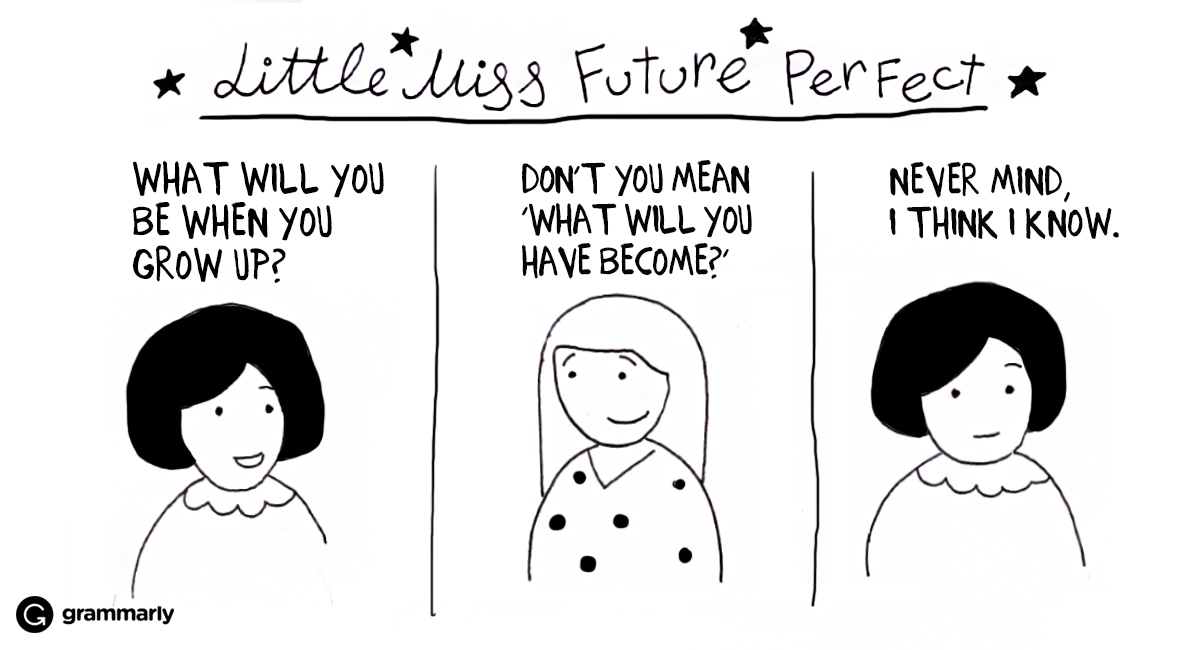
Future Perfect Tense

The future perfect is a verb tense used for actions that will be completed before some other point in the future.

The parade will have ended by the time Chester gets out of bed. At eight o’clock I will have left.

https://www.grammarly.com/blog/future-perfect/

Future Perfect Continuous Tense

The future perfect continuous, also sometimes called the future perfect progressive, is a verb tense that describes actions that will continue up until a point in the future. The future perfect continuous consists of will + have + been + the verb’s present participle (verb root + -ing).

https://www.grammarly.com/blog/future-perfect-continuous-tense/

Everyone I’ve ever worked with wants an edge …

When you’re seeking extreme or elite performance you need to maximize both what you put your attention on doing, and how you do it. This means that you need to know a few key things:

  • The Outcome – specifically what you are attempting to achieve or accomplish
  • Milestones – the steps to getting what you want that must happen in parallel or sequence
  • Metrics – precisely what to measure that will let you know that you’re getting what you want
  • Exit Criteria – knowing what achieving or accomplishing the outcome will be like so you know you’ve arrived

Getting “The Edge” all elite performers possess depends on your ability to imagine a future that hasn’t happened yet but will happen as you imagine it happening.

Exquisite Performance Happens In The Body First … And Then Follows In Time

There are two keys to imagining a future happening exactly as you intend it and then making it so …

  • The ability to language your future imagination and projections about the future as memories of what has already happened.
  • The ability to know within yourself as an embodied, body-based, feeling what it will be like for you when it has happened.

I’d also argue that the key to exemplary, elite leadership requires both of these keys to have been ingested, digested, and assimilated by you are automatic ways of being about your personal and professional intentions.

Most people who have seen great performances the achievements and accomplishments that result assume they are watching the performance where the result has been achieved or accomplished.

The performances that create the achievements or accomplishments that happen in real-time have already happened long before others witness what only happening for them in real-time.

The outcome that the performers realize in real-time in front of witnesses first happened for them when they had the embodied experience of it for themselves, and the many, many times they re-experienced it along the way to achieving or accomplishing it in real-time in the way others perceive it.

This is obvious in looking at any masterful athletic event or at any performance by great entertainers who spend weeks or months practicing for that specific event, and years developing the mastery to achieve and accomplish the outcome … e.g.: winning a gold medal, getting a Grammy or Oscar, or any other achievement or accomplishment of the same caliber … being awarded a Nobel Prize.

If this is the kind of elite performance and outcomes you aspire to you must become a master of creating futures before they exist, and that means mastering the two keys to creating futures that happen as you imagine and intend them …

It All Starts Here: Temporal Shifting (The Precursor to Time-Sliding)

“Once you’ve read this you will become what you are not yet but soon will be!“

In my training programs for my clients, including my executive and entrepreneurial clients, organizational and team leaders, and especially when I’m training other professional change artists … consultants, coaches, trainers, therapists, hypnotists, etc. … I refer to this kind of sentence as using hypnotic protocol.

When you use hypnotic language structures you force a specific cognitive process intentionally, it’s almost as though the structure of your language becomes a cognitive instruction itself.

When you read or hear, “Once you’ve read this you will become what you are not yet but soon will be!” in order to make sense of it you must move through time and construct a future-based temporal position to unfold the meaning contained within it.

Let’s dissect this sentence from beginning to end so we can see the loops created within it …

“Once you’ve read this …” assumes this will happen in the near future as most people will deconstruct the language … again, like an instruction, or almost a command.

Then we find the embedded phrase, “… you will become …” this is clearly an instruction or embedded command that remains undefined, i.e.: become what?

What follows is an ambiguous reference that can only be deciphered by the reader or listener who experiences it in reference to themselves … “… what you are not yet …” this presupposes both that there is something they are not yet, as well as in implied assumption about something they want to or would like to become that they need to fill in and complete in order to make sense of it.

This particular phrase, “… what you are not yet …” tends to shift things for most people because they move to a completely constructed reference that is this purely future based, or possibly exists outside of time in terms of any linear sequencing. It begins to set up a movement to a past reference about the future having already happened … just not yet.

When the temporal shift happens, from present to future, and then to past, for most folks there’s a vestibular shift as well meaning their sense of relative balance shifts because it feels like there’s a somatic movement of their center from one point to another. This is a very powerful thing to be able to do … with others or for yourself!

The end of the sentence “… but soon will be.” does double duty, it forces them to occupy the space where what has not happened yet has happened and shifts the experience to being experienced as a memory, something I refer to as creating a Future Memory … a thing that has happened, just not yet.

This is because in part the word “but” serves to negate what has just preceded it, i.e.: “… but soon will be.” is preceded by and immediately follows, at you are not yet …” When you negate “… what you are not yet …” the assumption is that you actually are already that which you are not yet.

The idea that you are already that which you are not yet creates confusion in the present that can only be resolved by moving to a future-based position where what has not yet happened in the present already has happened, or the creation of a Future Memory.

Creating a Future Memory is a critical step in establishing the mindset required to take action in the present that exceeds expectations built on either past performance or present evidence … this is the secret sauce of elite leadership … i.e.: both self-leadership and the leadership of others.

The temporal shifts that happen when you structure language in this way happen both mentally and physically … semantically and somatically. I build the entire SomaSemantics model around this way of using language to create transformational change.

Using the SomaSemantics model to create transformational change happens in communication as transmission (the sentence above and it’s breakdown forms an example of transmission), as well as in reception (the noticing of how someone is responding to communication interactions both semantically – the meaning they derive from the communication … and somatically – the shifts in their body responses as they experience the communication, e.g.: proprioceptive/postural changes … movement, gestures, expressions … literally any observable somatic adjustments including micro-muscular adjustments, physiological changes – breathing rate, blood flow changes indicated by skin color changes … eye dilation, focal positioning and blink rate …

It’s all patterns …
(everything that can be noticed counts)

The Art of Adumbration

What I’m pointing to and depending upon rests on the presumption that humans prefer patterns of familiarity, and when they encounter something that is uncertain or unknown they do whatever it takes to make the adjustments necessary in their perception and experience to re-find and re-set themselves on familiar ground.

Getting this idea about the human tendency to find and create patterns of familiarity is central to getting the power of adumbration and adumbrating …

We (humans) experience time as a pattern. Some time patterns are familiar … the movement of the sun throughout the day, the cycles of the seasons. When these patterns are disturbed in some way … a full solar eclipse or a particularly unseasonably hot or cold spell when we expect weather that’s more familiar to us … we feel off-center about what’s happening and desire a return to the pattern more familiar to us.

The key components of these experiences are the physical, somatic adjustments we make as we are going through the mental, semantic impressions they create in us. To make sense of what’s happening and find ourselves able to return to our center requires we create a vestibular adjustment in how we feel. Literally for most people, especially untrained individuals, unfamiliarity and uncertainty create a sense of being off balance that is vestibularly experienced as an actual body feeling.

When we are vestibularly uncertain we feel a certain compulsion to make proprioceptive adjustments to get to where we need to be to re-set our centers to a position of balance. An extreme example of this might be the vertigo some people feel when they experience something so unfamiliar or unexpected that they cannot find anywhere to place it in the framework of their thinking.

The shifts that happen when we are confronted by something that we have no framework to make any sense of create a simultaneous mental and physical instability that seems outside of or beyond reality as we know it. In these moments the most important and urgent thing will be to find the way to make sense of the experience, and place it into a familiar enough sense of what’s happened, happening, or will happen that their sense of reality becomes stable for them again.

When observing and working with extremely well-trained, elite performers like … special-ops U.S. Navy SEALs, U.S. Army Delta Force commandos, or U.S. Marine Force Recon teams, U.S. Navy “Top Gun” type fighter pilots, S.W.A.T. teams, Hotshot and Smokejumper wildland firefighters, extraordinary surgeons, world-class litigators, professional boxers, and championship martial artists … they all have the unique ability to deal with the flow of what’s happening in real-time despite the expectation of how things were supposed to have happened or should have unfolded for them. Then understand and accept the reality of uncertainty and chaos, and are able to adjust and respond in relation to the outcome they most desire despite the seeming evidence inhibiting their progress moving forward to achieve or accomplish it.

Superior leaders in business also understand and accept the reality of uncertainty and chaos, and they use it to their advantage. In most leadership positions there is a competitive field in which the strategies and plans they make, and the actions they take, happen. This looks and feels very much like the kind of performance we see when we examine the thinking and actions of other elite performers in other domains of excellence.

The ability to succeed in a competitive environment, where others are trying to gain the competitive edge, demands an exquisite precognitive ability to predict where the system is going as things are unfolding in real-time, and to act in relation to the intended future that hasn’t happened yet, but will if the right actions are taken now.

Using this knowledge of how we process our experience relative to our pre-existing frameworks and patterns of understanding can be remarkably useful. We can establish patterns of familiarity or unfamiliarity that lead to a natural presumption of where what we’re experiencing is likely to lead next, and our drive to continue or create a sense of stability will take over allowing us to fill in the blank spots in our understanding. It’s critical to realize that our drive for stability can and will override our ability to perceive reality with an explanation that fits our previous and current understanding and the framework that supports that understanding.

When our sense of familiarity with the unfolding pattern that we are experiencing becomes disrupted a vacuum that needs to be filled by us to return to the stability of understanding we demand opens and the most immediate explanation offered will be accepted and used to fill it.

The sense of the vacuum in reality that we experience in moments of uncertainty and chaos can only be resolved in a way that serves us best by either having elite preparation and the knowledge, skills and experience in dealing with uncertainty and chaos as it’s happening, or preparing ourselves to organize and align to a certain future outcome despite out current unfolding experience and the evidence it presents to us … or ideally both!

The vacuum that’s created in these situations provides us with a hypnotic opening that we can insert a suggestion into that will be likely to be accepted and used to make sense of what happened, is happening, and will happen.

Therefore, the ability to notice these patterns of familiarity and aberration to the familiar, especially regarding the ability to predict where the system is headed as they are unfolding is the art of adumbration.

No other skill creates as much advantage or gives you as much of an edge in responding to create the outcomes you desire than the ability to adumbrate the situation you are experiencing, and maybe no more significantly than in human interaction and communication.

Adumbration as Somatic Awareness

You ability to adumbrate begins with your sensitivity to your own somatic experience.

Begin able to notice the first and smallest sense of physical response in your body gives you what you need to open your awareness of adumbrating the situation.

Your body will respond to signals in the system, especially to subtle changes and shifts to the familiar, faster than your conscious awareness of those signals.

The ability to keep your awareness of these somatic adjustments gives you the adumbrative edge you need to stay ahead of where the system is going before it gets there …

Literally, the ability to track your own subtle somatic shifts as they are happening is the holy grail and rosetta stone to adumbrating and making the changes that allow you to position yourself where you need to be to get the outcomes you intend so that your experience is that you’re in the future waiting for the past to arrive to where you positioned to receive it and experience it in the way you derive the most value from in being in that particular position.

Preframing your experience to benefit you begins with using the structure of hypnotic language and protocol with yourself.

One group of folks that must do this professionally to succeed are traders in any of the markets … commodities, equity, currencies, etc. These folks are invested in reading patterns of activity that are suggestive of where the market will go, and take a position now that anticipates it arriving to where they predict it to be at some given point in the future. Active traders also make more specific presumptions about when the market will get there and time their trades to take advantage of the patterns of activity they are tracking.

When you speak with many of the most successful traders you’ll find they speak of a feeling they get about a trade. They track real information that arises in congregate and total for them as a feeling, and they may or may not then validate their feelings by backtracking and future projections based on the feeling they get using the information available to them.

There are also many very successful traders who will say that they cannot fully explain why they knew to make a particular trade but they felt it. Digging deeper you find in speaking to these successful traders that over their years of developing their skill and expertise they taught themselves and learned which signals to pay attention to, and what specific physical feelings meant about taking a trade or not.

In working with elite, successful business professionals, such as the executives in multinational companies and break-through entrepreneurs that have been my clients, I’ve found the best of the best do the same thing relative to the decisions they make as the most successful traders. They track real information that arises as a feeling for them about what to be doing and how to do it, based on a future projection that may or may not have a basis in previous results they can point to or use from the results produced in the past.

The ability to trust their “unreasonable” expectations about the decisions they make about the direction to take moving forward regarding taking massive “unreasonable” action and gambling on a potential opportunity, or pulling back from what seems an obvious win, when others in their space are tracking along with the obvious and familiar unaware of the future looming before them, separates what I refer to as elite, successful business professionals and the average executive or entrepreneur.

Often the way they speak to themselves, literally in terms of their internal dialogue about what they are noticing and deciding about, builds the confidence to set “unreasonable” expectations and to take the “unreasonable” action. When they express their thoughts externally you can hear how they construct their internal dialogue … e.g.: “When we have crossed the billion dollar revenue mark we will have already established a position on the market that will be far ahead of our competitors or their ability to catch up with where we now are relative to them.”

This kind of language is framed in what grammaticians call, Future Perfect language.

Future Perfect languaging is the essence of time sliding, adumbrative thinking and the ability to stand in a future that hasn’t happened yet, but will.

Time Sliding And Noticing The Somatic Signals

When I’m training folks to develop the elusive nature of profound adumbration and the skills of effectively predicting the most likely futures that align most closely with their intention I begin with the body.

Even when it may seem that I am doing language training, as when I’m teaching time-sliding language patterns, I am pointing to and emphasizing what happens somatically.

The ability to notice the vestibular and proprioceptive shifts associated with choosing an unknown future position to build your present operating consideration on forms the deep, cutting edge you need to go where you need to be to receive the future you are creating and intend to reap.

The kinds of futures I’m referring to are those realized by super-successful traders and the elite, successful business professionals I’ve referenced already. These are folks like Steves Jobs stepping into a future expectation and building technology that makes no real sense in the moment it emerged under his direction … the original iPod formed the basis, understanding, and desire for the iPhone that has been the company’s biggest success long before the iPhone existed or made any sense in the market as it was when he was making the investment to make it happen. I’d vehemently argue that Jobs was standing in the space of the success of the iPhone when he made the decision to invest in the first prototype of the original iPod.

Jobs repeated that success with his vision for the iPad, and we can point to any number of break-through entrepreneurs and thought-leaders in tech that followed the same patterns of massive investments in a future that didn’t exist when they made their decisions to make the investments they did. We see this in other spaces as well when we look to the history of inventions that shouldn’t have happened or couldn’t be done … the Wright Brothers ridiculous attempts (and failures) at creating a heavier than air flying machine (while everyone else was betting on zeppelins and balloons!).

First there’s a feeling of possibility, then a translation into future perfect internalized hypnotic language, then the internalized language is projected externally as time-sliding language expressed in future perfect continuous form, and finally we see the realized outcome of this process … long after the person who had the initial feeling felt it.

The key to getting here before you do begins with developing the ability to notice and trust the feelings you have about the future that are present in the current patterns as they are unfolding in real-time. When you can reliably notice the feelings about what’s about to happen but hasn’t yet in a meaningful way you can then practice translating them into time-sliding language.

The ability to use time-sliding language that references somatic experience, and creates it for those who read and/or hear it as well, generates the responses that make the intended future possible and bring it to full realization.

You must begin with tuning your awareness about the subtle, indistinct feelings you have about what’s unfolding to be able to recognize the patterns they suggest about what could and will be unfolding that is present in what’s enfolded and hasn’t yet become present.

It’s also imperative that you build confidence in your ability to notice and recognize these subtle signals to take even “unreasonable” action based on them that results in your system coming to rest …

Your system “comes to rest” when the embodied physical experience and cognitive mental experience are completely aligned and integrated into a singular common expectation about the future, a future expectation that flows naturally from the singularity you contain within … from this position it becomes virtually inevitable that what you intend indeed comes to pass, building a recursive reinforcing loop of confidence that radiates from you in everything you do, such that others experience it building trust and confidence in your ability to lead them as well.*

This is all very possible as I know, because I’ve trained clients globally to do it with surgical precision … this is the great adventure … knowing where you’ll be with certainty before you get there!

*NOTE: The idea expressed in the conception of “the system coming to rest” above is the essence of the triad, POWER | CREATIVITY | INFLUENCE. where POWER is the ability to take the action that creates the outcomes you intend, CREATIVITY is the ability to remain adaptable in face of uncertainty and chaos, and INFLUENCE is the ability to ENGAGE, ENROLL, AND EMPOWER others to create outcome that exceed those you are capable of creating on your own, that forms the fundamental leadership model within the MythoSelf Process work. This triad is the basis of self-leadership and the leadership of others.

Best,

Joseph Riggio, Ph.D.
Architect & Designer of the MythoSelf Process and SomaSemantics
Sullana, Peru – 8 July 2023

P.S. : If you want to experience this in our upcoming live, intensive training and leave with your adumbrative ability turned on and tuned it … join me and Al Ridenhour for Generative Flow five-day intensive training at The Fives all inclusive resort, Playa del Carmen on the beach in Cancun, Mexico from 3-7 October this year!!!

Get all the info you need here:

The Five-Day Intensive
GENERATIVE FLOW℠ Training


with Dr. Joseph Riggio &
Lt. Col. Al Ridenhour U.S. Marines Ret.

https://www.eventcreate.com/e/generativeflow

Filed Under: Behavioral Communication, Blog, Business Performance, Cognitive Science, Elite Performance, Language & Linguistics, Personal Transformation, Transformational Change & Performance, Transformational Communication

A New Take On Trauma

A New Take On Trauma

by Joseph Riggio · Jun 4, 2022

I believe some of the greatest successes we’ve observed in the history of the world come from some trauma the individuals who realized these successes experienced at sometime in their life.

TRAUMA = LEARNING

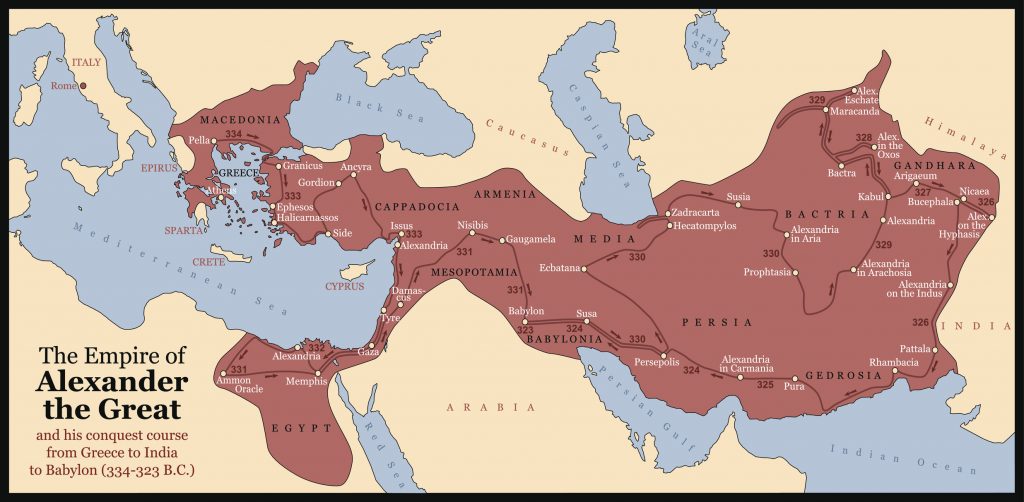
I’d argue that individuals as renowned as Alexander the Great or Napoleon were in part responding out of trauma induced learning, as well as more modern figures we associate with high achievement like Steven Jobs and, many famous athletes and entertainers.

Most of my professional clients, including some of the world-class executives and entrepreneurs I work with, come to me because of the effect of unresolved, unrealized and unconscious trauma they’ve experienced in their lives … both part of what drives their success … as well as what’s hidden from them, that limits them.

The traditional take on trauma is that it has three forms:

Acute – trauma induced from a single incident

Chronic – trauma from repeated and prolonged abuse

Complex – trauma caused by multiple, varied events, often of the kind that are invasive

Furthermore trauma is most often defined as an intense emotional response to a “terrible event.” While this definition works well in a psychological or psychiatric setting, or use, it doesn’t define the absolute boundary of how we can consider what trauma is, it’s lingering effects, or how we might choose to approach addressing it.

I want to propose that trauma may be something entirely different, …

TRAUMA: a massive, intense learning experience … or, to be more specific, a massive, intense learning experience that imprints on the neurocognitive processing pathways, that often occurs beneath the level of fully conscious awareness, and leaves a neurocognitive response that remains out of conscious awareness.

Joseph Riggio, Ph.D. – 2022

Assuming trauma creates an imprint in the emotional response that occurs in response to a “terrible event” it becomes acceptable to view it as something to be eliminated, removed, overcome or resolved – in other words, ‘fixing’ the emotional response system that has been somehow overwhelmed and/or damaged.

Abuse and trauma almost always leave a few generalized responses in the individuals who experience them, some are less life disturbing, others are more interruptive, and others still can be fully debilitating, depending on experience of the abuse, the trauma that’s induced and the individual response to it.

At the very least we can probably say that trauma will leave “emotional triggers” behind, some completely beyond the awareness of the individual experiencing them, except in the response that manifests as a result. Some of these triggers and responses are subtle, some are more significant.

Here are some examples of what trauma responses might manifest as, including those that go unrecognized as trauma responses by the person experiencing them:

  • Unexplainable procrastination or hesitation to act, feeling stuck
  • Low energy, low motivation, low or no ability to follow through
  • Fears and phobias, risk avoidance and/or avoidance of the unfamiliar
  • Eating disorders including obesity, bulimia and anorexia
  • Physical discomfort, headaches and/or body pain, profound fatigue
  • Anxiety, or panic with more acute or extreme trauma
  • Irritation, inability to connect with others easily or effectively
  • Lack of clarity, fuzzy thinking, inability to focus, and/or confusion
  • Inability to sleep or experience restful sleep
  • Feeling of isolation, disconnection or dissociation
  • Unreasonable lack of trust, relationship breakdowns
  • Low self-esteem, confidence and possible depressive episodes

Almost anyone who experiences any of these residual effects of trauma wants to get beyond the sense of “stuck-ness” that comes with them. Those who are thinking about trauma in a more traditional way may seek traditional psychological or medical intervention, because that has become the most familiar approach to take.

However, if trauma represents a learning experience, we might choose to begin by asking, “What learning happened as a result of the exposure to the event, or events, that induced the trauma?” This could take us to approaching radically differently than simply intending to ‘fix’ it in one way or another.

None of this means to suggest that trauma doesn’t leave emotional effects, and possibly emotional damage. It almost surely leaves neurocognitive effects, and shapes perception in particular ways. How the perceptual shaping manifests from trauma as response varies from individual to individual, from life changing to trivial, depending on many factors (too many to be discussed in this article).

The television series, Lie to Me, can be seen as a great example of how trauma can be viewed through a lens of learning. The premise of the show is that main character, Dr. Kal Lightman, played by Tim Roth, is a ‘deception scientist’ someone who’s studied the non-verbal signals of emotional response, and specifically micro-expressions, which are preconscious indicators of emotion. At multiple times in the show Kal refers to his protégé, Maria Torres, played by Monica Raymund, as a “natural.”

LIE TO ME, Tim Roth, Monica Raymund, Better Half , Season 1, ep. 110, aired April 22, 2009 photo: Isabella Vosmikova / TM and Copyright 20th Century Fox Film Corp. All rights reserved, Courtesy: Everett Collection 20thCentFox/Courtesy Everett Collection

In the television program Dr. Lightman make it clear that first and foremost he’s a scientist, and his ability to do what he does comes from long and deep study, based in scientific research. As his consultancy grows he expands his staff to include Torres, who he’s discovered working security in an airport, a “natural” – i.e.: someone who has never studied the science and has never been trained in reading micro-expressions or signals, but who “naturally” learned to read deception and emotions at an elite level of skill.

We learn she’s become a “natural” as a response to both abuse, and the threat of abuse, experienced by her as a child in her home, presumably from her father. This would be an example of ‘chronic trauma’ and yet despite the damage that may have been inflicted as a result of that trauma she’s also learned to read people, and their intentions, at an incredibly astute level. Her exposure to trauma in this case created a profound learning as well.

We don’t see so much of Torres’ negative response to the trauma in the series, i.e.: the emotional damage it may have caused, although in the show it’s alluded to indirectly. Instead of the emotional damage caused by the exposure to trauma, we are presented with the residual effect of the learning she experienced because of it, i.e.: her elite skill at reading subtle emotional responses in people … she’s become a “natural” as a result of the trauma.

Okay, let’s restate where this has lead us …

TRAUMA =
EMOTIONAL-SOMASEMANTIC LEARNING

We can state with a fair degree of certainty from what many experts working with trauma have shared, including many medical researchers, psychologists, psychiatrists and others working in the field that trauma stores at some level in the body, and shows up in preconscious body responses (including the obvious ones in the list above) like sweating, heart pounding, shallow breathing, hyperventilating, tremors, the inability to move freely, and the opposite, explosive behaviors associated with anger and rage.

These traumatic responses are also all responses associated with the autonomic nervous system sympathetic response (ANS-S) to danger, threat, fear and/or stress. We know the ANS-S responses in the more familiar, fight, flight, freeze sequence.

Acknowledging that trauma may be even more associated with the autonomic nervous system responses than emotional ones, although they are intimately and inextricably connected, allows us to reconsider both what trauma is, how it’s experienced, and what we can do with it … including taking advantage of the learning it offers us.

The approach I take with clients that experience any of the symptoms of trauma that are below the level of acute debilitation, often not even acknowledged as signs of trauma at all, begins with eliciting the intention of the neurocognitive patterning that has been learned as a result.

For example, if someone comes to me and complains about issues like procrastination, or low motivation, or the inability to change some habit that interferes with their life in some way, I start by assuming that this behavior served them at some point in their life in response to some event or context they experienced. Only by understanding what the trauma response intends to offer can it be reshaped to provide the benefit without the debilitating effects.

Once we’ve uncovered the hidden intention of the learning that’s been experienced we can then update both the way to use that learning, and the deeply ingrained patterns associated with the trauma response that are parasitic and no longer beneficial or useful. I’ve done this work effectively with clients who display simply irritating, intermittent flutters of distraction, to clients who are experiencing full-blown cases of the effects of PTSD, sometimes working alongside their medical caregivers.

One distinction of the approach I take resides in the assumption that most of what my clients experience remains below any conscious level of awareness beyond the behavioral responses that are the after-effect of the neurocognitive patterns induced by the trauma, everything from overeating to hysterical responses to insignificant comments, and everything else in between.

Another distinction of my approach, using the MythoSelf Process and Somasemantic Modeling, can be seen in the direct somatic elicitation, calibration and intervention that forms the basis of the transformational changework that MythoSelf Facilitators and Trainers, including myself, use when working with clients.

This way of approaching transformation can be so effective that at times the change has happened before the client is even aware that anything has happened, yet when the same stimulus that had prompted the traumatic response is represented they don’t experience or display any of the previous trauma affects. While I expect this to work like this when doing this work with clients, I am still in awe at how effective viewing trauma as learning instead of damage can be, as are most of the clients I’ve worked with who experience it with me or another MythoSelf trained professional.

Within the model of work I refer to here as MythoSelf Process facilitation and Somasemantic model we define this kind of work as “structural” meaning a redesign and repatterning of the neurocognitive experience and expression. Ideally we seek to create what we call “Structural Wellformedness” meaning that they experience and expression matches the sensory data present in the the environment, and creates a desired and appropriate outcome for the person expressing their behavior response to what they are experiencing.

Structural Wellformedness is why thinking about trauma as learning is so valuable. specifically because the learning that comes via trauma remains, with none of the inappropriate or undesirable affects that can linger long after the event that induced the original trauma. This is often because, while the learning was useful and appropriate to the context that the trauma was induced in, cross-mapping that response to contexts that are similar, but essentially different, becomes somewhere between interruptive to debilitating.

Yet, when the learning remains, without the damaging affects of induced trauma, we often see the “natural” patterns that form the core responses of extraordinary success and behavioral fluency emerge effortlessly.

I’d love to read your comments to this article … thanks!

Best,

Joseph Riggio, Ph.D.
Architect & Designer of the MythoSelf Process and SomaSemantics

Filed Under: Behavioral Communication, Blog, Business Performance, Coaches & Consultants, Coaching, Cognitive Science, Life, Personal Transformation, Uncategorized

Living Mythically

Living Mythically

by Joseph Riggio · Jan 18, 2021

Living Mythically … Taking Control Of Your Story

From the beginning of my professional practice I referred to what I do with clients as “a piece of work” and suggest to my clients do their work. There’s a bit of danger phrasing thing in this way, in that “work” is often heard and thought of as negative, something that’s hard or difficult, or as something in opposition to fun and play, something that’s not enjoyable. And, yet I think that to be a very small minded and limited point of view, that only applied to work you should never be doing in the first place.

My “work” is aiming my clients to live and perform in their lives mythically. By living mythically I mean taking control of their autobiographical narrative, or writing the scripts they live by, their own life story. There’s nothing I find more playful, enjoyable and worthwhile than doing this work, yet it can be challenging and sometimes downright daunting, and even then it remains completely playful, engaging and fun for me to do.

Establishing A New Profession …

Another way I speak of what I do professionally in my practice with clients is that I am a “Clinical Mythologist.” I guide my clients mythologically to discover the stories they have been living from, the story they are living, and the story they are living into. Once we uncover these stories we take it further to begin to take control of the narrative these stories create collectively … the continuity of past, present and future as a singular way of understanding who you are fundamentally. This is an “ontological/ aesthetic” way of knowing yourself … as a being experience life sensually, contained in the iconic, symbolic representations you form about yourself and your life. One way we do this is in the form of language, the language we use with and about ourselves, and the language we use to describe reality as we know it, including others and our relationships with them.

A “piece of work” then refers to uncovering an aspect of revealing the autobiographical narrative someone is living from, and the affect of that narrative in their life as a mythic form. Of course this also means we’re revealing them to themselves. The revelations we uncover are both ill-formed and well-formed.

Ill-Formed Or Well-Formed Personal Mythology?

Ill-formed myths are fundamentally distortions of reality, not real in some way. Ill-formed myths disconnect you from your life, especially in regard to your purpose, passion and power, and away from living playfully. The ill-formedness creates cognitive dissonance, meaning that when you are operating from ill-formedness what you experience doesn’t make sense, the pieces don’t fit and you cannot form a coherent narrative, or mythic form through time.

Ill-formedness in your personal mythology … the autobiographical narrative your living from that describes reality as you know it and the way you relate to it … leads to what I call mythological distress and ultimately mythological crisis … the story your living doesn’t fit you.

Eventually, an ill-formed personal mythology will lead to ill-formed behaviors, that cannot and will not create the outcomes you desired, or produce the life you intend to be living, the relationships you want to be having, the accomplishments you want to be realizing.

Well-formed myths on the other hand are those that match you intrinsically, the arise from deep within you, before any traumas or comprises of yourself were experienced or occurred. A well-formed personal mythology contains and describes reality as you know it to be as free of distortions as you are capable of achieving. This view of reality leads to coherence that led to a a natural sense of awe and wonder, and a way of being in the world that is playful, childlike but not childish.

Wellformedness in your personal mythology opens you to the possibility of living a life of joy and splendor, experiencing yourself and others in enchanted and enchanting ways … you begin to experience the epiphany or what it means to be fully human and fully alive … life becomes meaningful play, filled with purpose, passion and power without struggle, effort or compromise.

Taking Control Of Your Story, And Your Life

What I’ve found in working with thousands of clients individually, in groups and within organizations and institutions has been that doing the work of living mythologically requires simultaneously becoming aware of your autobiographical narrative and taking control of it. The way this happens begins with choosing to be the author of the scripts you are living from, and rejecting the scripts that others have imposed upon you … often without any conscious awareness that that has happened, or that the script you are running is not your own.

The “writing” of your story, and the scripts you run, rests on the ways in which you perceive and make sense of the experiences you have, the meaning you apply to those experiences, and the decisions you make that lead to the action you take … and, this of course leads to the outcomes your create, as well as those you don’t.

As one of the huge benefits of “doing your work” of uncovering, revealing and taking control of your personal mythology you’ll free yourself from the ways you found yourself stuck in the past … procrastinating, hesitating to act, acting poorly, running in circles and finding yourself trying everything and anything you can think of to move forward, and yet still finding your stuck either not moving or moving and winding up where you began.

I’ve worked often and intensely with clients helping them to get unstuck in many ways and places in their lives, including extremely often in the ways they relate to others in their personal and professional relationships. When you reset your personal mythology it frees you from conflict, resentment, envy, shame, guilt and all the other things that so many people struggle with … without ever needing to wade through the suffering of revisiting those emotional sinkholes.

I find another thing that comes up almost as often can be the way that you relate to your sense of discovering real purpose and meaning in your life and career. Knowing you personal mythology makes how what you do professionally evident to you, the meaning it has in your life, and in relation to others too. Passion come from knowing why you are doing what you do, regardless whether we’re talking about actions you take personally for yourself and with others, or professionally. One of the most powerful things this does for you will be a natural reset of your relationship with money … earning it, accumulating it, spending it and sharing it as well.

It’s also extremely interesting to observe how my clients experience a positive change in their health, physically, mentally, emotionally and even spiritually, when the take back control of their autobiographical narrative. When you choose to be the author of the stories of your life … what they are, what they mean, and how they organize you to experience your life as it unfolds and you move forward through it … everything becomes clear to you and you have choices about it all, including how those experiences affect your health and wellbeing.

You cannot not live in relation to your life’s story, the autobiographical narrative that shapes and forms you, your experiences, your relationships and the life you are living. Either you choose to take control of your personal mythology, the story you are living, or you are controlled by it.

What’s Next …

As I shared with you at the beginning I love “doing my work” … shaping the story I’m living and sharing my client’s stories, because by keeping my attention here I can help you “do your work” too, and become the author of your life. Let’s get together sometime and tell some stories, eh?

Joseph Riggio, Ph.D.
Architect & Designer of the MythoSelf Process and SomaSemantics

Sarasota, Florida

P.S. – WHEN YOU’RE READY … you can always set up a time to arrange a complimentary call with me when you’re ready to begin again … YES, Joseph I’m Ready, let’s get together to explore my personal mythology and the life story I’m living.

P.P.S. – Get my book “Experiencing the Hero’s Journey” and go a bit deeper into the journey of your story by reading a bit about mine … in it I reveal the deep structure of ill-formedness, well-formedness and how to discover your own personal mythology and story.

Filed Under: Blog, Business Performance, Coaching, Elite Performance, General, Life, Mentoring, Mythology, Personal Transformation, Transformational Change & Performance, Uncategorized

Outlaw Thinking: Part 3

Outlaw Thinking: Part 3

by Joseph Riggio · Nov 9, 2020

grok

grok/ɡräk/Learn to pronounceverbINFORMAL•US

  1. understand (something) intuitively or by empathy. “because of all the commercials, children grok things immediately”
    • empathize or communicate sympathetically; establish a rapport. “nestling earth couple would like to find water brothers to grok with in peace”

Grok/ˈɡrɒk/ is a neologism coined by American writer Robert A. Heinlein for his 1961 science fiction novel Stranger in a Strange Land. While the Oxford English Dictionary summarizes the meaning of grok as “to understand intuitively or by empathy, to establish rapport with” and “to empathize or communicate sympathetically (with); also, to experience enjoyment”, Heinlein’s concept is far more nuanced, with critic Istvan Csicsery-Ronay Jr. observing that “the book’s major theme can be seen as an extended definition of the term”.

(https://en.wikipedia.org/wiki/Grok)

“Grok means to understand so thoroughly that the observer becomes a part of the observed—to merge, blend, intermarry, lose identity in group experience. It means almost everything that we mean by religion, philosophy, and science—and it means as little to us (because we are from Earth) as color means to a blind man.”

It’s what I do … I grok.

I am a Master Grokker.

I grok professionally with and for others.

SO …

I , Joseph Riggio, grok the MythoSelf Process, and within that universe of understanding, the underlying developmental modeling principals that the building of worldviews, and the narratives that form and inform them, ultimately rests upon.

Now, if you’ll stick with me for a short bit longer I’ll get to how and why this may be of critical important to you too.

Hackers also grok, as in “I hack reality, because I grok it.”

The word was later woven into hacker culture, appearing in the earliest editions of the Jargon File from the early 80s, which was later edited and republished by famous programmer Eric S. Raymond under the title The New Hacker’s Dictionary.

Hackers Dictionary

The primary definition given there is consistent with Heinlein’s, but the more religious and mystical connotations have been dropped:

  1. To understand. Connotes intimate and exhaustive knowledge. When you claim to ‘grok’ some knowledge or technique, you are asserting that you have not merely learned it in a detached instrumental way but that it has become part of you, part of your identity. For example, to say that you “know” LISP is simply to assert that you can code in it if necessary — but to say you “grok” LISP is to claim that you have deeply entered the world-view and spirit of the language, with the implication that it has transformed your view of programming. Contrast zen, which is similar supernal understanding experienced as a single brief flash.

Here’s an especially interesting bit for me:

When you claim to ‘grok’ some knowledge or technique, you are asserting that you have not merely learned it in a detached instrumental way but that it has become part of you, part of your identity.

I am quite literally asserting that after thirty plus years of immersing myself in the work I do, i.e.: the MythoSelf Process, and all the bits and pieces that it contains and it built up from and in relation to, I grok this stuff like nobody’s business!

NOW onto why this is all important, maybe critical, for and to you …

I’ve been laying out a premise for what I’ve playfully been calling Outlaw Thinking in my last couple of posts.

The essence of the idea is that A) I think (and therefore communicate) differently … other than as folks normally associate what thinking is or how it should be done, i.e.: in a straight linear way, from point A to point B, as efficiently and directly as possible … and, B) I help others to think and communicate like an outlaw too, meaning that I help them build new and more complex worldviews and narratives, that give them unique perspectives, options, choices and opportunities, because they develop significant adaptability in the way they think and communicate.

Okay here that is again …

B) I help others to think and communicate like an outlaw too, meaning that I help them build new and more complex worldviews and narratives, that give them unique perspectives, options, choices and opportunities, because they develop significant adaptability in the way they think and communicate.

SIMPLY … I train people to grok their world, their work, their own lives, and the other folks they engage and interact with … and I also train folks to do this work I do with others, so they can help their clients grok too.

Now you have what you need to decide if this is important, or even critical, to where you find yourself in your life today.

If getting to this kind of thinking and communication in your life and work means something to you, you’re in the right place … YOU’VE FOUND IT!

OUTLAW THINKING REVISITED:

So what do I do again, and why is it important, or critical, for you:

Applying the MythoSelf Process model with my clients helps them to unwind sticky, or wicked, problems and situations in their lives, relationships, work and businesses.

“Grokking” the MythoSelf Process model gives me a kind of genius superpower … because it makes it obvious what level of thinking someone is operating from, and where the limitation in their cognitive process exists, and then points the way to resolve that so that my clients can literally upgrade their mind.

The “genius” in the model is available to anyone who groks it, and that’s ultimately the effect of working with someone deeply versed in the MythoSelf Process.

All perspectives, or worldviews, rest on narratives that describe what is real for the individual, or organization, that is living within and in relation to the narrative … the stories they tell about themselves, others and the world as we know it to be.

The MythoSelf Process model uncovers the existing narrative, as well as the “primal narrative” — the origin narrative that contains the uncorrupted and uncompromised form of the individual or organization, before any attempts where made to reshape them to fit into what society wants them to become.

The primal narrative is the pure mythic form of the individual or organization, and provides access to a teleological trajectory the pulls them into the most desirable future possible for them. In some models of transformational work this would be referred to as becoming authentic, or operating authentically.

The advantage of accessing the primal narrative, or mythic form, that working within the MythoSelf Process provides any user, is that decision making becomes unclouded, and action taking become virtually automatic in relation to creating the outcomes you intend … the effect is that taking effective action, and creating results, feels effortless.

Solving wicked problems is especially important to what we’re discussing here, what I’ve call Outlaw Thinking.

The MythoSelf Process allows you to process complexity that gives rise to wicked problems, and develop effective strategies that unravel the complex issues that have tentacles in multiple directions, having multiple consequences that are overlapped, intertwined and potentially costly if you fail to resolve them, and when they are resolved well are highly rewarding.

Doing this requires operating from a different mind and elevating your performance in relation to the world we now live in today.

The deep challenges we face include:

  • A brain that evolved somewhere between 500,000 and 50,000 years ago, not in the complex and interrelated global world we now move in
  • Cultural learning and impositions designed hundreds of years ago, imposing explicit laws and implicit rules that order our lives today, that no longer effectively represent the world we are living in now

Only by upgrading your worldview, i.e.: effectively upgrading your mind, can you hope to effectively deal with the actual levels of complexity and circumstances we live in relation to on a daily basis today.

The MythoSelf Process is a method for working with someone who will guide you through the specific things you need to do to shift how you are experiencing yourself and your life, usually in relation to a specific situation or circumstance you are currently facing, that then generalized the upgraded pattern of thinking throughout your life.

Beyond the MythoSelf Process work with a facilitator or trainer of the Process, there is an opportunity to learn more about the foundational principals that form and inform the Process.

These principals used with the MythoSelf Process model are built on a developmental model of cognitive maturity, and will dramatically shift the way you think and the way you communicate (because quite literally communication is thinking — as you raise the level of your cognitive maturity communication, and language use in particular, become a controlling mechanism for thought).

If you’re ready to take the next steps in exploring how you can make this kind of leap in advancing yourself, your thinking and your communication have a look here now:

Mastering Cognitive Maturity

Best,

Joseph Riggio, Ph.D.
Architect & Designer of the MythoSelf Process and SomaSemantics

Developer of A.C.T. | Adaptive Cognitive Training and the Cognitive Maturity Model

P.S.: If you’re interested in working with me in one of my small coaching groups or 1:1, there’s no need to wait any longer, reach out to me directly at: joseph@josephriggio.com, and we’ll come back to you about how to find out more about taking the next steps to do that …

Filed Under: Blog, Business Performance, Coaches & Consultants, Coaching, Cognitive Science, Elite Performance, General, Human Systems, Language & Linguistics, Life, Mentoring, Mind Games, Mythology, MythoSelf Process Training, Uncategorized

Changing Minds …

Changing Minds …

by Joseph Riggio · Oct 28, 2020

Escaping The Matrix

“Remember … there is no spoon.”

(Author’s Note: This one is going to go deep fast, and then loop around a bit, all requiring some commitment, probably demanding a few readings, but I bet it will be worth many readings after you’ve read it once … ENJOY!)

Take A Walk With Me On The Wild Side of POWER | CREATIVITY | INFLUENCE

For thirty years I’ve been working with clients personally and professionally helping them become more:

  • Powerful in their lives, i.e.: able to take the action that leads to the results and outcomes they intend
  • Creative in how they approach thinking and decision-making, with an aim at helping them become more adaptable and artful in acting strategically
  • Influential in their interactions, becoming masterful at communicating authentically and persuasively to engage, enroll and empower others

This is ultimately about how you can develop deep personal mastery so you can create the life you want to be living … a life lived on your own terms, without compromise.

So if you’re ready walk with me for a bit and we’ll explore the journey I’ve take to where I am today in the work I do.

A Little Background:

In the early 1980s I began developing a model of thinking about thinking, or more specifically thinking about how to improve thinking, that I called “Transformational Applied Philosophy” … T.A.P.

I named what I was working on Transformational Applied Philosophy because I was focused on building a phenomenologically grounded model of transformational ontological change, designed around the work of a few philosophers I was reading deeply at the time.

The philosophers I was reading at the time included: Georg Wilhelm Fredrich Hegel (post-kantian logic and phenomenology), Edmund Husserl (existential phenomenology), Arthur Schopenhauer (aesthetic existentialism), Martin Heidegger (existential ontology), Maurice Merleau-Ponty (embodied ontological existentialism), Ludwig Wittgenstein (metaphysics and analytic philosophy of language), and John Searle (analytic and linguistic philosophy/philosophy of mind).

Then I went on and found a few more philosophers who I added to the mix of my reading, social ontologists like Gilles Deleuze, a couple of the hermeneutic philosophers like Jurgen Habermas and Hans-Georg Gadamer, and those in the domain of philosphy of mind, neurophilosophy, cognition and embodiment like Patricia Churchland and, George Lakoff and Mark Johnson.

All of that reading was significant because philosophy has been informing people about how to live their lives well, to find a path of authenticity and purpose. Reading philosophy can be challenging, it dense and sometimes very dry too. And, one thing literally leads to another … and another, and another … ad infinitum, until you’ve read the entire canon of Western Philosophy at least (which of course I haven’t, and neither has anyone I know of, but some professional philosophers sure seem to have read 90% of it!).

I still read philosophy actively, more of the later kind … philosophy of mind, cognitive science and neurophilosophy … and this forms a great deal of my background, and current focus, about how I think about thinking, and help others to think better … i.e.: with greater clarity and more precision, leading to a dramatic increase in the ability to think with passion and strategically.

My realization was that while approaching my work with clients philosophically had great and deep value, what I am aiming at required something more than what staying just in the domain of philosophy offers me and my clients.

Going Beyond The Basics

When I found them I fell in love with informal logic and embodiment. This was especially true as the embodiment movement led through the extended mind phase led by Humberto Maturana and Francisco Varela’s work (following Gregory Bateson), and evolved to an understanding enactivism/enactment, where the premise is that the mind exists in the interaction with the environment. Quite literally the environment, and the objects in it, the total context, is as much a part of the mind of the individual as the individual’s neural processing and physical/sensory experience.

So I began to look more and more into the domain of somatics and folks from F.M. Alexander to Moshe Feldenkrais to Thomas Hanna. That took me deep for many years, way into anatomy, physiology, and eventually into neuroscience too. But, because I was led there by an interest in the idea of undifferentiated body-mind singularity my focus for about five years centered on studying cerebellar response where movement predominates thinking, proprioception and vestibulation.

HEY, PLEASE STAY WITH ME … WE’RE GETTING THERE …

Somehow this stuff made sense to me as a set of intertwined connections linking and weaving it all together, especially when I began looking at it through the lens of narrative and mythology, and the structure of storytelling.

This phase of my work was deeply grounded in studying the work of Joseph Campbell, the renowned mythologist, and his “Hero’s Journey” model. There’s no way you can do this and avoid looking at the work of many other folks in related fields from psychology (e.g.: Carl Jung) to ethology (Konrad Lorenz) and anthropology (e.g.: Gregory Bateson), linking what I call the biological imperative with the creative imperative, leading to an aesthetic orientation.

Sometime in the late 1990s I was introduced to the work of Clare W. Graves, the developmental social pyschologist. Dr. Graves work impacted my thinking on many levels and shifted the framework of the model I been developing for almost ten years by that point. For the next ten years I would study the work of the post-autonomous, post-conventional developmentalists including Jane Loevinger, Susanne Cook-Greuter, and William Torbert.

OKAY, WE’RE THERE!!! (WELL ALMOST THIS TIME, REALLY …)

Mythological Expressions

By the early 1990s I’d begun referring to my model as “The Mythogenic Self Process” which became the “MythoSelf Process” by around 1994.

That was because of the impact of Joseph Campbell on my work. Adding up all the pieces led me to take a mythological turn, or what I think of equally as a narrative turn. I began to realize that our entire relationship to reality is structured like story, i.e.: in narrative or mythic form.

I’d moved well beyond the limited philosophical approach I’d begun thinking was the way to achieve significant transformational change with clients.

The way I approached transformation early on was based on a premise that the way we hold and process information in our brains as the manipulation of representations, both sensory memories and/or abstractions. That’s why I became (and to some extent remain) so fascinated with a philosophical approach. This approach has great validity when dealing with the cognitive process of making sense of and manipulating information, e.g.: language.

What was missing were the two elements that have become the signature pieces of the MythoSelf Process, sensorial cognition and dynamic movement. When I added these to using a narrative approach to uncovering the mythic form of the frame of reference that holds reality intact for an individual or organization, i.e.: the externalized temporally organized markers that are then internalized and acted upon, it all came together … finally!

(FWIW, I know this all very technical sounding, but I warned you up front this was going to take some commitment, but that it would be worth it, right? BTW, you can ask me about anything you want me to clarify in the comments section below.)

By 1999 I’d already begun training and certifying others to use the model and process I’d designed with great success.

For the next twenty years I’d continue to develop and refine the work I’d designed, and extended the reach of applications from sales and leadership training, to executive coaching, to team development, to intensive individual coaching, to mentoring coaches and consultants to use the model and process with client groups in virtually every specialization imaginable and with clients from eight to over eighty years of age.

What I had in hand was …

An aesthetically oriented, phenomenologically grounded and embodied model of transformational ontological changework that took into account developmental levels of awareness engaging the mythological form that supported the fundamental autobiographical narrative from which individuals and groups define reality as they know it to be in any given moment, operating it enactively.

WOW!!!

That’s surely a mouthful (and why I just refer to it simply as the MythoSelf Process model).

To get what it really is we’re dealing with all of that is actually essential. What makes this so strange to consider however is the typical orientation to reductionism, silos and linear thinking versus synthesis, integration and systemic thinking.

BUT … you can’t deal with dynamic complex systems, e.g.: human systems, without addressing the reality of that they are in fact dynamic complex systems!

The model of transformational changework I built, the MythoSelf Model, then is a model that shifts the fundamental way you perceive, think about and act in the world.

What’s at the center of the model is the shift in thinking from linear to systemic, and from fuzzy to precise. This requires a whole new way of using your brain than most people have ever experienced, one that is both more integrated and, far more embodied and wholeform than your education has ever made available for you to access.

Two other aspects of using your brain in this way is how embodied the experience becomes as you being thinking through and with body-based processing (somatically organized) as well as mentally-based processing (semantically organized) as an enfolded and entwined processing model of thought … and, how sensual and aesthetic this way of thinking is organized. When using the MythoSelf Process model as the basis of how you experience, perceive, process and act in the world aiming for beauty and elegance in form becomes a most sought for characteristic. Essentially this drives sensuality into decision making and performance (strategic action aimed at an intended outcome), making them beautiful as well.

Storytelling & Narrative Communication As A Control System

Way back when … virtually at the same time I began this journey from my study of the philosophers I’ve already mentioned, I also was beginning to read in the field of cybernetics, and cybernetic control systems based in communication.

I felt from the start that there was a direct correlation between what I was reading in cybernetic theory and the work I wanted to master in helping individuals and organizations make transformational changes. What I couldn’t put together was the mathematical orientation of many of the cybernetic thinkers I was studying at the time and how to apply them directly to helping people make the changes they desired.

The idea of systems that provided and operated on feedback made perfect sense, yet the mechanism of how to apply this directly with my clients eluded me for many years. It took the connection between mythological form/narrative and developmental theory to make sense of it as I now have and apply in my work with clients.

While the idea of a primary cybernetically organized mechanism to assist clients to make change made perfect sense, the specific methodology was a bit trickier to fully explicate and define.

When I brought together all of the systemic work I had been doing with individuals and organizations, as well as the mechanism of mythological form/narrative applied within a developmentally organized approach, it all became very clear that what I knew was working could be codified.

Stories are intrinsically cybernetic in the sense that they are self-contained systems. In stories language “controls” the movement of the narrative in terms of content, space as place, and temporality.

Where someone perceives themselves in space and time relative to the content in consideration determines what the content represents to and for them, and what’s possible as a result.

Narrative structure is based in organizing temporally, and placing actors and agents in relation to one another relatively in space, i.e.: who’s affected by the events that happen and how, where the events are happening, as well as when the events happen, are all part of narrative structure.

Organizing the stories we tell ourselves and others, as well as the stories others tell … especially those they tell about us … are all part of the mythic form of our life that organizes who we know ourselves to be in relation to reality as we know it to be.

Therefore the most powerful skill we can possess may be our ability to design, craft and tell potent stories … in storytelling we contain POWER | CREATIVITY | INFLUENCE simultaneously. When we tell stories intentionally, to ourselves or others, we shape and reshape reality as we know it, and in regard to how we relate to it.

Transformational storytelling sits at the heart and soul of the MythoSelf Process model. Storytelling is the essential and central skill that allows someone to create a future possibility that doesn’t exist for them as they are today. Using stories also opens up the possibility of shifting away from those things that limit an individual or organization.

I’ve designed the MythoSelf Process to allow facilitators of the Process to help clients make significant shifts towards what they want, as they simultaneously reset their relationship to what had been limiting them in the past, using narrative form as a means of updating their personal mythology.

Using a wholeform approach that takes into account sensorial and dynamic movement processing, as well as content driven sense-making, meaning-making and decision-making, defines the MythoSelf Process more than just a narrative or storytelling methodology as they are normally approached.

The MythoSelf Process creates a new wholeform reality by blending somatic and semantic modeling within a narrative, storytelling process that resets the temporal and spatial relationship of a client to the future-based position they intend to achieve.

Holding The Space For Clients Until They Can Hold It For Themselves

The new wholeform reality created by combining somatic and semantic modeling using a narrative, storytelling approach shifts the filters of perception and the sorting patterns that lead to sense-making, meaning-making and decision-making that precede taking action that produced the results that lead to achieving outcomes.

Only when an individual’s or organization’s filters and sorting patterns are fully organized and aligned with the outcome that’s intended, will the trajectory of action create the results needed to achieve the outcome that’s desired.

By shifting the filters and sorting patterns to align with a newly intended future, the individual or organization shifts the way they are paying attention, what they notice for, and how they notice for it, as well as what it means, needed to create that future intended outcome. This amounts to stepping into and living a new story that forecasts and leads to a new emergent reality.

Like this, what to do becomes obvious, even when it requires significant work to accomplish. In this way, operating from within the new story structure, moving towards the new emergent reality becomes effortless … regardless of how challenging it may be to do what’s necessary.

As the agent of change, “I” was the primary mechanism I had been seeking, and the specific way I could organize myself in relation to my clients to assist them in bringing about the change they sought when they engaged me became instantly clear as well (although it’s taken me another ten years to document and codify it fully).

There are two aspects to applying the MythoSelf Process in the way I have been building up to and describing … first by establishing the stories that need to be told and re-told, and second by holding a position in relation to your client that demands they operate from the position they’ll be in when they achieve their outcome. Doing this requires understanding all the “science” part of what I’ve been laying out here, as well as the “art” of knowing how to step into and adopt the position of choice.

In this way bits and pieces of what your clients need to be aware of starts becoming obvious to them. As the become aware of what they need, they simultaneously become more able to hold the position they need for themselves where noticing in this way is automatic and natural for them (without needing you to provide the structure and stimulus to prompt them to hold this position).

Over time the new position, actually a new reality for them, becomes how they are without effort or trying, it’s quite literally who they become (with your help of course, until you don’t need to help anymore).

This is a radical departure from how most processes, approaches, methodologies and models of transformational change operate. In virtually every other way of prompting transformational change it’s what the change artist does with or to the client that makes the difference. In the MythoSelf Process model the way you are as you do what you do with or to the client is what makes all the difference.

“Holding the position” is a cybernetic process, and personal communication … including the art of storytelling … is the ultimate control function in the system.

Stories form the mechanism to provide the intervention, or interventions, required to shift the system so the individual can find a way to permanently occupy the new position of choice, opening the pathway to a new possibility, a new future, beyond what would have been possible before resetting the system to the new position created in the relationship between the client and the facilitator.

In the end becoming that person, the one who can hold the position necessary makes it all worthwhile to have done all the reading, study and the thousands of hours of client work required to know how to discover what to do and how to do it, and then to do it.

Best,

Joseph Riggio, Ph.D.
Architect & Designer of the MythoSelf Process

Sarasota, FL

P.S.: – If you would like to discuss the MythoSelf Process more, either as a coach or consultant … or, with the intention of exploring how experiencing the MythoSelf Work might help you personally … let’s talk, set up a complimentary consultation at your convenience: Schedule Time To Talk With Joseph Now

Filed Under: Blog, Business Consulting, Business Performance, Coaches & Consultants, Coaching, Cognitive Science, Elite Performance, General, Human Systems, Language & Linguistics, Life, Mentoring, Mythology, MythoSelf Process Training, Personal Transformation, Story, Transformational Change & Performance, Transformational Communication, Uncategorized

Revisiting: Pathways to A High-Ticket Coaching Or Consulting Practice

Revisiting: Pathways to A High-Ticket Coaching Or Consulting Practice

by Joseph Riggio · Mar 2, 2019

Or … The Gravesian Way To Making A Great Living As A Coach/Consultant/Trainer …

Graves Business Model Venn Diagram JSR


Okay … the idea of the Venn Diagram showing this particular intersection isn’t mine, but the commentary around it is …

Let’s take a closer look together … shall we?


[NOTE: I originally wrote this as a post on my blog where I’ve been talking the Graves Model for years. This model identifies what most drives perceptual, decision-making and behavioral responses that people default to generally, all other things being equal. The fundamental point here is that unconscious values drive responses. When you can recognize how your values shape your responses, and the way values shape the responses that others make, you can make choices that serve you more powerfully in your business. It’s not so important to try to master the Graves Model, as to get the underlying values that form business decisions that shape a business’ outcomes.]

Most of the build your coaching business gurus will point you towards what I’m calling out as the Reflective Thinking/Graves Six position where you supposedly make money by pursuing your passion … e.g.: your Million Dollar Message B.S.

BUT … while you can indeed make money by overlapping What You’re Passionate About resides and where What Your Clients Want and Are Willing To Pay Handsomely To Get overlap … there ain’t no guarantee that’s gonna happen …

BECAUSE there’s no guarantee that what you’re passionate about … or your message, life story, insights, calling, whatever … is going to resonate with what customers and clients are willing to pay handsomely for today.

Now if you notice most of these “Gurus” are following the path that most of the  on-line business/marketing gurus will point you toward (and mostly follow themselves) … i.e.: the place where What You’re Good At and What Clients Want and Will Pay Handsomely For overlap. This is the Reactive Thinking/Graves Five position on the diagram, and you can indeed make loads of money when you follow this path to riches.

In other words, the Reflective Thinking/Graves Six Do What You Love Gurus seldom follow their own advice precisely, except when there’s a lucky accident and they are actually at the Integrative Thinking/Graves Seven position (think Oprah Winfrey).

I point to this position in the middle of the diagram where all three circles overlap … (BTW this is where the money you can earn is for all intents and purposes unlimited), so it all comes together for them.

Just to complete the outer positions, 90% of folks who have businesses that are actually jobs are stuck in the Reflexive Thinking/Graves Four position, where What You’re Good At and What You’re Passionate About overlap. (NOTE: This is Michael Gerber of “The E-Myth” fame refers to as the technician’s ‘entrepreneurial spasm’.)

OKAY, SO HERE’S THE “SKINNY” AS I LIKE TO SAY …

YOU HAVE TO DECIDE EXACTLY “WHY” YOU WANT TO RUN A COACHING/CONSULTING/TRAINING BUSINESS!!!

(Or, what you get from your coaching/consulting/training business will not necessarily be what you want or expect to get from it.)

What To Do About It …

(If You Really Want To Build A High-Ticket Practice)

A great majority of folks who are good at what they do, but ain’t making no money, are operating at a Reflexive Thinking/Graves Four position on this diagram. It’s simple and kind of stupid (I’ll explain why later on, give me a minute to get there …)

Most folks who are willing to do what it takes, are at a Reactive Thinking/Graves Five position on the diagram, and are building businesses that make money, sometimes tons of moolah, but they aren’t necessarily that happiest folks on the planet (in fact they are often the most anxious folks on the planet, always waiting for the house of cards they built to implode).

When you leap to the Reflective Thinking/Graves Six position you find that there’s a whole spectrum of success, from what is utter financial failure to super financial success and independent wealth. Yet, these folks are living in a dream expecting to live the dream, i.e.: doing well by doing good, regardless of the fact the reality is that most of the time they are more interested in what they want to do for themselves than helping out the world as a form of service or sacrifice.

Now that ain’t saying that folks who are operating out of the Reflective Thinking/Graves Six value set aren’t doing good work, it’s just that the reality is that most of the time that decision is based on what NLPers (folks trained in NLP/neurolinguistic programming) call Sorting By Self and Internal Reference. In other words they decide what’s most right by their own internal measure and not necessarily what would in fact most serve the world-at-large.

For example a whole lot of these folks drive expensive SUVs and many drive expensive sports cars, that ain’t doing a whole lot for the planet they claim to love, or being particularly respectful of the percentage of resources they use compared to the least privileged folks on the planet. And those in the coaching/consulting industry don’t stay local/buy local/work local either, because they are getting on planes to go to the conventions where their tribe meets up and when they’re not flying to meet their tribe they’re looking to hook up with some tribe in Fiji or Patagonia or the Himalayas on holiday.

Once again, I’m NOT condemning these folks … good on the if they’ve found a way to satisfy their deepest desires and making the dosh they need to pursue them fully. BUT, as I said this is as much a lucky coincidence as it is strategic planning, and even then this is NOT the path to sainthood regardless of how many Salutations to the Sun you’ve done, or how many hours you’ve spent meditating mindfully, or even if you’ve spent two years of your youth in the Peace Corps.

The main point for anyone who’s trying to build a high-ticket practice is to get that if you want to be on the path to success that is strategic, then you’ve really got to look at why you want this and how you expect to pull it off in the real world where no one cares about your intention …

That’s right … NO ONE CARES ABOUT YOUR INTENTION!

ALL FOLKS CARE ABOUT ARE WHAT THEY WANT AND,
HOW YOUR ACTIONS HELP THEM GET THAT … OR NOT!

(NOTE: There is an exception to this as well … when folks believe and expect that you will help them get what they want, even when that doesn’t turn out to be true after the fact.)

So think about it … WHY DO YOU WANT TO BUILD A HIGH-TICKET COACHING, CONSULTING OR TRAINING PRACTICE???

In other words answer these two question for yourself:

1. What do you expect to get from building a high-ticket coaching, consulting or training practice?

2. How will getting this satisfy your deeper desires and values beyond just making money (unless your at Reactive Thinking/Graves Five, just making money is not going to keep you happy).

Now going back a step …

If you both want to make money AND satisfy your deeper desires and values you’ll need to come to terms with a couple of things …

FIRST … you MUST satisfy the intention to serve your clients based on “What Your Clients Want and Will Pay You Handsomely For” … if you’re NOT starting here you are NOT operating strategically with regard to building a High-Ticket Practice.

AND … you MUST satisfy the intention to serve “What You’re Passionate About” as well.

Now, that may sound like I just recommended that you follow the Graves Six pathway to success, and that’s ALMOST correct, but as they say in the infomercial world … “WAIT THERE’S MORE!”

REMEMBER … there’s absolutely no guarantee that “What You’re Passionate About” and “What Your Client’s Want and Will Pay You Handsomely For” are aligned or will come together … if those two things aren’t also “What You’re Good At” too.

Because typically High-Ticket Clients almost always go to someone who is an expert, who does the best quality work, for what they want and expect to pay handsomely for as well. In other words, they seek out folks who are good at what they do as their primary criteria (even when they get it wrong because someone has created a reputation built on sand … probably a savvy Six BTW).


For BOTH YOU AND YOUR CLIENTS to be deeply satisfied you need to be in the Reactive Thinking/Graves Five zone for them … AND the Reflective Thinking/Graves Six zone for you!

And, in the world of this model Reactive Thinking/Graves Five and Reflective Thinking/Graves Six together equal Integrative Thinking/Graves Seven when it comes to building a High-Ticket Coaching, Consulting or Training Practice that satisfies BOTH YOU AND YOUR CLIENTS!


Summing It Up

Simply put, STOP PAYING ATTENTION TO THE MAGICAL THINKING WORLD OF THE GET RICH QUICK BY DOING WHAT YOU LOVE Gurus!!!

While there’s nothing wrong with doing what you love … HECK I RECOMMEND IT … you aren’t going to have the chance to work with the High-Ticket clients you want, or to strategically satisfy your desire to make more money … or get filthy, stinking rich for that matter … if you don’t move out of the position you’re in to a position where you really do satisfy all the people in the equation BASED ON THEIR CRITERIA AND NOT YOURS ALONE.

As the wise men say, there are many paths to the top of mountain, but whether you get up there broken and defeated barely having survived, happily trekking with a merry band of sherpas and stopping for a week in basecamp before you turn around and head down never having seen the peak, or travel all the way in a luxury helicopter is up to you.

If you want to you can indeed have it, and knowing WHO you are, is at least as important as WHAT to do and HOW to do it … this is the world of Integrative Thinking/Graves Seven autonomy and success … and, here’s a little secret, when you are operating from WHO you are, you begin to gain unprecedented insight into WHO your clients are as well.

So if your guru isn’t starting there with you, i.e.: WHO you are, as the basis for designing the offers you build your HIGH TICKET Coaching/Consulting/Training business around, then at least remember this wise saying … CAVEAT EMPTOR (i.e.: buyer beware).

Joseph Riggio, Ph.D.
Architect & Designer of the MythoSelf Process, Soma-Semantics and Generative Flow

P.S. – Leave a comment and let me know what you think  … if you’d like to get a little more clarity on your current identity and values in regard to your business, I can talk and walk you through where you are on the diagram today and help you make the move to the center of yourself in about 15 minutes . If you’d like to pursue it you can schedule a call here …

Schedule Your Short Complimentary 15 Minute Call with Me Here

Filed Under: Business Performance, Coaching, Mentoring, NLP, NLP & Hypnosis

Next Page »

© 2025 ABTI | Joseph Riggio International · Rainmaker Platform

Privacy Policy

  • Services
  • Log In