This website or its third-party tools use cookies which are necessary to its functioning and required to improve your experience. By clicking the consent button, you agree to allow the site to use, collect and/or store cookies.
Please click the consent button to view this website.
I accept
Deny cookies Go Back
  • Skip to primary navigation
  • Skip to main content

ABTI | Joseph Riggio International

  • Home
  • Meet Joseph
    • To Sicily And Back … A Love Story
    • JSR Short Bio & CV
    • Abbreviated CV Timeline
  • BLOG :: “Blognostra”
  • Contact
You are here: Home / Archives for Blog

Blog

Further Down the Rabbit Hole …

Further Down the Rabbit Hole …

by Joseph Riggio · Oct 7, 2020

Imagine for a moment that you have entered a restaurant in a foreign city center … an amazing, beautiful and mysterious place … one that you were referred to be a local stranger you met in a cafe over a coffee earlier that day …

She recommended it because you asked in the course of your causal conversation if there were anything they thought you absolutely must do while visiting their city, and the only thing they insisted was essential if you wanted to have the experience of a lifetime as a visitor was to reserve a dining experience at the restaurant you’ve just entered.

As you continue to reflect on how you got here you recall a sense that the stranger was indeed strange, sublimely attractive in a way that no one would likely call beautiful in a trite runway or cover model way, but indeed beautiful in a deeply radiant way. In fact as you continue reminiscing about the exchange you recall you couldn’t take your eyes off her … no, that’s not right, you couldn’t take your eyes off her eyes, feeling like they were inviting into somewhere completely familiar and yet utterly unknown.

“May I Help You”

You are slightly startled by the maitre d’s voice as you suddenly recall where you are, and respond, “Yes, I have a reservation.” and give the maitre d your name, and he walks ahead, leading you to your table.

It is a small round table, clearly set and ready for two, yet you clearly said your reservation was for just one. The maitre d assures you that the reservation is for two, as this small adventure gets curiouser and curiouser, and you decided not to challenge his clearly incorrect assumption.

Shortly a waiter arrives at your beautifully set table … filling the crystal goblet in front of you with water. Sitting just to right of your water goblet is the most unique wine glass you’ve ever seen with an etched bowl depicting a hunter chasing what appears to be a deer or maybe an elk with a bow resting on a gold leafed stem. It is clearly a glass intended for a deep red wine, large and rounded, with a large opening for the wine to rise and open.

You ask for a menu, and the waiter just smiles and walks away, barely acknowledging your request. Within a minute another waiter returns with an appetizer, a small beef tartar, very traditional, decorated with a few sprigs of watercress. It’s literally perfect!!!

An Appetizer and More …

Tender … flavorful … just the right amount … and the crisped toast points compliment it ideally. But how did they know that beef tartare is both your favorite appetizer, and your “test” dish for a new restaurant if it’s on the menu???

Now you just decide to settle in and with the flow, expecting a entree will appear shortly as well. As you lean back in your chair, feeling the weight you’ve been carrying from the day drop away the original waiter arrives back at your table, and you realize he’s very well put together, groomed to a “T” and wearing an immaculate tuxedo, all the way to his perfectly white, white gloves.

Behind him is a second person to whom he hands you empty dish and utensils, and almost magically a bottle of a fifteen year old reserve brunello di montalcino appears in his hand as he fills your wine glass, without a single drop going astray. It’s magnificent, like liquid velvet of a deep purple red, just barely translucent in the dimmed light of the restaurant. Again, how did they know?

Of course you want to pick it up, you can feel your arm tensing and your mouth wetting with saliva in anticipation, but you restrain yourself for another moment to take in the beauty of the entire setting as you allow your gaze to go from the glass to take in the entire restaurant, the patrons dining at other tables, the way the room is decorated and appointed … all of it somehow providing a matched frame to your glass, the brunello waiting there for you to indulge, your favorite of all red wines.

So you pick it up, and even before it reaches your lips you smell the bouquet … it fills your nostrils, tickling the front of your brain and exciting your taste buds already. You take the first sip and it expands from the front of your tongue to the back of your mouth. It’s exquisite, and it’s as though time has stopped between the moment of taking that sip and swallowing, and as you do swallow once again you are filled with the bouquet of the wine, and the subtle sweetness of the grape at the back of your throat. Ahhhhhhhh … this alone would have been worth coming for …

You open your eyes, not realizing you had closed them, and in front of you is a filleted Dover sole menuniere … the simplest and most elegant of presentations. Brown butter, lemon and parsley forming the sauce the lightly dredged fish was sauteed in directly. This meal is wonderful beyond words, and literally since you asked for the menu that never appeared you haven’t spoken any.

What’s next, can there be more, can it get better???

Coffee and A Surprising Dessert

You refuse a refill on your wine, as you fork the last morsel of your sole. The plates are unobtrusively removed and the crumbs wiped from the tablecloth, and again, almost as if by magic elegant china coffee service appears before you. You can’t help but raise the empty cup for it’s beauty and it’s so fine the light shines through the translucent side walls, and transfixes your gaze for a moment.

As you bring your cup back down to the saucer, and pick up your gaze again sitting across from you is the stranger from the coffee shop again, with the same beautiful china coffee service before her as well … smiling back at you mischievously.

Once again you wonder for an instant when she arrived and sat down, because you missed it entirely, but this evening has so far been unusual enough to condition you to allow this to pass without comment. As that thought floats away your guest says simply, ‘Good evening. Did you enjoy your meal?”

“Thoroughly, it was the most magnificent meal I’ve ever had!”

“That’s wonderful.” she says. “But you haven’t had desert yet … just wait the meal isn’t quite finished yet.” As if on cue the waiters appear again, with covered silver platters they place before you and your guest.

The waiters glance at one another and simultaneously lift the silver covers from the platters, and you almost laugh out loud as you see what’s on the platter before you … three small donuts … a glazed doughnut, a chocolate cake doughnut, and an iced doughnut you don’t quite recognize.

After this extraordinary meal it feels so incongruous to be served donuts. Your guest seemed not to have moved a muscle, and has remained smiling, if anything possibly a little more of a smile now than when you first noticed her sitting across from you.

She nods towards the donuts, so you pick up the first one you noticed, the simple glazed one. You’re surprised as how light it is as you lift it. As you bring it up to take a bite, you are hit by the subtle smell wafting up to you you’re sure it’s citrus, but not sure what exactly, it’s familiar but you can’t quite place it. And, you take a small bite …

The taste is out of this world, this is unlike any doughnut you’ve ever had … bergamot and lime sublime!

Your hand feels frozen, as you look back and forth between the doughnut in your hand, and the two left on your platter, and your guest literally laughs out loud as she she’s your indecision … “Go ahead, finish it, you’ll be able to finish those two as well, that’s why they make them so small … no one has been able to resist yet.“

So you do, in one more rather small bite, and smile yourself. Then, you take a sip of the still steaming, strong, black, French Roast coffee in front of you. It’s bitterness hits you as the ideal way to cleanse your palate preparing you to try the chocolate doughnut. Again, it’s as if they knew how you like your coffee, hot, black and strong. How?

Your guest has already finished the glazed doughnut, and has already taken a bite out of her chocolate one. She looks almost intoxicated, so you reach out, lift the chocolate one yourself, and in almost direct opposition to how light the glazed one was this doughnut feels heavy and solid in some way.

This time you don’t hesitate, you take a bite and it is indeed dense, and then immediately melts in your mouth, almost like a divine chocolate truffle, and much less like any doughnut you’ve ever imagined.

This time the second bite, finishing the second doughnut, follows almost immediately and you feel you could giggle like a child, but you resist and feel a grin stretching your mouth happening beyond your control.

Coming Full Circle …

You realize you’re very happy, and you feel very close … even intimate with your dinner guest sitting across from you. How did this happen? What have these people done to you? Whatever it is, you realize you’re pleased they have … and, of course you realize you decided to accept the suggestion your guest gave you over coffee, and have participated in each act in the theater of this dinner.

Now, after another sip of your coffee, you feel an excited, anticipation about trying the mystery iced doughnut. Almost as soon as you have it in your fingers you realize what it is … carrot cake! The icing is cream cheese, and the flavor explodes with a remarkable balance of sweetness, spice, dark caramelized sugar … this time you do actually giggle, which turns in a moment to a laugh forcing you to cover your mouth because you haven’t quite finished your first wonderful bite of carrot cake doughnut.

After you wash down the final bite of dessert, you look across to your dining partner, and ask her, “So what’s really going on here? This meal has been the best of my life, and of course I want to thank you for your recommendation, and I will most surely come back, sit here again, and indulge in another fine meal like this one.”

The Last Laugh!

Now it’s your guest’s turn to laugh out loud again, literally tilting her head back as she does, and says, “No, no, no … you won’t! You see this is what we call the ‘Front Room’ for first time guests only. There are many more rooms in this building, each taking you further into what our chefs are capable of preparing … much more than you can even imagine from this meal alone!”

You find your head reeling with what you’re hearing. How could this be the simplest meal you’ll have in this amazing restaurant. “How … how can this be this not be the best meal they are capable of preparing, I’ve never experienced anything like it!”

“I can only ask that you trust me, and come back soon. This meal was specifically designed to begin what we think of as both satisfying you completely, and training your palate for what’s to come.”

“My friends and I,” at this point you notice the waiters have returned to your table side, “would love to see you again and take you much deeper into the adventure you’ve just begun.”

Now imagine how, at this point as your new found guide looks across the table, you realize that what she has just said is exactly how you feel sitting there … content, confident and curious about what’s next.

Joseph Riggio, Ph.D.
Architect & Designer of the MythoSelf Process and SomaSemantics

Sarasota, FL – 9 Oct 2020
Filed Under: Blog, Life, Personal Transformation, Story, Transformational Change & Performance, Uncategorized

Surviving Myself

Surviving Myself

by Joseph Riggio · Oct 7, 2020

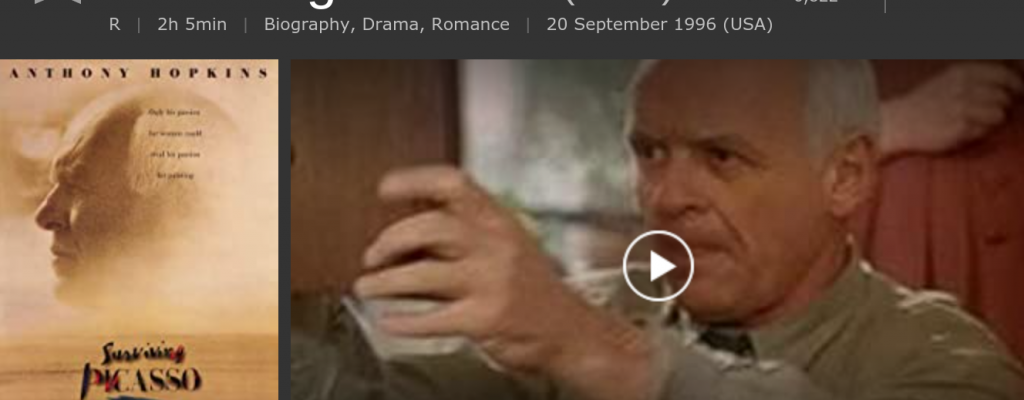
https://www.imdb.com/title/tt0117791/

Beginning again … and staring anew …

A little more than thirty years ago last month, September 2020, I began a journey that I didn’t fully understand as I took the first steps on the path that led me to where I find myself today. 

Truth be told if I properly unwind the spiral of time, tracing back the tendrils enfolded within to the source, the journey began long before … and I can’t actually tell that story because I don’t really know it.

That story began before I was able to track what was happening, or how, let alone having any consideration of why. 

The story I refer to, that must remain unknown, is common to all … the story of our becoming before we know ourselves to be, at least in any truly conscious way. 

“My people” … those who cared for me, raised me, instilled me with my earliest beliefs and examples of how to be in the world … set me up to become who I know myself to be today in ways I doubt could ever be fully unpacked. 

I believe myself to be who I know myself to be, and it sure seems and feels that this is ‘me’.

At the same time I am astute enough to know that many aspects of ‘me’ are actually remnants of my upbringing and of hundreds or thousands of subsequent experiences that have embedded themselves on and within the ‘me’ I know myself to be … which seem from the inside to be aspects of my own creation, because I’ve long ago lost the source of how they came into being in the first place.

So I’ll ask you to indulge me and allow me to begin my story much later this time, around the age of 30 give or take a year or two either way.

BEGINNINGS: The MythoSelf Process

For the years since then I’ve both unofficially and officially been practicing what I call the MythoSelf Process, or when first conceived originally, the Mythogenic Self.

Most of all this is an idea, a concept or notion, if you will, that points to a way of knowing ourselves to be, that places us at the center of the Universe.

Now it’s important to state that this particular way of referencing and organizing one’s self doesn’t preference you to be uniquely at the center of the Universe, but places anyone who is contemplating their place in the Universe simultaneously and without cessation at the center of the Universe … so you and everyone else is at the center of the Universe by virtue of the simple consideration that makes it so.

This idea, of being at the center of the Universe, is not the most complex idea in the model I’ve been practicing, the MythoSelf Process model, but until it’s grasped … or better groked … it remains a bit confusing to most who are used to Cartesian thinking and especially Cartesian graphing. 

THINKING … in more than one dimension

That’s largely because most people have been trained to think in only two dimensions … for example …

This and That, or, Here and There, or, Then and Now … and so on.

Rarely you have someone who can actually process in three dimensions …

This and That or some other thing, time place … and so on.

And, damn few who ever ever consider living in relation to four dimensional thinking …

This and That or some other thing only now and then not now … because the Universe is both dynamic and fractal by all evidence we have at our disposal.

So let’s change the language and labeling just a bit to avoid some of what might otherwise be confusing.


Let’s call the first kind of thinking, two dimensional, This and That, binary thinking

Let’s call the second kind of thinking proposed above, This and That or some other thing, multidimensional thinking.

And, let’s call the third proposed pattern for thinking, This and That and some other thing only now and then not now, fractal thinking. 

THINKING … Part 2: Why Bother?

OKAY … if you made it this far you might be asking “WHY?” … “Why bother with all this Joseph?” 

Fair enough, because when you upgrade your thinking you improve your life. That simple.

For the entire thirty plus years I’m referencing that’s been my focus …

How do I upgrade my thinking and the quality of my life, and subsequently, how do I help others do the same themselves?

That essentially is what the MythoSelf Process work is all about, so I’m starting at the core, not necessarily the beginning. 

I’ll assume for argument’s sake that you’re beginning to grok even more than you think about the MythoSelf Process and why I believe it’s so valuable to myself and others.

Let’s start again with more of the early story, and I think that will make all this much easier to grasp. 

In late 1980s I participated in Werner Erhard’s “The Forum” … as he described it then, a conversation that we are in even when we don’t recognize that we have been engaged in it for as long as we know ourselves (my phrasing, not his).

That experience was transformational for me, and led me to study NLP, meet Roye Fraser, start training people, develop the MythoSelf Process, and build and international training and consulting organization, and coaching and facilitating thousands of people in the essential fundamentals of the Process.

Quite frankly, the beginning was so pretty, because it began when I was largely out of sorts about myself and my place in the Universe, not feeling much like I was at the center at all. 

Unbeknownst to me at the time, I was coming to the end of my first marriage, I was struggling to make ends meet financially because I’d just walked away from a lucrative role as partner in an Interior Architecture and Design firm I helped to found with two other partners, I had just begun training dogs full time in transition to I don’t know what, and soon I’d be living back at “home” with my parents for a few years … 

What I did know was that I was unsettled, and the source was internal and not external. I had to come to terms with something about myself that was unsettling, but I didn’t quite know what it was, or in reality even where to begin looking for it. 

I’d already done a lot of self examination and searching. I was a product of the 1970s, and the near universal quest to “find oneself.” 

I’d read all the pop psychology and spiritual books that were prominent at the time. I practiced meditation, tried yoga, fasted, followed a path of Christian contemplative mysticism, read a lot of the books on Zen translated into English at the time, even tried ‘sitting’ for a while … but my mind had been trained in a Western form of thought, and while all those things continued to fascinate me, they were “The WAY” for me personally.

But in my late teens I’d come across some reading that opened another possibility to me, including Carlos Castenada’s “Don Juan” books and a particular book by W.D. Norwood, “The Judoka.” 

Finding the 4th WAY

The difference in these books was that the main protagonists were active, not sitting still contemplating their internal world, and I had an innate sense that “The WAY” for me was about being in the world, not apart from it. 

That led me to G.I Gurdjieff and the idea of a ‘4th WAY’ … rather than profound meditation, contemplation, prayer or yoga, I could move in the world and use that movement and the interactions that arose as a result as the grist for the mill of deciphering the meaning of life. 

This suited me greatly at the time … so I began going further into the idea of living meditation as I thought of it, seeking to extract meaning from the day to day living of my life.

I think that the main thing I was seeking was a purpose for my life, a reason to wake up and get going, but I still lacked an essential quality … directionality.

Pursuing DIRECTIONALITY & Discovering EFFORTLESSNESS

That’s a word I got from my years studying with Roye Fraser … DIRECTIONALITY.

It’s a quality of mind that organizes action in a direction that is aligned with one’s being.

It’s about knowing where and how to direct yourself to take action that supports both who you are and who you intend to become by virtue of where and how you place your attention, and then how you act in relation to what you perceive and intend. 

The result of operation with DIRECTIONALITY is that you build a level of precise focus of attention and the action that flows from it such that you’re ability to create outcomes becomes effortless for you, regardless of how difficult the tasks involved.

EFFORTLESSNESS shifts radically when you’re operating out of profound DIRECTIONALITY, because it no longer references how difficult or hard something is to do as most people might measure effort.

For example, imagine a world-class athlete performing at the very top of their game, and engaged in competition in a state of pure flow … in that performance there is no effort.

Or, you might imagine an A-List entertainer … an actor or musician … engaged in a particularly demanding performance, even one that is physically draining or exhausting, but again you’d find their experience while in the performance to them might seem truly effortless. 

“… there is no time.”

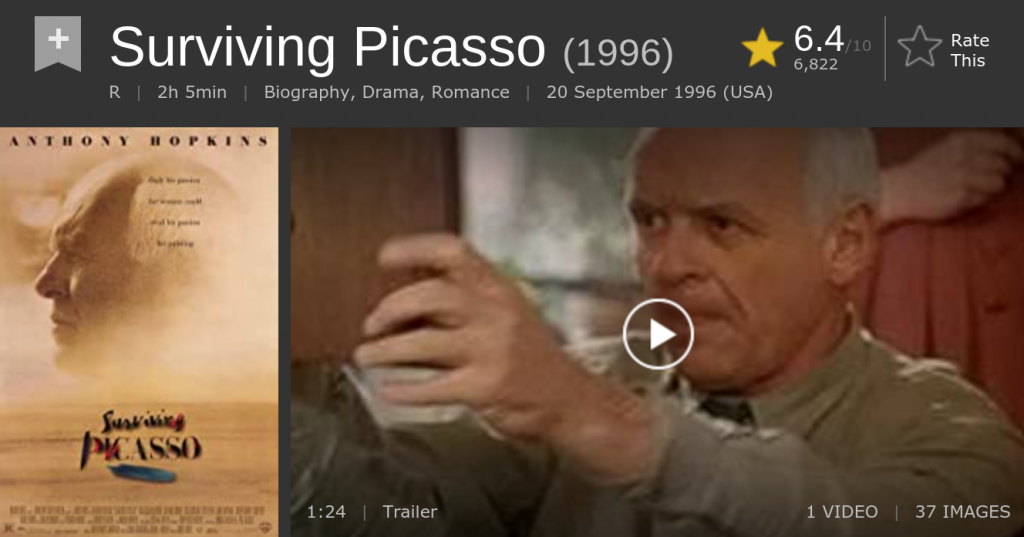
There is a great scene in the movie Surviving Picasso where Anthony Hopkins playing the character of Picasso is approached by Natascha McElhone who’s playing the character Francoise Gilhot, Picasso’s lover at the end of his life. 

In this scene Gihot approaches Picasso who’s been working non-stop in his studio for nine hours and hardly eaten or drunk anything and implores him to take a break because he must be exhausted she thinks, especially because of his advanced age. He refuses, and she reminds him that he’s been at it for nine straight hours. As I recall, in the movie scene I’m referring to here, Picasso simply replies, “When I am working there is no time.”

This is the essence of what EFFORTLESSNESS means within the model I’m beginning to describe and share with you here.

I hope to share a bit more soonest … 


Joseph Riggio, Ph.D.
Architect & Designer of the MythoSelf Process and SomaSemantics

Sarasota, Florida 2020

Filed Under: Blog, Elite Performance, Life, MythoSelf Process Training, Personal Transformation, Transformational Change & Performance, Uncategorized

The State of the Practice: ABTI | Joseph Riggio International

The State of the Practice: ABTI | Joseph Riggio International

by Joseph Riggio · Dec 29, 2019

Entering A New Decade – 2020 Update

Howdy …


Here’s a little sandwich I’m building for those of you who have some interest in working with me professionally at some point, as well as those who have worked with me in the past or are working with me now.

NOTE: This meal is for anyone who’s been paying attention, and wants to kick ass, take names and get on with having YOUR life … 

First the bottom slice of bread, that the rest of our meal together today will be built up from …
(we’ll add condiments later on):

Okay let’s start with some self revelation … it’s my 6th decade here on Planet Earth, or Gaia as some folks prefer to think of her (yes, I think she’s a she because she is fertile and fecund).

That little tidbit ain’t so meaningful by itself, but very few little tidbits are meaningful outside of context, so let’s add some context.

This is all about where I’ve been (very little actually about that) and where I’m aiming (almost everything else here is about that) as a professional expert advisor, mentor, coach, consultant and trainer.

So now little juicy tidbits won’t be here about my personal life behind closed doors (sorry if you might have wanted or even expected that from me … maybe another time, with photos).

Of course all this is only meaningful to the extent that you care, and more to the point — in the way it may impact or effect you personally.

So I’m aiming this update at those folks who have worked with me before and who’s life/business I’ve impacted, those who are working with me now and are hoping for a positive impact and effect in the work we’re doing together, and also to those who may consider working with me in the future as well.

Now that we’ve covered the preamble and framing stuff let’s go to the meat of cheese of it all …

It’s significant that after living on her ample bosom I can happily report that Mother Earth has treated my particularly well, and I am both well satisfied and well positioned to continue with sojourn here for a while longer (Trans.- basically I’m in great health, good spirits and prepared to leap forward from the base of learning and experience I’ve accumulated in the past six decades).

For about three of my six decades I’ve been working at learning and applying stuff about the human condition to various and sundry aspects of creating an extraordinary life. Some folks say I’ve gotten pretty good at it too.

Here’s a short list of some of the sundry things I’ve put my attention on over the years:

  • Teaching NLP and communication skills
  • Learning and using Roye Fraser’s ‘Generative Imprint’ model working with folks and help them discover, access and sustain what it’s like for them to be at their best, and operate from there consistently
  • Working with individual clients and some small groups to provide personal interventions around issues like health and wellbeing, personal and professional relationships, career and business issues … doing what now today might be called coaching, but I still prefer the term I learned with Roye, “doing a piece of work”
  • Architecting and designing the MythoSelf Process model, originally called the Mythogenic Self Process, as an aesthetic model of embodied ontology using somasemantic interventions
  • Developing ways to integrate the NLP model and Roye’s model together building customized sales and leadership development training solutions for business/professional clients
  • Designing positively organized strategic solutions for my business/professional clients and assisting them to integrate and implement them
  • Training, certifying and licensing folks, who were interested and committed, to facilitate and train the MythoSelf Process, the model of work I’ve been at since 1990
  • Developing and delivering online training programs built around the MythoSelf Process model, and integrating that with other things, like business development and communication skills.
  • Training and mentoring coaches and consultants in building their business and deepening their skills
  • Working with high achieving individual clients on personal as well as professional issues like their relationships, business transitions, legacy …

So you can see I’ve been busy … and growing.

But, as I’ve noticed is so often the case, as people get older the circle closes, and they return to their roots. So it is for me.

My love is the MythoSelf Process work, and helping people to develop the fundamental life perspective it fosters … what is best called having a “possibility mindset” … seeing the world through a lens of opportunistic thinking and linking that to taking action.

Now this is a remarkably simplistic way of referring to what I do with people, but it gives us a place to begin and orient from as I go a little deeper.

What’s required to access and sustain a possibility mindset is a new perspective about life, and that perspective is that it’s always working, even when it may seem from a particular place and stance that it is not.

A simple example of having a possibility mindset is the idea that all endings are also new beginnings.

It’s also about recognizing the possibilities or opportunities that abound in the present moment.

So, in part it’s also about developing a specific kind of intuition to notice for what is present but unseen, including the emergent future possibilities — something I refer to as adumbration, or the art of foreseeing the immediate future that’s unfolding in this moment.

I can go on, but the work is complex, deep and profound in so many ways, all of which enhance and create a robust richness in living one’s life, both on own’s own and with others (now you can see why I so love doing this work).

What this means is that I’ll be rolling up a lot of what I’ve done and have been doing, some of it that I’ll only be doing in the future with partners I have built significant relationships with who are peers and colleagues in delivering what I think of as some of the best training, consulting and coaching programs on the planet, but other than that it will disappear from my personal portfolio of work.

The work that will happen only in conjunction with my partners will be everything I’ve done before (as well as stuff I haven’t) that doesn’t specifically fit into what’s below.

I guess the question then becomes — what will I be focused on moving forward …

Simple …

  • One to one, and small group work, with high achieving individuals (and those who are truly aspiring to be high achieving themselves) … i.e.: doing a piece of work

    This is all about personal and professional interventions to develop the kind of intuitions that make living one’s life on one’s own terms effortless, Getting Unstuck, Breaking Through and Creating Results to put it another way — this is all about resolving the ways in which you get in your own way, and freeing yourself to see the world in ways you haven’t before or yet, to open you to the vast range of possibilities to have your life work as you wish and desire … on your own and with others, personally and professionally

  • A major shift to delivering Relationship Coaching and Training as a central theme of what’s coming — for folks who’ve been there and done that, and who are ready to build a relationship that fulfills them completely — what’s intended to be the “Last Chapter” … where you get to live “happily ever after …”

    I’ve been around long enough to know that we are embedded in our relationships, especially those that involve those we love — this work is about resolving what gets in the way of having the kind of relationship that happens in RomComs, Hallmark channel programming and romance novels (especially those with the steamy bedroom and beach scenes) — I’ve been aiming at this work actually for years, and I’ve done a lot of it, and now it will become a major focus on where I’m placing my time and attention on live programs going forward … if you’re on board, get ready for the ride of your life, because that’s the only one you’ll know after you’ve experienced what’s in store for you here

  • Running and delivering MythoSelf Process Training and Certification Programs internationally

    I’ll be running a limited number of MythoSelf Process programs for individuals internationally throughout the upcoming year with folks certified by me to deliver them, and turning over this part of the MythoSelf Process training to them more and more over the next two years (so if you’ve ever wanted to attend a MSE | MythoSelf Experience with me do it this year) … this is at the heart of the work I love, and part of what this means is that I’ll be focused on running and delivering certification programs, and for those who are interested and skilled offering licensing to run MythoSelf training themselves.

  • Working with Coaches, Consultants and Expert Advisors as a mentor and advisor to them

    I’ve been around a long time now and I have something to share with those folks who are interested in what I’ve gathered about this work — this is highly specialized work … and I intend for it to be very intensive and intimate work as well … for a very target group of folks, but where it’s a fit there’s a lot we’ll be doing together — business building, skills development, client insights …

And, that’s all folks!

Now you have the meat and the cheese (the work I’ll be doing with others, as well as a ton of what I intend to give away for free … a new podcast (or two), live video feeds, my ongoing writing (in some new places too) … we can call the condiments, okay?).

If you want the short summary … it’s all gonna be MythoSelf … MythoSelf all the way through and through (the exception being some of the work I do with my partners) … no matter how it’s dressed up, and all the other stuff falling away like a snake shedding it’s skin and revealing itself anew.

So to place the other slice of bread …

(the one that closes a proper sandwich, so you can pick it up and eat it with your hands, not that finicky, prissy shit of using a fork and knife, cutting away little bits to place in your dainty little mouth … my stuff is intended to take big old bites out of … this is stuff that will nourish your soul, as well as improve your life):

Look for some major changes in what I’m putting out in 2020 and beyond, as well as where you’ll find it … and some of the changes will be significant too.

I’m going to hand off or shut down a number of my FB groups, to focus much more on consolidating what I’m saying and to whom.

I’ll have some new places and ways of sharing what I’ve consolidated as parts of a singular message (can you guess what that is … ding, ding, ding right on! … all MythoSelf Process based stuff … stories, applications, examples … all of it).

I’ll be sending out a few emails shortly to invite anyone who’s interested to a few new things I’m setting up, so keep your eyes peeled (and if you’re currently in a program with me, watch especially carefully as we update everything there too … especially for you folks).

Thanks for listening 😉

Joseph Riggio, Ph.D.

Architect and Designer of the MythoSelf Process and SomaSemantics
December 29, 2019 (the end of an era)

PS – If you’re excited by any of this and want to discuss what’s coming up and how you might work with me, join a program or find out more before we come out with our major release of the new era information you can schedule a call with me here: Talk with Joseph


Filed Under: Blog, Coaching, Elite Performance, General, Human Systems, Life, Mentoring

Distinctions of NLP, The Generative Imprint Model & the MythoSelf Process

Distinctions of NLP, The Generative Imprint Model & the MythoSelf Process

by Joseph Riggio · Oct 27, 2019

Orientations to Living The Good Life …


Digging Into The Distinctions:


There is a clear distinction between the MythoSelf Process, which was founded on the technology or NLP as applied in the unique work of Roye Fraser’s “Generative Imprint” model, and NLP as a standalone model of work. Since the early 1990s as the MythoSelf Process model was originally emerging it has been significantly further developed and transformed into something less like either NLP or the Generative Imprint models than it appeared to be at first.

The most obvious distinction, and the one I’ll focus on here, is in regard to the differences between a subjective and inter-subjective model of work.

NLP speaks directly to the subjective, but wants to ignore the inter-subjective for the most part. It does this by representation and representational processing at the core of individual experience, wholly within the individual and their capacities as an individual.

The Generative Imprint model also starts with fundamental assumptions that are largely subjective in nature, which include an assumption about the assault on the essential subjective experience of the individual in relation to their interactions with others, something Roye Fraser referred to as “sensitizing imprints.”

In both, the NLP and the Generative Imprint models, we can identify a primary assumption that the individual can take control of their experience uniquely and solely in terms of the subjective nature of reality.


Distinctions of The NLP Model:


NLP proposes that the experience of reality is held in the sensorial representations experienced and manipulated by the individual, referred to as modalities, including the sub-distinctions of those representations, referred to within the NLP model as submodalites. The modalities address by NLP are the five sensory channels of perception, sight, sound, feeling (which they refer to as kinesthetics), taste and smell. Access to the modalities held by and being manipulated by the individual that form their subjective experience, and knowledge of what “reality” is for them, can happen by observing their non-verbal expressions such as eye movement patterns or body movements, including breathing patterns. The modalities that are present for an individual are also observable in their language use and the patterns of linguistic expressions they employ.

NLP places a large emphasis on language and its internal structure, and also the way language creates results and outcomes in the world, for the language user and those they interact with as well. An example of this is how language can be wellformed or ill-formed, meaning internally consistent and in alignment with the external reality being represented by the language used.

A specific case might be the distinction within the NLP model of associated or disassociated representation in language, “When I went to the party …” versus “When you go to a party …” when the individual is expressing their own experience of going to a party. If the individual knows they are referencing their own experience, and use the dissociated form to describe it we might say within the NLP model that they expressing their experience in an ill-formed way.

A component of NLP is also their use of hypnotic protocols, including direct “conversational” hypnosis based on the patterns of Milton Erickson, or what has become known as Ericksonian hypnosis. NLP also uses metaphor as another kind of hypnotic protocol, where hypnosis refers to an altered perception of reality that creates the possibility for hypersensitivity to suggestion.

Another particular aspect of NLP is that as one of the co-developers of the model, John Grinder puts it, the model is primarily epistemological, meaning it is about how we know what we know about our assumptions about reality. NLP seeks to access and modify the internal organization of the way we hold and process subjective experience epistemologically, via the tools and techniques described above, as well as others beyond the scope or necessity of what I’m presenting here and now.


Distinctions of The Generative Imprint Model:


The Generative Imprint model uses all of the above mentioned components of NLP and has some additional, unique ways to approach accessing and modifying individual subjective experience. There are two aspects of the Generative Imprint model that stand out in this regard, the attention to and use of idiomatic expressions and idiosyncratic behaviors. These two aspects of attention and use within the Generative Imprint model are aimed at capturing the unique ways in which an individual represents, holds and relates to their personal experience and conceptions of reality.

Using the technology of NLP and some of the unique ways developed by Roye Fraser to get the subjective representation of reality, the Generative Imprint model aims at getting to the personal “iconic, symbolic representation” of being alive and well that Roye referred to as the “generative imprint.” This is a specific wholeform internal configuration of sensory representations in all of the sensory modalities of sight, sound, feeling, taste and smell, although the individual may or may not be simultaneously aware of the entire wholeform configuration.

When the generative imprint is elicited and accessed there are also specific idiomatic and idiosyncratic forms that emerge in simultaneity with the wholeform iconic, symbolic representation. The effect of accessing the generative imprint is an acknowledgement of being alive in relation to an orientation towards possibility and a pervasive sense of wellbeing.

For the individual who experiences this work the affect is very powerful for them in resetting themselves ontologically. In this way Roye’s Generative Imprint model differs from the NLP model, in that it’s ontologically organized, and seeks to shift the individual’s relationship to the quality of their experience of being. In my opinion this is a fundamental distinction, and the most significant distinction between the NLP and Generative Imprint models.


Distinctions of The MythoSelf Process Model:


A specific distinction of the MythoSelf Process model is that sense of being at one’s best, and the directionality it generates, is accessed somatically though the elicitation and identification of a very precise micro-muscular configuration, and the sensorial form that arises from that configuration as it’s held in narrative form.


The MythoSelf model shares many of the aspects found in both the NLP and Generative Imprint models. The original MythoSelf Process model, at the time referred to as the Mythogenic Self Process, was a unique presentation and delivery of the Generative Imprint model, with an emphasis on functionality or praxis. The intention of the Mythogenic Self Process was to align the individual who experienced the Process to gain access to the way of being that becomes possible using the technology of the Generative Imprint model in the application of living their lives. The effect of experiencing the Process was an instantaneous dropping away of all worry or concern and an accompanying sense of compelling directionality about a positively organized future.

While the original descriptions of the MythoSelf Process model stated it was also an ontologically organized model, due to the orientation to shifting the sense of how the individual experienced their way of being, and how that reoriented them towards a new sensational way of living their life, later descriptions began to recognize the more aesthetic orientation of the model. The Process is primarily organized aesthetically, integrating the sensorial experience of delight in discovering unique micro-muscular movement patterns that are somatically held, and aligning them with the unique personal semantic configuration of the individual’s autobiographical narrative.

What makes the MythoSelf Process unique is that it places the individual directly in the stream of the human narrative where assumptions about reality are formed, and then provides the tools to subjectively examine the inter-subjective assumptions held there. Experiencing the Process moves the assumptions about reality outside of the medium of language, and places them in the domain of direct sensorial experience. Then the model continues beyond that, seeking to integrate the personal, subjective narrative with the interpersonal, inter-subjective narrative, which largely holds these assumptions about reality in place in the social context.

Of course, beyond the social narrative, there are also tradition and ritual, and other cultural artifacts, e.g.: art, that hold the assumptions about reality intact socially, until they change. The totality of the impact of the subjective and inter-subjective assumptions about reality on the individual are held within the context of the MythoSelf Process model to be the basis of their ontological awareness, or what we could more commonly, or familiarly, call their consciousness. Within the MythoSelf Process model the individual’s sense of ontological awareness, or consciousness, is held to be a specific aesthetic orientation towards how they know themselves to be alive and well.

In it’s most current form, the MythoSelf Process model gives rise to a very powerful sense of well-being, or being at one’s best, and a strong orientation to a positively held future, as in the Generative Imprint model. The Process provides this access to the subjective and inter-subjective assumptions about reality in relation to the ontological, aesthetic orientation that is the foundation of the MythoSelf Process model.

A specific distinction of the MythoSelf Process model is that sense of being at one’s best, and the directionality it generates, is accessed somatically though the elicitation and identification of a very precise micro-muscular configuration, and the sensorial form that arises from that configuration as it’s held in narrative form.


Accessing The Narrative Form Within The MythoSelf Process Model:


Therefore the authoring process, while essentially subjective, cannot leave behind the inter-subjective artifacts assimilated and incorporated as function of being and living as a human among other humans in the unique and specific, place and time, of their being.


The narrative form that becomes a specific distinction of experiencing the MythoSelf Process is autobiographical in nature, but continues into the future where one’s life is presumed known, but hasn’t happened yet. This projection of possibility and directionality that forms the structure of the future oriented autobiographical narrative that arises from experiencing the Process is referred to as one’s Life Story, or the “story of your life” within the model. The sensation of a known future that just hasn’t happened yet, held in autobiographical narrative form, is a particular application of personal adumbration.

Another specific distinction of the MythoSelf Process is that it address the inter-subjective quality of authoring the autobiographical narrative that is one’s own life story. There is a recognition that the subjective and the inter-subjective aspects of consciousness cannot be separated or fragmented, because we all are formed and exist in relation to a cultural/social context. Much of this context is shared and embodied in language and it’s form, as they arise temporally and spatially in the here and now of the individual’s subjective experience.

Therefore the authoring process, while essentially subjective, cannot leave behind the inter-subjective artifacts assimilated and incorporated as function of being and living as a human among other humans in the unique and specific, place and time, of their being.


The Experience Of Aesthetic Phenomenography As Expansion:


In part what the MythoSelf Process model seeks to impart is a fully realized conscious awareness of the phenomenographic assumptions about reality that are present for the individual, and to expand the conceptual space they can and do access as a result of that burgeoning awareness.


Accessing and authoring one’s own Life Story shifts the phenomenological and phenomenographic awareness for the individual experiencing the Process. There is an explicit, specific awareness of consciousness that becomes possible and present as a function of what happens when the specific micro-muscular configuration of being at one’s best is accessed and organized. The subjective and inter-subjective phenomenological experience then becomes embodied as a result of experiencing the Process with someone trained to facilitate it.

When one becomes aware of their own embodied phenomenological experience, as somatic response and allows themselves to acknowledge the impact and relationship of their body-based responses to sensorial data, the hold on them of linguistic and cultural artifacts loosens so they can examine them with some degree of perspective. This naturally repositions them both ontologically and aesthetically in relation to their subjective and inter-subjective assumptions about reality. It is the aspect of awareness of the inter-subjective phenomenological assumptions that makes the model phenomenographic as well as phenomenological.

In part what the MythoSelf Process model seeks to impart is a fully realized conscious awareness of the phenomenographic assumptions about reality that are present for the individual, and to expand the conceptual space they can and do access as a result of that burgeoning awareness.

This expansion of conceptual space gives them more room to play with the assumptions they make about their Life Story, and especially how they choose to adumbrate what is possible, and even likely, for them in their future. 

As the individual becomes more familiar with accessing their own state of perfection, the specific soma-semantic configuration of how they are at their best, they become more capable and interested in authoring their own Life Story. As a function of authoring their Life Story, the individual who has experienced and assimilated the work of the MythoSelf Process begins to author themselves, by taking control of how they shape their future before they arrive in it … an adumbrative act that is aesthetically organized.

The idea of becoming aethetically phenomenologically and phenomenographically organized as the preferential lens of one’s own being, at the subjective and inter-subjective level, and from that authoring the self narrative that is one’s own autobiographical life story is the fundamental distinction of the MythoSelf Process.

The experience of the MythoSelf Process with a trained facilitator is essentially an aesthetically organized, phenomenographic exploration and resetting of one’s life as they know themselves, others and the world they share, to be in the here and now … expanding the breadth, depth and range of the conceptual space of being and becoming they are able to occupy and play in … and from that, how they may choose to author their own future, on their own and in relation to others.


Joseph Riggio, Ph.D.
Architect & Designer of the MythoSelf Process and Soma-Semantics


P.S. – I love reading and responding to your comments, and I’d especially love to hear what you think about my descriptions and distinctions of the models in this particular post …

Filed Under: Blog, Language & Linguistics, Mentoring, NLP, Transformational Change & Performance, Uncategorized

Ontological Integrity

Ontological Integrity

by Joseph Riggio · Apr 13, 2019

The restoration of ontological integrity. 

“The conflict about who I was, what I know to be true innately and intimately, and what I was taught to believe is the truth about the world, fractured my sense of self … i.e.: my ontological integrity. Instead of remaining secure both in who I was and how to aim myself into my future, I had conflict.”


Today I would argue that the ontological crack is really a separation between accepting direct sensory experience, and how someone has been taught (by choice or coercion). In the process of being taught they learned to think about what they experience other than as they themselves experience it directly.

We are taught to turn sensation into ideation … lived experience into abstractions and the representations we substitute for it.

We learn to “process” our experiences to project meaning onto them, not to have our experiences directly and perceive meaning based on what we experience as it emerges and unfolds before us.

In not knowing how to have the experience of our life in favor of “processing” our experience, we do not just lose touch with the direct sensation of what is happening as we experience it … we lose ourselves as well.

Mistaking ontological longing for existential longing, i.e.: mixing up your desire to know yourself as you are, with the desire to find meaning and purpose in your life, especially in your work, is common when your ontological integrity has been compromised.

Doing what you are doing and accepting it for what it is, and no more than that … i.e.: farming makes you a farmer because you are farming, not because G-d destined you to have a farmer’s soul … provides existential peace.

Today we are taught in every way that we must find our purpose to experience existential relief, substituting what we do for who we are, as the basis of our being. Depending on how you look at it this is either insanity … or what must be a leading cause of it.

A way of talking about being at and operating from your center is, “Bringing the system to rest.” Being “at rest” refers to the entirety of your experience in the world … internally, your body-mind experience, and in relation to the system that you are a part of that simultaneously contains you externally. When you are “at rest,” you are settled and at ease, without conflict, internally and externally … simply resting in a “Ready State.”

In the Ready State you can easily take action … or not … there is no hesitation or urgency to act, both are equal and remain fully available based on circumstance and choice.

The beginning point is somatic integration, becoming aware of what you are experiencing as you are experiencing it, i.e.: awareness that is sensory-based and embodied. This sounds remarkably obvious and simple, and it is once you have learned how to do it. Yet without access to the Ready State being aware of what you are experiencing, as it happens, is somewhere between unlikely and impossible.

At first I bought the theory that experiencing extreme stress as you make “progress” in your life is normal, and I thought I was sane, or at least as sane as anyone else I knew. Then I began waking up and realized I was truly living an insane life within an insane social model. When I sought relief, I found that all the ordinary physical and/or psychological medical references controlled by the insane society I was living in had to offer me were ways to modulate and cope with the “symptoms” of stress I was experiencing.

Like this, I was lost and had no easy or clear way back to sanity on my own. I was caught in the web, but I knew enough to recognize that struggling against it would only ensnare me further. While I did not have a path to freedom yet, I decided that I had to begin to make my moves within the structure of the system without attracting to much undue attention from it. From where I stood it appeared to me that “the only way out was through” … so I dove in, going deeper, becoming fully present to the insanity I was living.


(Excerpts taken from: “Experiencing The Hero’s Journey”   by Joseph Riggio, edited 13 April 2019)

Filed Under: Blog, General, Life, Story, Transformational Communication, Uncategorized

Mythogenic Mastery

Mythogenic Mastery

by Joseph Riggio · Apr 1, 2019

mythogenesis

noun


mytho·​genesis |  ˌmithə+ variants: or less commonly mythogeny  mə̇ˈthäjənē  plural mythogeneses also mythogenies

Definition of mythogenesis

1: formation or production of myths

2: the tendency to make myths or to give mythical status to something (as a tradition or belief)

[From: https://www.merriam-webster.com/dictionary/mythogenesis]


It’s interesting that when you Google “mythogenesis” Google asks you, “Did you mean pathogenic?” — potentially leading you away to a definition of something that means ‘causing disease’.

It’s also interesting to me that more people probably know what pathogenic means than mythogenic.

However, I’d like to take us beyond definitions and into experience for a few moments … to explore “myth making” as a way of approaching self awareness, self understanding and self mastery.

For years I’ve been on about mastery versus transformation. Many programs of the kind that I myself lead promise transformation. They suggest you need to be different than you are today, so that you can get/have what you don’t today. Yet, this seems to me self defeating, because whatever you think you may want that you don’t currently think you have is predicated on who you are today, and not who you will become when you have whatever it is you’re seeking. Therefore you may find that when you arrive … have whatever it is that you’re seeking … you feel no more satisfied than you were before you had it, because getting it changes you.

Years ago, around the early 1990s I had done some research and realized that people really want the feeling of satisfaction, and they want it to linger and not just as a transient experience.

So I designed a model I called the Satisfaction Cycle®.

This model was predicated on the idea that who you are in this moment right now hold all the keys to your potential through all time, and furthermore that you have immediate access to realizing that full potential instantaneously.

The only requirement …

You must remove that which limits you from experiencing yourself fully as whole and complete … right now.

Yet, most people have been trained to see themselves as only having the potential to be whole and complete in the future. This creates the endless desire for self-improvement, that some folks like to call self-growth or personal development.

Now I’m not against personal development as an idea. In fact I like the idea of improving, but I think of it as refinement, not necessity. To my way of thinking you express the fullness of being you are now seeking to experience by attending to the fullness of being that you already posses, and then you can’t help but to experience personal development.

You see, just attending to something fully and with rigorous focus refines it. I should probably make it clear here that when I use the word “attending” I mean “doing something” not “contemplating” … even if you first contemplate you must take action to complete the process of fully attending, putting the contemplation to rest.

Coming To Rest

Everyone ultimately wants to come to rest within themselves.

This doesn’t mean stopping your action or activity, it means being a peace within yourself, giving up the relentless sense of chasing something that you think you need or want, but don’t yet have.

Coming to rest means realizing this moment is complete unto itself, and stepping fully into it to experience it completely. 

The paradox of coming to rest means that you begin have more time and energy available to do things you haven’t yet done, and you do them without any undue urgency or, sense of threat or overwhelm. You begin moving through the world from a position of self-mastery.

Others can’t help but to notice when you possess self-mastery. 

Self-mastery expresses itself as an air of calm and control beyond the chaos of the moment. Regardless of the urgency of the moment, whey you possess self-mastery you aren’t urgent. Think of the surgeon who makes critical life and death decisions in seconds, and retains a calm deliberate certainty in the moment about the choices they make. Or, the naval fighter pilot who’s plane hurdles through space faster than the speed of sound, and calmly and deliberately controls their craft with the certainty required to land it safely on the rolling deck of an aircraft carrier in the middle of an ocean deep in the darkness of night.

I remember a story that I was told from when I was too young to remember. My grandmother, my father’s mother, who I spent a great deal of time with, was watching over me and I spiked a very high fever. My then young unmarried uncle, told me he was very concerned and felt like I needed to be taken to the doctor or the emergency room. My grandmother instead told him not to worry that the fever would break and I’d be fine. She repeatedly bathed me in cool water and then rubbed alcohol on my feverish body, three times … four times … until as she predicted, the fever broke and I “slept like the dead” according to the way my uncle tells it.

When I woke the next morning it was as though I had never had a fever, and as usual ran about leaving a wake of minor destruction in my path. Never though did my grandmother’s composure waver. Whenever she was engaged in a task of any kind she possessed and evidenced an air of self-mastery always as I remember her, even in those moments of lucidity that had become sporadic into her 103 year when she finally passed peacefully one night during her sleep.

When you possess self-mastery in the simplest moments you can extend it to the most chaotic moments. I like to think of this as keeping your head about you when all those around you are losing theirs. However, I find most people only look to access mastery of this kind when they are already in crisis, failing to seek it, practice it, and experience it in the mundane moments of their life when they more easily access it to make it a habit and pattern of being they recognize for themselves.

Stop And Smell The Roses

Mastery and mythogenesis meet where you experience your own autobiographical narratives. 

For the most part the world will impose certain narrative on you … stories about who your people were/are, stories about the place you come from, stories about how you look and how that fits the current fads of appearance and beauty, stories about how you should be and what’s important or not … it goes on and on.

For instance, one of the great narratives shared and told in many places refers to the story of education … either you’re one of the smart kids or you’re not one of them. This of course has less to do with being intelligent than it does with conforming to demands to do it they way you are told. In many measures of intelligence in education creativity becomes a detriment. Yet, the label of being a smart kid, or not, puts an indelible mark on many people before they have any sense of personal choice about it.

Another common narrative has to do with what “side of the tracks” you come from … was your family wealthy or not, are you the right kind of person, do you practice the ‘right’ religion, do you have the ‘right’ skin color, do you speak the ‘right’ language and pronounce it in the ‘right’ way, are your people from the ‘right’ place, do you were the ‘right’ clothes, to you eat the ‘right’ foods, to you practice the ‘right’ traditions … and on it goes, and the narrative builds about whether or not you are the ‘right’ kind of person.

The Hermenutic Option: Despite the impositions of the narratives imposed upon you, you always have a choice about how you interpret them … you get to set the meaning. 

Trying to “fix” the meaning of the narratives that have been imposed upon them, beyond their initial control, keeps a lot of people chasing a dream about who they could be or should be … but in their own minds (and maybe by dint of cultural interpretation too) ain’t.

Many folks are lost in trying to manifest a life that matches some narrative that they don’t own … one that ain’t their own.

You always get to choose your own myth, the story you are living into, and the way that shapes how you interpret the narratives of your life, as long as you want it and make that choice.

Choosing your own myth frees you. Your myth is always bigger than any of the narratives it contains.

You really have no choice as to whether or not you’ll be living into a myth, if you’re very clever you only really get to choose the myth itself.

By the time you were seven or so, a myth was present for you … and you’ve either be A) living into it unthinkingly, B) resisting it desperately, or C) revising it and choosing one for yourself.

The book of your life was begun by others, but you don’t need to remain in that story.

Whenever you choose you get to take over the authorship of your own life, and begin scripting a new life if you so desire it.

The moment you take over the myth-makers role in your own life you immediately begin reshaping the entirety of the story that’s been told so far. You don’t need to rewrite your past stories …

The very act of deciding who you are now in this moment, and who you are becoming, imposes a new meaning on who you have been. 

This simple act of taking control of your own story, shaping the narrative that’s being told, transports you into the beginning of possessing self-mastery.

Keeping it simple, you cannot possess self-mastery if you don’t possess your own story.

In many old fairy tales the hero’s/heroine’s heart is removed and keep in a box by some evil witch or sorcerer and to become whole, often even to live and prevent their own untimely death, the hero/heroine must discover where their heart is hidden and reclaim it for themselves.

The heart at the center of your being that you are seeking is your myth.

Once you’ve discovered your myth, the essential story of who you are, have always been and are becoming, everything about you will begin to coalesce and reform to accept this as the centering and guiding essence of your being. You’ll feel this happening within yourself, and you’ll see the manifestation of it without as well all around you. As you continue others will also begin to notice it and will respond to it in spoken and unspoken ways.

You will be known for your acts, but you will know yourself more because of the myth you are making, and the master you’ve become.

It is of little value to master all about you, if you have left the mastery of yourself behind. 

Just some thoughts to ponder as a new dawn approaches …

Joseph Riggio, Ph.D.

Somewhere on the East Coast of the United States at 05:32 AM EDT

Filed Under: Blog, General, Language & Linguistics, Mythology, Story, Transformational Change & Performance, Uncategorized

Seeing Wholeness

Seeing Wholeness

by Joseph Riggio · Dec 17, 2018

The Key To Transformational Embodiment 

About 30 years ago I began searching for the universal ”skeleton key” to transformational change.

By the mid-1990s I had come to the conclusion that the ”key” to transformational change was part of what I began calling the somatic ground of being … embodiment … the foundation of ontological experience and awareness. This led to an approach using somatic interventions to instigate ontological transformation.

I remember sitting in the “Hypnotorium” with Roye at the front doing something with someone, a piece of profound transformational hypnosis.

This is very different from what many think of as hypnosis, i.e.: “You are getting sleepy … your eyes are getting heavy, tired, and they want to close … just let them close, NOW … going deeper into a deep, deep sense of relaxation … let yourself float down, even deeper, still …” and then some suggestions about stopping smoking or losing weight, or some other habit interruption and reframing.

It’s also obviously very different from stage hypnosis, (same script followed by), ”Now you will follow my suggestions … when I snap my fingers you will open your eyes, and when I mention the word “hypnosis” you will cluck like a chicken …” No, not anything like that at all.

Transformational hypnosis was … is … the art of shifting the ontological awareness you operate from about reality, what is real and how it is organized, and most importantly your place in relation to it.

Within the art of transformational hypnosis there is an intention not to change symptoms or behavior at the surface, but the structure of your perception at a deep and essential level, all the way down to the core of your sense of identity.

Now the way I was learning about how Roye worked was presented in what he referred to as “wholeform” … never truly broken down into steps to follow, but instead presented as a complete piece of work.

Someone would come in and present a life issue they were facing and within … a significant choice in a relationship maybe, or the need and desire to make a major change in their profession or lifestyle, it might be they were dealing with a major loss and were struggling with processing it fully, and as often it would have been someone who was simply stuck and yearning for a breakthrough to an imagined future that infuriatingly continued to elude them.

Roye would refer to whatever it was that the person presented as the ”presenting problem” and point out that it was simply the lens to a solution. The trick of course was to be able to elicit and discern the solution that had been obfuscated by the presenting problem and remained unavailable to the one presenting it.

So I would come, a couple or a few times a month, or even weekly, to sit in the Hypnotorium with Roye to learn the secrets of the deep art of transformational hypnosis. I have to admit that for months the entirety of it eluded me and all I could gather from what he was doing at the front of the room was bits and pieces of technique.

Maybe I would pick up a way of leading someone into an altered state with some bit of language. Or, I’d notice that Roye would alter his posture to be more like the person he was working with, and yet with all these bits and pieces I was gathering my skill remained mostly limited to working at best at the surface of things.

Then it happened …

I think maybe I was tired, or frustrated, but I’d given up trying to “get it” and I just sat there as Roye was doing a piece of work with someone and I saw the whole thing!

This wasn’t the process he was using, or what he was doing, it was what he was noticing about the person in front of him. They are the whole thing!

This is where the magic happens. I got that absolutely in that instant, as fleeting as it was and as difficult to recapture. By trying to “get it” … looking and listening for what it was, I remained unable to get the “whole thing” … the entirety of what happens moment to moment as you are with someone.

The “whole thing” is the entirety of how someone is organized in any given moment AND how they change moment to moment in an endlessly choreographed dance of dynamic movement.

This way of seeing became the essence of the work I do and teach in MythoSelf Process and Soma-Semantics models.

I proposed we have a fundamental, ontological state of being that is innate to us, because of the deep integration between the somatic and semantic structure of wholeform experience that treats the body-mind as an integrated singularity. This state of being always emerges in wholeform as a singularity all at once.

The wholeform ontological structure contains the entirety of the way we are within our bodies, how we use them, move within them and move through them, and the language forms that arise to inform us and others via the descriptions of the subjective experience we are having as we do.

One of the primary teaching distinctions of the MythoSelf Process and Soma-Semantics is the art of Seeing Wholeness.

Yet Seeing Wholeness remains elusive, as it did for me for months of my early training with Roye, only becoming apparent in that first instance as a wholeform experience of undifferentiated wholeness that was the true essence of the person I saw for the first time that day.


Seeing The Wholeform Of Wholeness:

To see wholeness you cannot be looking for the pieces or the parts, as wholeness only exists in the wholeform.

This is what makes it so hard for folks to learn … the letting go of trying to see what they cannot yet discern for themselves.

For most people to learn to see wholeness you must allow yourself to see it through the eyes of someone who can already see it, and see what they are seeing, not what you are looking for yourself.

This of course is a kind of trick you must learn for yourself, i.e.: to see through the eyes of another.

What you’re noticing for is the entirety of whatever you are present to, not the parts of the entirety. Of course the entirety includes you, since you are present as well.

Wholeness always includes whatever happens between you and what you are noticing, and it is there that the magic of the wholeform experience becomes most present … in the space between.

To put this another way, I always feel the wholeform experience before I can see it, but once I can feel it I can’t help but to see it as well.

What we call adumbration in the MythoSelf Process and Soma-Semantics training forms the basis for seeing wholeness … the ability to foresee what is emerging as it emerges, or even a microsecond or so before it is apparent in any ordinary sense of being able to see it.

As crazy making as this seems to see wholeness you must allow yourself to feel it coming before it’s there within yourself. Then you must allow yourself to stop looking for anything and just notice for everything, because when you are tracking for wholeness everything changes all at once.

When you are noticing for wholeness you do not only notice that someone has moved an arm or a leg, or that they smiled or frowned, or that their voice changed in someway such as increasing or decreasing in volume or pitch. You notice for the way they are now entirely different AND they moved an arm or a leg, or that they smiled or frowned, or that their voice changed in someway such as increasing or decreasing in volume or pitch.

By getting caught by the arm or a leg moving, or that they smiled or frowned, or that their voice changed in someway such as increasing or decreasing in volume or pitch, you lose the sense of the wholeform, and you lose any ability to see wholeness.

Wholeness flows.

Wholeness doesn’t exist in any moment and it does in every moment. It is the ability to see the grand pattern of change and transformation, and to notice for how that pattern organizes itself in alignment with some future, teleological wholeform possibility.

Using the information that is present by tracking the Soma-Semantic (whole)form you can then assist whomever you are working with to align themselves with that wholeform possibility as the possibility of choice. This then becomes the trajectory along which they propel themselves into their chosen future.

NOTE FOR MYTHOSELF PROCESS FACILITATORS AND TRAINERS:

When you can do this you are doing the MythoSelf Process, and only when you are doing this, doing anything else is something, but not the MythoSelf Process.

Merry Christmas 2018!

Joseph Riggio, Ph.D., Parsippany, NJ
Architect & Designer of the MythoSelf Process,a SomaSemantics and Generative Flow

Filed Under: Behavioral Communication, Blog, Coaching, NLP, NLP & Hypnosis, Transformational Change & Performance, Transformational Communication, Uncategorized

« Previous Page
Next Page »

© 2025 ABTI | Joseph Riggio International · Rainmaker Platform

Privacy Policy

  • Services
  • Log In