This website or its third-party tools use cookies which are necessary to its functioning and required to improve your experience. By clicking the consent button, you agree to allow the site to use, collect and/or store cookies.
Please click the consent button to view this website.
I accept
Deny cookies Go Back
  • Skip to primary navigation
  • Skip to main content

ABTI | Joseph Riggio International

  • Home
  • Meet Joseph
    • To Sicily And Back … A Love Story
    • JSR Short Bio & CV
    • Abbreviated CV Timeline
  • BLOG :: “Blognostra”
  • Contact
You are here: Home / Archives for Joseph Riggio

Joseph Riggio

The Mythogenic Self Revolution

The Mythogenic Self Revolution

by Joseph Riggio · Apr 23, 2016

You Are A Myth Making Machine
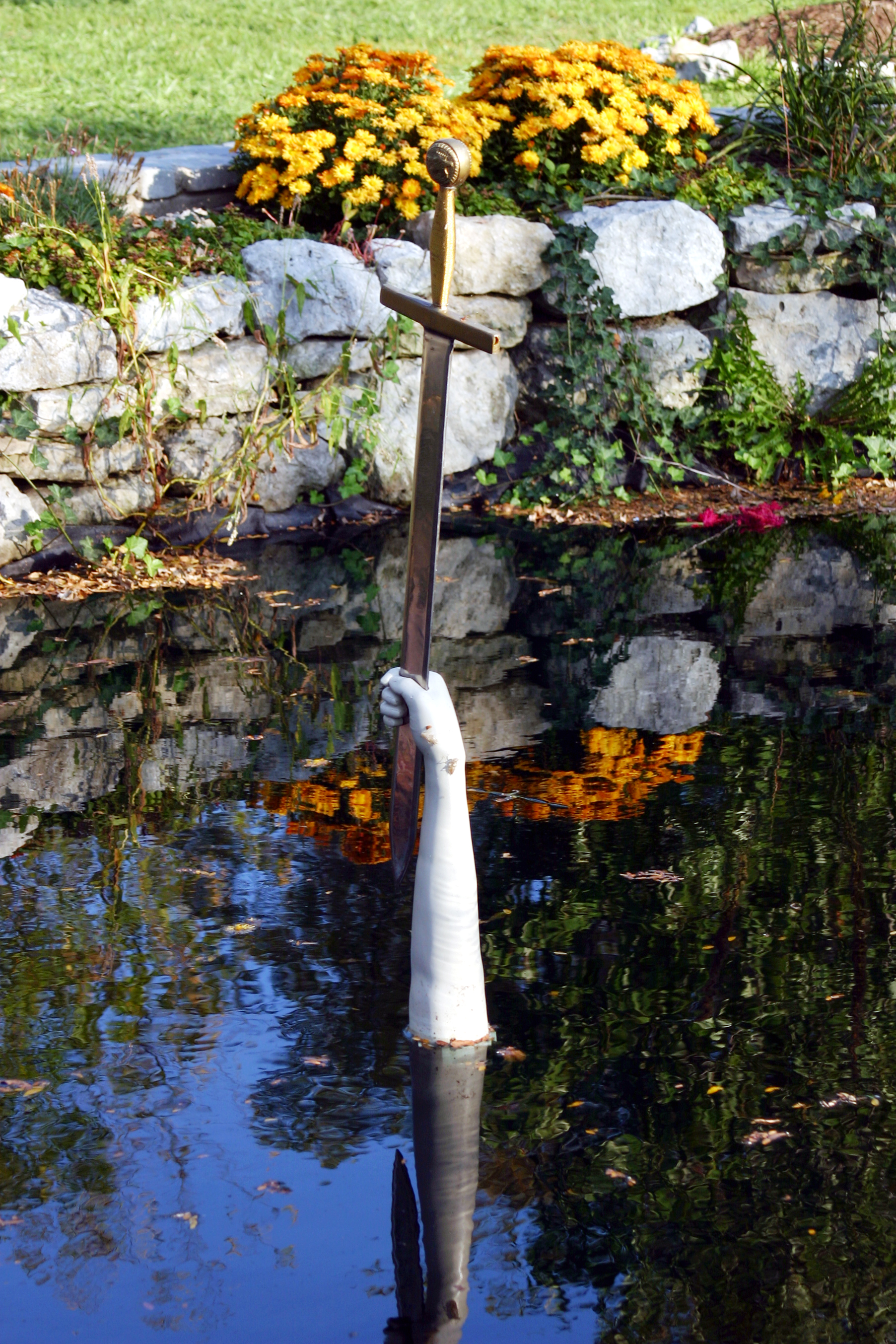
Excaliber - Lady of the Lake  morgue-file000620790792

This is the fundamental idea of the MythoSelf Process. Not that you are living inside of a myth, that was Joseph Campbell’s offer, understanding and contribution, not mine.

My observations are about a way of life, living it … not peering into it to understand it better or more deeply.

Oh, okay, to live life better and more deeply we may have to dive into understanding it better and more deeply as well.

But, never mistake understanding for diving directly into life itselt and experiencing it … they are not the same things.

The revolution is aesthetic … NOT intellectual … NOT psychological … NOT philosophical … AESTHETIC.

The revolution begins when you take back your life and begin living it, as opposed to thinking about it.

That’s what I mean by aethetic … diving into the deep end of sensuality.

Experiencing your life directly through your sense and sensate experience, as opposed to intellectualizing you life and ideation.

You may be challenged by never having had any formal aesthetic education, and I don’t mean art history, learning to read poetry or appreciating good music.

I mean learning how to recognize the signals from your senses directly … to experience physical sensation DIRECTLY!

There are lots of psycho-somatic practices that teach people to attend to their physical feelings and then make meaning of them … or figure out what the sensation is trying to offer you about whatever you’re feeling (instead of just feeling it).

WTF???!!!!!?????!!!!???!!!

That’s exactly NOT WHAT I’M TALKING ABOUT!!!!!

I designed the MythoSelf Process to lead people back to themselves.

Back from the edges of interpreting to the direct sensations of experiencing.

The MythoSelf Process leads people back to becoming aware of being.

We use an ontological stance, NOT an epistemological one, as the root of our practice.

BEING!!!!!

When I refer to being I refer to the very basic experience of living life as you find it.

Read that once again please …

… the very basic experience of living life as you find it.

Now I make my living as a change artist, i.e.: someone gifted in the art of helping people to change and experience transformation.

Yet … I have no intention to help people to learn how to make change happen in their life, other than to get to a state where they have become unchanging as they experience themselves …

I AM THIS

Then life happens … you can neither stop that, nor do anything about it.

(On another note, why would you want to if you could?)

The MythoSelf Process directs you to become saturated with life, stepping into it fully, not away from it with “meta-meanings” that remove you from it.

The MythoSelf Process moves you to the MESA-STATE … to the center of the swirling experience you call your life to experience the entirety of it … fully and completely.

To quote myself … the MythoSelf Process leads you to “have the experience of YOUR life” not some shadow of it … or projection … or interpretation … or something designed to represent your life as intended by others (what we commonly call culture and arrived at by the process of enculturation).

This is the revolution …

Years ago I used to talk a lot more about UNLEARNING … the process of learning how to forget what you had learned that ain’t true.

It’s about remembering to forget what you know as truth that has no basis in fact, e.g.: you should be polite to strangers.

Why?

A child immersed in natural learning often asks “Why?” as the most basic question that comes to them about what they are learning.

“Why do caterpillers turn into butterflies?”

NOT, “How?” … but, “WHY???”

(“How” comes later … and, despite the curiousity surrounding “how” for the most deeply curious “why” remains more persistent.)

Soon enough however, the most persistent child learns that “WHY?” will never be rewarded in the same ways as “how.”

Knowing “WHY” we do math, will never get the child the same rewards as knowing “how” to do math.

Yet, knowing “WHY” before knowing “how” might have saved humanity countless tears.

“WHY” do we want to or need to win the war? shifts the conversation.

“How do we win the war? directs our attention to create an “other” that must be defeated or conquered.

When we examine the “WHY” we often find ourselves at odds with what we hold as our fundamental values and beliefs.

“Why go to war?” … because we want their stuff … their land, their women and children, their food, their minerals … their stuff.

Yet we tell ourselves that we are doing the moral and just thing, and often justify it by proclaiming our gods want it to be this way … i.e.: with us as the victors and confiscators of the spoils of war.

One of the first aphorisms I learned was about how the victors write the history books.

Now I’m not writig a treatise on war, but I am using the example to make a point.

By directing the attention away from “WHY” and over to “how” we take away the naive curiousity and wisdom of our children and “turn them into adults” … in other words, good little worker bees.

To take back you life means first and foremost you’ll have to leave the hive …

Finding life as it comes to you

We’re all experiencing a great shift in how we know the world.

Too much happens too quickly to track it all effectively … and most of it not at all.

We are at a time of a great confluence … of cultures, ideas, information, resources … and it goes on and on.

We live in a shrinking world with regard to time and space as our sense of distances becomes ever smaller as we continue to refine our technologies and dream about reaching beyond our solar system and colonizing the outer planets of our galaxy … and then we reach again with our mind’s eye beyond that as well.

Yet, in deference to Joseph Campbell, we don’t have a mythology that supports the dreams we hold in our mind’s eye.

Our mythologies are from another time and space.

We inherited the mythologies of questing and conquering, without gaining the wisdom required to limit our thirst for what we don’t yet have and don’t yet know … worshiping not the gods and their circumscriptions about unlimited knowledge and power, but hubris itself … overbearing pride and arrogance that we alone hold the keys to the Universe.

AND, we have largely succeeded in exceeding ourselves.

We have at hand the means for destroying that which sustains us and make us as we know ourselves to be possible.

Yet we seem NOT to have the means to limit ourselves to what we can sustain … to what will allow us to remain and prosper.

We are systematically killing the planet and raping her resources, to the point where what was unimaginable fecundity has begun to look less like the Garden of Eden or Paradise, and more like an over used landfill, heaped with waste and heaving with disease.

FWIW I don’t believe this is irresolvable or irrecoverable … BUT IT WILL TAKE A NEW MIND.

This has always been the focus, direction and intention of the MythoSelf Process model and work … designing a new mind for a new world.

The MythoSelf Process does not attend to fixing problems or even curing their cause.

The MythoSelf Process aims at building a new mind that transcends problem formulation and construction.

The MythoSelf Process organizes around a new paradigm of connectivity, beginning with the elevation of becoming connected to one’s self.

The MythoSelf Process insists on a revolution based in accepting things as they are, not as we wish or hope they would be or will be, because as we look away from where we find ourselves we remain unable to do what we must in the moment we are living our experience and acting on a phantasm we perceive to be real.

The revolution is almost over

We all seem to sense that things are moving faster than our old minds can keep up with … and simultaneously many, if not most … if not all … of us are waiting for the revolution that will allow us to make the leap beyond the tragedy we are witnessing to the ability to do something about it.

And, for many, if not most … if not all … of us, we continue to act in the same ways we have learned that got us to where we find ourselves now.

Our hubris drives us forward believing that MORE IS BETTER, when the evidence we faces shows us that more may be too much.

We silently tremble in fear about not having enough in a world of unbelievable plenty, because some want much more than they need or could even ever use or consume … while others want more than that for themselves and theirs alone.

We live in a world run by an elite class that thinks like the old farmer who claims that he doesn’t want all the farm land there is, just the farm land that next to the farm land he already has and just what’s next to that too.

But the real REVOLUTION will be INTERNAL and not external … the revolution will be a changing of the mind we use, not how we use the mind we have now.

The OLD MIND asks, “How do I …” … the NEW MIND asks, “Why do we …”

When we make this shift we will become what we are destined to be again … myth-makers, i.e.: mythogenic beings.

We will rewrite the codes of life in the service of life … and not in the service of death and the extraction of wealth from the dying … the dying planet or those who live upon it.

In the new world view that the revolution brings we will not seek to change things and make them better, we will seek to perceive life as it comes and lives in harmony and balance with it.

The old revolution was technological … the new revolution is biological.

LIFE WILL AGAIN BECOME THE DRIVING MEASURE OF VALUE.

We will put technology in the service of life, and not life in the service of technology.

The NEW REVOLUTION will be quiet and personal, one person at a time arriving at the new mind that honors and reveres life as the most desirable asset … to live fully and saturated with the experience of living … beyond the acquisition, accumulation and consumption of things, or information, or even experiences … coming to rest in simply being, and respecting life as it comes.

The MythoSelf Process proposes this radical assumption: that we are moving beyond the paradigm of fear that leads to the avarice and greed that forces us to acquire, accumulate and consume more than we need.

The MythoSelf Process proposes that we are whole and complete as we are, without the need for the props of culture to support or steady us in our desire to fully experience our lives as fully intact sensate beings.

The MythoSelf Process proposes that we are beyond the cusp of beginning to realize what we are capable of becoming, and have stepped across the threshold of being that which we already are when we have become fully human.

The MythoSelf Process proposes that we are capable of writing a new story, of redefining the myth of being human and living in a cosmos beyond our comprehension, to a new myth that recognizes us as fitting into a cosmos that works perfectly and that we are designed to fit into perfectly as well.

Imagine that … the absolute sense of certainty that the Universe works perfectly and that you have been designed to fit it just as perfectly, just as you are now.

Not by some grand scheme necessarily, not by some divine decree – although that too may be possible, but rather by the endless unfolding of the Universe coming into being and revealing you to yourself as part and parcel of its own being.

You cannot not be of the Universe that contains you, and despite that fleeting sense you may have of either you or it not being complete and whole, there can be no other reasonable conclusion.

So I am proposing that you join me in the revolution willingly, openly, wholeheartedly … and do whatever it takes to learn to become fully human … to manifest, realize and reveal that which you already are.

Write the myth that lives within you by releasing it in the acts and actions of your life … join me, the revolution awaits you.

Joseph Riggio, Ph.D.
New Hope, PA

Architect and Designer of the MythoSelf Process
Filed Under: Blog, General, Human Systems, Life, Transformational Change & Performance

Which Brain Are You Using?

Which Brain Are You Using?

by Joseph Riggio · Mar 29, 2016

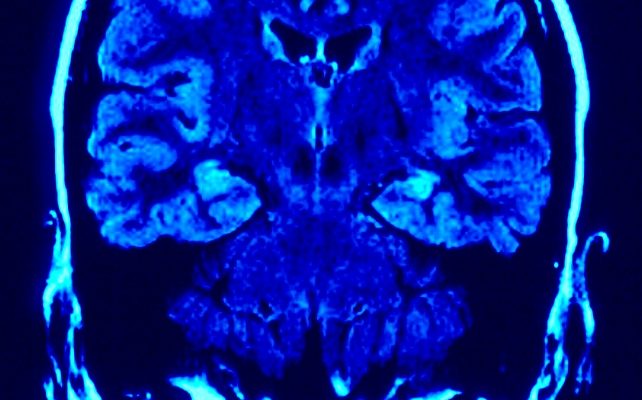
Silent Brain Learning

brain01 125NOTE: Read this article and watch the video first …

[The Enormous Power of the Unconscious Brain]

It’s a great article, but the journalist has it all wrong IMO. In fact he completely contradicts himself …

Silence is Golden

In the video you see the comparison between the journalist’s brain and the world-champ’s brain (that’s right the 10 year old is a world champion cup stacker … what have you done lately???).

In that video the journalist’s brain is lit up like a Christmas tree .. whle the champ’s brain is virtually silent. Yet the journalist claims he’s wired in the programming to his cortical processing to run the patterns he’s running without processing them.

That’s fundamentally absurd!!! (Go ahead, read the paragraph above again.)

The argument I’m making is that what the champ did was to get his brain out of the way (okay, not his whole brain, but the part we “think” with normally … or at least consciously … the cortical brain (the neocortex).

His brain is silent because it’s not working … and even the little blips we see have little to nothing to do with what his hands are doing.

That’s not about training the cortical processing, or learning to submerge the conscious processing function.

The champ used his neocortex to train his cerebellum to take over … i.e.: his Silent Brain!


Why Performance Mastery Is “Silent”

Performance is a function of the ability to act in response and relation to the stream of data flowing in the system that you’re operating in to create your intended outcome.

The more accurately you perceive and interpret the data present in the system, the more accurately you can adumbrate what’s coming next … and, make adjustment to your responses.

Ultimately, your performance is a function of behavior, i.e.: the actions you take and don’t take in response to the way you percieve and interpret the data in the system. The more closely your actions align with the simplest, most direct path with the least resistence between where you are in the present moment and what you intend as your outcome, the more elgant, efficient and effective your performance will be … let’s call this the “Path of Perfection.”

When you can act consistently and reliably along the Path of Perfection, you will gained mastery in that behavioral performance … whether that’s mastery in sports, communication, business … or some other domain of action.

This kind of performance, i.e.: mastery, is a function of processing done beyond the reach of cortical processing … or at least solely by cortical processing.

The primary driver of mastery at the behavioral level of performance is processed in the cerebellum.

This is the seat of the silent processing we see in the video of the champ’s brain …

He’s not showing activity in the neocortex, because he’s off-loaded the processing to the cerebellum and gotten his cortical processing out of the way of his faster, more elegant cerebellar processing.
 

Blind But Not Dumb

The cerebellum may be blind, but it’s not dumb.

Cerebellar processing operates differently from cortical processing because it’s non-representational.
We see this when the champ puts on the blindfold and still runs the behavioral performance as well as when he’s not blindfolded. Although he’s not getting any visual input his motor facilities still function as accurately in the task he’s trained them to do.

He’s using a combination of kinesthetic input and spatial mapping to function at that level of performance. This is the magic of training the vestibular and proprioceptive systems to take over for the more common sensory system processing task, e.g.: looking at the cups, his hands and what he’s doing with them.

The silence of the cerebellum is it’s trick. The cerebellar processing pathways are more efficient because they are closer to the direct sensory data. The cortex almost immediately transforms direct sensory data into representations, abstractions and intellectualizations … at least one step removed from the actual data itself.

One of the most obvious examples, especially if you have yet to master something at the level of the world cup stacking champion (5 seconds for that whole routine, again and again, even blindfolded) … is the transformation of direct emotional experience into an intellectualization. Anger, joy, grief, ecstacy … all have an actual body experience, a felt sense … but the way the average person experiences their emotions has as much or more to do with the associations they make with the way they label their experience.


Cerebellar Training & Learning

The basis of virtually all the work I do is framed in relation to moving unnecessary cortical processing out of the way of performance.
This is not saying there is no place for corical processing, of course our neocortex is one of our most amazing evolutionary gifts … but, all things at the right time and in the right place … preferencing cortical processing over all other kinds of “thinking” or kinds of neurological processing.

The real “trick” is knowing how to get the cortex out of the way, freeing it to do what it does best … i.e.: make connections in time and space that don’t yet exist … creating future memories.

To do that the behavioral part of performance must be off-loaded whenever possible to the more efficient cerebellum.

When the cerebellum is in charge of responding there is a direct line to taking action, that cortical processing must run through multiple channels to get to first, creating a slower, more cumbersome response.

For some people (especially those who remain untrained) in getting through the levels and complexity of cortial processing they run out of steam before they get to action, i.e.: they find themselves unable to take action or constantly hesitating and procrastinating when immediate action would have served them (and, possibly others) best.

Knowing how to organize yourself to take action is the key to mastery.

In otherwords, if you want to attain mastery you must develop the ability to train and learn at the cerebellar level of response.

When you’re ready give me a call …

(You’ll find my contact details here: Joseph Riggio DotCom)
Joseph Riggio, Ph.D.
New Hope, PA

PS – The most effective way “cerebellar training” I’ve ever put together is my “Foolish Wisdom” group coaching program. I’m running a program in New Hope, PA in a couple of weeks on Saturday & Sunday, 16/17 April 2016.

Check out the Foolish Wisdom Workshop details here:
https://www.amiando.com/HSNIUBF.html

Filed Under: Blog, Business Performance, Coaching, Cognitive Science, Elite Performance, Transformational Change & Performance, Uncategorized, Upcoming Events

Critical Intervention Coaching …

Critical Intervention Coaching …

by Joseph Riggio · Mar 14, 2016

Artist Sculpture morguefile-DSC_0070 square

Critical Intervention Coaching…


When Your Need Is Urgent And What To Do About It …

When you are at a juncture that requires immediate action and are unsure of how to proceed yourself this is when the role of Critical Intervention Coaching may be the lifesaver you’re searching for in that moment.

Critical Intervention Coaching is distinct from both Developmental Coaching and Project/Outcome Based Coaching. The main distinction in Critical Intervention Coaching is the time frame is minimal to non-existent, i.e.: You need and want help, and you need it right now. When you are in a situation like this you don’t have the luxury of time to contemplate endless options or to build new, additional, deep resources before you take action.

How Critical Intervention Coaching Works:

The main thrust of Critical Intervention Coaching is to create solutions on the go, literally often as the situation or circumstances are unfolding in real time. This requires that your coach advisor stays very close to you, and your coach remains available at a moment’s notice if necessary.

This is a very intimate relationship that requires deep skill to access the situation and circumstance in the briefest amount of time and to strategize just as quickly to arrive at reasonable solutions and actions to be taken.

The way we approach Critical Intervention Coaching has a ten-step structure to it:

  1. Identify the full sense of the situation “as is”
  2. Identify the thrust or direction the situation is most likely to be headed in
  3. Establish a best case scenario for the outcome that is most desirable
  4. Build a solution experience that defines the actions that can and will be taken first
  5. Access the necessary resources to implement the actions decided upon
  6. Provide the emotional, mental and strategic support required to take action
  7. Bring in additional resources as necessary to create the outcome/s decided upon
  8. Continue to manage the process of taking action and updating to remain current
  9. Re-access, update and iterate after taking each action or upon accessing new data
  10. Define the final outcome to be realized and organize the actions and resources required

The last piece may be the most significant in the chain of steps, i.e.: “Define the final outcome to be realized and organize the actions and resources required” … but, can only be attended to after the initial critical stage has been managed first.

Knowing that there is a sequence to be followed, and having the experience, expertise and discipline to stick with it … or to intentionally ignore it when necessary … is what makes or breaks the success of providing Critical Intervention Coaching. 

Why We Are Your Best Option When It Comes To Critical Intervention Coaching:

We have experience in managing critical events that are personal, professional and organizational in nature over almost three decades of working with clients. It would be an exaggeration to suggest we’ve seen it all … but, only slightly. As experts in handing critical events we know how to manage the sense of panic that tends to accompany them, as well as how to conserve and manage essential resources of time, energy and money.

If you are in a situation that requires Critical Intervetion Coaching please reach out and we will schedule an immediate no cost, no charge, no obligation consultation call to discuss whether our help can make the difference that will make the difference … get the details here:

Critical Intervention Coaching … or

CONTACT JOSEPH DIRECTLY NOW

Filed Under: What We Do

Group Facilitation & Team Development …

Group Facilitation & Team Development …

by Joseph Riggio · Mar 14, 2016

F1 Racing Team morgue-file000851772714 Square
   

Group Facilitation & Team Development …


There are things you can learn in a group, or when operating in a team, that are unavailable to you in any other way …

For many years we have put our attention on working with groups and teams to harness the power of collective action and relational awareness. In the process of developing our approach to working with groups and teams we have come to appreciate the uniqueness of them as entities that transcend the individuals that comprise them, and at the same time being a reflection of those same individuals.

What’s The Difference Between A Group And A Team:

The main distinction between a group and a true team is the level of collective agreement to a common outcome. A group may have a loosely agreed upon outcome, e.g.: to support one another’s personal or professional development. A team will typically have a much more focused collective outcome, e.g.: getting a product to market in a specified timeframe and at a specified budget. These distinctions also determine how much the individuals in the group or team are typically willing to submerge their personal agenda to the collective agenda, and how willing they will be to submit to committing to the collective outcome first and foremost, before achieving their personal outcome.

What Makes Group Facilitation And Team Development So Powerful:

What remains the same for groups and teams is that the individuals in them can and do learn from and support one another. Leveraging the learning that is possible in this structure is what excites us most about working in group and team environments. We focus on making the reflective nature of relationships in groups and teams available to the individuals that comprise them ... regardless of whether they have been together for a day or a decade.

Sometimes organizing an ad hoc group for the sole purpose of collective learning creates a supremely powerful experience for the participants when properly and expertly facilitated. We put these groups together for programs like our Foolish Wisdom Group Coaching events that last just one or two days, and despite the short time frame the group dramatically accelerates the amount of learning that becomes possible in this setting.

In cases where teams are the focus of the developmental work we’re delivering a critical factor can be the length of time the team has been together. Often when we encounter teams of long standing our first task is to unravel and unwind the hidden emotional and relational issue that reside beneath the surface, and to reset the “rules” that the team operates under and how they relate to one another.

How We Work With Groups And Teams To Ensure Success:

Establishing the outcome position for groups and teams, and the work we agree to do together at the outset often determines the ultimate success (or failure) of the actions we take. We have a specific process that we’ve developed over decades of working with groups and teams that bring them together very rapidly and then deepens the positive bonds as we continue. This is one of the key aspects of our approach, and our success, in group facilitation and team development.

The other key aspect of our approach is the fundamentally experiential nature of how we work with groups and teams … i.e.: in a real time way using what comes up as the grit for the process.

If you want the most powerful possible learning and development experience available to you, you owe it to yourself to explore the possibilities of working with us in a group or team context … we’re confident you will be amazed at how far you will come in a remarkably short amount of time together.

Filed Under: What We Do

Organizational Training Design & Delivery …

Organizational Training Design & Delivery …

by Joseph Riggio · Mar 14, 2016

doodle-faces morguefile square
   

Organizational Training Design & Delivery …


Full Scale Training Design Capabilities:

Since 1995 we have been designing bespoke training for multi-national corporate clients, and by the end of the 1990s we were responsible for having developed complete curriculums for in-house corporate universities … spanning the gamut from management development, to complete sales training for all levels of professionals and support staff in the organization, to senior executive leadership and board level development.

Today we continue to work with clients internationally to develop both bespoke and semi-custom training, ranging from single programs to complete multi-year training curriculums, including full corporate university offerings.


Experiential Training Design:

Our expertise begins with needs analysis based on determining Key Performance Indicators and valid ways of measuring Training ROI. Then with our clients be determine the best approach to training design based on the best practices of adult learning, but always with an emphasis on experiential learning design.

Our focus is on developing skills that translate into applied expertise in the individuals we design training for regardless of the agreed upon learning outcomes. We also seek to develop programs that encourage and build the foundation for long-term continual self-directed professional development.


Program Materials Development:

Once we have agreed upon a training design, we work with our clients to develop the required materials to support the implementation throughout the organization either at a single level of delivery or multiple levels of delivery based upon the specific client organization needs. Depending on the materials requirements we may agree to take on the creation and production in-house, or we will oversee the development of the materials using best in class outsourced resources.


Program Training Delivery & Post Program Support:

If the training program/s to be delivered are within the scope of our expertise we will also contract to deliver the training at a single site or internationally at many sites, and also develop local language translations using only our our international world-class training consultants.

When the training programs have been successfully delivered we can also work with you to provide post-training review and de-briefing, including things such as follow up in-house training exercises to be used by client training staff or line management to reinforce the training delivery provided by us.

Filed Under: What We Do

L3 | Leadership Learning Laboratory

L3 | Leadership Learning Laboratory

by Joseph Riggio · Mar 14, 2016

meerkat_family morguefile square

L3 | Leadership Learning Laboratory … Discover Your Personal Leadership Style

Filed Under: Workshops

Reinventing Reality …

Reinventing Reality …

by Joseph Riggio · Feb 23, 2016

Why Sir Issac Newton Had To “INVENT” Calculus … (and why his reason should matter to you)

Defying Gravity - One-person-acrobatic-jumping-scene-symbolize-vitality,-aspiration,-success,-progress-000010811119_400px“If you can’t tell if it’s reality you’re dealing with, you can’t possibly expect take action to create the results you want.” – Joseph Riggio, Ph.D. author of “The State of Pefection: Unleashing Your Hidden Code To Mastery”

For decades I’ve been on about the alignment between our perceptions of reality (all I believe we ever have with regard to our sense of reality and our ability to act in the world as we know and experience it) and …

What’s beyond beyond our subjective, or constructed, experience .. the manifest and extant data in the environment … “objective, empirical evidence” … what we must accept as true even when we don’t agree with it or like it … as we know it to be through our own empirical, sensory perceptual experience.

BUT … this is no ordinary or easy task … i.e.: arriving at an empirical experience of reality that simultaneously allows for what cannot be known except by one’s own subjective, empirical perception and understanding.

AND, I beleive it is what Newton solved in creating “the Calculus.”
Give me a minute or two more and I’ll explain why I believe that … and what it means to you too.


Newton’s “Fluxional” Calculus:

Okay, to begin with we can’t really know if it was actually Issac Newton or Gottfied Leibniz who actually invented modern Calculus (the term was in use long before either of these 17th century genius, but referred to mathematics in general before it was formalized in the approach that we simply refer to as “calculus” today).

And … I don’t really care either …

The reason I want to focus on Newton is because his path to “the Calculus” was more general and applicable, and less theoretcial and sweeping philosophically than Leibniz’s approach.

Leibniz believed that “the Calculus” was a metaphysical explanation of change, i.e.: beyond the material realm, but nonetheless fascinating as a method to explore what was not possible to capture in the physical plane of existence, his was the “Infinitesimal Calculus” the sought to explore infinitesimal events as they were held as concepts of thought.

Newton on the other hand saw Calculus as a general explanation of change, and in specific a way to mathematically understand, capture and describe the motion of objects … especially when dealing with the magnitude of the motion of the objects in question.

Another reason is that I love the way Newton referred to what we know think of as formalization of the Calculus he developed; “Fluxional Calculus” … it just appeals to me.

However, the deep distinction in Newton’s calculus was that he tried to avoid infinitesimals, i.e.: that which could not be grasped empirically, but defaulting to a strictly rigorous epiricism. His was a task of explaining “the indisputable fact of motion” by accepting that as objects moved they were transiting a path that was continuous and not made up of infinitesimally small increments of movement.

This is a distinction between the empiricism of the analog in motion and the imaginal of the digial points that a moving object occupys in some unique, divided and separate instant from all other instants it occupies along the path it transits.

&nspb;

Why Newton HAD To Invent Calculus”


It’s claimed that Newton “HAD” to invent the Calculus to gain acceptance of his theory of gravity with the Royal Academy of Science in England … and there’s some truth to that, but it wasn’t the only reason he began or became obsessed with the path that led to his Fluxional Calculus.

Newton HAD to invent calculus to give him a way to describe the world that had become empirically obvious and undeniable to him … a world filled with motion and change that was constant, continuous, inevitable and unbroken or indissolvable into discreet and distinct separate elements or moments in space or time.

One of the most fascinating things about Newton’s (and Leibniz’s) calculus, that described motion and change, to me was that it demanded the creation of an entire new system of mathematical representation for the elements and concepts that it was addressing and workign with as a “tautology” … a closed, self-contained, way of considering reality as we know it, with it own set of self-referencing, self-organizing principals, rules and language.


So Why Should You Care About Any Of This???


The reason to care about this is simple … because your life depends on it!

Okay … Okay … maybe I’m being a little melodramatic for effect.

BUT, let’s say that the quality of your life, and the experiences you have, do actually depend on it … i.e.: your ability to describe reality beyond yourself, or your solipsistic, singular way of knowing.

To put it another way … YOU NEED TO HAVE MULTIPLE POINTS OF VIEW TO MAKE SENSE OF ANYTHING BEYOND A WILD HALLUCINATION OF WHAT YOU THINK IS “OUT THERE” IN THE WORLD BEYOND YOURSELF … that thing we call “reality.”

You see your own personal experience of anything is “non-falsifiable” as your experience. Your experience is what it is absolutely, undeniably and indisputedly … just like an object in motion is an object in motion.

However, to make sense of your experience in relation to the world beyond yourself … the experience others are having – of themselves, of you, of the world you are experiencing in simultaneity … or, the events that are occuring that are beyond your ability to contain personally … just about any event that includes more than just you yourself experiencing just you yourself … you must have a way to “triangulate” and navigate your experience in reference to what is beyond just you.

(I recommend you slow down … go back … and re-read that paragraph a few more times. It’s both essential to what I’m offering you here, and also critical if you want the value of what I’m offering you here as well.)

This is the essence of the work I refer to as accessing “The State of Perfection” … a way of moving towards a more rigorous empiricial position that begins by having access to and the ability to sustain multiple points of view …

  1. One point of view that you must gain a handle on is what we can call a “first person point of view” (FP-POV). A FP-POV is the point of view that you have from within yourself, i.e.: your experience of your experience … the point of view that is absolute, undeniable and indisputable.
  2. Another point of view you can have is a “second person point of view” (SP-POV). A SP-POV is one in which you consider what it would be like to experience the experience you’re having if you were another person having the experience of being with you … having your experience.This one’s a little more complex in that you have to hold two points of view simutaneously to get there … the point of view of what it would be like to notice another person having an experience of being with you while you’re having the experience you’re having … AND, the point of view of noticing the experience that other person would be having of being with you.
  3. A third point of view could be one in which you are simply in an observer’s position noticing what there is to notice without referencing it as subjective experience … for example; “My arm is moving” as the pure experience of noticing that your arm is moving in detached way, almost as though it’s not your arm that’s moving … like you would notice someone else’s, anyone else’s arm moving. This would be a third person point of view (TP-POV).What’s significant is that you can extend the TP-POV to experiences that are not externally observable, for example: “I am angry … AND I’m feeling it as a tension in my abdominal area, while my hands and jaw are clenching, and I’m constracting all the muscles along my back from my waist to my next far more than I am usually aware of contracting them … and, I also notice that my field of vision seems to be much narrower and more tightly focused than is usual to me.” without becoming attached to any of that description beyond noticing what’s there … i.e.: not wanting or needing it to be anything other than or different than what it is “as is.”The TP-POV would then become a kind of “empirical” or “epistemlogical” phenomenology … i.e.: an examination of the content of your own experience as though from a position beyond, or outside of yourself, where you are extremely interested in and observant of the data about what you are experiencing without attaching any meaning to it beyond a pure description of what you’re observing about it.

When you can access these multiple points of view, especially a TP-POV … an epistemological phenomenological” point of view … you will be infinitely better at managing your perceptions and actions to direct them to the outcome positions you most want to attain.

This is how you will begin to gather the ability to optimize all your experiences … regardless of the circumstance or situation, on your own and/or with others.


So Why Bring Newton Into This Conversation About Optimal Experience Then???


There are two reasons that the discussion about Newton creating Fluxtional Calculus are important to this conversation …

  • First, because it clarifies the distinction of subjective and empirical perception. Newton based virtually all of his discoveries and genius on holding a TP-POV that opened up a window to perceiving reality from simultaneous, multiple points of view … a kind of “G-d’s Eye” position, where Newton could and did perceive more of the hidden and elusive nature of reality than is immediately or ordinarily observable.E.g.: that gravity was a universal and constant force, that was changed depending on the factors of mass and distance of the objects exerting and being effected by the force of gravity … or the idea that white light was only a single way of perceiving multiple spectrums or bands of light that were simultaneoulsy present and experienced by the human eye as a single band of light, i.e.: white light, and that white light is unique in that it contains all the other bands of light that humans are capable of perceiving.
  • Second, because Newton needed to create a separate specical language to describe the unique characteristics of reality that he was observing. Without the Calculus not only was it not possible to share with others what he was empirically observing as he experienced it … but it was impossible to share with them the ability to make similar observations and discoveries for themselves.Yet, with the new “language” of Fluxional Calculus anyone who choose to could use the tautological space created by it to replicate the observations of Newton from all three perceptual positions described above, a FP-POV, SP-POV or TP-POV, and also using this “language” begin to describe observations of their own and share them with others who could also experience them from a FP-POV, SP-POV or TP-POV for themselves including observations that Newton had not made, but opened up the possibility of making using the new form he had created and shared with them.


You Need A SPECIAL LANGUAGE To Describe The Otherwise Indescribable


In my own work, the MythoSelf Process model, I deal with an set of observations about the world that are premised on some special conditions as well …

  • Starting from a uniquely positive point of view – the “excitatory state” or the neurological condition of the system remaining open to the inclusion of new data, even data that is contridictory, unfamiliar or previously unknown or unaccceptable
  • Assuming a stance of possibility rather than limitation – the premise that any data, evidence or experience can lead to the next step to be taken toward as desired outcome, and not a limitation that prevents the possibility of achieving the outcome eventually
  • Using the body as the basis of primary data about what is happening, rather than the distortion of tranforming sensory data into intellectualizations and abstractions – holding an embodied and situated way of experiencing real and imaginal events by attending first and foremost to the sensorial data, i.e.: the experience of seeing, hearing, feeling, tasting and smelling, as well as the body sense of balance and proprioception in an integrated and cumulative way as the singluarity of the felt sense of the experience as well as the individual components that comprise it (the felt sense)
  • Organizing the totality of experience as containing the singularity of space and time as mythic form – understanding the primary autobiographical narrative that is your own Life Story, i.e.: who you perceive yourself to be in relation to the world-at-large and the cosmos within which that world is situated
  • Recognizing the “storied nature” of experience and how we tend to experience events in an integrated way happenign simultaneously in terms of all the data that is present along a continuum of time that we later describe in discreet packets of information – e.g.: first this happened and then that, separating the analog nature of actual space-time into a digital representation of space-time
  • Defaulting to the premise of wholeform learning and communication in that we accept that all experience is wholeform with all events containing all the information present in simultaneity – this presupposes that all of our experiences are also had in simultaneity with all of the data impressing itself on our senses as a singluarity in any given space-time moment, despite our desire to keep things discreet to make sense of them as individual events happening in parallel, i.e.: there is no separation posssible in the events we experience that happen in the same space-time moment
  • That we can and do create our own experiences, constructing them out of wholeform structures, and then accept our constructions as what is “real” – and, by accepting that our experience is at least in part “made up” by us in wholeform that we also have the ability to choose the form we give to our experience
  • That the primary mechanism we have for managing the way we construct our experience is somatic, i.e.: body-based, and that our somatic experience gives rise to our stories and the meaning we make of them, i.e.: our semantic experience – knowing that we only know what we know, and know what that (what we know) means, in the form of the stories we tell ourselves and others, and in the stories others tell us
  • Only be integrating and aligning the somatic and semnatic forms we hold can we arrive at an integrated sense of ourselves and the world-at-large, as well as the cosmos and our place in it – this is the basis for the approach and methodology I use in working with the MythoSelf Process model, i.e.: Soma-Semantics, a way of simulaneously accessing and address the somatic and semantic forms that are the ways we represent reality to ourselves and others

So, fundamentally to do the work I do I had to create a tautology for the model, i.e.: a self-contained, self-referencing, self-organizing system with it’s own set of principals and rules, as well as it’s own language … in much the same way that Newton and Leibniz had to do to form a way to capture and describe the nature of motion and change that is the Calculus.

In my case, the approach and methology of Soma-Semantics, is the form of describing how we capture and describe the nature of subjective experience and change within it. This is the basis for transformational change – the changing of our experince of reality NOT the change of what we do in response to our experience of realty.

Within the application of the MythoSelf Process model from the transformational shift that becomes possible using the approach and methodology of Soma-Semantics, a second possiblity emerges … that of realizing a significant performance breakthrough, which is only possible to the extent that it is when transformational change has happened first, i.e.: a shift in the fundamental perception of reality.

The essential starting point for achieving transformational performance, where transformational change and performance breakthrough intersect, is the State of Perfection the state experience that is established at the start of the application of the MythoSelf Process work. Without this body-based, felt sense of being in the world what follows would not be possible, with it nothing remains impossible …

Yet, once you have accessed and sustain the State of Perfection all things become possible to you.


All the Best,

Joseph Riggio, Ph.D.

Creator of the MythoSelf Process and Soma-Semantics
New Hope, PA

23 February 2016

PS – If you are interested in experiencing the State of Perfection for yourself … click on this link for more:
The State of Perfection


PPS – I will be holding a special one time only 2-hour webcast event, “Accessing & Sustaining The State Of Perfection” on 8 March 2016

Filed Under: Behavioral Communication, Blog, Cognitive Science, Story, Transformational Change & Performance

« Previous Page
Next Page »

© 2026 ABTI | Joseph Riggio International · Rainmaker Platform

Privacy Policy

  • Services
  • Log In